







 Support our online development, and advance our onground research initiatives in free market economics, as we seek to showcase the brightest Next-Gen minds.
THE ME-P DISCLAIMER: Posts, comments and opinions do not necessarily represent iMBA, Inc., but become our property after submission. Copyright © 2006 to-date. iMBA, Inc allows colleges, universities, medical and financial professionals and related clinics, hospitals and non-profit healthcare organizations to distribute our proprietary essays, photos, videos, audios and other documents; etc. However, please review copyright and usage information for each individual asset before submission to us, and/or placement on your publication or web site. Attestation references, citations and/or back-links are required. All other assets are property of the individual copyright holder.
Support our online development, and advance our onground research initiatives in free market economics, as we seek to showcase the brightest Next-Gen minds.
THE ME-P DISCLAIMER: Posts, comments and opinions do not necessarily represent iMBA, Inc., but become our property after submission. Copyright © 2006 to-date. iMBA, Inc allows colleges, universities, medical and financial professionals and related clinics, hospitals and non-profit healthcare organizations to distribute our proprietary essays, photos, videos, audios and other documents; etc. However, please review copyright and usage information for each individual asset before submission to us, and/or placement on your publication or web site. Attestation references, citations and/or back-links are required. All other assets are property of the individual copyright holder.


One Doctor- Advisor’s [How-To] Diatribe
[By Dr. David Edward Marcinko; MBA]
[Publisher-in-Chief] www.CertifiedMedicalPlanner.org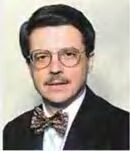
For some doctors – even more than laymen – cash management is the pivotal issue in the financial planning process. Accumulation of investment assets cannot occur if cash inflows do not exceed cash outflows. On the other hand, accumulated assets are eventually spent to fund expenses during planned time periods when cash outflow exceeds inflow.
Inflation
Traditionally, financial advisors have opined that inflation has a dramatic impact on both ends of the cash management spectrum because inflation has a compounding effect. That compounding effect means that a mere ¼% change in planning assumptions about anticipated inflation can have more significant influence over long-term projected outcomes than a 5% change in the amount of a particular item of budgeted income or expense. Well, true enough if projected linearly using some Monte-Carlo type software simulation. But, in the real word, economists appreciate cost and efficiency improvements [email over snail mail] and the potential for substitution of goods [diesel fuel for gasoline – chicken for steak, etc].
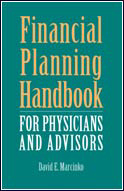
Be More Like … my Dad
On the other hand, far too few of my fellow medical colleagues – and financial advisors – are like my dad. Not well educated by academic standards, but with common sense that seems a precious commodity, today.
Dave, he used to tell me – and still does at age 84:
“Invest your money for growth carefully – and take some risks – but don’t be too afraid of inflation.”
Why not, dad?
“Because; if you’re not a conspicuous consumer, you’ll have less to worry about.”
Cash Management
Well, most of us are not like my dad; me included. But, his depression-mentality has never completely worn off. A doctor’s household can maximize the cash available for investing by setting up the account in this manner.
1. The first step is to open a checking account, money market account, and a brokerage account. The money market account is often included in a brokerage account.
2. The second step is to initiate electronic direct deposit of the paycheck into the money market account.
3. The third step is to determine the amount of cash reserve needed. As mentioned elsewhere on this ME-P, we are suggesting 3-5 years of cash-reserves on-hand, as an emergency fund for most medical professionals.
Once, when, and if, the amount of the reserve is determined and achieved, any extra money should be transferred to the brokerage account and invested according to personal goals, objectives and risk-tolerance. A small balance of a few thousand dollars can be kept in the checking account to prevent overdrafts. Beyond the few thousand dollars, the checking account should serve as a pass-through account where money is transferred from the money market account to cover checks written for the budgeted expenses.
Example of Managing Cash Reserve Amounts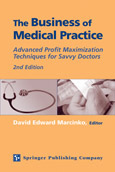
A physician client recently asked me to help him increase his savings. He explained that he had a very detailed realistic budget, but had a hard time staying within the budget when cash was available; as he lectured occasionally and was fortunate to have a few extra dollars every now and then.
Recommendations
As a financial planner, and the founder of an online educational-certification program for physician focused advisors, I recommend that he set up his checking, money market and investment accounts and have his medical practice directly deposit his paycheck in the money market account. He then was to transfer only enough money to his checking account each month, to cover his very carefully budgeted and spread-sheet driven expenses. Furthermore, his money market account was to be equal to our predetermined cash reserve needs, with any excess cash transferred to his investment account and according to his financial and investing plan.
Assessment
Of course, his carefully constructed budget included no cash reserves or emergency fund! He forgot to budget cash! And so; the usual conundrum ensued.
Conclusion
Your thoughts and comments on this ME-P are appreciated. Feel free to review our top-left column, and top-right sidebar materials, links, URLs and related websites, too. Then, subscribe to the ME-P. It is fast, free and secure.
Link: http://feeds.feedburner.com/HealthcareFinancialsthePostForcxos
Speaker: If you need a moderator or speaker for an upcoming event, Dr. David E. Marcinko; MBA – Publisher-in-Chief of the Medical Executive-Post – is available for seminar or speaking engagements. Contact: MarcinkoAdvisors@msn.com
OUR OTHER PRINT BOOKS AND RELATED INFORMATION SOURCES:
LEXICONS: http://www.springerpub.com/Search/marcinko
PHYSICIANS: www.MedicalBusinessAdvisors.com
PRACTICES: www.BusinessofMedicalPractice.com
HOSPITALS: http://www.crcpress.com/product/isbn/9781466558731
CLINICS: http://www.crcpress.com/product/isbn/9781439879900
ADVISORS: www.CertifiedMedicalPlanner.org
BLOG: www.MedicalExecutivePost.com


Share this:

Filed under: "Ask-an-Advisor", Financial Planning, Funding Basics, iMBA, Inc., Op-Editorials | Tagged: American Institute of Certified Public Accountants, cash flow, cash management, cash reserves, Certified, certified medical planner, CFP, CIMA, CMP, david marcinko, Financial Planning, investment adisors, physician investors, reserve fund |


Dr. Marcinko and ME-P Subscribers,
RE: Up Front Patient Payments as Cash for Doctors
According to Francesca Lunzer Kritz of The Washington Post, on Tuesday, March 3, 2009; more and more physicians are asking for the patient’s share of that day’s medical fees, including any deductible set by the insurer, at their time of the visit.
“It’s a paradigm shift from what most consumers are used to at their doctor’s office,” says Red Gillen, a San Francisco-based analyst with consulting firm Celent, who last month published a report on doctors seeking upfront payment from their patients.
Gillen says that until recently, insurers paid so much of the cost of medical care that medical providers, including doctors, labs and hospitals, focused their fee recovery efforts on the companies.
But, in the past few years, employers and insurers have shifted more costs to consumers in the form of higher co-pays, higher co-insurance and higher deductibles, making those payments an increasingly large share of doctors’ incomes.
Link: http://www.washingtonpost.com/wp-dyn/content/article/2009/03/02/AR2009030201786.html
Janice
LikeLike
Hello Janice and Dr. Marcinko
Here is a link I found on surgical department cash flow acceleration with a new sofware program.
http://www.informationweek.com/news/healthcare/admin-systems/showArticle.jhtml?articleID=219501106
Nash
LikeLike
These are some good recommendations regarding cash flow.
One change that I would recommend is in regards to the establishment of a brokerage account. These accounts are often used for purchasing individual stocks, frequent trading, and speculation. Too often the physician confuses these activities with being an investor.
Early in a physician’s career, it would be prudent to open an account with a low-cost mutual fund company such as Vanguard. Monthly automatic contributions to low-cost indexed mutual funds can be arranged, resulting in a disciplined dollar-cost-averaging approach to investing. As the value of investments grows, the physician may eventually hire a fee-only advisor to offer greater diversification as well as fiduciary advice.
Brian J. Knabe; MD CFP
LikeLike
Nearly 3 in 10 have no savings for an emergency
Most Americans don’t have enough money saved for a rainy day — or even a cloudy one. But, what about the doctors?
http://lifeinc.today.msnbc.msn.com/_news/2012/06/25/12362104-nearly-3-in-10-have-no-savings-for-an-emergency?lite
Herman
LikeLike
Rich families are hoarding cash
[So should doctors]
A new survey by Citi shows that wealthy families only have 25% of their assets in stocks.
http://money.msn.com/investing/post–rich-families-are-hoarding-cash
Most expect interest rates to rise.
Dr. David Edward Marcinko MBA CMP™
http://www.CertifiedMedicalPlanner.org
LikeLike
On Cash
Good thoughts – But, to put it plainly, you’ve got to let your money grow in order to retire comfortably.
If you’ve been sitting out on the sidelines, then dividend reinvestment is a good way to ease yourself back in the game.
Consider running your own real-world dividend reinvestment experiment. Start slowly. Pick one or two stable dividend-paying securities and watch the growth that even a few months of dividend reinvestment can deliver.
Buckley
LikeLike
Cash is King
https://www.msn.com/en-us/money/personalfinance/pros-cons-of-living-cash-only/ar-BB1gHCyA
Ludmilla
LikeLike