Support our online development, and advance our onground research initiatives in free market economics, as we seek to showcase the brightest Next-Gen minds.
THE ME-P DISCLAIMER: Posts, comments and opinions do not necessarily represent iMBA, Inc., but become our property after submission. Copyright © 2006 to-date. iMBA, Inc allows colleges, universities, medical and financial professionals and related clinics, hospitals and non-profit healthcare organizations to distribute our proprietary essays, photos, videos, audios and other documents; etc. However, please review copyright and usage information for each individual asset before submission to us, and/or placement on your publication or web site. Attestation references, citations and/or back-links are required. All other assets are property of the individual copyright holder.
Support our online development, and advance our onground research initiatives in free market economics, as we seek to showcase the brightest Next-Gen minds.
THE ME-P DISCLAIMER: Posts, comments and opinions do not necessarily represent iMBA, Inc., but become our property after submission. Copyright © 2006 to-date. iMBA, Inc allows colleges, universities, medical and financial professionals and related clinics, hospitals and non-profit healthcare organizations to distribute our proprietary essays, photos, videos, audios and other documents; etc. However, please review copyright and usage information for each individual asset before submission to us, and/or placement on your publication or web site. Attestation references, citations and/or back-links are required. All other assets are property of the individual copyright holder.


Hippocratic Dental Consumerism
By Darrell K. Pruitt; DDS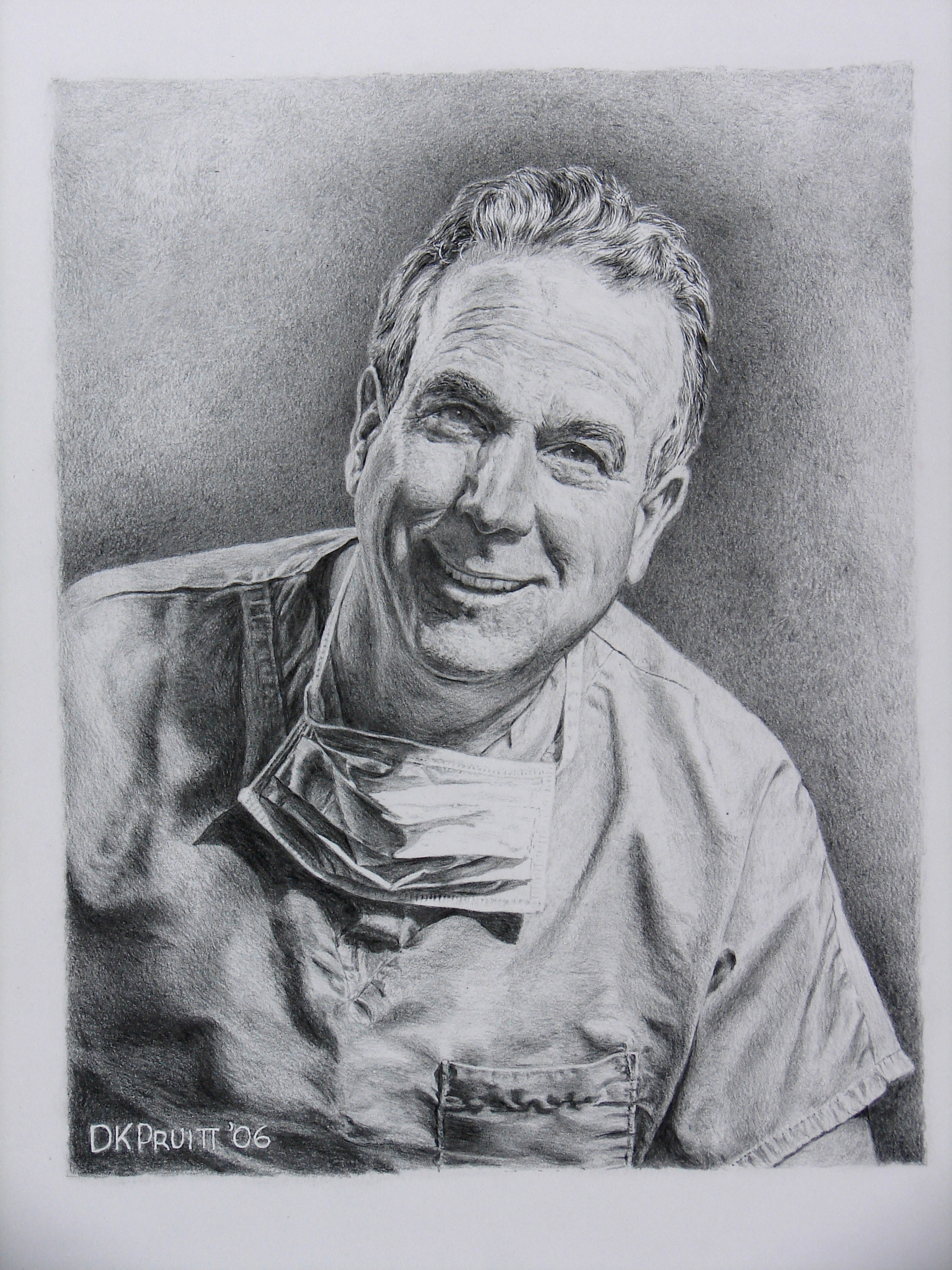
Even before the downturn in the economy sent dentists scrambling for new sources of patients, these were already times of revolutionary changes in the marketing of dental care. To those who are alert, the Internet-enabled chaos signals a rare opportunity if one sides with consumers rather than tradition. It takes confidence to welcome transparency, and it looks increasingly bad when dentists resist accountability in traditional ways – like suing. Yelp; because of a bad review that was posted on the patient referral site. That is the second stupidest thing one can do. Being perhaps a geeky student of the Internet, and sort of nosey, I have been tracking the popularity of dentists’ comments on a few Internet venues for quite a while, because of my own curiosity. I also get ornery enjoyment from reporting to my friends my opinion of what is really happening in my profession that nobody else talks about. My hobby could be called fuzzy data mining based on a platform of precise subjectivity.
For more intricate and dependable real-time information, I choose the surveys reported on The Wealthy Dentist Blog, hosted by Jim Du Molin. They are the best around.
Link: http://www.thewealthydentist.com/blog/
American Dental Association
The ADA also provides nice, formal presentations of even more accurate information, but it is often dated and not ground-level relevant like Du Molin’s studies. Until the Internet came along, gathering useful information about dentists’ prevailing attitudes outside one’s professional circle was virtually impossible, and dentists are well aware that even within these circles, colleagues’ opinions at dental meetings are sometimes intentionally misleading – perhaps mine are less reliable as well at social gatherings. I never talk this frankly in real life.
Dental Information Silos
Talk about information silos! No less that 85% of dentists in the nation are owners of solo private practices (ADA News), and only 2% have bubbly personalities (my guess). Dentists’ quiet isolation, which is arguably favored by what I would guess would be around 85% of dentists in the nation, is a unique characteristic in modern healthcare that is part of a unique labor-intensive art – performed to exacting tolerances in an unpredictable environment – intricate work that most consumers know little about. Yet the ultra-personal accountability welcomed by almost all solo dentists is the way even neighborhood physicians once practiced their trade for thousands of years before modern stakeholders became involved.
Hippocratic Oath
Is working alone with one’s chosen staff the most efficient way to provide dental care? No way. But for me personally, maintaining complete control of the care I provide from start-to-finish for those who depend on me is safer for them and a better business model for me than any alternative I have seen yet. In my opinion, there is no room in the Hippocratic Oath for less than 100% devotion to the patients’ interests. More than two thousand years later, it is called consumerism, and it is 180 degrees counter to stakeholders’ interests, preferred provider lists and universal healthcare. And, it probably comes as no surprise that last October I observed that the most popular comments that were posted shifted from news about the benefits of high-tech inventions in dentistry to advice for how to survive in a tough economy. The whole nation is concerned about finances, and getting one’s teeth cleaned is commonly sacrificed when things get tough. Don’t even mention implants and crowns.
2009 Recession
At the risk of sounding ostentatious as well as pedantic, I will offer that (for the time being) my practice is not suffering from a downturn that many of my local colleagues are enduring. In fact, I am actually busier than I was this time last year – and I made more profit in 2008 than ever before in 26 years of practice. I am also discovering that patients I lost long ago are returning now that they no longer have provider lists. They are also finding that my prices are not so high after all (in fairness, I should add that it has been longer than usual since I have raised fees – except for full gold restorations, of course). Since I am not in the business of selling advice, I am not afraid to also admit that my practice still experienced a couple of slow periods in the late fall – directly attributable to the initial shock of the downturn. But I cannot say that the slowdown was any worse than other times in the last few years, and it certainly hasn’t been as bad as what dentists in Michigan must endure. My sympathy and best wishes go out to my colleagues up north. Things could all turn for the worse for me tomorrow, but for right now, I’m somewhere between surviving and thriving, for what that is worth; nothing spectacular, but solid.
Three Part Series
This posting, which I hope some readers find useful, will be a multi-part series. I haven’t worked everything out yet, and my outline is subject to change, but here is what I have in mind.
In Part One, I’ll describe how my active participation in DR. Oogle (doctoroogle.com) has not only kept my name off of preferred provider lists, but it has also improved the quality of care my staff and I provide, as well as improved the working atmosphere in the office. Transparency will do that.
Then, in Part Two, I will offer my suggestion how one can use DR. Oogle or similar patient referral site to “graduate” from managed care into fee-for-service dentistry without losing patients or profit. As a naughty teaser, let me hint that over three years ago, I offered the idea as an article for the monthly newsletter of my local dental society, only to be refused publication for the first time in over two decades of submissions. I was told that an official nixed it as a transparent “scheme” to harm managed care dental companies, and was therefore below the standards of ADA publications.
“Image is everything”
-ADA/Intelligent Dental Marketing
Finally, in Part Three, I’ll describe how a good offense is also a handy defense – perhaps even in defense against malpractice litigation. Hopefully, a few sincere readers will consider playing to win rather than playing not to lose. And, for those who still don’t see my point, I will reveal how to play not to lose. Fair is fair. It costs from $625 to $1995 per year, and in my opinion, is the stupidest thing one can do. Hope you enjoy this three part series.
Assessment
Editor’s Note: This post was first published on PennWell. Dr. Pruitt blogs here and at others sites. His insights are applicable to most all medical specialties.
Conclusion
And so, your thoughts and comments on this Medical Executive-Post are appreciated.
Speaker: If you need a moderator or speaker for an upcoming event, Dr. David E. Marcinko; MBA – Publisher-in-Chief of the Executive-Post – is available for seminar or speaking engagements. Contact: MarcinkoAdvisors@msn.com or Bio: www.stpub.com/pubs/authors/MARCINKO.htm
Our Other Print Books and Related Information Sources:
Practice Management: http://www.springerpub.com/prod.aspx?prod_id=23759
Physician Financial Planning: http://www.jbpub.com/catalog/0763745790
Medical Risk Management: http://www.jbpub.com/catalog/9780763733421
Healthcare Organizations: www.HealthcareFinancials.com
Health Administration Terms: www.HealthDictionarySeries.com
Physician Advisors: www.CertifiedMedicalPlanner.com
Subscribe Now: Did you like this Medical Executive-Post, or find it helpful, interesting and informative? Want to get the latest E-Ps delivered to your email box each morning? Just subscribe using the link below. You can unsubscribe at any time. Security is assured.
Link: http://feeds.feedburner.com/HealthcareFinancialsthePostForcxos
Share this:

Filed under: Career Development, Ethics, Health Economics, Managed Care, Marketing & Advertising, Op-Editorials, Practice Management, Research & Development | Tagged: ADA, American Dental Association, Darrell Pruitt, health 2.0, Hippocratic Oath, IDM, Intelligent Dental Marketing, Jim DuMulin, The Healthy Dentist Blog | Comments Off on Collaborative Dental Health 2.0 [Upcoming Three Part Series]


 The Leading Business Education Network for Doctors, Financial Advisors and Health Industry Consultants