






 Support our online development, and advance our onground research initiatives in free market economics, as we seek to showcase the brightest Next-Gen minds.
THE ME-P DISCLAIMER: Posts, comments and opinions do not necessarily represent iMBA, Inc., but become our property after submission. Copyright © 2006 to-date. iMBA, Inc allows colleges, universities, medical and financial professionals and related clinics, hospitals and non-profit healthcare organizations to distribute our proprietary essays, photos, videos, audios and other documents; etc. However, please review copyright and usage information for each individual asset before submission to us, and/or placement on your publication or web site. Attestation references, citations and/or back-links are required. All other assets are property of the individual copyright holder.
Support our online development, and advance our onground research initiatives in free market economics, as we seek to showcase the brightest Next-Gen minds.
THE ME-P DISCLAIMER: Posts, comments and opinions do not necessarily represent iMBA, Inc., but become our property after submission. Copyright © 2006 to-date. iMBA, Inc allows colleges, universities, medical and financial professionals and related clinics, hospitals and non-profit healthcare organizations to distribute our proprietary essays, photos, videos, audios and other documents; etc. However, please review copyright and usage information for each individual asset before submission to us, and/or placement on your publication or web site. Attestation references, citations and/or back-links are required. All other assets are property of the individual copyright holder.


Foreword and Book Review
[By Frank A. Cappiello; MBA]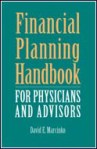
Financial Planning for Physicians and Advisors is essentially a “how-to book” on finance, financial planning and related topics for healthcare providers.
Fortunately for patients, medicine requires a high degree of professional training, both in terms of science and technology. Unfortunately for providers, it affords little time for acquiring medical practice management skills, or learning about the financial aspects of business or investment planning.
An Unusual Book
More to the point, this is an unusual textbook on financial planning for two reasons.
First, it is a detailed guide for physician’s seeking the complex road to success and profit in the confusing healthcare industrial complex. Rarely does one see such clarity of presentation, without the usual jargon that often discourages those trying to learn such a foreign and forbidding subject, as finance.
Second, the subject matter is focused for medical providers who work in one of the fastest growing industries in the United States. The contributors hope that by integrating both disciplines of finance and medical management, they will help foster affordable and profitable healthcare for our nation, which is so entrepreneurial, yet aging.
A Wall Street Career
In my thirty-five years on Wall Street, I have observed that physicians are particularly disadvantaged when it comes to anything regarding finance. Most medical professionals have enough on their mind practicing their specialty and keeping up with healthcare technology and practice trends, that planning for their financial future is often forgotten.
Financial planning and good investment practices require a solid background of how companies work in the “real world”, and an awareness of how they function within the economy. These economic essentials are vital to understanding business, as principles like budgeting, risk management, cash flow analysis, fiscal benchmarking and rudimentary accounting are presented in this book.
Furthermore, the necessity of keeping up with state and federal insurance legislation, the Health Insurance Portability and Accountability Act and other complex managed care contracting issues, places a continual burden on the individual practitioner, group or medical network seeking to stay abreast of current developments.
A Personal Knowledge Endeavor
But, the text focuses on financial planning and how the healthcare professional can increase personal knowledge and skills in this area.
The coverage is both broad and yet detailed, ranging from basic macroeconomic factors that affect our national economy, such as the Gross Domestic Product (a single figure that summarize the business activity of the US), to the more mundane activities of maintaining cash flow, tax reduction strategies, home mortgages and even correcting credit card reporting errors.
Sophisticated Topics
More sophisticated topics include: debt and equity investment vehicles, derivatives, mutual fund and hedge fund investing, portfolio management and risk analysis, and the new laws on tax, retirement and estate planning. The book rightly concludes with practice succession planning for doctors, and begins with a chapter on the psychological meaning of money itself.
Assessment
It seems to me that all those in healthcare are well-served by reading this book with its format and step-by-step setup process for financial success, in terms of starting and ultimately surviving in a complicated business full of pitfalls and misinformation. Most useful will be the extremely detailed table of contents that allows the user to quickly pinpoint an area of interest, and get started answering a problem.
Simply put, my recommendation is to read: Financial Planning for Physicians and Advisors, and “reap”.
Note:
Frank A. Cappiello; MBA
President, McCullough, Andrews & Cappiello, Inc
10751 Falls Road Suite 250
Lutherville, MD 21093
Distinguished Visiting Professor of Finance
Loyola College, Maryland
Former Guest Panelist; Wall $treet Week with Louis Rukeyser TV
Conclusion
Your thoughts and comments on this ME-P are appreciated. Feel free to review our top-left column, and top-right sidebar materials, links, URLs and related websites, too. Then, subscribe to the ME-P. It is fast, free and secure.
Speaker: If you need a moderator or speaker for an upcoming event, Dr. David E. Marcinko; MBA – Publisher-in-Chief of the Medical Executive-Post – is available for seminar or speaking engagements. Contact: MarcinkoAdvisors@msn.com
OUR OTHER PRINT BOOKS AND RELATED INFORMATION SOURCES:
- PRACTICES: www.BusinessofMedicalPractice.com
- HOSPITALS: http://www.crcpress.com/product/isbn/9781466558731
- CLINICS: http://www.crcpress.com/product/isbn/9781439879900
- ADVISORS: www.CertifiedMedicalPlanner.org
- FINANCE: Financial Planning for Physicians and Advisors
- INSURANCE: Risk Management and Insurance Strategies for Physicians and Advisors
- Dictionary of Health Economics and Finance
- Dictionary of Health Information Technology and Security
- Dictionary of Health Insurance and Managed Care


Share this:

Filed under: Book Reviews, Financial Planning | Tagged: Financial Planning |
 The Leading Business Education Network for Doctors, Financial Advisors and Health Industry Consultants
Your financial “Family” planner
Your financial planner may know more about you than your doctor does. When significant life events—engagements, pregnancies, career successes and setbacks, or serious illnesses—affect your family, the planner is often one of the first people to know.
Does that mean you think of your financial planner as part of the family? According to a recent article by Deborah Nason for CNBC, some planners would like you to see them in that light.
I was one of the professionals interviewed for the article, which discussed planners providing emotional support for and building long-term relationships with clients. It also addressed the impact these services have on client retention rates.
My firm’s client-centered services focus on clients’ emotional as well as financial well-being. Still, I was uncomfortable with the tone of part of the piece, especially statements like this: “. . . advisors are serving as thinking partners, therapists, surrogate family members and community organizers.” “Some advisors set out intentionally to become part of the client’s extended family.”
Some of my unease came from one essential word that was missing from the article: integrity. My guess is that for the advisors quoted, integrity is such a given that they didn’t think to mention it. Supporting clients’ well-being with services like financial coaching only serves clients well when it is built on a solid platform of professional skill and integrity. The only way to build the trust that is such an essential aspect of comprehensive financial planning is by being trustworthy.
Both clients and planners need to be fully aware—not just at the beginning of their professional relationship, but as they work together over time—of the importance of that essential foundation of integrity and skill. It has to be maintained through transparency and professional safeguards. Otherwise, a “family” relationship could obscure an advisor’s lack of knowledge in a particular area or make it very hard for a client to question advice that may not serve them well.
To take this one step further, it’s wise to remember one of the reasons unscrupulous con artists are able to fleece unwary customers out of millions of dollars. They have honed the ability to manipulate people’s emotions to persuade customers to trust them, and they then abuse that trust.
Also a matter of integrity is the question of whether it’s even appropriate for planners to “set out to become part of the client’s family.” This has the potential to lead to a manipulative and patronizing view of clients.
Serving clients’ best interests in a fiduciary relationship is the opposite of viewing them as customers to be sold a service. Planners who “sell . . . the relationship,” as one advisor quoted by Nason put it, run the risk of putting their agenda and their goal of creating a relationship ahead of the clients’ agenda and goals. There is nothing wrong with wanting clients for life; such long-term relationships can certainly serve clients well. But those relationships are built, not sold.
One of my clients who read the article told me: “I don’t want a planner to set out to ‘become part of my family.’ I want a planner to provide an impeccable level of service and trustworthiness that invites me to start thinking of him or her as ‘family’—eventually, if that is comfortable for me.”
This, I think, is at the heart of client-centered fiduciary planning. Over time, advisors might become ‘family’ because of their integrity, advocacy, chemistry, etc., but such close relationships should always originate with the clients. Moving into such a position of trust has to be earned and only comes by invitation.
Rick Kahler MS CFP
LikeLike