







 Support our online development, and advance our onground research initiatives in free market economics, as we seek to showcase the brightest Next-Gen minds.
THE ME-P DISCLAIMER: Posts, comments and opinions do not necessarily represent iMBA, Inc., but become our property after submission. Copyright © 2006 to-date. iMBA, Inc allows colleges, universities, medical and financial professionals and related clinics, hospitals and non-profit healthcare organizations to distribute our proprietary essays, photos, videos, audios and other documents; etc. However, please review copyright and usage information for each individual asset before submission to us, and/or placement on your publication or web site. Attestation references, citations and/or back-links are required. All other assets are property of the individual copyright holder.
Support our online development, and advance our onground research initiatives in free market economics, as we seek to showcase the brightest Next-Gen minds.
THE ME-P DISCLAIMER: Posts, comments and opinions do not necessarily represent iMBA, Inc., but become our property after submission. Copyright © 2006 to-date. iMBA, Inc allows colleges, universities, medical and financial professionals and related clinics, hospitals and non-profit healthcare organizations to distribute our proprietary essays, photos, videos, audios and other documents; etc. However, please review copyright and usage information for each individual asset before submission to us, and/or placement on your publication or web site. Attestation references, citations and/or back-links are required. All other assets are property of the individual copyright holder.


Broad Consensus Seems Impossible for Medical Professionals – and Everyman
By Dr. David Edward Marcinko; MBA, CMP™
[Publisher-in-Chief]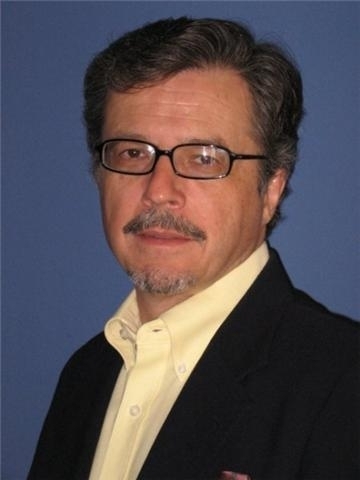
While an undergraduate student at Loyola University in Maryland, I learned from my Jesuit teachers and philosophers that a couple of centuries ago, the decider of all matters of importance in Jerusalem was the Great Sanhedrin, or a council of 71 judges. The council met most every day except on festivals and the Sabbath. It functioned as sort of a combination of the Supreme Court, Congress and a political debate boiler room.
Incorrect Unanimity
As one might imagine, the Sanhedrin’s members normally disagreed as they hammered out their daily opinions; much like today’s political debates over healthcare reform. But occasionally they came to a unanimous decision, and they had an amazing and very wise rule when that occurred: The decision was immediately overturned because the sages believed that a unanimous conclusion among so many individuals just had to be wrong.
THINK: The US Senate and Congress
Rules for Upward Mobility
Anyway, I was thinking about the Sanhedrin’s rule after last night’s 2010 State of the Union address by President Barrack H. Obama while I was considering the current state of the economic union for doctors – specifically. The translation is easy for non-physicians [everyman] as well; so bear with me.
Anyway, I was struck by the fact that if there was one grand unified theory which gets at least 90-100% agreement from current generations of America’s medical and lay punditocracy – it is the rules for upward [medical professional] mobility.
These rules, especially for second generation Americans like me, were:
- A medical degree [college education] leads to a lucrative profession [job] and a satisfying lifestyle.
- [Working hard], or practicing long hours, means your income will grow.
- Devotion to medicine, or your job, will produce a comfortable retirement.
- Your children will follow your career path [job] and create a lasting legacy
The Paradigm Shift
Today, with a national unemployment rate hovering around 10%, doctors and everyman may need to reconsider the above unwritten rules that have governed our upward mobility since the end of World War II. As the son of a GM auto worker – I did decades ago – and still do.
For example, from 1945 to 2000, various private and public health insurance mechanisms were developed, along with the idea that health insurance was a fringe benefit in lieu of the wage and price controls instituted after the war. Today it is even considered a “right” by some.
Nevertheless, the doctor-class was a surrogate for the affluent American upper middle class lifestyle, and a type of perpetual prosperity machine that created wealth.
There were periodic general economic dislocations of course, like the recessions of the mid-1970s and early 1980s, and the rise of managed care in the early 1990s. But, wealth seemed to compound for physicians, and progress always resumed its upward trajectory. This was especially true for all medical professional during the “golden age of medicine” [circa 1965-1990, approx].
After all, wasn’t [isn’t] healthcare considered a recession proof business? Perhaps no more!
The Physician Net-Worth Numbers
Then: I was involved in study a few years ago [September 16, 2008] which determined that the average 47 year-old physician, earning $180,000 annually, needed to amass a net-worth of about $5.5-M in order to maintain the same lifestyle throughout retirement at age 65.
Link: http://www.hcplive.com/finance/publications/pmd/2005/92/3951
Link: www.CertifiedMedicalPlanner.com
Now: Today, with the DJIA down about 30% from its’ October 2008 high, is this retirement / employment scenario still possible? Are our opinions Sanhedrin-like?
And remember, the estate tax laws sunset back to their original rates in 2011. Moreover, many financial advisors, like me, believe income tax rates and brackets will increase going forward; along with increasingly onerous regulations for small businessmen and women like physicians and private medical practitioners. New business innovations of all stripes will also be adversely affected.
Full Disclosure: I am founder of the Certified Medical Planner™ online education program for financial advisors and medical management consultants.

Assessment
And so, I ask, do the rules of upward mobility for physicians or everyman still apply; or have they changed? Why or why not? If so, is the change permanent or temporary, and is it for the positive or negative. Please consider financial, societal and/or generational implications.
IOW: Is President Barack H. Obama correct?
Conclusion
Your thoughts and comments on this ME-P are appreciated. Feel free to review our top-left column, and top-right sidebar materials, links, URLs and related websites, too. Then, subscribe to the ME-P. It is fast, free and secure.
Link: http://feeds.feedburner.com/HealthcareFinancialsthePostForcxos
Speaker: If you need a moderator or speaker for an upcoming event, Dr. David E. Marcinko; MBA – Publisher-in-Chief of the Medical Executive-Post – is available for seminar or speaking engagements. Contact: MarcinkoAdvisors@msn.com
OUR OTHER PRINT BOOKS AND RELATED INFORMATION SOURCES:
- DICTIONARIES: http://www.springerpub.com/Search/marcinko
- PHYSICIANS: www.MedicalBusinessAdvisors.com
- PRACTICES: www.BusinessofMedicalPractice.com
- HOSPITALS: http://www.crcpress.com/product/isbn/9781466558731
- CLINICS: http://www.crcpress.com/product/isbn/9781439879900
- ADVISORS: www.CertifiedMedicalPlanner.org
- BLOG: www.MedicalExecutivePost.com
- FINANCE:Financial Planning for Physicians and Advisors
- INSURANCE:Risk Management and Insurance Strategies for Physicians and Advisors


Share this:

Filed under: "Ask-an-Advisor", Career Development, Financial Planning, Funding Basics, Health Economics, Health Law & Policy, Investing, Op-Editorials, Retirement and Benefits | Tagged: Great Sanhedrin, Loyola, Marcinko, obama, physician net worth, social mobility, State of the Union | 5 Comments »
 The Leading Business Education Network for Doctors, Financial Advisors and Health Industry Consultants