





 Support our online development, and advance our onground research initiatives in free market economics, as we seek to showcase the brightest Next-Gen minds.
THE ME-P DISCLAIMER: Posts, comments and opinions do not necessarily represent iMBA, Inc., but become our property after submission. Copyright © 2006 to-date. iMBA, Inc allows colleges, universities, medical and financial professionals and related clinics, hospitals and non-profit healthcare organizations to distribute our proprietary essays, photos, videos, audios and other documents; etc. However, please review copyright and usage information for each individual asset before submission to us, and/or placement on your publication or web site. Attestation references, citations and/or back-links are required. All other assets are property of the individual copyright holder.
Support our online development, and advance our onground research initiatives in free market economics, as we seek to showcase the brightest Next-Gen minds.
THE ME-P DISCLAIMER: Posts, comments and opinions do not necessarily represent iMBA, Inc., but become our property after submission. Copyright © 2006 to-date. iMBA, Inc allows colleges, universities, medical and financial professionals and related clinics, hospitals and non-profit healthcare organizations to distribute our proprietary essays, photos, videos, audios and other documents; etc. However, please review copyright and usage information for each individual asset before submission to us, and/or placement on your publication or web site. Attestation references, citations and/or back-links are required. All other assets are property of the individual copyright holder.


Considering Pay-for-Retention [P-4-R]
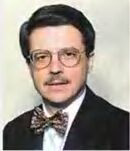
By Darrell K Pruitt; DDS
Here is the question on lots of minds these days; how can we change the way medical providers are paid so they are both incentivized and adequately compensated to provide consistent, high-quality, patient-centered medical homes?
My Novel Idea
Here is a solid, common sense idea; increase providers’ pay gradually according to how long the doctors retain patients – who are free to choose any doctor they wish. Consistency is the mortar of a medical home [i.e., pay-4-retention].
An Ounce of Prevention
If prevention, which predates eHRs by thousands of years, is more than just a modern buzzword, the nation can still shave much more expense from health care by promoting continual, personalized care for consumers than from digital health records alone – void of prevention incentives. Who in the audience still cannot understand that concept? Think of it this way. How do business leaders in the land of the free retain the best employees? They pay bonuses. Even waiters get tips to encourage interest in providing service consumers will return for. What do US physicians get? Guaranteed cuts in their Medicaid payments over the next decade. Physicians no longer encourage their children to become doctors. Surprised? Scared?
Consumers Should Rule
In place of consumers ruling their healthcare in the US, well-positioned, giant stakeholders have persuaded lawmakers to offer physicians bonus money (that will later be taken away), not for curing patients, but for using digital records “in a meaningful manner.” It’s called “Mark and Michael Leavitts’ Clicking for Cash.” Since the rules are made up along the way, they change like the weather. That is why the larger and more progressive medical facilities pay bonuses to retain their best “Coders” and other informatics specialists who keep up with the current Ingenix-styled games in order to maximize profits. It is my opinion that health care IT’s complexity works well with the economic stimulus plan to improve employment in the nation. Entrepreneurial stakeholders will continue to be movie-star popular right up until the complete collapse of Medicare. Then they’ll be impossible to find www.HealthDictionarySeries.com
HIMSS
Have you ever heard of HIMSS?
“The Healthcare Information and Management Systems Society (HIMSS) is the healthcare industry’s membership organization exclusively focused on providing leadership for the optimal use of healthcare information technology (IT) and management systems for the betterment of healthcare.”
– From the HIMSS Web site.
HIMSS Annual Meeting
A week ago, HIMSS convened its annual convention in Chicago. The keynote speakers for the four day event were actor Dennis Quaid; followed by the Chairman and CEO of Kaiser Foundation Health Plan, George C. Halvorson; then the economist and former Chairman, Board of Governors of the Federal Reserve, Alan Greenspan, and finally; Jerry M. Linenger, MD, MSSM, MPH, PhD, Captain, Medical Corps, USN (Ret.), NASA Astronaut, and Space Analyst, NBC News. As one can tell, healthcare IT has lots of momentum. In fact, Dave Roberts, the HIMSS vice president for government relations confidently told Bob Brewin on NextGov.com
“The e-records initiative is an entitlement program like Social Security.”
http://www.nextgov.com/nextgov/ng_20090406_1509.php
Another Entitlement Program – Entitlement for Whom
In Regina Herzlinger’s 2007 book “Who Killed Health Care?” the Harvard School of Business professor argues that entitled stakeholders, including a few ambitious members of HIMSS, are destroying health care in the name of reform. In the first half of her 260 page book, she spells out entrepreneurial malfeasance in simple well-annotated terms. In the last half, she describes why Consumer-Driven Health Care [CDHC] makes sense to her. Professor Herzlinger does not specifically mention the words “medical home” in her book, yet she emphasizes the importance of continuity of care. To promote continuity, she suggests that managed care insurance policies be extended to three years duration and longer. Although she also does not mention dentistry, it is obvious to me that since chronic illnesses like diabetes are exacerbated by poor oral health, continuity of care in dentistry is of special importance. It occasionally takes years to improve some patients’ oral health care. And sometimes we fail.
Assessment
If these assumptions about continuity of care are accurate, it follows that the physical and economic health of the nation depends on long-term medical insurance contracts with employers and freedom-of-choice in providers. So is prevention worth holding ourselves accountable to consumers for once? Maybe it is just me, but I think unprecedented truth in healthcare will soon emerge regardless of stakeholders’ needs for confusion and obscurity. It is called consumerism. And it goes hand-in-hand with the Hippocratic Oath, the free-market and common sense.
Conclusion
Your thoughts and comments on this ME-P are appreciated. Feel free to review our top-left column, and top-right sidebar materials, links, URLs and related websites, too. Then, subscribe to the ME-P. It is fast, free and secure.
Link: http://feeds.feedburner.com/HealthcareFinancialsthePostForcxos
Speaker: If you need a moderator or speaker for an upcoming event, Dr. David E. Marcinko; MBA – Publisher-in-Chief of the Medical Executive-Post – is available for seminar or speaking engagements. Contact: MarcinkoAdvisors@msn.com
OUR OTHER PRINT BOOKS AND RELATED INFORMATION SOURCES:
Health Dictionary Series: http://www.springerpub.com/Search/marcinko
Practice Management: http://www.springerpub.com/product/9780826105752
Physician Financial Planning: http://www.jbpub.com/catalog/0763745790
Medical Risk Management: http://www.jbpub.com/catalog/9780763733421
Hospitals: http://www.crcpress.com/product/isbn/9781439879900
Physician Advisors: www.CertifiedMedicalPlanner.org




Share this:

Filed under: Career Development, Ethics, Health Insurance, Information Technology, Managed Care, Op-Editorials, Practice Management, Quality Initiatives, Recommended Books, Research & Development | Tagged: ADA, Alan Greenspan, Bob Brewin, CDHC, consumer driven healthcare, CPT codes, Darrell Pruitt, David Roberts, DDS, Dennis Quaid, EMRs, eRs, George C. Halvorson, HBS, Herzlinger, HIMSS, Hippocratic Oath, HIT, insurance coers, IT, Jerry M. Linenger, Mark Leavitt, medical home, michael leavitt, P4R, Regina Herzlinger, www.healthcarefinancials.com, www.healthdictionaryseries.com, www.NextGov.com | 3 Comments »


 The Leading Business Education Network for Doctors, Financial Advisors and Health Industry Consultants