The Next-Generation of “Anti-Millionaire” Doctors

“$1 Million Mistake: Becoming a Doctor”

See the source image

BY DR. DAVID E. MARCINKO MBA CMP®

CMP logo

SPONSOR: http://www.CertifiedMedicalPlanner.org

CBS Moneywatch published an article entitled “$1 Million Mistake: Becoming a Doctor” Aside from the possibility that devoting one’s life to helping others might be considered a mistake, medical student Dan Coleman was struck by the “$1 million” figure.

Before medical school, he worked in the pharmaceutical industry and even turned down a hefty promotion to his education as soon as possible, rather than defer for a year or two. But, his financial calculations made it fairly obvious that, including benefits, bonuses, and potential promotions, his medical decision was not a $1 million mistake, but was more like a $1.3 million dollar disaster. Still; he opined:

Yet, even today, as we stare down the barrel of the Affordable Care Act, being a doctor is a very desirable job. We may not be famous, but we will be well-respected. We may not be rich, but we will certainly live comfortably. We may work a lot, but we will never be out of work. To future doctors, the young and impecunious, the anti-millionaires, tuition is a mere afterthought. All that matters is the MD.

Source: http://in-training.org/medical-students-the-anti-millionaires-4361

Millionaire Interview 81 - ESI Money

OVER HEARD IN THE MEDICAL STUDENT’S LOUNGE

“We are medical students.
We are young, proud, and righteous.
We have made the hard choice (medicine), but we have cleared the high hurdle (getting into school).


We know healthcare is a difficult, imperfect art, but we are devoted.
We arm ourselves with the weapons of knowledge and compassion, prepared to defend against the onslaught of trauma, disease, and time.
We are here to the bitter end, for our patients and ourselves.
And above all, we know the cost of our choice.

And if we’re lucky, it will stay under 6% interest through graduation”.

Daniel Coleman

[Georgetown University School of Medicine]

First-year Student

Your thoughts are appreciated,

THANK YOU

***
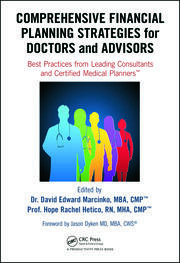
Comprehensive Financial Planning Strategies for Doctors and Advisors: Best Practices from Leading Consultants and Certified Medical Planners™

ORDER Textbook: https://www.amazon.com/Comprehensive-Financial-Planning-Strategies-Advisors/dp/1482240289/ref=sr_1_1?ie=UTF8&qid=1418580820&sr=8-1&keywords=david+marcinko

ODER TEXTBOOK: https://www.routledge.com/Risk-Management-Liability-Insurance-and-Asset-Protection-Strategies-for/Marcinko-Hetico/p/book/9781498725989

INVITE DR. MARCINKO: https://medicalexecutivepost.com/dr-david-marcinkos-

***

The High Cost of College Loans

Join Our Mailing List

Slowing Down the Speeding Train of Educational Debt

By Rick Kahler MS CFP® ChFC CCIM

www.KahlerFinancial.com

Trying to improve on the free market system almost always ends badly. Take medical school or college tuition as an example. It’s an important segment of our economy, since for most a college education is a door to higher wages and a better lifestyle.

Tuition Due in Cash

In the days before college loans were as ubiquitous as mountain pine beetles in the Black Hills of SD, college costs were like any other service. They were due in cash. Students and their parents had to save money or pay tuition out of their earnings. Many students worked their way through college. Those whose parents didn’t save, who couldn’t or didn’t want to work, or who didn’t have high enough grades to get scholarships didn’t go to college.

Supply and Demand Basics

Since colleges competed for students, of course, schools had to keep a close watch on their tuition rates. Raising tuition too much resulted in fewer students. Fewer students meant falling revenues. The two forces of supply (college capacity) and demand (the ability to pay the tuition) kept college costs in check.

Political Fiat

Understandably, getting a loan to pay for college tuition was difficult. What sane bank or investor would make a loan to an unemployed teenager with no collateral to speak of? If you could find someone willing to make such a risky loan, the interest rate was more like the high rates charged by credit card companies.

Well-intended politicians decided it wasn’t fair that those who didn’t have the means to pay the tuition were denied college educations. They decided the solution would be to require the taxpayers to loan unemployed teenagers the money they needed to pay their tuition, sometimes at interest rates lower than what the most creditworthy could obtain.

Easy Money

With tuition money easy to obtain through loans, demand for a college education increased. With the increased demand came higher tuition costs. This easy money is the primary reason that college tuition costs have far outpaced inflation and gone up twice as fast as medical costs since 1985.

Unfortunately, one consequence of loaning money to someone the private sector deems a poor risk is that many of those borrowers will be unable to repay the debt. That’s why the private sector took a pass on making the loans in the first place. It should come as no surprise that 60% of all student loans are currently in default. According to The Kiplinger Letter, December 2, 2011, that default rate will only get worse, as the unemployment rate of those aged 20 to 24 is around 14%. Today, taxpayers are on the hook for over 70% of the $1 trillion in outstanding student loans.

Rising Appetites

And the appetite for loans continues to rise. This year we will add another $100 billion in college debt to the books. Today, the average student graduates with over $27,000 of debt owed to institutions or the government and another $7,000 owed to parents. It isn’t uncommon for a medical student to amass over $200,000 of student loan debt.

College Loan Debt

The more college loan debt that graduates take into the workplace, the less they have to spend for vehicles, rent, and consumer goods. The 60% who are in default on their debt will also mar their credit ratings, so their purchasing power will suffer for years to come.

Assessment

If taxpayers ever decide to quit footing the bill, many colleges’ tuition rates will fall. They may crash as hard as housing prices did in Florida, Arizona, and California. It will be a buyer’s market. But, that day could be years away. In the meantime, savvy students will do whatever they can to minimize their college tuition and graduate debt-free. 

Conclusion

Your thoughts and comments on this ME-P are appreciated. Feel free to review our top-left column, and top-right sidebar materials, links, URLs and related websites, too. Then, subscribe to the ME-P. It is fast, free and secure.

Link: http://feeds.feedburner.com/HealthcareFinancialsthePostForcxos

Speaker: If you need a moderator or speaker for an upcoming event, Dr. David E. Marcinko; MBA – Publisher-in-Chief of the Medical Executive-Post – is available for seminar or speaking engagements. Contact: MarcinkoAdvisors@msn.com

Our Other Print Books and Related Information Sources:

Health Dictionary Series: http://www.springerpub.com/Search/marcinko

Practice Management: http://www.springerpub.com/product/9780826105752

Physician Financial Planning: http://www.jbpub.com/catalog/0763745790

Medical Risk Management: http://www.jbpub.com/catalog/9780763733421

Hospitals: http://www.crcpress.com/product/isbn/9781439879900

Physician Advisors: www.CertifiedMedicalPlanner.org

Product Details  Product Details

Medical School Debt Burdens

Join Our Mailing List

Tuition and Student Cost-of-Living Expenses

dr-david-marcinko1

[By Dr. David Edward Marcinko; MBA, CMP™]

According to the New York Times, December 19, 2008, almost one-quarter of U.S. medical students now graduate from medical school with $200,000 or more in debt. And, according to New England Journal of Medicine [NEJM], this is an expense that limits entry to the profession.

Median Costs

The median cost of attending a year of medical school, including all fees, is now $62,243 at private schools and $44,390 for state residents at public schools. Most of the $2.5 billion in financial assistance available to medical students comes in the form of non-subsidized loans, while few top schools have the resources to discount tuition for students from lower-income families. The steep costs may discourage low-income students from going to medical school, and sway graduates toward higher-earning specialties like radiology, surgery, invasive cardiology and gastroenterology; and away from lower-paying ones like primary care; well-know for sparse compensation and long hours [thinker versus doer].

Assessment

By way of comparison at Temple University in the late 1980’s, my annual tuition and lodging was in the $5,500 – $8,500 range. I was a bachelor without a vehicle, who shared a single room above an antique store on Pine Street, and worked part-time at Pennsylvania Hospital. I graduated debt-free. This frugality enabled me to take prime, but low paying internship, residency and fellowship programs which proved an excellent long-term decision.

Conclusion

Your thoughts and comments on this ME-P are appreciated. Feel free to review our top-left column, and top-right sidebar materials, links, URLs and related websites, too. Then, subscribe to the ME-P. It is fast, free and secure.

Link: http://feeds.feedburner.com/HealthcareFinancialsthePostForcxos

Speaker: If you need a moderator or speaker for an upcoming event, Dr. David E. Marcinko; MBA – Publisher-in-Chief of the Medical Executive-Post – is available for seminar or speaking engagements. Contact: MarcinkoAdvisors@msn.com

OUR OTHER PRINT BOOKS AND RELATED INFORMATION SOURCES:

DICTIONARIES: http://www.springerpub.com/Search/marcinko
PHYSICIANS: www.MedicalBusinessAdvisors.com
PRACTICES: www.BusinessofMedicalPractice.com
HOSPITALS: http://www.crcpress.com/product/isbn/9781466558731
CLINICS: http://www.crcpress.com/product/isbn/9781439879900
BLOG: www.MedicalExecutivePost.com
FINANCE: Financial Planning for Physicians and Advisors
INSURANCE: Risk Management and Insurance Strategies for Physicians and Advisors

Product Details  Product Details


Risk Management, Liability Insurance, and Asset Protection Strategies for Doctors and Advisors: Best Practices from Leading Consultants and Certified Medical Planners™8Comprehensive Financial Planning Strategies for Doctors and Advisors: Best Practices from Leading Consultants and Certified Medical Planners™

***