By Staff Reporters
***
***
As you likely know, the US spends much on healthcare ($4.3 trillion in 2021, to be exact). But did you also know that healthcare fraud makes up a not-so-small piece of that pie?
The National Health Care Anti-Fraud Association (NHCAA), a national organization that works to prevent health insurance fraud, conservatively estimates that 3% of the US’s total annual healthcare spend—a hearty $129 billion—is lost to healthcare fraud. Some government agencies estimate that percentage to be as high as 10% (that’s $430 billion), according to the NHCAA.
Overall, Medicare fraud costs the US about $60 billion each year, Nicole Liebau, national resource center director for Senior Medicare Patrol, a government-funded organization designed to help prevent Medicare fraud, told Healthcare Brew, though she added that “the exact figure is impossible to measure.”
CITE: https://www.r2library.com/Resource/Title/082610254
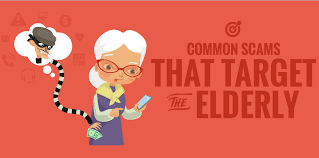
While Medicare fraud isn’t new, the US saw a rise in one particular tactic during the pandemic: a durable medical equipment (DME) scheme.
How the schemes work.
In a DME scheme, scammers target Medicare patients—often after a procedure or an injury—and cold-call them to offer free equipment, said Jennifer Stewart, senior associate general counsel and senior director of fraud prevention and investigation at Blue Cross Blue Shield of Massachusetts. The scammers offer consumers items like lidocaine, wheelchairs, walkers, or braces.
The scammers have roped in doctors—who are often unaware they’re working with scammers instead of legitimate medical companies—to sign off on prescriptions that are then used to bill Medicare for the equipment, Stewart said. Sometimes patients actually receive the products, and sometimes they don’t.
“It’s really dangerous because [a prescription like lidocaine] could have reactions with other medications. The durable medical equipment isn’t sized for them, and certainly the doctor who treated their injury didn’t prescribe it […] There is a lot of patient harm involved,” Stewart said. Keep reading here.
***
COMMENTS APPRECIATED
Thank You
***
ORDER: https://www.amazon.com/Dictionary-Health-Insurance-Managed-Care/dp/0826149944/ref=sr_1_4?ie=UTF8&s=books&qid=1275315485&sr=1-4
***
Filed under: "Ask-an-Advisor", Drugs and Pharma, Ethics, Experts Invited, Glossary Terms, Health Insurance, LifeStyle | Tagged: DME, durable medical equipment, fraud abuse, fraud and abuse, Healthcare Brew, healthcare fraud, medicare, Medicare fraud, medicare scams, NHCAA, Nicole Liebau, Predatory Senior Medicare Scam | Leave a comment »







 Support our online development, and advance our onground research initiatives in free market economics, as we seek to showcase the brightest Next-Gen minds.
THE ME-P DISCLAIMER: Posts, comments and opinions do not necessarily represent iMBA, Inc., but become our property after submission. Copyright © 2006 to-date. iMBA, Inc allows colleges, universities, medical and financial professionals and related clinics, hospitals and non-profit healthcare organizations to distribute our proprietary essays, photos, videos, audios and other documents; etc. However, please review copyright and usage information for each individual asset before submission to us, and/or placement on your publication or web site. Attestation references, citations and/or back-links are required. All other assets are property of the individual copyright holder.
Support our online development, and advance our onground research initiatives in free market economics, as we seek to showcase the brightest Next-Gen minds.
THE ME-P DISCLAIMER: Posts, comments and opinions do not necessarily represent iMBA, Inc., but become our property after submission. Copyright © 2006 to-date. iMBA, Inc allows colleges, universities, medical and financial professionals and related clinics, hospitals and non-profit healthcare organizations to distribute our proprietary essays, photos, videos, audios and other documents; etc. However, please review copyright and usage information for each individual asset before submission to us, and/or placement on your publication or web site. Attestation references, citations and/or back-links are required. All other assets are property of the individual copyright holder.






 The Leading Business Education Network for Doctors, Financial Advisors and Health Industry Consultants