DAILY UPDATE: Synapse Fin-Tech and UnitedHealthcare Part C as Stock Markets Slide

MEDICAL EXECUTIVE-POST TODAY’S NEWSLETTER BRIEFING

***

Essays, Opinions and Curated News in Health Economics, Investing, Business, Management and Financial Planning for Physician Entrepreneurs and their Savvy Advisors and Consultants

Serving Almost One Million Doctors, Financial Advisors and Medical Management Consultants Daily

A Partner of the Institute of Medical Business Advisors , Inc.

http://www.MedicalBusinessAdvisors.com

SPONSORED BY: Marcinko & Associates, Inc.

***

http://www.MarcinkoAssociates.com

Daily Update Provided By Staff Reporters Since 2007.
How May We Serve You?
© Copyright Institute of Medical Business Advisors, Inc. All rights reserved. 2025

REFER A COLLEAGUE: MarcinkoAdvisors@outlook.com

SPONSORSHIPS AVAILABLE: https://medicalexecutivepost.com/sponsors/

ADVERTISE ON THE ME-P: https://tinyurl.com/ytb5955z

Your Referral Count -0-

CITE: https://www.r2library.com/Resource

A grand jury is investigating criminal misconduct at a Silicon Valley fintech firm where customer funds went missing, and has questioned an executive who raised alarms before the company collapsed, people familiar with the matter said. Synapse connected financial technology firms with banks, helping startups that marketed flashy savings apps find a place to park their digital customers’ funds. The middleman managed billions of dollars at its peak, before its sudden collapse in April left thousands of people unable to access their money.

CITE: https://tinyurl.com/2h47urt5

The US Department of Justice is reportedly investigating the insurance giant UnitedHealthcare for its Medicare billing practices. The federal government is examining whether UnitedHealthcare is using patient diagnoses to illegally increase the lump sum monthly payments received through the Medicare Advantage program, according to a report in the Wall Street Journal.

CITE: https://tinyurl.com/tj8smmes

US stocks sold off into the close on Monday as investors weighed the prospects of President Donald Trump’s tariff policies and also shifted focus to this week’s Nvidia (NVDA) earnings.

The Dow Jones Industrial Average (^DJI) was little changed on the heels of its worst week since October. The S&P 500 (^GSPC) fell 0.5%, while the tech-heavy NASDAQ Composite (^IXIC) fell 1.2%.

EDUCATION: Books

COMMENTS APPRECIATED

PLEASE SUBSCRIBE: MarcinkoAdvisors@outlook.com

Thank You

***

***

***

***

EDUCATIONAL TEXTBOOKS: https://tinyurl.com/4zdxuuwf

***

What is Financial – Tech?

The Definition of Fin-Tech

cropped-dem

By Dr. David E. Marcinko MBA MEd CMP

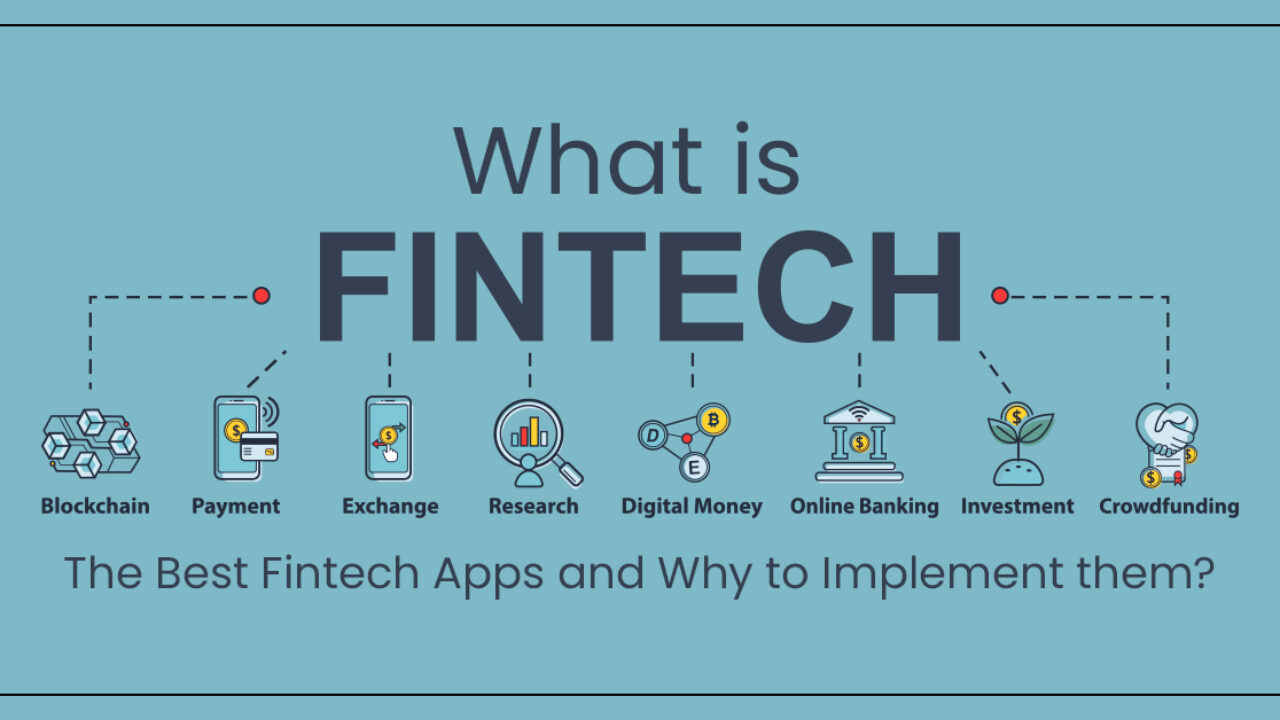
Fintech is a portmanteau of financial technology that describes an emerging financial services sector in the 21st century.

Originally, the term applied to technology applied to the back-end of established consumer and trade financial institutions. Since the end of the first decade of the 21st century, the term has expanded to include any technological innovation in the financial sector, including innovations in financial literacy and education, retail banking, investment and even crypto-currencies like bitcoin.

BREAKING DOWN ‘Fintech’

The term financial technology can apply to any innovation in how people transact business, from the invention of money to double-entry bookkeeping. Since the internet revolution and the mobile internet revolution, however, financial technology has grown explosively, and fintech, which originally referred to computer technology applied to the back office of banks or trading firms, now describes a broad variety of technological interventions into personal and commercial finance.

Fintech’s Expanding Horizons

Already technological innovation has up-ended 20th century ways of trading and banking. The mobile-only stock trading app Robinhood charges no fees for trades, and peer-to-peer lending sites like Prosper and Lending Club promise to reduce rates by opening up competition for loans to broad market forces. Technologies being designed that should reach fruition by 2020 include mobile banking, mobile trading on commodities exchanges, digital wallets (like Apple (AAPL) and Google’s (GOOG) developing mobile wallet systems), financial advisory and robo-advisor sites like LearnVest and Betterment, and all-in-one money management tools like Mint and Level.

***

2f436b72-e961-4350-90cf-38293b834eb0-original

***

New Tech in Fintech

In the olden days, individuals and institutions used the invisible hand of the market – represented by the signaling function of price – to make financial decisions. New technologies, like machine learning, predictive behavioral analytics and data-driven marketing, will take the guess work and hocus pocus out of financial decisions. “Learning” apps will not only learn the habits of users, often hidden to themselves, but will engage users in learning games to make their automatic, unconscious spending and saving decisions better. On the back end, improved data analytics will help institutional clients further refine their investment decisions and open new opportunities for financial innovation.

Fintech Users

Who uses fintech? There are four broad categories: 1) B2B for banks and 2) their business clients; and 3) B2C for small businesses and 4) consumers. Trends toward mobile banking, increased information, data and more accurate analytics and decentralization of access will create opportunities for all four groups to interact in heretofore unprecedented ways.

Conclusion

Your thoughts and comments on this ME-P are appreciated. Feel free to review our top-left column, and top-right sidebar materials, links, URLs and related websites, too. Then, subscribe to the ME-P. It is fast, free and secure.

Speaker: If you need a moderator or speaker for an upcoming event, Dr. David E. Marcinko; MBA – Publisher-in-Chief of the Medical Executive-Post – is available for seminar or speaking engagements. Contact: MarcinkoAdvisors@msn.com

OUR OTHER PRINT BOOKS AND RELATED INFORMATION SOURCES:

Risk Management, Liability Insurance, and Asset Protection Strategies for Doctors and Advisors: Best Practices from Leading Consultants and Certified Medical Planners™8Comprehensive Financial Planning Strategies for Doctors and Advisors: Best Practices from Leading Consultants and Certified Medical Planners™

***

Financial-Tech [Entrepreneurial Start-Ups] Falling

By Staff Reporters

***

***

DEFINITION: Financial technology (abbreviated fintech or FinTech) is the technology and innovation that aims to compete with traditional financial methods in the delivery of financial services. Artificial intelligence, Blockchain, Cloud computing, and big Data are regarded as the “ABCD” (four key areas) of FinTech. The Fintech industry is an emerging industry that uses technology to improve activities in finance. The use of smartphones for mobile banking, investing, borrowing services, and cryptocurrency are examples of technologies aiming to make financial services more accessible to the general public.

***

Financial technology companies consist of both startups and established financial institutions and technology companies trying to replace or enhance the usage of financial services provided by existing financial companies.

CITE: https://www.r2library.com/Resource/Title/082610254

A subset of fintech companies that focus on the insurance industry are collectively known as insurtech or insuretech

READ: https://tinyurl.com/yrx2kxy4

***

INVESTING: https://www.amazon.com/Comprehensive-Financial-Planning-Strategies-Advisors/dp/1482240289/ref=sr_1_1?ie=UTF8&qid=1418580820&sr=8-1&keywords=david+marcinko

***

COMMENTS APPRECIATED

Thank You

***

Why Your Financial Planner May be Replaced?

 By a Computer [FIN-TECH]

[By Rick Kahkler CFP®]

If Ken Fisher is right, in the future you will be talking to a computer about your asset allocation and loving every minute of it.

Fisher has built Fisher Asset Management into the largest fee-only investment advisory firm in the US, with over $100 billion under management. Speaking at the Investment News Innovation Summit in New York City on April 17, 2019, he said, “We need to get machines talking to people in a way that is more human than human.”

If you view “talking to machines” mostly in terms of using four-letter words when your computer locks up, you might be skeptical.

Fisher explained there are six personality profiles that fit almost every investor. “When you (or a machine) knows what they are, then you deal with them according to their profile.” In Ken’s thinking, machines will be able to spot the profile and then, using an algorithm free of human error, interact with the customer in a manner superior to a human advisor. He sees this happening within the next ten years.

I asked him, “What happens to the human advisors when machines talk to your customers better than a human?” Ken replied, “I don’t know the answer to that question,” suggesting that people will need to gain new skills and move on to the next thing. “You can’t keep doing the same thing you were before or you will be out of luck.”

As shocking as this idea is to investment advisors, it’s not at all far-fetched. In an “Axios AM Deep Dive” article on April 6, 2019, Mike Allen quoted Axios Future Editor Steve LeVine as saying that Millennials (those born between 1981 and 1996) will be the first generation to fully face the new age of automation, which could wipe out jobs faster than the economy creates new ones.

Like most before them, many Millennials have taken entry level, minimum wage jobs. Allen suggests that, unlike prior generations, they may not find much of a ladder up from there. Part of that is because of the aftermath of the great recession and part is because technology and globalization have reduced middle-wage jobs.

The median income of younger Millennials is $21,000, according to the AXIOS article. Contrast that to the median wage of $84,000 for statisticians and financial analysts, both of which have high concentrations of older Millennials.

It’s those $84,000 a year jobs that Fisher thinks will be done better by machines. If this happens, it will disrupt the financial services industry in spectacular fashion.

Danielle Fava of TD Ameritrade didn’t agree that human investment advisors will become obsolete in ten years. She does see voice digital assistants making email obsolete. She also believes that artificial intelligence will “enhance the conversations advisors are having with their clients,” rather than replace the human advisor.

***

robo

***

While staring my professional demise in the face in ten years, I drew solace from knowing I am nearing the end of my career. Another fact that should comfort some financial professionals is the difference between investment advisors and analysts (like those who work for Ken Fisher) and financial planners. Investment advising is relatively easy; that’s why a machine may be able to do it all in ten years. Also, investment advice comprises only a small fraction of what financial planners do. It will take a really, really smart machine to integrate all the complex aspects of someone’s financial picture into a sensible plan.

Assessment

So maybe ten years from now a machine will flawlessly figure out your asset allocation. But it may be another ten years before your financial planner is a machine, and maybe another 50 before a machine can do financial therapy.

Conclusion

Your thoughts are appreciated.

***

Risk Management, Liability Insurance, and Asset Protection Strategies for Doctors and Advisors: Best Practices from Leading Consultants and Certified Medical Planners™8Comprehensive Financial Planning Strategies for Doctors and Advisors: Best Practices from Leading Consultants and Certified Medical Planners™

***

New Wave FIN-TECH Business Models?

FINANCIAL SERVICES:

New business models and big opportunities

By MIT Technology Review

CMP logo

Courtesy: http://www.CertifiedMedicalPlanner.org

The financial services industry is turning to bold initiatives to propel from pandemic response to business growth. And, among financial services institutions, 62% are looking to ramp up tech investments, and another 62% expect to move IT and business functions to the cloud, compared with 46% across industries.

For example, in a recent report, Nucleus Research found that cloud deployments deliver four times the return on investment as on-premises deployments do.

Link: https://www.technologyreview.com/2021/04/29/1023266/new-business-models-big-opportunity-financial-services/?mc_cid=3ae91e4c2b&mc_eid=72aee829ad

INDUSTRY RELATED: https://medicalexecutivepost.com/2014/09/24/is-the-financial-services-industry-all-fed-up/

TRANSFORMATION: https://medicalexecutivepost.com/2016/12/28/the-most-transformational-era-in-financial-services-since-the-1980s/

Your thoughts are appreciated.

THANK YOU

***