







 Support our online development, and advance our onground research initiatives in free market economics, as we seek to showcase the brightest Next-Gen minds.
THE ME-P DISCLAIMER: Posts, comments and opinions do not necessarily represent iMBA, Inc., but become our property after submission. Copyright © 2006 to-date. iMBA, Inc allows colleges, universities, medical and financial professionals and related clinics, hospitals and non-profit healthcare organizations to distribute our proprietary essays, photos, videos, audios and other documents; etc. However, please review copyright and usage information for each individual asset before submission to us, and/or placement on your publication or web site. Attestation references, citations and/or back-links are required. All other assets are property of the individual copyright holder.
Support our online development, and advance our onground research initiatives in free market economics, as we seek to showcase the brightest Next-Gen minds.
THE ME-P DISCLAIMER: Posts, comments and opinions do not necessarily represent iMBA, Inc., but become our property after submission. Copyright © 2006 to-date. iMBA, Inc allows colleges, universities, medical and financial professionals and related clinics, hospitals and non-profit healthcare organizations to distribute our proprietary essays, photos, videos, audios and other documents; etc. However, please review copyright and usage information for each individual asset before submission to us, and/or placement on your publication or web site. Attestation references, citations and/or back-links are required. All other assets are property of the individual copyright holder.


On “Smart Phones” and Mobiles Devices
By Shahid N. Shah MS
M-Health or “mobile health” is an industry term for collectively defining those tools and technologies that can be used on “smart phones” like iPhone, Blackberry, Android, or on traditional mobile phones from various vendors.
Unlike traditional computers, almost every patient that walks into your medical office, as well as all your own staff, have mobile devices already. If you can find mobile applications that can help your practice you can immediately put to use without large capital expenses, network configuration, and other technical tasks.
www.MedicalBusinessAdvisors.com
The M-Health Initiative
According to the mHealth Initiative, there are 12 major “application clusters” in mobile health: patient communication, access to web-based resources, point of care documentation, disease management, education programs, professional communication, administrative applications, financial applications, emergency care, public health, clinical trials, and body area networks.
www.CertifiedMedicalPlanner.com
The Applications
Almost all of these applications are focused around the patient but most of them will be directly useful to you and your staff as well. Here’s how:
- Improving physician-patient communications. You can get your staff to send out text messages, e-mails, photos, and other information about your practice to the patient before their visit. You can remind them about appointments, tell them what to expect, ask them for their insurance and check-in information, or let them send you their personal health record link. During the visit you can send them patient education information directly to their phones instead of handing out paper. After the visit you can send medication reminders, additional educational resources, and update to their personal health record, or ask them to join a Health 2.0 social network. PumpOne, GenerationOne, Intouch Clinical, Life:Wire, and Jitterbug phones all have great patient user experiences and you should tell your patients about them.
- Faster access to information for you and your patients. There are countless web-based resources that are now at your fingertips on a phone. Patients can lookup providers, labs, testing services, etc. that you can refer them to; you can help them join clinical trials, and manage their health records online. None of these require a computer either in your office or in their home, it can all be done on the phone. Check out companies like Healthagen and iSeek.
- Real-time documentation of office or hospital visits. Most of the things you want to do in your EMR are possible on a smart phone today. You can get your patient profiles, document an encounter with basic order management and lab results review capabilities, and immediate storage into either your own EMR or your hospital’s information system.
- Help those patients with the most time-consuming treatments. You already know that disease management is an important part of managing the health of chronic patients; diabetes and hypertension are two perfect examples. Help enroll your patients into Diabetes Connect, MediNet, HealthCentral, and similar applications that can help track compliance with your medical treatment guidance. If they use these applications they can simply give you printouts or login credentials so that you can track their progress without doing any data entry yourself. There are patient tools for most common diseases.

Editor’s Note
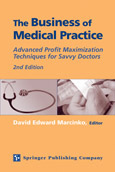
Shahid N. Shah is an ME-P thought leader who is writing Chapter 13: “Interoperable e-MRs for the Small-Medium Sized Medical Practice” [On Being the CIO of your Own Office] for the third edition of the best selling book: Business of Medical Practice [Transformational Health 2.0 Skills for Doctors] to be released this fall by Springer Publishing, NY. He is also the CEO of Netspective Communications, LLC.
www.BusinessofMedicalPractice.com
Conclusion
And so, your thoughts and comments on this ME-P are appreciated. Feel free to review our top-left column, and top-right sidebar materials, links, URLs and related websites, too. Then, be sure to subscribe. It is fast, free and secure.
Speaker: If you need a moderator or speaker for an upcoming event, Mr. Shah and Dr. David E. Marcinko; MBA – Publisher-in-Chief of the Medical Executive-Post – are available for seminar or speaking engagements. Contact: MarcinkoAdvisors@msn.com
Get our Widget: Get this widget!
Our Other Print Books and Related Information Sources:
Practice Management: http://www.springerpub.com/prod.aspx?prod_id=23759
Physician Financial Planning: http://www.jbpub.com/catalog/0763745790
Medical Risk Management: http://www.jbpub.com/catalog/9780763733421
Healthcare Organizations: www.HealthcareFinancials.com
Health Administration Terms: www.HealthDictionarySeries.com
Physician Advisors: www.CertifiedMedicalPlanner.com
Subscribe Now: Did you like this Medical Executive-Post, or find it helpful, interesting and informative? Want to get the latest ME-Ps delivered to your email box each morning? Just subscribe using the link below. You can unsubscribe at any time. Security is assured.
Link: http://feeds.feedburner.com/HealthcareFinancialsthePostForcxos
Sponsors Welcomed: And, credible sponsors and like-minded advertisers are always welcomed.
Link: https://healthcarefinancials.wordpress.com/2007/11/11/advertise
Share this:

Filed under: CMP Program, Information Technology, Media Mentions and PR, Recommended Books | Tagged: Android, blackberry, Business of Medical Practice, CIO, CMIO, EHRs, EMRs, iPhone, M-Health Initiative, mobile devices, Mobile Health, Netspective Communications, Shahid Shah, smart phones, www.BusinessofMedicalPractice.com, www.certifiedmedicalplanner.com, www.medicalbussinessadvisors.com | 1 Comment »

 The Leading Business Education Network for Doctors, Financial Advisors and Health Industry Consultants