WHAT IS “GRESHAM’S LAW” OF MONEY ECONOMICS?

Is it still relevant today?

Courtesy: www.CertifiedMedicalPlanner.org

The law was named in 1860 by Henry Dunning Macleod, after Sir Thomas Gresham (1519–1579), who was an English financier during the Tudor dynasty. However, there are predecessors.

The law had been stated earlier by Nicolaus Copernicus. It was also stated in the 14th century, by Nicole Oresme in his treatise On the Origin, Nature, Law, and Alterations of Money, and by jurist and historian Al-Maqrizi (1364–1442) in the Mamluk Empire; and noted by Aristophanes in his play The Frogs, which dates from around the end of the 5th century BC.

***
***

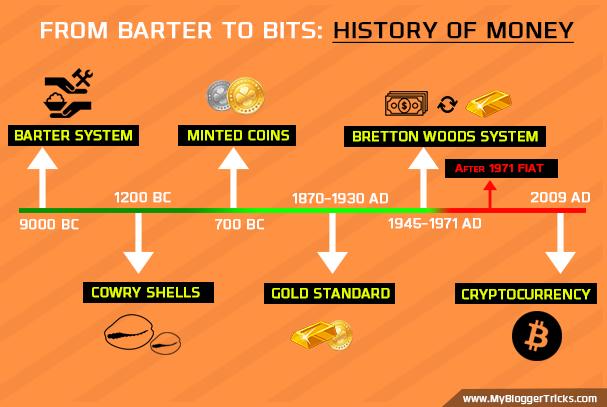
IOW: It is the tendency for money of lower intrinsic value to circulate more freely than money of higher intrinsic and equal nominal value (often expressed as “Bad money drives out good”).

***
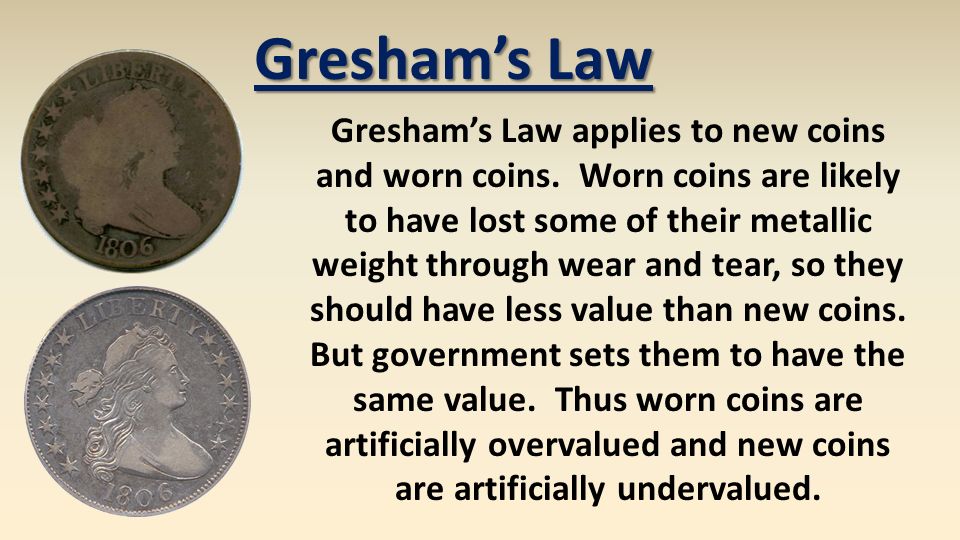
Gresham’s Law applies to new coins and worn coins. Worn coins are likely to have lost some of their metallic weight through wear and tear, so they should have less value than new coins. But government sets them to have the same value. Thus worn coins are artificially overvalued and new coins are artificially undervalued.

***

So, is Gresham’s Law still relevant today?

THINK: The modern Bitcoin, and related crypto-currency, controversy? We asked colleague Timothy J. McIntosh CFP® MPH CFA for some insights.

ESSAY: https://medicalexecutivepost.com/2014/01/23/understanding-currencies-bitcoins/

Assessment

Your thoughts are appreciated.

Conclusion

Feel free to review our top-left column, and top-right sidebar materials, links, URLs and related websites, too. Then, subscribe to the ME-P. It is fast, free and secure.

Speaker: If you need a moderator or speaker for an upcoming event, Dr. David E. Marcinko; MBA – Publisher-in-Chief of the Medical Executive-Post – is available for seminar or speaking engagements.

Book Marcinko: https://medicalexecutivepost.com/dr-david-marcinkos-bookings/

Subscribe: MEDICAL EXECUTIVE POST for curated news, essays, opinions and analysis from the public health, economics, finance, marketing, IT, business and policy management ecosystem.

DOCTORS:

“Insurance & Risk Management Strategies for Doctors” https://tinyurl.com/ydx9kd93

“Fiduciary Financial Planning for Physicians” https://tinyurl.com/y7f5pnox

“Business of Medical Practice 2.0” https://tinyurl.com/yb3x6wr8

HOSPITALS:

“Financial Management Strategies for Hospitals” https://tinyurl.com/yagu567d

“Operational Strategies for Clinics and Hospitals” https://tinyurl.com/y9avbrq5

***

Risk Management, Liability Insurance, and Asset Protection Strategies for Doctors and Advisors: Best Practices from Leading Consultants and Certified Medical Planners™8Comprehensive Financial Planning Strategies for Doctors and Advisors: Best Practices from Leading Consultants and Certified Medical Planners™

On David Ricardo and “Derived-Demand” Health Economics in Medicine?

On Ricardian Derived Demand – Does it Even Exist?

Courtesy: www.CertifiedMedicalPlanner.org

What it is – How it works

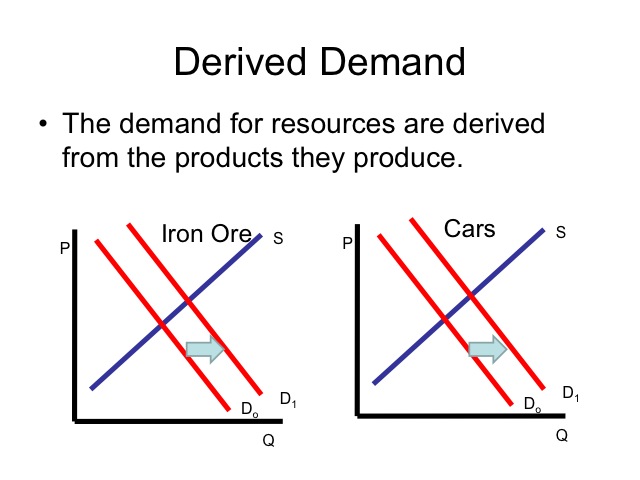
In economics, derived demand is demand for a factor of production or intermediate good that occurs as a result of the demand for another intermediate or final good. In essence, the demand for one is dependent on that whose demand its’ demand is derived from another: www.HealthDictionarySeries.org

******

For example, if the demand for a good such as cars increases, then this leads to an increase in the demand for iron ore.

OR

For example, if the demand for a good such as wheat increases, then this leads to an increase in the demand for labor.

Medicine

So, what about medicine? Saurabh Jha gives us some insight right here!

ESSAY: http://thehealthcareblog.com/blog/2018/08/30/is-medical-imaging-a-ricardian-derived-demand/

RELATED: big data

Your thoughts are appreciated.

MORE INVESTING FOR DOCTORS:

“Insurance & Risk Management Strategies for Doctors” https://tinyurl.com/ydx9kd93

“Fiduciary Financial Planning for Physicians” https://tinyurl.com/y7f5pnox

“Business of Medical Practice 2.0” https://tinyurl.com/yb3x6wr8

***

Product DetailsProduct Details

GOING PRIVATE: 23andMe?

By Staff Reporters

***

***

On September 16th, 2024, ancestry and genetics-testing company 23andMe has agreed to pay a $30 million settlement after a class-action lawsuit was brought against the company for last year’s data breach.

The settlement, which is pending a judge’s approval, comes after the company confirmed in October that “threat actors” used about 14,000 accounts, approximately 0.1% of the company’s user base, to access the ancestry data of 6.9 million connected profiles. Leaked data included users’ account information, location, ancestry reports, DNA matches, family names, profile pictures, birth dates and more.

CEO’s plan to take it private?

And so, all seven of the struggling DNA testing company’s independent directors just stepped down from its board of directors, leaving only founder and CEO Anne Wojcicki. A committee formed by the board had previously rejected Wojcicki’s plan to take the company private, concluding that it didn’t offer a high enough premium to shareholders. Wojcicki persisted with her efforts, but in their resignation, the directors said they still hadn’t seen a “fully financed, fully diligenced, actionable proposal,” so they couldn’t agree on the strategic direction forward.

The CEO said in a memo to employees that she was “surprised and disappointed” by their decision.

COMMENTS APPRECIATED

Thank You

***

***

Fractional Reserve VERSUS Gerbil Banking

Cons from the Austrian School of Economics

By Staff Reporters

***

***

According to Coinmena, fractional reserve banking is a system in which banks are only required to have a fraction of bank deposits from their customers backed by actual cash on hand or available for withdrawal. This is done to expand the economy by enabling banks to free idle capital for commercial lending while keeping a sufficient amount for customer withdrawals.

The creation of the fractional reserve?

The fractional reserve system was first established by the Swedish Riksbank in 1668 after establishing the first central bank in the world. The idea came about after banks realized that there is a minimal chance that all the customers would come to claim their money from the bank at once; therefore, instead of hoarding the money in a vault, it could be used to grow and expand the economy through commercial loans. Fractional reserve banking became more popular around the world after the U.S. enacted The Federal Reserve Act of 1913, which created the Federal Reserve Bank, now known as the U.S. Central bank.

CITE: https://www.r2library.com/Resource/Title/0826102549

How does it work?

When a customer deposits money into their bank account, the money is no longer directly theirs. The bank holds custody of the customer deposits, and they provide the customer with a deposit account that they can withdraw their money from upon demand.

The bank now has full control of the money as the custodian. The bank can opt to reserve a small percentage of the deposited amount (fractional reserve) and loan the rest or use it for another commercial purpose. The reserve amount usually ranges between 3% to 10%. Although, during harsh economic times, the central banks can lower this reserve requirement to 0%. The Covid-19 pandemic forced central banks around the world to lower the reserve requirement to help stimulate the economy.

 Example

  • Customer A deposits 100,000 AED in Bank 1. Bank 1 loans Customer B 90,000 AED
  • Customer B deposits 90,000 AED in Bank 2. Bank 2 loans Customer C 81,000 AED
  • Customer C deposits 81,000 AED in Bank 3. Bank 3 loans Customer D 72,900 AED
  • Customer D deposits 72,900 AED in Bank 4. Bank 4 loans Customer E 65,610 AED
  • Customer E deposits 65,610 AED in Bank 5. Bank 5 loans Customer F 59,049 AED

 As you can see, the original amount of 100,000 AED has been expanded to represent deposited money for five accounts, and the total existing money supply is 468,559 AED, including the final loan. This is a basic representation of the money multiplier effect.

The system works on the basic principles of debt. The money deposited into the bank by a customer is considered a debt (liability) on the bank to the customer and an asset for the customer. The banks then loan out this money with an interest rate to make a profit for themselves and have the principal amount to pay back their original debt to the depositor (customer).

Pros & Cons of fractional reserve

Banks have the most benefit from a fractional reserve system as this is the way they make their profits. Additionally, customers can also earn interest through their savings or deposit account paid from the interest profits made by the bank. Governments also support this system because it encourages spending and provides economic stability and growth.

Economists from the Austrian School of Economics argue that this system is unsustainable and risky given that most countries rely on a credit-based system and not hard money. Additionally, a fractional reserve system runs the risk of a bank run. Essentially, if people lose faith in a bank to be able to pay back all the depositor’s money, it would trigger a  “run on the banks” or “bank run.” It is not typical behavior for customers to go claim their money from the bank all at once, but it has happened in the past, with the most notorious example being the 1929 Great Depression in the U.S. In this case, the banks would only be able to pay out only 3% of depositors, equal to the fractional reserve requirement.

More: https://www.sofi.com/learn/content/what-is-fractional-reserve-banking/

Related: https://www.washingtonpost.com/washington-post-live/2023/03/21/former-fdic-chair-sheila-bair-global-banking-system/?utm_campaign=mb&utm_medium=newsletter&utm_source=morning_brew

***

GERBIL BANKING

Link: https://fortune.com/2023/03/23/gerbil-banking-preceded-the-great-depression-were-seeing-it-again-today/

COMMENTS APPRECIATED

Thank You

***

ORDER: https://www.routledge.com/Comprehensive-Financial-Planning-Strategies-for-Doctors-and-Advisors-Best/Marcinko-Hetico/p/book/9781482240283

***

DAILY UPDATE: Microsoft and Intuitive Machines as the Stock Markets Rocket Upward!

MEDICAL EXECUTIVE-POST TODAY’S NEWSLETTER BRIEFING

***

Essays, Opinions and Curated News in Health Economics, Investing, Business, Management and Financial Planning for Physician Entrepreneurs and their Savvy Advisors and Consultants

Serving Almost One Million Doctors, Financial Advisors and Medical Management Consultants Daily

A Partner of the Institute of Medical Business Advisors , Inc.

http://www.MedicalBusinessAdvisors.com

SPONSORED BY: Marcinko & Associates, Inc.

***

http://www.MarcinkoAssociates.com

Daily Update Provided By Staff Reporters Since 2007.
How May We Serve You?
© Copyright Institute of Medical Business Advisors, Inc. All rights reserved. 2024

REFER A COLLEAGUE: MarcinkoAdvisors@msn.com

SPONSORSHIPS AVAILABLE: https://medicalexecutivepost.com/sponsors/

ADVERTISE ON THE ME-P: https://tinyurl.com/ytb5955z

Your Referral Count -0-

Microsoft will buy back up to $60 billion in shares and is boosting its dividend by about 10% (from 75 cents per share to 83 cents).

Stat: 60%. That’s how much Intuitive Machines’ stock jumped in early trading yesterday after NASA awarded the company a contract to “build moon data satellites.” (CNBC)

CITE: https://www.r2library.com/Resource

What’s up

  • Lower interest rates mean it’s cheaper to afford a car, a realization that helped propel Tesla up 7.36% today.
  • Darden Restaurants rose 8.25% as shareholders cheered a new deal between the Olive Garden parent company and Uber, whose shares rose 2.42% as well.
  • Airbnb gained 5.17% after CEO Brian Chesky noted that the company is working to expand long-term rental offerings of over 28 days.
  • MobilEye Global popped 14.99% after Intel announced it has no plans to sell any of its 88% stake in the autonomous driving company. Intel shares rose 1.78% as well.

What’s down

  • Trump Media & Technology Group fell 5.89% as the lockup period, during which early investors like the former president can’t sell their stake in the company, is about to end.
  • Progyny plummeted 32.65% after the health insurance benefits company announced it is losing a key customer that accounts for 12% of Progyny’s revenue.
  • Five Below sank 2.22% after JP Morgan analysts downgraded the stock, though they also boosted their price target.

CITE: https://tinyurl.com/2h47urt5

Here’s where the major benchmarks ended:

  • The SPX rose 95.38 points (1.70%) to 5,713.64; the $DJI added 522.09 points (1.26%) to 42,025.19; the NASDAQ Composite® ($COMP) added 440.68 points (2.51%) to 18,013.98.
  • The 10-year Treasury note yield (TNX) climbed five basis points to 3.74%, while the 2-year note yield was unchanged.
  • The CBOE Volatility Index® (VIX) slid to 16.33, registering its lowest close so far this month.

CITE: https://tinyurl.com/tj8smmes

Visualize: How private equity tangled banks in a web of debt, from the Financial Times.

COMMENTS APPRECIATED

PLEASE SUBSCRIBE: MarcinkoAdvisors@msn.com

Thank You

***

***

***

***

EDUCATIONAL TEXTBOOKS: https://tinyurl.com/4zdxuuwf

***