







 Support our online development, and advance our onground research initiatives in free market economics, as we seek to showcase the brightest Next-Gen minds.
THE ME-P DISCLAIMER: Posts, comments and opinions do not necessarily represent iMBA, Inc., but become our property after submission. Copyright © 2006 to-date. iMBA, Inc allows colleges, universities, medical and financial professionals and related clinics, hospitals and non-profit healthcare organizations to distribute our proprietary essays, photos, videos, audios and other documents; etc. However, please review copyright and usage information for each individual asset before submission to us, and/or placement on your publication or web site. Attestation references, citations and/or back-links are required. All other assets are property of the individual copyright holder.
Support our online development, and advance our onground research initiatives in free market economics, as we seek to showcase the brightest Next-Gen minds.
THE ME-P DISCLAIMER: Posts, comments and opinions do not necessarily represent iMBA, Inc., but become our property after submission. Copyright © 2006 to-date. iMBA, Inc allows colleges, universities, medical and financial professionals and related clinics, hospitals and non-profit healthcare organizations to distribute our proprietary essays, photos, videos, audios and other documents; etc. However, please review copyright and usage information for each individual asset before submission to us, and/or placement on your publication or web site. Attestation references, citations and/or back-links are required. All other assets are property of the individual copyright holder.


YOU DECIDE AND OPINE
By Dr. David E. Marcinko MBA
The Plot Thickens
Autumn is here, and leaves aren’t the only thing falling.
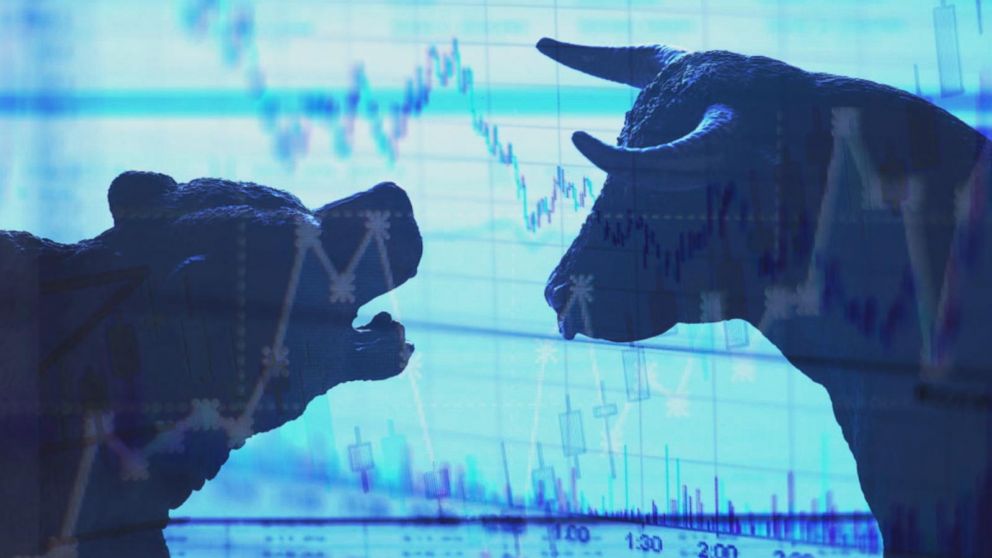
After seven months of higher monthly closes, plus one record-setting high early in the month, the benchmark S&P 500® Index wobbled its way to a 5% pullback in September. The causes were many—uncertainty emanating from Washington, inflation, supply chain problems, and softer earnings growth forecasts—and now the horizon is looking foggy as we gaze ahead toward the final months of 2021.
Shipping bottlenecks and a near-record number of job openings are raising costs and putting upward pressure on wages, which may start to hurt profit margins, and the twin specters of inflation and higher interest rates are making investors wonder when the Federal Reserve might step in to raise interest rates.
Related: https://medicalexecutivepost.com/2016/03/18/doctors-and-bull-and-bear-markets/
But, if there’s a potential bright spot, we have to look across the sea to the Eurozone, where the signs point toward an era of increased government spending that could be positive for global economic growth.
CITE: https://www.r2library.com/Resource/Title/0826102549
And then came October, 2021; thus far!
Bull -OR- Bear?
YOUR COMMENTS ARE APPRECIATED.
***
RISK MANAGEMENT: https://www.routledge.com/Risk-Management-Liability-Insurance-and-Asset-Protection-Strategies-for/Marcinko-Hetico/p/book/9781498725989
Thank You
***
Share this:

Filed under: Glossary Terms, Investing, Touring with Marcinko | Tagged: bear markets, Bull and Bear Markets, bull market, Dictionary of Health Economics and Finance, Investing |
 The Leading Business Education Network for Doctors, Financial Advisors and Health Industry Consultants
STATS
The top 10% of Americans now hold 89% of corporate equities and mutual fund shares, a record high.
The top 1% alone hold over half of stocks owned by households, according to the Federal Reserve.
That means the wealthiest Americans disproportionately profited from the stock market’s strong performance over the last year.
Debra
LikeLike
Debra,
Your numbers come against the backdrop of America’s uneven recovery from the pandemic, but the trend of wealth inequality in America has been ongoing for decades.
Research from Jason Furman, a former top economist to President Barack Obama, found that the amount of time it takes a typical American family to grow their income has slowed significantly.
From 1948 to 1973, the typical family would be able to double their income roughly every 23 years – or once a generation. Since 1973, however, it would take them 100 years to do so.
Amber
LikeLike
Folks
The S&P 500 posted its fifth straight day in the green led by health care and tech stocks.
Bitcoin, meanwhile was nearing an all time high.
Agnes
LikeLike
BULLS
We are in a bull market that began in March of 2009 and continues, accompanied by the typical and inevitable pullbacks and corrections. Its end will come either when stocks get too expensive relative to bonds or when earnings decline, neither of which is the case now; IMHO.
Dr. David E. Marcinko MBA
LikeLike
Markets
Make that three straight positive weeks for the major US indexes, with the cherry on top being that the Dow closed at a record. American Express was a big reason why: It said its cards are becoming more popular among millennials and Gen Z.
Agnes
LikeLike
UPDATE
The major US stock indexes are riding at or close to record highs as investors face a torrent of Big Tech earnings this week. It’ll be a crucial test for companies like Amazon, which started the pandemic hot but have failed to keep up that momentum.
Dr. David E. Marcinko MBA
LikeLike