Did ADA Leaders Mislead Congress about EDR Security?

 Electronic Dental Records [EDR] Security?

By Darrell K. Pruitt DDS

“Terrifying Truth: Ransomware is Everywhere – At its basest level, ransomware is a form of kidnapping. Hackers effectively ‘kidnap’ a business’s data and information systems and threaten to destroy it unless the business pays a ransom for its safe return.”

Todd Lewis for Nibletz [October 24, 2017]
http://www.nibletz.com/security/ransomware

Lewis: “Healthcare and hospital networks are prime targets for these attacks. A patient whose medical service provider is unable to access critical patient information can be in a life-or-death situation unless the healthcare network is rapidly recovered and brought back on line. Cyberattackers take advantage of this urgency and realize that hospitals have greater incentives to pay a ransom to recover their systems and operations. Moreover, hospital networks operate on a 24-hour basis and are rarely taken down for maintenance and updating that might include patches for security holes. Ransomware attacks frequently take advantage of holes in networks that have not been patched with regular updates, and hospitals and medical centers are more likely than businesses in other industries to have failed to close those holes.”

ADA: “Dentists will have a more complete data set of the patient they are treating, enabling better care.”

Dr. Robert H. Ahlstrom, representing the American Dental Association and by default, all US dentists, in testimony before the National Committee on Vital and Health Statistics (NCVHS) on the benefits of EHRs in dentistry. His testimony is featured in an official document titled “Testimony of the American Dental Association, National Committee on Vital and Health Statistics Subcommittee on Standards and Security July 31, 2007.”

Click to access 070731p08.pdf

Insightful or clueless dentist?

Conclusion

Your thoughts and comments on this ME-P are appreciated. Feel free to review our top-left column, and top-right sidebar materials, links, urls and related websites, too. Then, subscribe to the ME-P. It is fast, free and secure.

Speaker: If you need a moderator or speaker for an upcoming event, Dr. David E. Marcinko; MBA – Publisher-in-Chief of the Medical Executive-Post – is available for seminar or speaking engagements.

Contact: MarcinkoAdvisors@msn.com

***

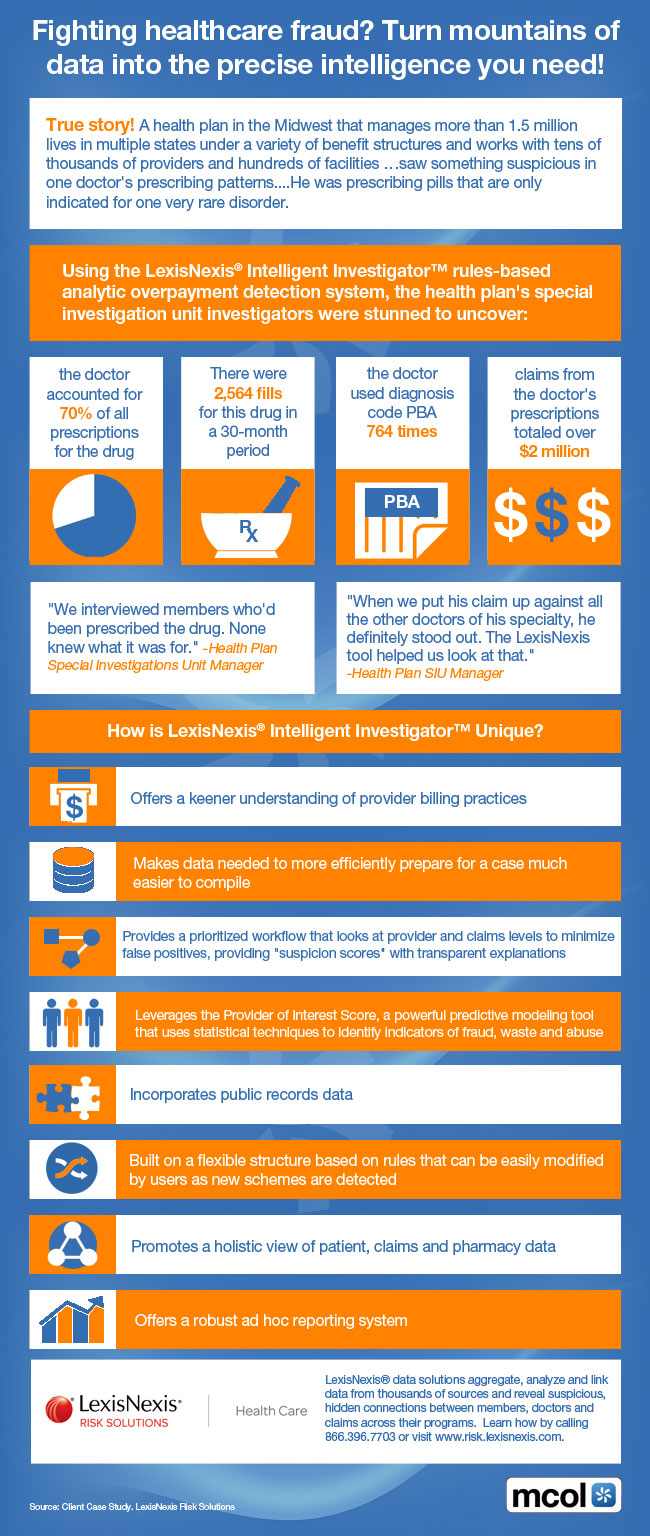
Fighting Healthcare Fraud?

Turning Data into Intelligence

By http://www.MCOL.com

***

***

Conclusion

Your thoughts and comments on this ME-P are appreciated. Feel free to review our top-left column, and top-right sidebar materials, links, urls and related websites, too. Then, subscribe to the ME-P. It is fast, free and secure.

Speaker: If you need a moderator or speaker for an upcoming event, Dr. David E. Marcinko; MBA – Publisher-in-Chief of the Medical Executive-Post – is available for seminar or speaking engagements.

Contact: MarcinkoAdvisors@msn.com

Subscribe: MEDICAL EXECUTIVE POST for curated news, essays, opinions and analysis from the public health, economics, finance, marketing, I.T, business and policy management ecosystem.

***


CONSENSUAL AMOROUS RELATIONSHIPS IN MEDICINE?

NON-CONSENSUAL AMOROUS RELATIONSHIPS DEFINED

By Vicki L. Buba JD

Risk Management, Liability Insurance, and Asset Protection Strategies for Doctors and Advisors: Best Practices from Leading Consultants and Certified Medical Planners™

By Dr. David Edward Marcinko MBA CMP™

http://www.CertifiedMedicalPlanner.org

An “Amorous Relationship” is defined as a consensual romantic, sexual or dating relationship. This definition excludes marital unions. The term also encompasses those relationships in which amorous or romantic feelings exist without physical intimacy and which, when acted upon by the faculty or staff member, exceed the reasonable boundaries of what a person of ordinary sensibilities would believe to be a collegial or professional relationship. The faculty/student and supervisor/employee relationship should not be jeopardized by question of favoritism or fairness in professional judgment.

Furthermore, whether the consent by a student or employee in such relationship is indeed voluntary is suspect due to the imbalance of power and authority between the parties. All members of the healthcare entity should be aware that initial consent to a romantic relationship does not preclude the potential for charges of conflict of interest, or for charges of sexual harassment arising from the conflict of interest, particularly when students and employees not involved in the relationship claim they have been disadvantaged by the relationship. A faculty, staff member or graduate assistant who enters into an “Amorous Relationship” with a student under his or her supervision, or a supervisor who enters into an “Amorous Relationship” with an employee under his or her supervision, must realize that if a charge of sexual harassment is subsequently lodged, it will be exceedingly difficult to prove blamelessness on grounds of mutual consent. This policy is superseded by the laws governing inability to consent based on age.

HANDLING ROMANTIC PATIENT ADVANCES

While physicians vary in their approaches to managing flirtatious patients, many agree that nipping the behavior in the bud is critical to maintaining professionalism and upholding ethical standards. “It’s flattering to have a flirtatious patient,” said Dr. William P. Scherer MS, Professor of Radiology at the Barry University School of Medicine, Boca Raton, Florida. “But, we have an obligation to protect the integrity of our medical profession, and to our marital contracts and spousal relationships and family, and to act professionally at all times” [personal communication].

Dr. Scherer finds it helpful to put some professional distance between himself and a flirtatious patient. “I have no problem saying to a patient: I appreciate what interests you may have, but I have to draw the line to take proper professional care of you, instead.”

And a good way to derails flirtatious behavior from patients is by deflecting their unwelcome comments. “And, you can’t act sheepish about it.” When a patient’s remark crosses the line from complimentary to something uncomfortable, the doctor may either curtly laugh it off or ignore it. “I don’t acknowledge the statement and immediately move the conversation into something clinical in order to put the rest of the visit in a serious tone.”

On the other hand, Dr. Barbara S. Schlefman MS, a fitness trainer and retired podiatrist, instructed her nurses to have another staffer accompany them into an examination room when a patient is known for being flirtatious was waiting to be seen; and to leave the door open [personal communication].

Likewise, other physicians use a “more is merrier” approach for themselves and their staff as a defense against flirtatious behavior. This is a problem that can be avoided by having physicians never see patients alone. So, as Dr. Schlefman advised, be sure to always a nurse or medical assistant in the room with the physician, even if you have to see somebody in the office on call after hours. And, be sure to have a call schedule for the nursing and medical assistant staff that includes patients of both genders, regardless of physician gender, since flirtatious behavior can be same-sex flirtatious behavior. Fortunately, adjunct or visiting clinical professors, or doctors on a medical school clinical teaching staff, rarely have patient encounters without a medical student, intern, resident fellow or nurse in the room during examinations.

Recognize the Signs

While it’s important that physicians don’t act on a flirtatious patient’s advances, it’s equally critical to recognize subtle flirtatious signs from a patient; according to Donna Petrozzello MD, an otolaryngologist at the California Sinus Centers.

A patient that maintains unusually long eye contact with their doctor, or engages in talk not related to their visit, or makes a habit of touching the physicians when not medically necessary may be flirting. Additionally, doctors can protect themselves when performing some common procedures that put the physician in close proximity to a patient’s face, breasts, genitals, legs and even feet. That closeness could turn a clinical exam into a flirtatious event. Wearing a mask to perform each of these local or regional examinations is not only for the purposes of infection control but gives the added benefit of establishing some personal space and protection, to avoid any potential misunderstanding. For example, auscultating lungs through a shirt, not underneath, is a good idea with this type of exam on a young woman patient.

[Two icons of romantic relationships]

Continue reading

On Ethereum Smart Contracts

Breeding digital cats might help you figure out Ethereum

[By MIT Technology Review]

Bitcoin’s younger cousin has its own programming language that people can use to write so-called smart contracts, applications that run on processing power provided by computers on the network.

Confused?

A new game that lets you use Ethereum smart contracts to breed digital cats might help.

https://motherboard.vice.com/en_us/article/bj78jv/cryptokitties-blockchain-cats-axiom-zen-game?utm_campaign=21ae94a9da-EMAIL_CAMPAIGN_2017_10_24&utm_medium=email&utm_source=MIT+Technology+Review&utm_term=0_997ed6f472-21ae94a9da-154253973

Conclusion

Your thoughts and comments on this ME-P are appreciated. Feel free to review our top-left column, and top-right sidebar materials, links, urls and related websites, too. Then, subscribe to the ME-P. It is fast, free and secure.

Speaker: If you need a moderator or speaker for an upcoming event, Dr. David E. Marcinko; MBA – Publisher-in-Chief of the Medical Executive-Post – is available for seminar or speaking engagements.

Contact: MarcinkoAdvisors@msn.com

Subscribe: MEDICAL EXECUTIVE POST for curated news, essays, opinions and analysis from the public health, economics, finance, marketing, I.T, business and policy management ecosystem.

***

On Investing Risk Tolerance

Determining Risk Tolerance

By Rick Kahler CFP®

If you are new to investing, or if you aren’t sure how much risk you are taking in your current portfolio, it may be helpful to spend a little time to determine your risk tolerance.

A good place to start is by taking a few risk tolerance surveys. A variety of free assessments are available online; three examples are at Vanguard, Schwab, and Morningstar.

Examples:

I like surveys that express your risk in terms of downside volatility, or how much loss you could tolerate. Most will express the downside in terms of how far your portfolio would have to go down over a 12-month period before you would jump out.

Unless you only look at your portfolio once a year (which I highly recommend), you most likely won’t tend to think of a decline in your investments as being over a 12-month period. Because we all “anchor” on the highest value, it’s more typical to compare a portfolio’s peak value to its lowest point. You may want to ask yourself how far would the markets need to drop from their highs before you would want to get out “before it’s all gone.” It’s important to understand that the peak to trough drop will usually be much higher than the annual drop. For example, in 2008-2009 the peak to bottom drop in some portfolios was 40% when the 12-month drop was closer to 20%.

What is the right number for you?

So, as the Sleep Number bed commercials ask, what is the right number for you?

If your 12-month tolerance is a 15% drop, you will need to be in a very conservative portfolio, perhaps something like an allocation of 25% in equities and 75% in fixed income investments like bonds. If your tolerance is 25%, a 50/50 allocation may fit. For a tolerance of 35%, maybe a 75/25 allocation will be comfortable.

Don’t take these numbers as gospel. There are many, many variables that will determine what is right for you. I use these simply to give you a context that the less of a drop you can stomach in your portfolio before selling out, the lower your allocation needs to be to equities and the higher your allocation needs to be to fixed income.

If your answer to the question of how much risk you are taking in your investment portfolio is, “I have no clue,” now is the perfect time to get a clue. Why? We are in the ninth year of a bull market in stocks, the third longest in history. Also, 22 out of 23 of the last bear markets bottomed in the first two years of the Presidential cycle.

******

If you find yourself taking too much risk in your portfolio, lighten up on equities and increase your allocation to bonds. Lightening up doesn’t mean selling out of equities. It may mean shifting a 70/30 allocation to a 60/40 or a 50/50. Maybe it means adding some asset classes or investment strategies that do well when stocks drop. Sometimes a slight tweak can do a great deal to keep you in the market when the economy looks to be in a death spiral.

The time to do that tweaking is before the stock market crashes (goes into a bear market), not after. As the six months from September 2008 to February 2009 reminded us, bear markets develop very quickly.

Assessment

The important thing is to take action today to become aware of the risk that is in your portfolio and assess whether you need to make a change.

Conclusion

Your thoughts and comments on this ME-P are appreciated. Feel free to review our top-left column, and top-right sidebar materials, links, urls and related websites, too. Then, subscribe to the ME-P. It is fast, free and secure.

Speaker: If you need a moderator or speaker for an upcoming event, Dr. David E. Marcinko; MBA – Publisher-in-Chief of the Medical Executive-Post – is available for seminar or speaking engagements.

Contact: MarcinkoAdvisors@msn.com

Subscribe: MEDICAL EXECUTIVE POST for curated news, essays, opinions and analysis from the public health, economics, finance, marketing, I.T, business and policy management ecosystem.

***

Risk Management, Liability Insurance, and Asset Protection Strategies for Doctors and Advisors: Best Practices from Leading Consultants and Certified Medical Planners™8Comprehensive Financial Planning Strategies for Doctors and Advisors: Best Practices from Leading Consultants and Certified Medical Planners™


Take the Physician-Focused FINANCIAL PLAN “Challenge”

Do You Have “What it Takes”?

Book Marcinko

DEM 2

By Professor David E. Marcinko MBBS DPM MBA MEd CMP®

Institute of Medical Business Advisors, Inc.

mba

www.CertifiedMedicalPlanner.org

cmp-logo16

My History

More than 15 years ago I crafted a comprehensive holistic financial plan for a young doctor colleague who was born in 1959. In fact, he was not even a medical student at the time; so “canned off-the-shelf plans”, computer generated software or generic spread sheets were not a viable creation option. It was all a granular, detailed, specific and cognitive work-product. Today, he is a board-certified internist.

So, in 2017, it is right and just to take a look back and see how well, or poorly, we’ve fared.

Now, I appreciate more than most how financial planning is a “process”; and not an isolated event. Yet, all sorts of “advisors” and “consultants” create and charge hefty fees for same, and on-going monitoring, every day.

The ME-P Challenge

Nevertheless, I challenge all you mid-career or senior financial planners /advisors to this competition; regardless of degree, certification or designation.

“Show me your financial plan” – AND – “I’ll show you my financial plan”

Here Comes the Judge

Then, our community of ME-P readers, subscribers, visitors and “judges” will decide the winner.

The contest is open to any financial advisor, planner, consultant, wealth manager, CFP®, CFA, insurance agent, CPA or CLU, ChFC, or stock-broker, etc., who is not afraid of transparency in his or her work product and purported expertise.

Of Financial Certifications and Designations

*** [Creating and Evaluating a physician focused financial plan]

***

Assessment

So, just send in a copy of any “blinded” physician-focused financial plan that is about 15 years old. We will post for all to see and review …. warts and all … including my own; three part mega-plan!

The winner will receive bragging rights, academic swagger, and expert promotion to our entire ME-P ecosystem and network of medical, business, law and graduate school communities; as well as physicians, nurses, healthcare executives and allied health care professionals.

An informed sought-after and lucrative sector – indeed!

IOW: Free publicity and positive “new-wave” PR – PRICELESS!

Of course, as an educator and professor of health economics and finance, we are pleased to present you with the deep medical business knowledge and detailed financial,managerial and accounting techniques used, with some real-life “tips and pearls” developed over the last two decades of R&D, right here:

MORE: Comprehensive Financial Planning Strategies for Doctors[Best Practices from Leading Consultants and Certified Medical Planners™]

MORE: Risk Management Liability Insurance, and Asset Protection Strategies for Doctors and Advisors [Best Practices from Leading Consultants and Certified Medical Planners™]

Conclusion

Your thoughts and comments on this ME-P are appreciated. Feel free to review our top-left column, and top-right sidebar materials, links, URLs and related websites, too. Then, subscribe to the ME-P. It is fast, free and secure.

Speaker: If you need a moderator or speaker for an upcoming event, Dr. David E. Marcinko; MBA – Publisher-in-Chief of the Medical Executive-Post – is available for seminar or speaking engagements. Contact: MarcinkoAdvisors@msn.com

OUR OTHER PRINT BOOKS AND RELATED INFORMATION SOURCES:

***

Risk Management, Liability Insurance, and Asset Protection Strategies for Doctors and Advisors: Best Practices from Leading Consultants and Certified Medical Planners™           8Comprehensive Financial Planning Strategies for Doctors and Advisors: Best Practices from Leading Consultants and Certified Medical Planners™

***

PART 1: My Sample Financial Plan I [Data gathering, goals and objectives]

PART 2: My Sample Financial Plan II [Data Analytics, Creation and Crafting]

PART 3: Request here: MarcinkoAdvisors@msn.com [Stress Testing and Completion]

***

Go back

Your message has been sent

Warning
Warning
Warning
Warning

Warning.

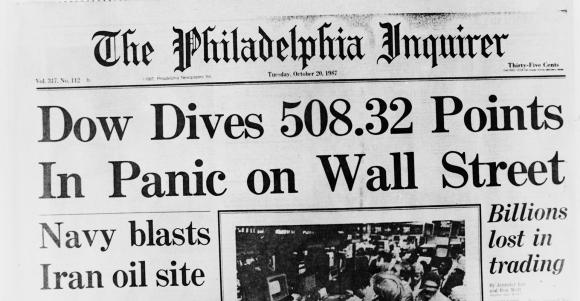
Remembering the Stock-Market “Crash” of 1987

It was 30 years ago … today!

***

https://en.wikipedia.org/wiki/Black_Monday_(1987)

***

Three reasons the next crash may be worse than 1987

http://www.marketwatch.com/story/three-reasons-the-next-crash-may-be-worse-than-1987s-2017-10-18

***

Thirty years ago this week, Wall Street slid into the abyss

https://www.msn.com/en-us/money/markets/thirty-years-ago-this-week-wall-street-slid-into-the-abyss/ar-AAtI5va?li=BBnbfcN

***

Conclusion

Your thoughts and comments on this ME-P are appreciated. Feel free to review our top-left column, and top-right sidebar materials, links, URLs and related websites, too. Then, subscribe to the ME-P. It is fast, free and secure.

Speaker: If you need a moderator or speaker for an upcoming event, Dr. David E. Marcinko; MBA – Publisher-in-Chief of the Medical Executive-Post – is available for seminar or speaking engagements.

Contact: MarcinkoAdvisors@msn.com

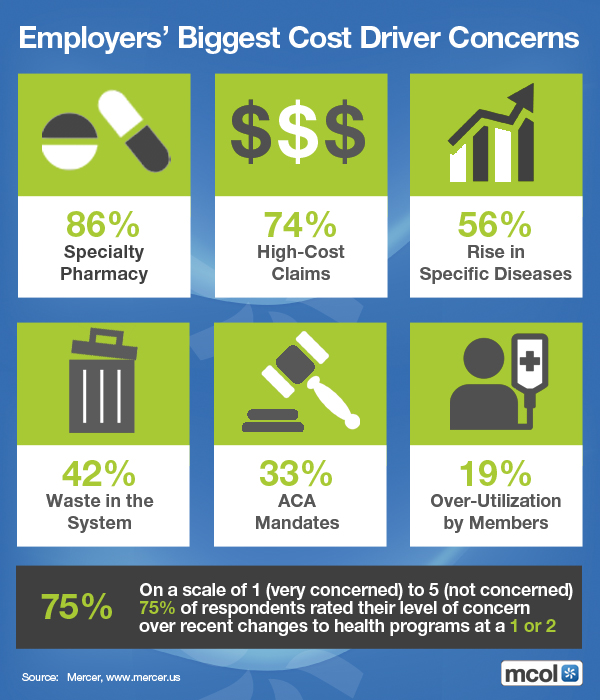
Employer’s Biggest Healthcare Cost Driver Concerns

Health Cost Driver Concerns

By http://www.MCOL.com

***

***

Conclusion

Your thoughts and comments on this ME-P are appreciated. Feel free to review our top-left column, and top-right sidebar materials, links, urls and related websites, too. Then, subscribe to the ME-P. It is fast, free and secure.

Speaker: If you need a moderator or speaker for an upcoming event, Dr. David E. Marcinko; MBA – Publisher-in-Chief of the Medical Executive-Post – is available for seminar or speaking engagements.

Contact: MarcinkoAdvisors@msn.com

Subscribe: MEDICAL EXECUTIVE POST for curated news, essays, opinions and analysis from the public health, economics, finance, marketing, I.T, business and policy management ecosystem.lll


On Retirement Planning Risks

How Much Risk?

By Rick Kahler CFP®

If I asked you how much risk you are taking with the investments in your retirement plan, what would you say? My guess is nine out of ten people couldn’t answer that question in a meaningful way. Answers like “A lot,” “Just right,” or “not much,” may as well be “I have no clue.”

Risk tolerance

We typically think of risk levels in terms of “risk tolerance.” This is the appropriate portfolio risk that a person would be most comfortable taking with their investments. While investment advisors are required to assess your risk tolerance and you can measure it yourself on various internet sites, determining what risk you are comfortable with is more of an art than a science. It depends on the investment return you need to produce an acceptable retirement income and the asset allocation that will give you that return, and it is a delicate balance between emotions and financial reality.

When markets are rising, everyone is comfortable with their risk tolerance. I have known retirees who had their entire retirement portfolio in a handful of small company growth stocks—a powder keg of investment risk by any definition of risk.

Yet they were entirely comfortable with that risk, because the stocks they were in “always went up.” Anyone with a stock that “always goes up” either hasn’t held the stock during a bear market or only looks at their brokerage statements once every five years.

Uncomfortable!

To find out what comfort really means when it comes to risk tolerance, it helps to define “uncomfortable.” While risk tolerance tests will ask you how far must your portfolio drop before you freak out and sell, the best way to find this out is when markets are in a free fall.

If you stay in the markets long enough to see them turn around and rise again, your risk tolerance was probably comfortable. If you sell out, it’s a pretty good indication your risk tolerance was not as great as you or your advisor thought. Unfortunately, selling out at a market bottom is a very costly way to find out the risk you had in your portfolio was “uncomfortable.”

A decade 

If you have been investing for over 10 years, finding your risk tolerance may be simple.

1. Think back to 2008-2009. Did you stay in the markets or get out?
2. Look at old statements and find out what percentage of your investments was in equities (owning things) and what percentage was in fixed income investments (loaning money through CD’s, money markets, and bonds).
3. Express this as a fraction with your equity percentage first and your bond percentage last. If you were 66% in equities and 34% in fixed income your asset allocation was 66/34.
4. If you stayed in the markets, your allocation was probably “comfortable.” If you got out, it was certainly “uncomfortable.”

***

***
If your allocation was 70/30 and you stayed in the market, maintaining that allocation should serve you well. Maybe you could even increase the equity portion to 75/25 or 80/20 and still be comfortable.

Conversely, if your allocation was 70/30 and you sold out or reduced the percentage you held in equities, your allocation clearly offered an uncomfortably high level of risk. You will need to reduce the equities in your portfolio. This is especially true if you got back into your old allocation, or something even riskier, to “make up time.” You may well be taking too much risk and setting yourself up for failure all over again. You will need to reassess

Conclusion

Your thoughts and comments on this ME-P are appreciated. Feel free to review our top-left column, and top-right sidebar materials, links, urls and related websites, too. Then, subscribe to the ME-P. It is fast, free and secure.

Speaker: If you need a moderator or speaker for an upcoming event, Dr. David E. Marcinko; MBA – Publisher-in-Chief of the Medical Executive-Post – is available for seminar or speaking engagements.

Contact: MarcinkoAdvisors@msn.com

Subscribe: MEDICAL EXECUTIVE POST for curated news, essays, opinions and analysis from the public health, economics, finance, marketing, I.T, business and policy management ecosystem.

***

Risk Management, Liability Insurance, and Asset Protection Strategies for Doctors and Advisors: Best Practices from Leading Consultants and Certified Medical Planners™8Comprehensive Financial Planning Strategies for Doctors and Advisors: Best Practices from Leading Consultants and Certified Medical Planners™

Wi-Fi security is wide open to hackers

A flaw in the WPA2 protocol

[By MIT Technology Review]

Researchers have discovered a serious flaw in the WPA2 protocol that secures almost every modern Wi-Fi network. The vulnerability could allow hackers to inject malware into websites, or spy on people by reading information that was previously assumed to be encrypted.

The researchers say that “any correct implementation of WPA2 is likely affected,” with Android, Apple, and Windows software all said to be vulnerable. Security updates should fix the issue—when they’re ready to install.

***

https://www.krackattacks.com/?utm_source=MIT+Technology+Review&utm_campaign=6d93d8c040-The_Download&utm_medium=email&utm_term=0_997ed6f472-6d93d8c040-154253973

***

Conclusion

Your thoughts and comments on this ME-P are appreciated. Feel free to review our top-left column, and top-right sidebar materials, links, URLs and related websites, too. Then, subscribe to the ME-P. It is fast, free and secure.

Speaker: If you need a moderator or speaker for an upcoming event, Dr. David E. Marcinko; MBA – Publisher-in-Chief of the Medical Executive-Post – is available for seminar or speaking engagements.

Contact: MarcinkoAdvisors@msn.com

***

Geographic Variations in Out-of-Pocket Spending

In Healthcare

By http://www.MCOL.com

***

***

Conclusion

Your thoughts and comments on this ME-P are appreciated. Feel free to review our top-left column, and top-right sidebar materials, links, urls and related websites, too. Then, subscribe to the ME-P. It is fast, free and secure.

Speaker: If you need a moderator or speaker for an upcoming event, Dr. David E. Marcinko; MBA – Publisher-in-Chief of the Medical Executive-Post – is available for seminar or speaking engagements.

Contact: MarcinkoAdvisors@msn.com

Subscribe: MEDICAL EXECUTIVE POST for curated news, essays, opinions and analysis from the public health, economics, finance, marketing, I.T, business and policy management ecosystem.

It’s time to put humans at the center of A.I.

More on Artificial Intelligence
By MIT Technology Rerview

“To make more helpful and useful machines, we’ve got to bring back the contextual understanding,” says Fei-Fei Li, chief scientist of Google Cloud, in an interview with MIT Technology Review.

***

***

Read why she wants to inject some humanity into AI

https://www.technologyreview.com/s/609060/put-humans-at-the-center-of-ai/?utm_source=MIT+Technology+Review&utm_campaign=f21f8e4086-The_Download&utm_medium=email&utm_term=0_997ed6f472-f21f8e4086-154253973

Conclusion

Your thoughts and comments on this ME-P are appreciated. Feel free to review our top-left column, and top-right sidebar materials, links, urls and related websites, too. Then, subscribe to the ME-P. It is fast, free and secure.

Speaker: If you need a moderator or speaker for an upcoming event, Dr. David E. Marcinko; MBA – Publisher-in-Chief of the Medical Executive-Post – is available for seminar or speaking engagements.

Contact: MarcinkoAdvisors@msn.com

Subscribe: MEDICAL EXECUTIVE POST for curated news, essays, opinions and analysis from the public health, economics, finance, marketing, I.T, business and policy management ecosystem.

Is money more instinctual than cognitive?

On Financial Therapy

By Rick Kahler MS CFP®

My research in psychology, along with 35 years of experience working with people and their finances, suggests that how we handle money is more instinctual than cognitive.

It’s more a factor of our brains’ hard-wiring than it is learned intelligence. Apparently, some people are just wired to do money well and others are not.

This can sound like a complete copout. The idea that you either have the money gene or you don’t seems simplistic. Yet I believe there is some truth to it.

R&D

Researcher and educator Russ Hudson finds that two centuries of data suggest every human being has three basic instincts that are necessary for survival: social (for getting along with others), sexual (for extending ourselves through generations), and self-preservation (for maintaining our physical life and functioning).

For most of us, these three are not equally balanced. One tends to be dominant, a second supports the dominant one, and the third and weakest one typically creates a blind spot. The dominant and weakest instincts give us the most trouble.

Evidence supports the idea that those with a dominant instinct of self-preservation tend to instinctually be successful savers. They are the people who find it relatively easy to, in the words of the late Dick Wagner, “Spend less, save more, and don’t do anything stupid.”

This doesn’t mean they have a good relationship with money; that they sleep peacefully at night, don’t worry about money, or are not obsessed with money. It doesn’t mean they are happy. But it does mean they tend to be frugal, which is the common denominator of accumulating wealth. They understand instinctually that you can’t spend more than you receive if you are going to thrive and prosper financially. Living life on the edge or focusing on the welfare of others is instinctually foreign to them.

******

On the other hand

Someone with a dominant social or sexual instinct may be living hand to mouth, but be blissfully happy doing so. What’s instinctually foreign to them is learning to manage money prudently and take care of themselves financially.

As Jonathan Clements recently wrote in his HumbleDollar blog, “Why is change so difficult? Improving behavior is toughest when it means bucking our hardwired instincts. Intellectually, we may know we should exercise more, lose weight and save more—and yet our instincts keep telling us to stay on the couch, eat Cheez Doodles and shop online.” That’s why more financial education or discipline isn’t enough to motivate most Americans toward finding financial wellness.

For those who don’t have self-preservation as the dominant instinct, the enormity of learning to practice more self-preserving financial habits can feel depressing and hopeless. Yet it is certainly possible. It just isn’t going to be easy.

Idea

One approach that may be helpful is to get assistance and support from others. Clements says he has come to believe the best thing to do is tell friends about your financial goals like saving money for a down payment on a home, paying off a debt, or increasing your retirement plan contributions. This can help motivate you to commit to following through.

Announcing an intention to friends with the hope that the shame of not following through will motivate you to create a new behavior may work for a few. Yet for most, it probably won’t help to change a hard-wired instinct.

Assessment

A better idea might be finding and reporting  to an accountability partner who would kindly, without scolding or shaming, help motivate you to establish a habit.

Even better may be engaging a financial therapist to help you with the hard work of cultivating new instinctual behaviors.

Conclusion

Your thoughts and comments on this ME-P are appreciated. Feel free to review our top-left column, and top-right sidebar materials, links, urls and related websites, too. Then, subscribe to the ME-P. It is fast, free and secure.

Speaker: If you need a moderator or speaker for an upcoming event, Dr. David E. Marcinko; MBA – Publisher-in-Chief of the Medical Executive-Post – is available for seminar or speaking engagements.

Contact: MarcinkoAdvisors@msn.com

Subscribe: MEDICAL EXECUTIVE POST for curated news, essays, opinions and analysis from the public health, economics, finance, marketing, I.T, business and policy management ecosystem.

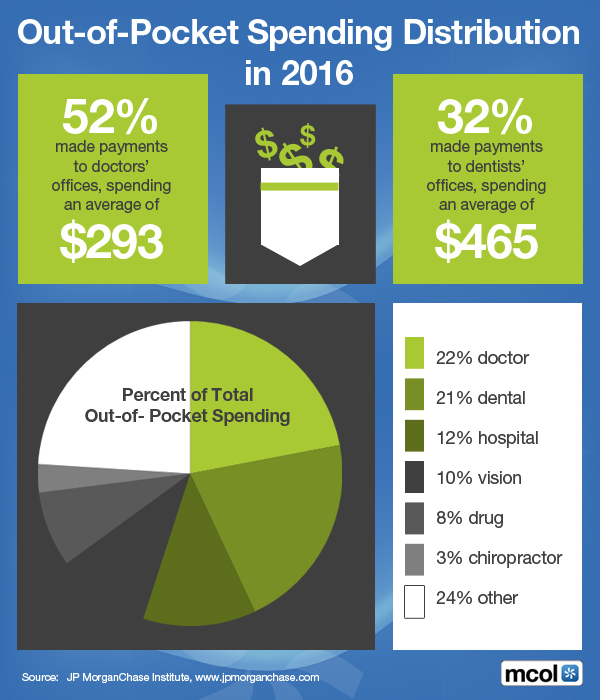
***

Out-of-Pocket Medical Spending Distribution

In 2016

By http://www.MCOL.com

***

***

Conclusion

Your thoughts and comments on this ME-P are appreciated. Feel free to review our top-left column, and top-right sidebar materials, links, urls and related websites, too. Then, subscribe to the ME-P. It is fast, free and secure.

Speaker: If you need a moderator or speaker for an upcoming event, Dr. David E. Marcinko; MBA – Publisher-in-Chief of the Medical Executive-Post – is available for seminar or speaking engagements.

Contact: MarcinkoAdvisors@msn.com

Subscribe: MEDICAL EXECUTIVE POST for curated news, essays, opinions and analysis from the public health, economics, finance, marketing, I.T, business and policy management ecosystem.

Should Algorithms and Robots Mimic Empathy?

Should Algorithms and Robots Mimic Empathy?

By Bertalan Meskó MD PhD

Robots telling jokes and chatbots acting as life coaches sound astounding and terrifying at the same time. Extensive research is going on lately in the field of applying human features, emotions, gestures, and reactions to digital technology; and it raises thousands of questions.

Three Questions:

  • Could not only smart, but emotional algorithms or robots appear also in healthcare soon?
  • Would there be a place or need for them?
  • How would it impact the patient-doctor relationship or social interactions in general?

http://medicalfuturist.com/algorithms-robots-mimic-empathy/?utm_source=The+Medical+Futurist+Newsletter&utm_campaign=2da4036681-Newsletter_2014_07_177_17_2014&utm_medium=email&utm_term=0_efd6a3cd08-2da4036681-399696053

Conclusion

Your thoughts and comments on this ME-P are appreciated. Feel free to review our top-left column, and top-right sidebar materials, links, urls and related websites, too. Then, subscribe to the ME-P. It is fast, free and secure.

Speaker: If you need a moderator or speaker for an upcoming event, Dr. David E. Marcinko; MBA – Publisher-in-Chief of the Medical Executive-Post – is available for seminar or speaking engagements.

Contact: MarcinkoAdvisors@msn.com

Subscribe: MEDICAL EXECUTIVE POST for curated news, essays, opinions and analysis from the public health, economics, finance, marketing, I.T, business and policy management ecosystem.

***

On Consumer DNA Testing

Two states still resist consumer DNA testing

[By MIT Technology Review]

Earlier this month, 55,000 football fans were to receive a giveaway at a Baltimore Ravens game: not a T-shirt or a beer koozie, but a free DNA test. Ultimately, though, Maryland laws nixed the stunt.

Ronni Sandroff explains why.

***

https://www.consumerreports.org/cro/news/2010/09/who-owns-your-dna/index.htm

***

Conclusion

Your thoughts and comments on this ME-P are appreciated. Feel free to review our top-left column, and top-right sidebar materials, links, urls and related websites, too. Then, subscribe to the ME-P. It is fast, free and secure.

Speaker: If you need a moderator or speaker for an upcoming event, Dr. David E. Marcinko; MBA – Publisher-in-Chief of the Medical Executive-Post – is available for seminar or speaking engagements.

Contact: MarcinkoAdvisors@msn.com

Subscribe: MEDICAL EXECUTIVE POST for curated news, essays, opinions and analysis from the public health, economics, finance, marketing, I.T, business and policy management ecosystem.

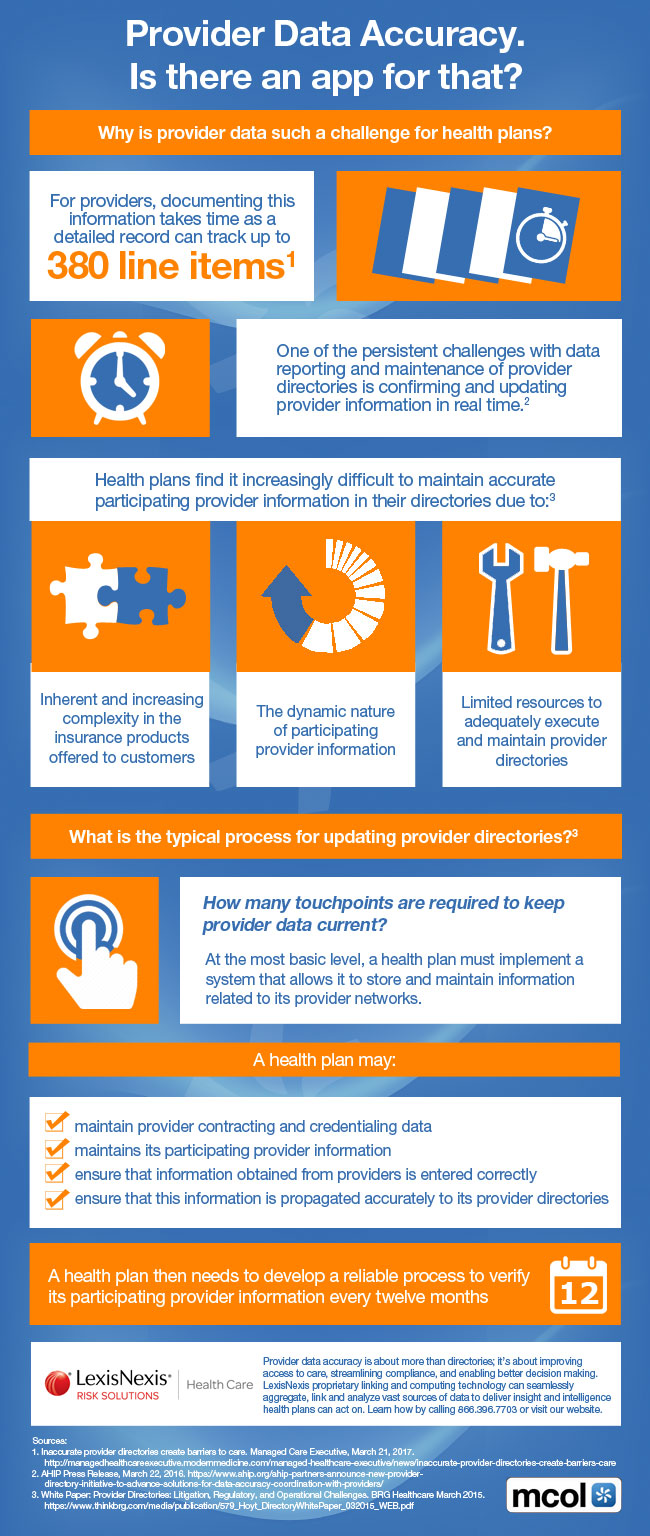
***

On Medical Data Provider Accuracy

Is there an app for that?

http://www.MCOL.com

***

Conclusion

Your thoughts and comments on this ME-P are appreciated. Feel free to review our top-left column, and top-right sidebar materials, links, urls and related websites, too. Then, subscribe to the ME-P. It is fast, free and secure.

Speaker: If you need a moderator or speaker for an upcoming event, Dr. David E. Marcinko; MBA – Publisher-in-Chief of the Medical Executive-Post – is available for seminar or speaking engagements.

Contact: MarcinkoAdvisors@msn.com

***

When a Drug Coupon Helps You but Hurts Others

When a Drug Coupon Helps You but Hurts Others

***

When a Drug Coupon Helps You but Hurts Others

Conclusion

Your thoughts and comments on this ME-P are appreciated. Feel free to review our top-left column, and top-right sidebar materials, links, urls and related websites, too. Then, subscribe to the ME-P. It is fast, free and secure.

Speaker: If you need a moderator or speaker for an upcoming event, Dr. David E. Marcinko; MBA – Publisher-in-Chief of the Medical Executive-Post – is available for seminar or speaking engagements.

Contact: MarcinkoAdvisors@msn.com