What is the Best Stock Valuation Ratio?

On Value Investing

By Michael at: https://valuestockgeek.com

***

What is the Best Stock Valuation Ratio?

Conclusion

Your thoughts and comments on this ME-P are appreciated. Feel free to review our top-left column, and top-right sidebar materials, links, URLs and related websites, too. Then, subscribe to the ME-P. It is fast, free and secure.

Speaker: If you need a moderator or speaker for an upcoming event, Dr. David E. Marcinko; MBA – Publisher-in-Chief of the Medical Executive-Post – is available for seminar or speaking engagements. Contact: MarcinkoAdvisors@msn.com

OUR OTHER PRINT BOOKS AND RELATED INFORMATION SOURCES:

Risk Management, Liability Insurance, and Asset Protection Strategies for Doctors and Advisors: Best Practices from Leading Consultants and Certified Medical Planners™8Comprehensive Financial Planning Strategies for Doctors and Advisors: Best Practices from Leading Consultants and Certified Medical Planners™

***

How to Overvalue a Company?

Use Discounted Cash Flow Analysis

By Michael at: https://valuestockgeek.com

***

How to Overvalue a Company: Use Discounted Cash Flow Analysis

Conclusion

Your thoughts and comments on this ME-P are appreciated. Feel free to review our top-left column, and top-right sidebar materials, links, URLs and related websites, too. Then, subscribe to the ME-P. It is fast, free and secure.

Speaker: If you need a moderator or speaker for an upcoming event, Dr. David E. Marcinko; MBA – Publisher-in-Chief of the Medical Executive-Post – is available for seminar or speaking engagements. Contact: MarcinkoAdvisors@msn.com

OUR OTHER PRINT BOOKS AND RELATED INFORMATION SOURCES:

Risk Management, Liability Insurance, and Asset Protection Strategies for Doctors and Advisors: Best Practices from Leading Consultants and Certified Medical Planners™8Comprehensive Financial Planning Strategies for Doctors and Advisors: Best Practices from Leading Consultants and Certified Medical Planners™

***

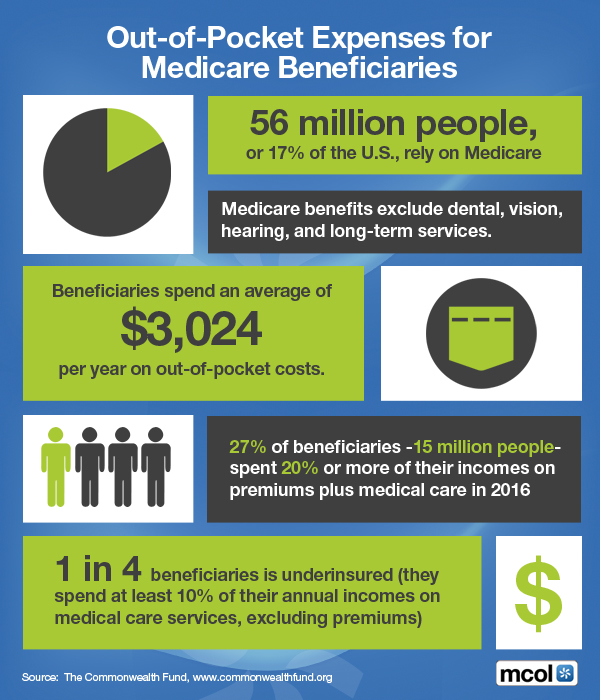
Out of Pocket Expenses for Medicare Beneficiaries

OOP Expenses for 56 Million People

By http://www.MCOL.com

***

***

Conclusion

Your thoughts and comments on this ME-P are appreciated. Feel free to review our top-left column, and top-right sidebar materials, links, URLs and related websites, too. Then, subscribe to the ME-P. It is fast, free and secure.

Speaker: If you need a moderator or speaker for an upcoming event, Dr. David E. Marcinko; MBA – Publisher-in-Chief of the Medical Executive-Post – is available for seminar or speaking engagements. Contact: MarcinkoAdvisors@msn.com

OUR OTHER PRINT BOOKS AND RELATED INFORMATION SOURCES:

Product DetailsProduct Details

***

Long Term Capital Management and the Dangers of Debt

Beware Debt – and REMEMBER!

By Michael at: https://valuestockgeek.com

***

Long Term Capital Management and the Dangers of Debt

Conclusion

Your thoughts and comments on this ME-P are appreciated. Feel free to review our top-left column, and top-right sidebar materials, links, URLs and related websites, too. Then, subscribe to the ME-P. It is fast, free and secure.

Speaker: If you need a moderator or speaker for an upcoming event, Dr. David E. Marcinko; MBA – Publisher-in-Chief of the Medical Executive-Post – is available for seminar or speaking engagements. Contact: MarcinkoAdvisors@msn.com

OUR OTHER PRINT BOOKS AND RELATED INFORMATION SOURCES:

Risk Management, Liability Insurance, and Asset Protection Strategies for Doctors and Advisors: Best Practices from Leading Consultants and Certified Medical Planners™8Comprehensive Financial Planning Strategies for Doctors and Advisors: Best Practices from Leading Consultants and Certified Medical Planners™

***

MSFT makes use of the densest data storage medium in the universe?

On Microsoft R&D

By MIT Technology Review


DNA

***

The company MSFT Corp., thinks DNA, a building block of life, is the future of data storage. It says it could have a “proto-commercial system” up and running in three years.

DNA is incredibly efficient at encoding data—it could store every movie ever made in a volume smaller than a sugar cube.

Assessment: Antonio Regalado reports, Microsoft thinks it won’t be long before the molecule becomes a building block of data centers, too.

Conclusion

Your thoughts and comments on this ME-P are appreciated. Feel free to review our top-left column, and top-right sidebar materials, links, URLs and related websites, too. Then, subscribe to the ME-P. It is fast, free and secure.

Speaker: If you need a moderator or speaker for an upcoming event, Dr. David E. Marcinko; MBA – Publisher-in-Chief of the Medical Executive-Post – is available for seminar or speaking engagements. Contact: MarcinkoAdvisors@msn.com

OUR OTHER PRINT BOOKS AND RELATED INFORMATION SOURCES:

Product DetailsProduct Details

***

Your Politics and Your Portfolio Do Not Mix

On Politics and Money

By Michael at: https://valuestockgeek.com

***

 Your Politics and Your Portfolio Do Not Mix

Conclusion

Your thoughts and comments on this ME-P are appreciated. Feel free to review our top-left column, and top-right sidebar materials, links, URLs and related websites, too. Then, subscribe to the ME-P. It is fast, free and secure.

Speaker: If you need a moderator or speaker for an upcoming event, Dr. David E. Marcinko; MBA – Publisher-in-Chief of the Medical Executive-Post – is available for seminar or speaking engagements. Contact: MarcinkoAdvisors@msn.com

OUR OTHER PRINT BOOKS AND RELATED INFORMATION SOURCES:

Risk Management, Liability Insurance, and Asset Protection Strategies for Doctors and Advisors: Best Practices from Leading Consultants and Certified Medical Planners™8Comprehensive Financial Planning Strategies for Doctors and Advisors: Best Practices from Leading Consultants and Certified Medical Planners™

***

Some Book Reviews on Value Investing

Articles and Papers, too:

By Michael at: https://valuestockgeek.com

If you like want to learn more about value investing, below are some great resources.

***

***

 Resources

Conclusion

Your thoughts and comments on this ME-P are appreciated. Feel free to review our top-left column, and top-right sidebar materials, links, URLs and related websites, too. Then, subscribe to the ME-P. It is fast, free and secure.

Speaker: If you need a moderator or speaker for an upcoming event, Dr. David E. Marcinko; MBA – Publisher-in-Chief of the Medical Executive-Post – is available for seminar or speaking engagements. Contact: MarcinkoAdvisors@msn.com

OUR OTHER PRINT BOOKS AND RELATED INFORMATION SOURCES:

8Comprehensive Financial Planning Strategies for Doctors and Advisors: Best Practices from Leading Consultants and Certified Medical Planners™

***

Are you a leader or a manager?

How to tell the difference?

By TrainHR

Are you a leader or a manager?

Conclusion

Your thoughts and comments on this ME-P are appreciated. Feel free to review our top-left column, and top-right sidebar materials, links, URLs and related websites, too. Then, subscribe to the ME-P. It is fast, free and secure.

Speaker: If you need a moderator or speaker for an upcoming event, Dr. David E. Marcinko; MBA – Publisher-in-Chief of the Medical Executive-Post – is available for seminar or speaking engagements. Contact: MarcinkoAdvisors@msn.com

OUR OTHER PRINT BOOKS AND RELATED INFORMATION SOURCES:

Product DetailsProduct Details

***

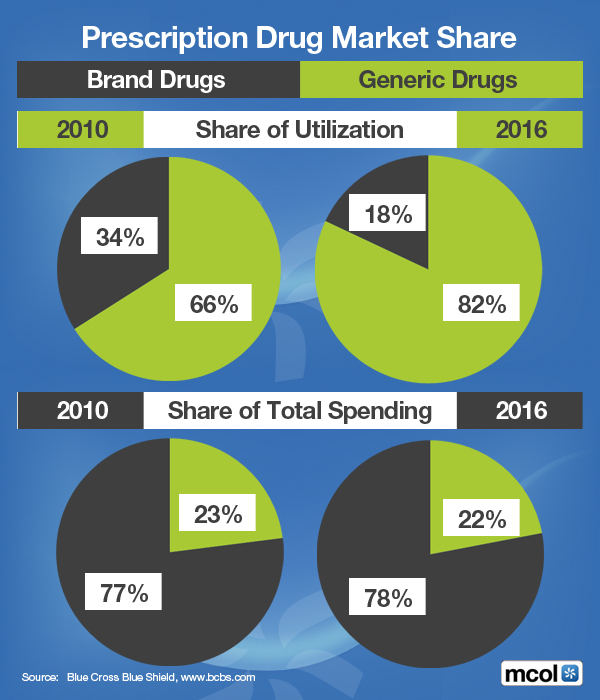
Prescription Drug Utilization Market Share

Brand V. Generic Drugs

By http://www.MCOL.com

***

Conclusion

Your thoughts and comments on this ME-P are appreciated. Feel free to review our top-left column, and top-right sidebar materials, links, URLs and related websites, too. Then, subscribe to the ME-P. It is fast, free and secure.

Speaker: If you need a moderator or speaker for an upcoming event, Dr. David E. Marcinko; MBA – Publisher-in-Chief of the Medical Executive-Post – is available for seminar or speaking engagements. Contact: MarcinkoAdvisors@msn.com

OUR OTHER PRINT BOOKS AND RELATED INFORMATION SOURCES:

Risk Management, Liability Insurance, and Asset Protection Strategies for Doctors and Advisors: Best Practices from Leading Consultants and Certified Medical Planners™8Comprehensive Financial Planning Strategies for Doctors and Advisors: Best Practices from Leading Consultants and Certified Medical Planners™

***

How to Give a Great Speech

By Vitaliy N. Katsenelson CFA

Little Moments, or How to Give a Great Speech

Conclusion

Your thoughts and comments on this ME-P are appreciated. Feel free to review our top-left column, and top-right sidebar materials, links, URLs and related websites, too. Then, subscribe to the ME-P. It is fast, free and secure.

Speaker: If you need a moderator or speaker for an upcoming event, Dr. David E. Marcinko; MBA – Publisher-in-Chief of the Medical Executive-Post – is available for seminar or speaking engagements. Contact: MarcinkoAdvisors@msn.com

OUR OTHER PRINT BOOKS AND RELATED INFORMATION SOURCES:

Risk Management, Liability Insurance, and Asset Protection Strategies for Doctors and Advisors: Best Practices from Leading Consultants and Certified Medical Planners™8Comprehensive Financial Planning Strategies for Doctors and Advisors: Best Practices from Leading Consultants and Certified Medical Planners™

***

A simple tweak could unlock the Web for millions of people

International Corporation for Assigned Names

By MIT Technology Review

***
The letters to the right of the dot in a URL look harmless, but for many users they’re a barrier. In 2011, the International Corporation for Assigned Names decided to grow the number of top-level domains from 12 to 1,200, including some that use non-Latin characters.
 ***
But that revealed a problem: many applications simply don’t recognize those new characters. Our own Mike Orcutt explains how a simple tweak could change that and help millions of people use the Internet more effectively.
***
Conclusion

Your thoughts and comments on this ME-P are appreciated. Feel free to review our top-left column, and top-right sidebar materials, links, URLs and related websites, too. Then, subscribe to the ME-P. It is fast, free and secure.

Speaker: If you need a moderator or speaker for an upcoming event, Dr. David E. Marcinko; MBA – Publisher-in-Chief of the Medical Executive-Post – is available for seminar or speaking engagements. Contact: MarcinkoAdvisors@msn.com

OUR OTHER PRINT BOOKS AND RELATED INFORMATION SOURCES:

Product DetailsProduct DetailsProduct Details

***

Holistic Financial Planning Specialists

Beyond “Primary Care Planning”

By Rick Kahler CFP®

I believe strongly in the value of financial planning and of working with a fiduciary planner who acts in your best interests. However, a planner is not necessarily the only money professional you may need to maintain your financial wellness. In many ways, a planner is similar to a primary care physician. Both these professionals know that providing the best patient or client service includes knowing when to consult a specialist.

When you see your doctor for an annual physical, the main purpose is to evaluate your health to find any potential problems before they become irreversible or life-threatening. This is important: most of us can think of someone who attributes being alive to “catching something early” because of a routine checkup.

While primary care physicians are skilled at diagnosing and treating many conditions, they are also trained to recognize health concerns that are beyond their areas of expertise. In these cases, they will often refer patients to an appropriate specialist for further treatment.

In similar fashion, a true financial planner is also a generalist whose role is to evaluate and maintain your financial health. This includes diagnosing financial threats and potential threats.

While the financial planner can address some of these conditions, others require referrals to specialists.

Here are a few examples of possible threats and a specialist whose help might be appropriate.

  • Critical gaps in insurance coverage. An insurance agent.
  • An inability to save for retirement. A financial therapist, if the financial planner has been unable to help the client resolve the emotional issues behind this behavior.
  • Potentially devastating issues in existing wills. An attorney specializing in estate planning.
  • Squandered tax-saving opportunities. An accountant and/or attorney with expertise in tax law and planning.
  • Lack of personal or business record-keeping and money management. A bookkeeper.
  • High-fee investment products that are draining retirement resources. This most often would be dealt with by the financial planner.

One of the many differences between doctors and financial planners is that most patients don’t have previous relationships with specialists, so primary care physicians often control the referrals they make. However, people often wait until they are in their 30s or 40s to engage a financial planner. This means they are likely to have existing relationships with attorneys, accountants, and insurance agents.

When a financial issue needing a specialist comes up, then, it’s common to assume one of the professionals you already know is the right person to deal with it. This may or may not be the case. For example, the attorney who handled your divorce or drafted your will is not necessarily an expert on real estate law or asset protection. Not every accountant understands the tax planning inherent in spendthrift trusts or life estates.

***

***

It’s often a better idea, if your financial planner recommends getting help from a specialist, to ask the planner to recommend someone who has the necessary expertise.

It might also be appropriate to ask for a recommendation from a current professional, such as your attorney or accountant. They may be glad to help, for two reasons. One, your relationship with them does not need to end because you engage a different professional whose particular skills you need. Two, they may well prefer not to take on a matter outside of their usual areas of expertise when a specialist could serve you better.

Assessment

Keep in mind, as well, that it’s your financial health at stake. Whether a professional is your generalist financial planner or a financial specialist, you need them to act in your best interests. This includes making sure they are professional enough to know and acknowledge what they don’t know.

Conclusion

Your thoughts and comments on this ME-P are appreciated. Feel free to review our top-left column, and top-right sidebar materials, links, URLs and related websites, too. Then, subscribe to the ME-P. It is fast, free and secure.

Speaker: If you need a moderator or speaker for an upcoming event, Dr. David E. Marcinko; MBA – Publisher-in-Chief of the Medical Executive-Post – is available for seminar or speaking engagements. Contact: MarcinkoAdvisors@msn.com

OUR OTHER PRINT BOOKS AND RELATED INFORMATION SOURCES:

Risk Management, Liability Insurance, and Asset Protection Strategies for Doctors and Advisors: Best Practices from Leading Consultants and Certified Medical Planners™8Comprehensive Financial Planning Strategies for Doctors and Advisors: Best Practices from Leading Consultants and Certified Medical Planners™

***

The Warren Buffett & Charlie Munger Show

More on Value Investing

By Vitaliy Katsenelson CFA

***

The Warren Buffett & Charlie Munger Show

Conclusion

Your thoughts and comments on this ME-P are appreciated. Feel free to review our top-left column, and top-right sidebar materials, links, URLs and related websites, too. Then, subscribe to the ME-P. It is fast, free and secure.

Speaker: If you need a moderator or speaker for an upcoming event, Dr. David E. Marcinko; MBA – Publisher-in-Chief of the Medical Executive-Post – is available for seminar or speaking engagements. Contact: MarcinkoAdvisors@msn.com

OUR OTHER PRINT BOOKS AND RELATED INFORMATION SOURCES:

Comprehensive Financial Planning Strategies for Doctors and Advisors: Best Practices from Leading Consultants and Certified Medical Planners™

***

The American Dream is Slipping Away?

Is the American Dream slipping away?

By Rick Kahler CFP®

Is the American Dream slipping away? Yes, according to an article by David Leonhardt, The American Dream, Quantified at Last, published in the New York Times in December 2016.

Leonhardt cites research done for The Equality of Opportunity Project and reported as Trends in Absolute Income Mobility Since 1940. It concludes that the ability to attain the American Dream has fallen from 92% in 1940 to 50% today.

For me, this report raised a few questions

First, how do we define the American Dream?

Merriam-Webster calls it a “happy way of living that is thought of by many Americans as something that can be achieved by anyone in the U.S. especially by working hard and becoming successful.”

Wikipedia says it is “the set of ideals (democracy, rights, liberty, opportunity, and equality) in which freedom includes the opportunity for prosperity and success, and an upward social mobility for the family and children, achieved through hard work in a society with few barriers.”

James Truslow Adams, in his 1931 book The American Dream, defines it as life being “better and richer and fuller for everyone, with opportunity for each according to ability or achievement.”

These definitions suggest the American Dream is every person having the opportunity through ingenuity and hard work to achieve financial and emotional well-being.

Interestingly, the study Leonhardt cites chose a definition from Lawrence Samuel’s 2012 book, The American Dream: A Cultural History: “the ideal that children have a higher standard of living than their parents.”

The study found that those born in 1940 had a 92% chance of earning more than their parents at age 30. Those born in 1950 had a 79% chance, in 1960 a 62% chance, in 1970 a 61% chance, and in 1980 a 50% chance.

Leonhardt calls this data “deeply alarming.” He says, “It’s a portrait of an economy that disappoints a huge number of people that have heard that they live in a country where life gets better, only to experience something quite different.” I am guessing the disappointment to which he refers is what most people experience as life getting worse.

Yet defining the American Dream as an economy where children perpetually make more money (adjusted for inflation and taxes) than their parents misses the mark. As an economy improves and matures, that’s not sustainable.

***

***

Indeed, our country is experiencing exponential decreases—decreases in those living in extreme poverty. We are actually experiencing substantial increases in those earning more. Research in 2016 by Stephen J. Rose found that from 1979 through 2014 the number of households becoming affluent (incomes were adjusted for inflation) increased eighteen times, from 0.1% of the population in 1979 to 1.8% in 2014. The upper middle class increased from 12.9% to 29.4%. This, of course, left significantly fewer people in the categories of middle class, lower middle class, and poor.

As more people increase their standard of living, it’s only logical that the relative income growth of future generations will decrease. At some point in time, enough is enough.

Instead of seeing the American Dream solely as out-earning our parents, it may be more useful to go back to the second part of James Truslow Adams’ definition: “It is not a dream of motor cars and high wages merely, but a dream of social order in which each man and each woman shall be able to attain to the fullest stature of which they are innately capable, and be recognized by others for what they are, regardless of the fortuitous circumstances of birth or position.”

Assessment

Once someone achieves financial, physical, and emotional well-being, earning more than one’s parents becomes immaterial.

Conclusion

Your thoughts and comments on this ME-P are appreciated. Feel free to review our top-left column, and top-right sidebar materials, links, URLs and related websites, too. Then, subscribe to the ME-P. It is fast, free and secure.

Speaker: If you need a moderator or speaker for an upcoming event, Dr. David E. Marcinko; MBA – Publisher-in-Chief of the Medical Executive-Post – is available for seminar or speaking engagements. Contact: MarcinkoAdvisors@msn.com

OUR OTHER PRINT BOOKS AND RELATED INFORMATION SOURCES:

Comprehensive Financial Planning Strategies for Doctors and Advisors: Best Practices from Leading Consultants and Certified Medical Planners™

***

About USAFACTS.com

About the Website: USAFACTS.com

By Staff Reporters

Principles

USAFacts is a new data-driven portrait of the American population, our government’s finances, and government’s impact on society. They are a non-partisan, not-for-profit civic initiative and have no political agenda or commercial motive. They provide this information as a free public service and are committed to maintaining and expanding it in the future.

USA FACTS rely exclusively on publicly available government data sources. They don’t make judgments or prescribe specific policies. Whether government money is spent wisely or not, whether our quality of life is improving or getting worse – that’s for you to decide. They hope to spur serious, reasoned, and informed debate on the purpose and functions of government. Such debate is vital to our democracy. They hope that USAFacts will make a modest contribution toward building consensus and finding solutions.

More

There’s more to USAFacts than their website. They also offer an annual report, a summary report, and a “10-K” modeled on the document public companies submit annually to the SEC for transparency and accountability to their investors.

***

***

Innspiration

USAFacts was inspired by a conversation Steve Ballmer [former CEO Microsoft Corporation] had with his wife, Connie. She wanted him to get more involved in philanthropic work. He thought it made sense to first find out what government does with the money it raises.

Assessment

Where does the money come from and where is it spent? Whom does it serve? And most importantly, what are the outcomes?

Visit: http://www.USAFACTS.com

Conclusion

Your thoughts and comments on this ME-P are appreciated. Feel free to review our top-left column, and top-right sidebar materials, links, URLs and related websites, too. Then, subscribe to the ME-P. It is fast, free and secure.

Speaker: If you need a moderator or speaker for an upcoming event, Dr. David E. Marcinko; MBA – Publisher-in-Chief of the Medical Executive-Post – is available for seminar or speaking engagements. Contact: MarcinkoAdvisors@msn.com

OUR OTHER PRINT BOOKS AND RELATED INFORMATION SOURCES:

Comprehensive Financial Planning Strategies for Doctors and Advisors: Best Practices from Leading Consultants and Certified Medical Planners™

***

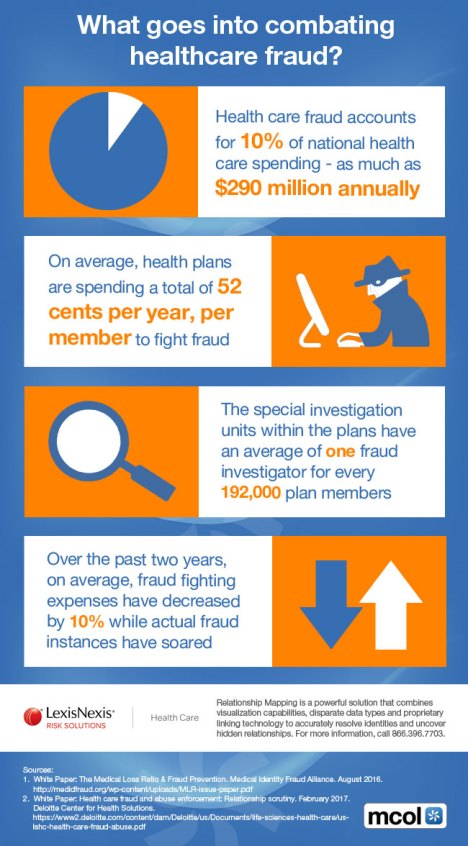
Combating Healthcare Fraud?

By http://www.MCOL.com

In Healthcare Plans and Accounts

***

 graphoid042617

***

Conclusion

Your thoughts and comments on this ME-P are appreciated. Feel free to review our top-left column, and top-right sidebar materials, links, URLs and related websites, too. Then, subscribe to the ME-P. It is fast, free and secure.

Speaker: If you need a moderator or speaker for an upcoming event, Dr. David E. Marcinko; MBA – Publisher-in-Chief of the Medical Executive-Post – is available for seminar or speaking engagements. Contact: MarcinkoAdvisors@msn.com

OUR OTHER PRINT BOOKS AND RELATED INFORMATION SOURCES:

Risk Management, Liability Insurance, and Asset Protection Strategies for Doctors and Advisors: Best Practices from Leading Consultants and Certified Medical Planners™      Risk Management, Liability Insurance, and Asset Protection Strategies for Doctors and Advisors: Best Practices from Leading Consultants and Certified Medical Planners™

***

Ten Fascinating [Medical-Technical-Commercial] Things

Ten Fascinating Things

By MIT Technology Review

  1. Doctors have kept fetal lambs alive in plastic artificial wombs for weeks, a technology that could soon help improve the care of premature babies.
  2. Google is tweaking its search algorithms and adding new reporting tools in order to help tackle fake news and offensive content.
  3. One of the best ways to learn is to ask someone for advice when you’re confused—which is exactly what this robot is able to do.
  4. Uber has ambitiously promised that its flying taxi vision will become a reality by 2020. (Relatedly: is it time we stopped calling these things flying cars?).
  5. By using lasers to identify the distinctive noises made by the beating wings of mosquitos, researchers might be able to find new ways to fight malaria.
  6. Boston Dynamics, the manufacturer of many a nightmarish robot, has been testing its mechanical dog, Spot, for package delivery in Boston.
  7. These tiny finger wearables let people touch what’s not there in virtual reality.
  8. Tiny water droplets in fog scatter light, making it impossible for us to see. But a new trick could overcome that to help lidar work better in extreme weather.
  9. China has built and launched its first ever homegrown aircraft carrier—a very public flex of its increasingly advanced technological muscle.
  10. An artificial intelligence scriptwriter produced every line for David Hasselhoff to act out in this very strange short short film. It’s as surreal as it sounds.

***

***

Conclusion

Your thoughts and comments on this ME-P are appreciated. Feel free to review our top-left column, and top-right sidebar materials, links, URLs and related websites, too. Then, subscribe to the ME-P. It is fast, free and secure.

Speaker: If you need a moderator or speaker for an upcoming event, Dr. David E. Marcinko; MBA – Publisher-in-Chief of the Medical Executive-Post – is available for seminar or speaking engagements. Contact: MarcinkoAdvisors@msn.com

OUR OTHER PRINT BOOKS AND RELATED INFORMATION SOURCES:

On Economic Information Avoidance

“Your reality is not my reality”

By Rick Kahler CFP®

As a young girl my daughter once told me, “Dad, your reality is not my reality.” While at the time I thought it was a cute quip, many years later I am still learning the depth of truth it contains.

One recent reminder is a study published in the Journal of Economic Literature by Russell Golman, David Hagmann, and George Loewenstein of Carnegie Mellon University. Their research found that “information avoidance” is one of the leading reasons people often have widely varying views of what seem like inarguable facts.

Take the issue of well-being, which includes our financial, physical, and emotional health. There is no lack of pertinent data, research, and information available to us that could enhance our well-being. Almost anything we would want to know about making sound financial decisions, maximizing our physical health, improving our relationships, and living a fulfilled life is available with a Google search.

Interrogatory?

Why, then, would 75% of Americans have to borrow or sell something to raise $1,000 cash? Why are two-thirds of Americans overweight? Why do millions suffer from depression?

According to a March 10, 2017, article at ScienceDaily.com about the Carnegie Mellon study, people make use of very little of the information available to them. In fact, we deliberately avoid information that would enhance our well-being. Why? Because we perceive that information which conflicts with our beliefs or perception of reality will actually threaten what happiness and well-being we perceive we have. It’s reminiscent of the line, “Please don’t confuse me with the facts.”

Loewenstein maintains that if we view things logically,

“. . . people should seek out information that will aid in decision making, should never actively avoid information, and should dispassionately update their views when they encounter new valid information. But people often avoid information that could help them to make better decisions if they think the information might be painful to receive.”

Example:

For example, take one component of financial well-being, becoming financially independent by age 65. If people want to believe they are on track to accomplish this, but fear having to make restrictive and painful adjustments to their current lifestyle if they are not, they may be reluctant to even contact a financial professional to find out the true state of their finances. Instead, we will often grasp at questionable beliefs like, “I will just continue to work in retirement,” even though the evidence shows that only 21% of people are able to work after age 65.

Even when some people find information that conflicts with their tightly held beliefs, they often ignore the information by discounting the source or motivations. “You can’t believe everything you read,” is a common way we discount conflicting information.

Information avoidance can not only harm our individual well-being, it also plays a part in harming our societal well-being. Says Hagmann, “An implication of information avoidance is that we do not engage effectively with those who disagree with us.” Avoiding both people and information that don’t align with our biases is one driver of the political polarization currently splitting the U.S.

He goes on to say, “Bombarding people with information that challenges their cherished beliefs—the usual strategy that people employ in attempts at persuasion—is more likely to engender defensive avoidance than receptive processing.”

***

***

Assessment

My years of experience with clients certainly supports the futility of trying to help people change their financial behavior by telling them what they “should” know or do. Instead, it is far more useful to listen to their beliefs, fears, and goals, and to suggest options and offer encouragement to help them discover their own paths toward financial well-being. 

Conclusion

Your thoughts and comments on this ME-P are appreciated. Feel free to review our top-left column, and top-right sidebar materials, links, URLs and related websites, too. Then, subscribe to the ME-P. It is fast, free and secure.

Speaker: If you need a moderator or speaker for an upcoming event, Dr. David E. Marcinko; MBA – Publisher-in-Chief of the Medical Executive-Post – is available for seminar or speaking engagements. Contact: MarcinkoAdvisors@msn.com

OUR OTHER PRINT BOOKS AND RELATED INFORMATION SOURCES:

Risk Management, Liability Insurance, and Asset Protection Strategies for Doctors and Advisors: Best Practices from Leading Consultants and Certified Medical Planners™8Comprehensive Financial Planning Strategies for Doctors and Advisors: Best Practices from Leading Consultants and Certified Medical Planners™

***