







 Support our online development, and advance our onground research initiatives in free market economics, as we seek to showcase the brightest Next-Gen minds.
THE ME-P DISCLAIMER: Posts, comments and opinions do not necessarily represent iMBA, Inc., but become our property after submission. Copyright © 2006 to-date. iMBA, Inc allows colleges, universities, medical and financial professionals and related clinics, hospitals and non-profit healthcare organizations to distribute our proprietary essays, photos, videos, audios and other documents; etc. However, please review copyright and usage information for each individual asset before submission to us, and/or placement on your publication or web site. Attestation references, citations and/or back-links are required. All other assets are property of the individual copyright holder.
Support our online development, and advance our onground research initiatives in free market economics, as we seek to showcase the brightest Next-Gen minds.
THE ME-P DISCLAIMER: Posts, comments and opinions do not necessarily represent iMBA, Inc., but become our property after submission. Copyright © 2006 to-date. iMBA, Inc allows colleges, universities, medical and financial professionals and related clinics, hospitals and non-profit healthcare organizations to distribute our proprietary essays, photos, videos, audios and other documents; etc. However, please review copyright and usage information for each individual asset before submission to us, and/or placement on your publication or web site. Attestation references, citations and/or back-links are required. All other assets are property of the individual copyright holder.


With Apologies to Flickr
By ME-P Staff Reporters
A New Feature Launch [Beta]
We are proud to introduce an exciting new Medical Executive-Post feature called the ME-Pr. Our goal is to aggregate and help subscribers make their blog related photographs available to those in our ecosystem who appreciate them; comical or sad, interesting or ironic, shocking or banal; or just plain iconoclastic. We hope ME-Pr will make these things possible … and more! To do this, we want you to send us your photos and videos so we can post, redact and make them searchable.
ME-Pr Rules of Engagement
1. You must own your photos or videos.
2. We reserve the right to post them, or not.
3. These terms and conditions may change without notice.
4. You must be a ME-P subscriber.

Assessment
So, check us out daily to stay apprised of the latest developments. The fact that you’ve read this post with nothing but text to keep your interested is our proof-of-concept. What are you waiting for?
Ann at: MarcinkoAdvisors@msn.com
SAMPLE
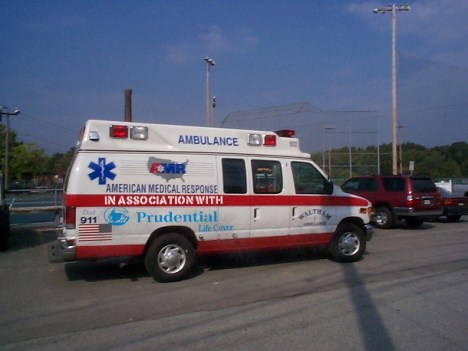
The irony of this Prudential insurance logo on an ambulance in Waltham, a city in Middlesex, MA, is obvious and very cheesy!
Conclusion
And so, your thoughts and comments on this Medical Executive-Post are appreciated. Feel free to review our top-left column, and top-right sidebar materials, links, URLs and related websites, too. Then, be sure to subscribe to the ME-P. It is fast, free and secure.
Link: http://feeds.feedburner.com/HealthcareFinancialsthePostForcxos
Speaker: If you need a moderator or speaker for an upcoming event, Dr. David E. Marcinko; MBA – Publisher-in-Chief of the Executive-Post – is available for seminar or speaking engagements. Contact: MarcinkoAdvisors@msn.com
Get our Widget: Get this widget!
Our Other Print Books and Related Information Sources:
Practice Management: http://www.springerpub.com/prod.aspx?prod_id=23759
Physician Financial Planning: http://www.jbpub.com/catalog/0763745790
Medical Risk Management: http://www.jbpub.com/catalog/9780763733421
Healthcare Organizations: www.HealthcareFinancials.com
Health Administration Terms: www.HealthDictionarySeries.com
Physician Advisors: www.CertifiedMedicalPlanner.com
Share this:

Filed under: Breaking News | Tagged: ME-Pr, photo sharing | 1 Comment »



 The Leading Business Education Network for Doctors, Financial Advisors and Health Industry Consultants