






 Support our online development, and advance our onground research initiatives in free market economics, as we seek to showcase the brightest Next-Gen minds.
THE ME-P DISCLAIMER: Posts, comments and opinions do not necessarily represent iMBA, Inc., but become our property after submission. Copyright © 2006 to-date. iMBA, Inc allows colleges, universities, medical and financial professionals and related clinics, hospitals and non-profit healthcare organizations to distribute our proprietary essays, photos, videos, audios and other documents; etc. However, please review copyright and usage information for each individual asset before submission to us, and/or placement on your publication or web site. Attestation references, citations and/or back-links are required. All other assets are property of the individual copyright holder.
Support our online development, and advance our onground research initiatives in free market economics, as we seek to showcase the brightest Next-Gen minds.
THE ME-P DISCLAIMER: Posts, comments and opinions do not necessarily represent iMBA, Inc., but become our property after submission. Copyright © 2006 to-date. iMBA, Inc allows colleges, universities, medical and financial professionals and related clinics, hospitals and non-profit healthcare organizations to distribute our proprietary essays, photos, videos, audios and other documents; etc. However, please review copyright and usage information for each individual asset before submission to us, and/or placement on your publication or web site. Attestation references, citations and/or back-links are required. All other assets are property of the individual copyright holder.


Two Emerging Medical Business Models
[By Dr. David Edward Marcinko; MBA, CMP™]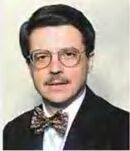
Last year, nurse-executive Hope Hetico; RN, MHA from www.MedicalBusinessAdvisors.com and I wrote a chapter on physician compensation for the book Practicing Medicine in the 21st Century. The book was edited by David B. Nash; MD, MBA of Jefferson Medical College, in Philadelphia. One of us [DEM] attended medical school at Temple University, so David clearly does not hold a grudge against us. Nevertheless, in the publication, we identified these two emerging trends that have grown even stronger with the passage of time:
Values Based Health Insurance Model
According to Mark Fendrick, MD and Michael E. Chernew, PhD, instead of the one size fits all approach of traditional health insurance, a “clinically-sensitive” cost-sharing system that supports co-payments related to evidence-based value for targeted patients seems plausible.
In this model, out-of-pocket costs are based on price and a cost/quality tradeoff in clinical circumstances: low co-payments for interventions of highest value, and higher co-payments for interventions with little proven health benefit. Smarter benefit packages are designed to combine disease management with cost sharing to address spending growth.
Medical Tourism and the Global Healthcare Model
American businesses are extending their cost-cutting initiatives to include offshore employee medical benefits, and facilities like the Bumrungrad Hospital in Bangkok Thailand (cosmetic surgery), and the Apollo Hospital in New Delhi India (cardiac and orthopedic surgery) which are premier examples for surgical care. Both are internationally recognized institutions that resemble five-star hotels equipped with the latest medical technology. Countries such as Finland, England and Canada are also catering to the English-speaking crowd, while dentistry is especially popular in Mexico and Costa Rica.
Although this is still considered “medical tourism,” Mercer Health and Benefits was recently retained by three Fortune 500 companies interested in contracting with offshore hospitals and JCAHO has accredited 88 foreign hospitals through a joint international commission. To be sure, when India can discount costs up to 80%, the effects on domestic hospital reimbursement and physician compensation may be assumed to increase downward compensation pressures.
Assessment
Another commentator on this topic is hospitalist Robert Wachter, MD; a blogger at Wachter’s World.
Channel Surfing the ME-P
Have you visited our other topic channels? Established to facilitate idea exchange and link our community together, the value of these topics is dependent upon your input. Please take a minute to visit. And, to prevent that annoying spam, we ask that you register. It is fast, free and secure.
Conclusion
Your thoughts and comments on this ME-P are appreciated. Feel free to review our top-left column, and top-right sidebar materials, links, URLs and related websites, too. Then, subscribe to the ME-P. It is fast, free and secure.
Speaker: If you need a moderator or speaker for an upcoming event, Dr. David E. Marcinko; MBA – Publisher-in-Chief of the Medical Executive-Post – is available for seminar or speaking engagements. Contact: MarcinkoAdvisors@msn.com
OUR OTHER PRINT BOOKS AND RELATED INFORMATION SOURCES:
- PRACTICES: www.BusinessofMedicalPractice.com
- HOSPITALS: http://www.crcpress.com/product/isbn/9781466558731
- CLINICS: http://www.crcpress.com/product/isbn/9781439879900
- ADVISORS: www.CertifiedMedicalPlanner.org
- FINANCE: Financial Planning for Physicians and Advisors
- INSURANCE: Risk Management and Insurance Strategies for Physicians and Advisors
- Dictionary of Health Economics and Finance
- Dictionary of Health Information Technology and Security
- Dictionary of Health Insurance and Managed Care


Share this:

Filed under: Book Reviews, Career Development, Health Economics, Health Insurance, Healthcare Finance, Managed Care, Media Mentions and PR, Op-Editorials, Practice Management | Tagged: David Nash, Hetico, Marcinko, Mark Fendrick, medical tourism, Robert M. Wachter |
 The Leading Business Education Network for Doctors, Financial Advisors and Health Industry Consultants
Wachter Speaks on Medical Tourism,
According to blogger and quality guru Robert Wachter MD;
“ … in the end, the flattening of healthcare is inevitable. And, while it will be controversial, it may also represent the kind of shakeup our system requires if it is ever to deliver the value Americans need and deserve …”
-Hope Hetico; RN, MHA
http://www.CertifiedMedicalPlanner.com
LikeLike
Medical Quality Gurus … Giants,
I couldn’t agree with Hope, Ann, Dr. Bob Wachter and Dr. Dave Marcinko more.
John Wennberg’s disciples at Dartmouth are coming out with so many uncomfortable facts for the healthcare industrial complex, that it’s hard to keep count.
Medical tourism, CDHPs, fee and complication rate transparency, and market competition, etc., are all just the beginning.
And, Wennberg started it all by introducing the notion of practice variation 30 years ago. His group is now turbo-charging its research production, and basically all of it is bad news for anyone pretending that “American health care is the best in the world”.
To paraphrase Uwe Reinhardt PhD, of Princeton, how can the American healthcare – not be as good as American health care?
Rachel Pentin-Maki; RN, MHA
http://www.HealthcareFinancials.com
http://www.CertifiedMedicalPlanner.com
http://www.HealthDictionarySeries.com
LikeLike
Here is a new list on the 10 best hospitals for medical tourism:
http://www.healthcarefinancenews.com/news/alliance-names-10-best-hospitals-medical-travel
Samantha
LikeLike