
Seriously?
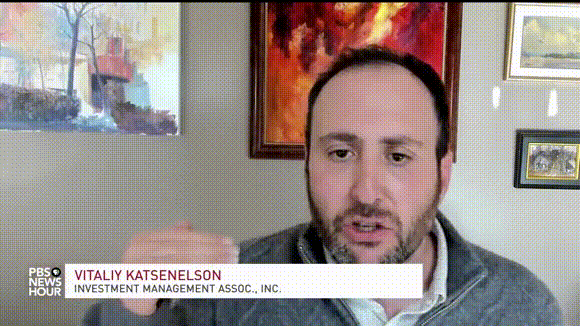
[By Vitaliy N. Katsenelson, CFA]
 I never thought I’d be giving writing advice. I was always the worst student in my literature class in Russia. I never received a grade higher than a C on any Russian essay I ever wrote. I have a theory that my teachers got sick of reading and grading my horrible essays, so they stopped and automatically gave me a passing grade out of pity. I don’t blame them.
When I came to the U.S., my grades in English class in college were not spectacular either; in fact, English was the only class I failed in college and actually had to retake my senior year.
My writing has improved slightly since then – and you, my loyal readers, get to be the judge of my scribbles. However, if the prequalification for giving writing advice was based solely on quantity – on how many words have blackened a perfectly fine white screen or besmirched innocent paper – then I am more than qualified. I have been at it for exactly a decade.
My writing “career” started in 2004 when I was hired as a writer by TheStreet.com. I was not hired because I was good – I wasn’t. But I had an investing background, and TheStreet.com was not very picky; it needed warm bodies (ideally with CFA next to their names) to comment on the markets and stocks. TheStreet.com paid almost nothing, and it was overpaying me.
I had zero experience, but I was ambitious. I took writing very seriously, and therefore my articles were serious. They were filled with big words, and, quite frankly, they were enormously boring. In addition, I was extremely self-conscious about grammar. Sentence structure and punctuation drove me nuts, and I was afraid of confusing words that were spelled similarly but had unrelated meanings (like comma and coma).
***

***
LESSONS LEARNED
This brings me to the first lesson that I want to impart about writing, and it’s one that will drive English teachers insane: Don’t worry about grammar.
Once I stopped worrying about grammar, I felt a huge weight lifted from my shoulders (as all those little punctuation marks emptied themselves from my brain). I completely gave up on a, an and the (my 12-year-old son, who was born here, does a great job fixing those for me), I stopped obsessing about commas (and comas), and I stopped trying to ferret out all the other marvelous secrets of English grammar. I let copy editors – who are very talented and oh so skilled at this – catch me out in all my little peccadilloes. Instead I channel my energy into making writing interesting and funny (if appropriate); this is Lesson No. 2.There are a lot of smart investors, and a lot of them write (just visit the web site Seeking Alpha), but only a small fraction manage to make their writing interesting (again, just visit Seeking Alpha) – and those are the ones who are read more than once.
As I mentioned, when I started writing, my articles were technical and boring. I still feel sorry for the people who read them and especially for my dear friends who felt an obligation to read them.
Then an accident happened. Six months into writing for TheStreet.com, I wrote about the digital video recorder company TiVo. In that article I dared to use a little bit of humor to describe a painful experience I had when I called TiVo’s automated telephone customer service, which did not seem to understand my “slight” Russian accent. To my embarrassment, I had to ask my three-year-old son, who by that time had already acquired a perfect “Disney” accent, to talk to the machine instead, and of course it understood him just fine.
That article was not brilliant – it contained as many or as few insights as my previous articles did – but it was not “proper,” and it was not boring. Suddenly, the feedback from readers was much different – I received a ton of e-mail. Then I understood the power of humor. But it was not just humor: I was able to deliver my otherwise boring message in an interesting way.
I realized that knowing what you want to say is not enough; you need to figure out how to say it.
To this day, I spend hours staring at the computer, trying to come up with an interesting analogy or a compelling angle on how to say something I already know. I often use analogies to tell a story, especially if the topic is complex. They help me relate complex ideas through simple examples.
Let me illustrate. I have a very smart investor friend of German ancestry. True to his roots, he is very efficient in everything he does. (I am stereotyping here, but why not?) He has written a very smart investment book. If you read the whole thing, you’d learn a lot. But that is a big if. His book is as efficient and properly structured as you would expect from a well-engineered German car or an instruction manual for that car. It doesn’t have an extra word or a superfluous sentence. But unfortunately, in the process of making it efficient, he sterilized his book. I was excited to read it but could not get past Chapter 3. I got terminally bored, and I do investments for a living.
Oh, and while we’re on the subject of boredom: Follow novelist Elmore Leonard’s advice when he said, “I try to leave out the parts that people skip.” Don’t try to be descriptive for the sake of being descriptive.
Andrew Blum in 2012 wrote a terrific book called Tubes: A Journey to the Center of the Internet . However, in his other life Andrew is a reporter who covers architecture. His job is to describe inanimate objects. In Tubes he often goes into “descriptive mode,” telling us all about things that do not need to be described. For example, at one point he falls into an exhaustive description of the hotel he stayed in near the Los Angeles International Airport. The hotel room had nothing to do with the story, but he went on and on, describing bars of soap, their colors, the plate they were on and how the sunlight bounced off each one of them.
After making it through the third chapter, I gave up and downloaded the audiobook of Tubes. So maybe Andrew succeeded after all, since I ended up buying two versions of his book. (And I do highly recommend listening to his book if you want to learn about the Internet.)
It took a while for my writing style to develop. A big part of its development came through reading great writers. The two people who had the most impact on me were John Mauldin and Cliff Asness.
John needs no introduction, as his economics newsletter (Mauldin Economics) is read by millions. He has a gift for explaining complex investment topics simply, but he also invites you into his life. He shares stories about the trips he takes and the people he meets; he talks about his kids and their travails, his lack of time for the gym and his penchant for cooking mushrooms. When you read him, you feel as if he’s writing for you – just you. This is different from fiction writing, in which the author’s fingerprints are hidden.
Cliff Asness has had a tremendous impact on me as well. Cliff is a hedge fund manager; he runs the large quant firm AQR Capital Management in Greenwich, Connecticut. Cliff has an incredible gift for being witty. Back in 2005 I read a paper by Cliff discussing the most boring topic on earth: the expensing of employee stock options. At the time, companies did not consider them an expense. Cliff argued that the companies were wrong and needed to show the options on their income statements, just like any other expense.
I had written on the same topic just a few months before, making a similar point. But after I read his paper, I sent Cliff an e-mail with the subject line “I am not worthy.” Cliff’s paper was published in the most boring finance magazine in the whole universe: Financial Analysts Journal (every article in it is full of geeky Greek symbols). To my astoundment, Cliff was able to inject humor where I thought it was not possible. I wrote a very boring, unmemorable article on stock options; Cliff wrote a great, funny article on the same topic that I still remember today.
John Mauldin showed me through his writing that it’s okay to be personal, and Cliff proved it is okay to be funny. No, Cliff proved that you must be funny when you discuss boring topics – this is how you make the reader stick with it. Lesson No. 3: Identify your favorite writers, the ones whose voices you can really relate to, and learn from them.
I could relate to John’s and Cliff’s writings because they fit my personality and my natural writing style. They liberated me from being sanitized, impersonal and boring.
A sublesson here is, Read to write. When you read, always have your writer’s hat on, and pay attention not just to content but to the quality of the writing as well. That is not something that comes automatically to most of us; we have to manually hit the “on” switch.
Lesson No. 4: Be respectful of your environment. This is not an ecological statement; I am talking about your writing environment. If you write long enough, you start to appreciate the importance of your external and internal environment. Stephen King, in his terrific book On Writing: A Memoir on the Craft , said that he listens to heavy metal band AC/DC when he writes; he feels it walls him off from the external world and helps him build his own worlds. I listen to classical music, and if I am really stuck, I start listening to opera.
And if that weren’t weird enough, I write only in italics. This little trick makes my letters look a bit friendlier to me. If you find that you like your font to be pink, go for it. We writers need any edge we can get, and you can always change back to a color and format that is acceptable to society when you are done.
The final lesson: Be prepared for pain – or maybe not. Writing is a very personal process. Some of us are great thinkers, able to puzzle through very complex ideas in our heads and lay them out logically on paper. I have tremendous respect for those lucky ones. For most of us, present company included, writing is usually a painful endeavor that involves staring at a blank screen for hours on end and writing and rewriting multiple times.
In fact, let me take it a step farther: I think through writing. A quote from George Bernard Shaw comes to mind: “Few people think more than two or three times a year; I have made an international reputation for myself by thinking once or twice a week.”
If you ask me a question about something I have not thought about before, even if you give me a minute to think about it, my answer will usually, well … suck. I have not written about that topic yet, and so I may not have thought it through, and the logical links may not have been made. That’s just how my mind operates.
Quite frankly, I am embarrassed for my brain. It’s like the dirty apartment of a confirmed bachelor, with unwashed clothes, empty pizza boxes and beer bottles all over the floor. For an idea to be developed to the point at which it can leave the room, I have to clean it up, organize it, put things in their rightful place. That is why I write – sorry, dear reader, it’s not about you; it’s about me, me and me again.
***

***
More:
ASSESSMENT
Writing is not a linear process, and when you sit down to write, your thoughts may not be quite ready to come out – it’s okay if they just haven’t come to a boil yet. Don’t blame it on writer’s block. Author Tom Clancy once said, “Writer’s block is just an official term for being lazy, and the way to get through it is work.” Just take some time off, do something fun and then get back on the writing horse.
ABOUT
Vitaliy N. Katsenelson, CFA, is Chief Investment Officer at Investment Management Associates in Denver, Colo. He is the author of The Little Book of Sideways Markets (Wiley, December 2010). To receive Vitaliy’s future articles by email or read his articles click here.
Investment Management Associates Inc. is a value investing firm based in Denver, Colorado. Its main focus is on growing and preserving wealth for private investors and institutions while adhering to a disciplined value investment process, as detailed in Vitaliy’s book Active Value Investing (Wiley, 2007).
Conclusion
Your thoughts and comments on this ME-P are appreciated. Feel free to review our top-left column, and top-right sidebar materials, links, URLs and related websites, too. Then, subscribe to the ME-P. It is fast, free and secure.
Speaker: If you need a moderator or speaker for an upcoming event, Dr. David E. Marcinko; MBA – Publisher-in-Chief of the Medical Executive-Post – is available for seminar or speaking engagements. Contact: MarcinkoAdvisors@msn.com
OUR OTHER PRINT BOOKS AND RELATED INFORMATION SOURCES:

Filed under: Career Development, Experts Invited, iMBA, Investing, Op-Editorials | Tagged: Andrew Blum, AQR Capital Management, Elmore Leonard, TheStreet.com, Vitaliy N. Katsenelson, writing advice | 1 Comment »







 Support our online development, and advance our onground research initiatives in free market economics, as we seek to showcase the brightest Next-Gen minds.
THE ME-P DISCLAIMER: Posts, comments and opinions do not necessarily represent iMBA, Inc., but become our property after submission. Copyright © 2006 to-date. iMBA, Inc allows colleges, universities, medical and financial professionals and related clinics, hospitals and non-profit healthcare organizations to distribute our proprietary essays, photos, videos, audios and other documents; etc. However, please review copyright and usage information for each individual asset before submission to us, and/or placement on your publication or web site. Attestation references, citations and/or back-links are required. All other assets are property of the individual copyright holder.
Support our online development, and advance our onground research initiatives in free market economics, as we seek to showcase the brightest Next-Gen minds.
THE ME-P DISCLAIMER: Posts, comments and opinions do not necessarily represent iMBA, Inc., but become our property after submission. Copyright © 2006 to-date. iMBA, Inc allows colleges, universities, medical and financial professionals and related clinics, hospitals and non-profit healthcare organizations to distribute our proprietary essays, photos, videos, audios and other documents; etc. However, please review copyright and usage information for each individual asset before submission to us, and/or placement on your publication or web site. Attestation references, citations and/or back-links are required. All other assets are property of the individual copyright holder.












 The Leading Business Education Network for Doctors, Financial Advisors and Health Industry Consultants