







 Support our online development, and advance our onground research initiatives in free market economics, as we seek to showcase the brightest Next-Gen minds.
THE ME-P DISCLAIMER: Posts, comments and opinions do not necessarily represent iMBA, Inc., but become our property after submission. Copyright © 2006 to-date. iMBA, Inc allows colleges, universities, medical and financial professionals and related clinics, hospitals and non-profit healthcare organizations to distribute our proprietary essays, photos, videos, audios and other documents; etc. However, please review copyright and usage information for each individual asset before submission to us, and/or placement on your publication or web site. Attestation references, citations and/or back-links are required. All other assets are property of the individual copyright holder.
Support our online development, and advance our onground research initiatives in free market economics, as we seek to showcase the brightest Next-Gen minds.
THE ME-P DISCLAIMER: Posts, comments and opinions do not necessarily represent iMBA, Inc., but become our property after submission. Copyright © 2006 to-date. iMBA, Inc allows colleges, universities, medical and financial professionals and related clinics, hospitals and non-profit healthcare organizations to distribute our proprietary essays, photos, videos, audios and other documents; etc. However, please review copyright and usage information for each individual asset before submission to us, and/or placement on your publication or web site. Attestation references, citations and/or back-links are required. All other assets are property of the individual copyright holder.


By Staff Reporters
SPONSOR: http://www.MarcinkoAssociates.com
DEFINITION
***
***
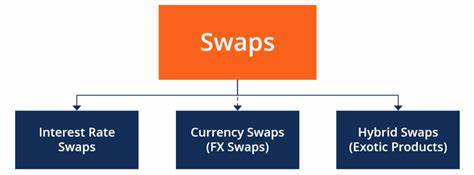
Swaps (a.k.a. swap agreements) are two-party contracts entered into primarily by institutional investors for periods ranging from a few weeks to more than one year.
In a standard “swap” transaction, two parties agree to exchange the returns (or differentials in rates of return) earned or realized on particular predetermined investments or instruments. The gross returns to be exchanged or “swapped” between the parties are generally calculated with respect to a “notional amount,” i.e., the return on or increase in value of a particular dollar amount invested at a particular interest rate, in a particular foreign currency, or in a “basket” of securities representing a particular index.
Forms of swap agreements include interest rate swaps (under which fixed- or floating-rate interest payments on a specific principal amount are exchanged) and total return swaps (under which one party agrees to pay the other the total return of a defined underlying asset in exchange for fee payments).
In addition, credit default swaps enable an investor to buy/sell protection against a credit event of a specific issuer. The seller of credit protection against a security or basket of securities receives an up-front or periodic payment to compensate against potential default(s).
COMMENTS APPRECIATED
Thank You
***
***
Share this:

Filed under: "Ask-an-Advisor", Financial Planning, Funding Basics, Glossary Terms, iMBA, Inc., Investing, Marcinko Associates | Tagged: credit default swaps, economics, economy, finance, hybrid swaps, interest rate, interest rate swaps, Marcinko, rate swaps, swap transactions, swaps | Leave a comment »
 The Leading Business Education Network for Doctors, Financial Advisors and Health Industry Consultants