







 Support our online development, and advance our onground research initiatives in free market economics, as we seek to showcase the brightest Next-Gen minds.
THE ME-P DISCLAIMER: Posts, comments and opinions do not necessarily represent iMBA, Inc., but become our property after submission. Copyright © 2006 to-date. iMBA, Inc allows colleges, universities, medical and financial professionals and related clinics, hospitals and non-profit healthcare organizations to distribute our proprietary essays, photos, videos, audios and other documents; etc. However, please review copyright and usage information for each individual asset before submission to us, and/or placement on your publication or web site. Attestation references, citations and/or back-links are required. All other assets are property of the individual copyright holder.
Support our online development, and advance our onground research initiatives in free market economics, as we seek to showcase the brightest Next-Gen minds.
THE ME-P DISCLAIMER: Posts, comments and opinions do not necessarily represent iMBA, Inc., but become our property after submission. Copyright © 2006 to-date. iMBA, Inc allows colleges, universities, medical and financial professionals and related clinics, hospitals and non-profit healthcare organizations to distribute our proprietary essays, photos, videos, audios and other documents; etc. However, please review copyright and usage information for each individual asset before submission to us, and/or placement on your publication or web site. Attestation references, citations and/or back-links are required. All other assets are property of the individual copyright holder.


By Dr. David Edward Marcinko; MBA MEd
SPONSOR: http://www.CertifiedMedicalPlanner.org
***
***
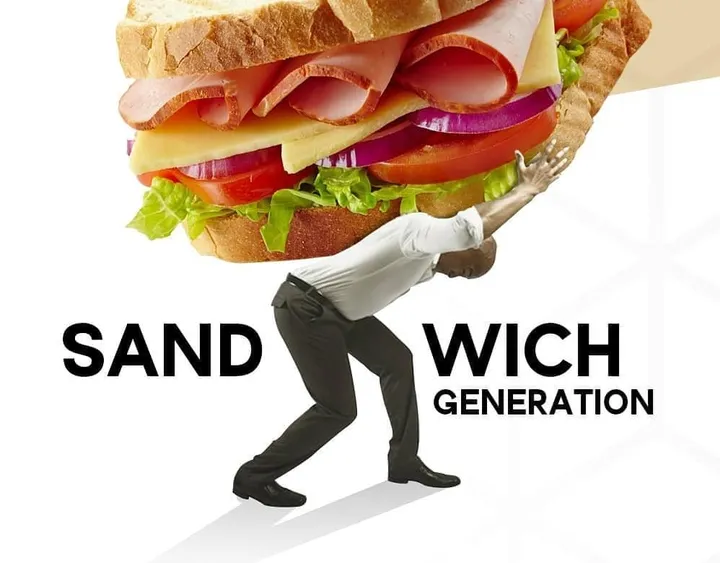
The sandwich generation describes adults who simultaneously support aging parents while still providing financial or caregiving assistance to their own children. This dual responsibility places them squarely between two dependent groups, creating a unique set of economic pressures. Although the emotional dimension of this role is significant, the financial and economic implications are often the most challenging. Understanding these pressures reveals how deeply the sandwich generation is affected by demographic shifts, rising living costs, and structural gaps in social support systems.
At the core of the financial strain is the simple fact that the sandwich generation must stretch resources across multiple households. Many adults in this position are in their peak earning years, yet their income is pulled in several directions. They may be paying for their children’s education, housing, or daily expenses while also covering medical bills, long‑term care costs, or living expenses for their parents. Even when parents have savings, pensions, or insurance, these resources often fall short of the rising costs of healthcare and assisted living. As a result, middle‑aged adults become the financial backstop, absorbing unexpected expenses that can destabilize their own long‑term financial plans.
Healthcare costs are one of the most significant economic burdens. As parents age, they often require specialized medical care, prescription medications, or in‑home assistance. These services can be expensive, and insurance coverage may not fully address the need. The sandwich generation frequently fills the gap, either by paying out of pocket or by reducing their own work hours to provide unpaid care. This reduction in labor participation has long‑term consequences: lower lifetime earnings, reduced retirement savings, and diminished Social Security benefits. The economic impact is not limited to the individual; it also affects the broader labor market when experienced workers scale back or leave the workforce.
At the same time, the cost of raising children has increased dramatically. Housing, childcare, and education expenses have risen faster than wages for many families. Young adults are also taking longer to achieve financial independence due to student debt, high housing costs, and a competitive job market. As a result, parents often continue providing financial support well into their children’s twenties. This extended dependency delays the sandwich generation’s ability to save for retirement or build financial security. The tension between supporting children’s futures and securing their own becomes a defining economic challenge.
Inflation and economic uncertainty further complicate the situation. When everyday expenses rise, the sandwich generation has less flexibility to absorb additional financial shocks. Emergency savings may be depleted quickly, and long‑term investments may be postponed. Many individuals in this group also carry their own debt, such as mortgages, car loans, or student loans from mid‑career education. Balancing these obligations with multigenerational support can create a cycle of financial stress that is difficult to break.
Beyond personal finances, the sandwich generation plays a significant economic role. Their unpaid caregiving labor reduces the burden on public systems and long‑term care facilities. However, this contribution often goes unrecognized in economic metrics. If valued at market rates, the caregiving provided by this group would represent a substantial portion of economic activity. Yet the cost is borne privately, often at the expense of the caregiver’s financial stability. This imbalance highlights gaps in social infrastructure, such as limited access to affordable eldercare, insufficient family leave policies, and inadequate retirement protections.
Despite these challenges, the sandwich generation also demonstrates resilience and adaptability. Many individuals find creative ways to manage financial strain, such as multigenerational living arrangements, shared caregiving responsibilities, or flexible work schedules. Some families openly discuss financial expectations, allowing for more coordinated planning. Others seek financial counseling or long‑term care planning to reduce uncertainty. These strategies do not eliminate the economic pressures, but they help families navigate them more effectively.
Ultimately, the financial and economic aspects of the sandwich generation reflect broader societal trends: longer life expectancy, rising costs of living, and shifting family structures. While individuals bear the immediate burden, the implications extend far beyond personal households. Addressing the needs of the sandwich generation requires a combination of personal planning, workplace flexibility, and policy support that acknowledges the realities of multigenerational care. Without such support, the economic strain on this group will continue to grow, affecting not only their financial security but also the stability of future generations.
COMMENTS APPRECIATED
SPEAKING: Dr. Marcinko will be speaking and lecturing, signing and opining, teaching and preaching, storming and performing at many locations throughout the USA this year! His tour of witty and serious pontifications may be scheduled on a planned or ad-hoc basis; for public or private meetings and gatherings; formally, informally, or over lunch or dinner. All medical societies, financial advisory firms or Broker-Dealers are encouraged to submit an RFP for speaking engagements: CONTACT: Ann Miller RN MHA at MarcinkoAdvisors@outlook.com -OR- http://www.MarcinkoAssociates.com
Like, Refer and Subscribe
HOSPITALS: http://www.crcpress.com/product/isbn/9781466558731
CLINICS: http://www.crcpress.com/product/isbn/9781439879900
ADVISORS: www.CertifiedMedicalPlanner.org
FINANCE:Financial Planning for Physicians and Advisors
INSURANCE:Risk Management and Insurance Strategies for Physicians and Advisors
Dictionary of Health Economics and Finance
Dictionary of Health Information Technology and Security
Dictionary of Health Insurance and Managed Care
***
Share this:

Filed under: iMBA, Inc. | Tagged: economics, family, finance, generation, health, Marcinko, mental health, personal-finance, sandwich | Leave a comment »

