







 Support our online development, and advance our onground research initiatives in free market economics, as we seek to showcase the brightest Next-Gen minds.
THE ME-P DISCLAIMER: Posts, comments and opinions do not necessarily represent iMBA, Inc., but become our property after submission. Copyright © 2006 to-date. iMBA, Inc allows colleges, universities, medical and financial professionals and related clinics, hospitals and non-profit healthcare organizations to distribute our proprietary essays, photos, videos, audios and other documents; etc. However, please review copyright and usage information for each individual asset before submission to us, and/or placement on your publication or web site. Attestation references, citations and/or back-links are required. All other assets are property of the individual copyright holder.
Support our online development, and advance our onground research initiatives in free market economics, as we seek to showcase the brightest Next-Gen minds.
THE ME-P DISCLAIMER: Posts, comments and opinions do not necessarily represent iMBA, Inc., but become our property after submission. Copyright © 2006 to-date. iMBA, Inc allows colleges, universities, medical and financial professionals and related clinics, hospitals and non-profit healthcare organizations to distribute our proprietary essays, photos, videos, audios and other documents; etc. However, please review copyright and usage information for each individual asset before submission to us, and/or placement on your publication or web site. Attestation references, citations and/or back-links are required. All other assets are property of the individual copyright holder.


A McKinsey Global Institute Review
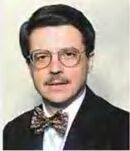
By Nancy Chockley; PhD
President & CEO
NIHCM Foundation
Path breaking work by the McKinsey Global Institute (MGI) shows that, relative to other peer countries from the Organization for Economic Cooperation and Development, the U.S. spends nearly $650 billion more on health care than would be expected after adjusting for cross-country differences in wealth. Fully two-thirds of this added spending occurs in the outpatient sector.
Out-Patient Services
The highly profitable nature of many outpatient services coupled with the incentives of a fee-for-service payment system are contributing to greater intensity of outpatient care and helping to fuel this spending. In this essay, “Why America Spends More on Health Care,” Eric Jensen and Lenny Mendonca describe MGI’s work to examine all sectors of the American health care system and identify factors responsible for the higher-than-expected spending.
More Examples
Other recent Expert Voices essays on health reform include:
- Jonathan Gruber, PhD, Professor of Economics, Massachusetts Institute of Technology, “The Role of Individual Mandates in Health Reform” (January 2009).
- Paul N. Van de Water, PhD, Senior Fellow, Center on Budget and Policy Priorities. “Scoring Health Legislation” (April 2009).
- Mark Fendrick, MD, University of Michigan Medical Center and Michael Chernew, PhD, Harvard Medical School, June 2009. “Value Based Insurance Design” (June 2009).
- I hope you enjoy reading this essay and those that follow.
Channel Surfing

Have you visited our other topic channels? Established to facilitate idea exchange and link our community together, the value of these topics is dependent upon your input. Please take a minute to visit. And, to prevent that annoying spam, we ask that you register.
Link: http://feeds.feedburner.com/HealthcareFinancialsthePostForcxos
Speaker: If you need a moderator or speaker for an upcoming event, Dr. David E. Marcinko; MBA – Publisher-in-Chief of the Executive-Post – is available for seminar or speaking engagements. Contact: MarcinkoAdvisors@msn.com
Get our Widget: Get this widget!
Our Other Print Books and Related Information Sources:
Practice Management: http://www.springerpub.com/prod.aspx?prod_id=23759
Physician Financial Planning: http://www.jbpub.com/catalog/0763745790
Medical Risk Management: http://www.jbpub.com/catalog/9780763733421
Healthcare Organizations: www.HealthcareFinancials.com
Health Administration Terms: www.HealthDictionarySeries.com
Physician Advisors: www.CertifiedMedicalPlanner.com
Subscribe Now: Did you like this Medical Executive-Post, or find it helpful, interesting and informative? Want to get the latest ME-Ps delivered to your email box each morning? Just subscribe using the link below. You can unsubscribe at any time. Security is assured.
Link: http://feeds.feedburner.com/HealthcareFinancialsthePostForcxos
Sponsors Welcomed
And, credible sponsors and like-minded advertisers are always welcomed.
Link: https://healthcarefinancials.wordpress.com/2007/11/11/advertise
Share this:

Filed under: Breaking News, Health Economics, Health Insurance, Health Law & Policy, Healthcare Finance, Op-Editorials, Research & Development | Tagged: Eric Jensen, Expert Voices, Harvard Medical School, Jonathan Gruber, Lenny Mendonca, Mark Fendrick, McKinsey Global Institute, Michael Chernew, Michigan Medical Center, MIT, Nancy Chockley, NIHCM, NIHCM Foundation, Paul N. Van de Water | 3 Comments »

 The Leading Business Education Network for Doctors, Financial Advisors and Health Industry Consultants