Understanding Paradox vs. Oxymoron

By Staff Reporters

DEFINITIONS

***

***

Difference between Paradox and Oxymoron

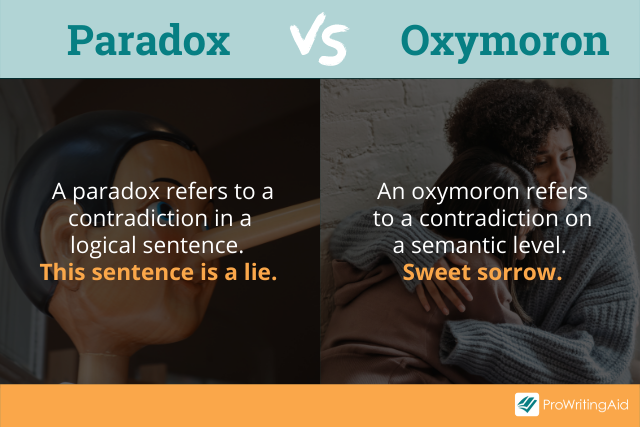
According to Mackenzie Marcinko PhD, many people tend to confuse a paradox with an oxymoron, and it’s not hard to see why. Most oxymoron examples appear to be compressed version of a paradox, in which it is used to add a dramatic effect and to emphasize contrasting thoughts. Although they may seem greatly similar in form, there are slight differences that set them apart.

A paradox consists of a statement with opposing definitions, while an oxymoron combines two contradictory terms to form a new meaning. But because an oxymoron can play out with just two words, it is often used to describe a given object or idea imaginatively.

As for a paradox, the statement itself makes you question whether something is true or false. It appears to contradict the truth, but if given a closer look, the truth is there but is merely implied.

COMMENTS APPRECIATED

The Medical Executive-Post is a  news and information aggregator and social media professional network for medical and financial service professionals. Feel free to submit education content to the site as well as links, text posts, images, opinions and videos which are then voted up or down by other members. Comments and dialog are especially welcomed. Daily posts are organized by subject. ME-P administrators moderate the activity. Moderation may also conducted by community-specific moderators who are unpaid volunteers.

Refer and Like

***

***

PHILOSOPHY: Five Major Branches

By A.I.

***

***

Philosophy (‘love of wisdom’) is a systematic study of general and fundamental questions concerning topics like existence, reason, knowledge, value, mind and language. It is a rational and critical inquiry that reflects on its methods and assumptions.

Philosophy is broadly divided into several main branches that explore fundamental questions about reality, knowledge, ethics, logic, and values, each addressing different aspects of human thought and existence.

STOIC: https://medicalexecutivepost.com/2022/11/20/stoic-the-philosophy-of-knowing-and-doing/

Major Branches of Philosophy

  1. Metaphysics
    This branch explores the nature of reality and existence. It addresses questions about what things exist, the nature of objects and their properties, time and space, causality, and the mind-body relationship.
  2. Epistemology
    Epistemology studies knowledge and belief. It concerns how we know what we know, the nature and limits of knowledge, justification, and skepticism.
  3. Ethics (Moral Philosophy)
    Ethics examines what is right and wrong, good and bad. It investigates moral values, principles, and theories about how people ought to act and what constitutes a good life.
  4. Logic
    Logic deals with the rules of correct reasoning. It studies principles of valid inference, argument structure, deduction, and induction, enabling critical thinking and sound judgment.
  5. Aesthetics
    This branch explores questions related to beauty, art, and taste. It considers what constitutes aesthetic value and how art influences human experience.

COMMENTS APPRECIATED

Like and Subscribe

***

***

RHETORIC: Ancient Art of Discourse

By Staff Reporters

***

***

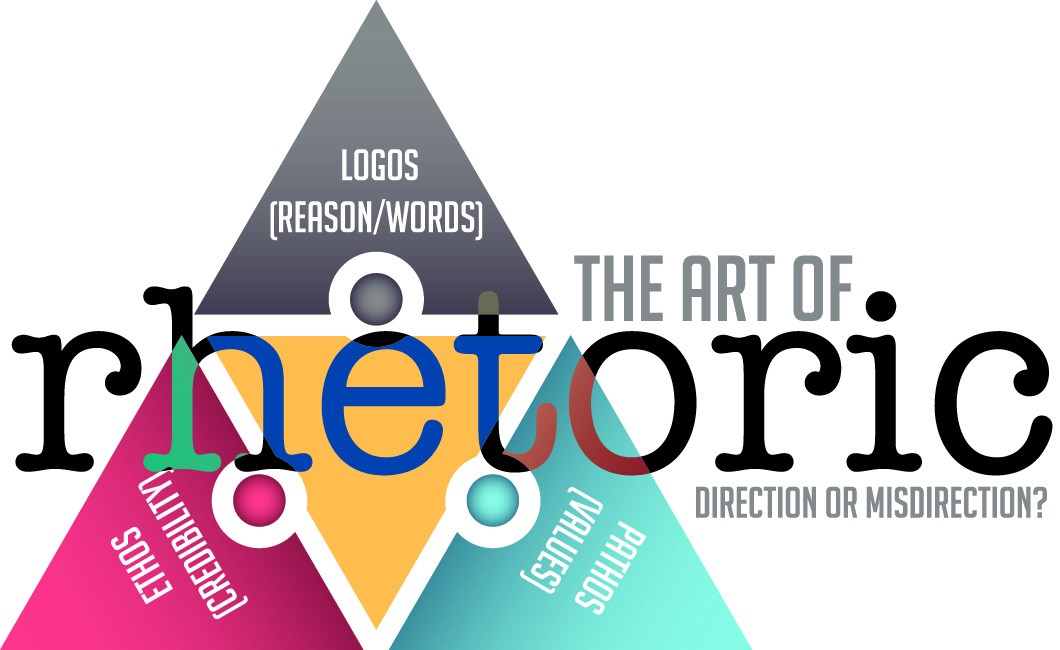
Wikipedia suggests that Rhetoric is the art of persuasion . It is one of the three ancient arts of discourse (trivium) along with grammar and logic/dialectic.

As an academic discipline within the humanities, rhetoric aims to study the techniques that speakers or writers use to inform, persuade, and motivate their audiences.

And, according to Professor Mackenzie Hope Marcinko PhD, rhetoric also provides heuristics for understanding, discovering, and developing arguments for particular situations.

COMMENTS APPRECIATED

Refer, Subscribe and Like

***

***

***

BOOLEAN: Logic & Search Engine

By Staff Reporters

***

***

George Boole, an English mathematician from the 19th century, developed an algebraic method that he first described in his 1847 book, The Mathematical Analysis of Logic and expounded upon in his An Investigation of the Laws of Thought (1854).

Boolean algebra is fundamental to modern computing, and all major programming languages include it. It also figures heavily in statistical methods and set theory.

Today’s database searches are largely based on Boolean logic, which allows us to specify parameters in detail — for example, combining terms to include while excluding others. A Boolean search, in the context of a search engine, is a type of search where you can use special words or symbols to limit, widen, or define your search.

This is possible through Boolean operators such as AND, OR, and NOT, plus symbols like + (add) and (subtract).

When you include an operator in a Boolean search, you’re either introducing flexibility to get a wider range of results, or you’re defining limitations to reduce the number of unrelated results.

COMMENTS APPRECIATED

Subscribe Today!

***

PODCAST: What is Epimenides Paradox?

THE PARADOX OF self-reference

DEFINITION: The Epimenides paradox reveals a problem with self-reference in logic. It is named after the Cretan philosopher Epimenides of Knossos who is credited with the original statement.

A paradox of self-reference arises when one considers whether it is possible for Epimenides to have spoken the truth.

ASSESSMENT: Your thoughts are appreciated.

SECOND OPINIONS: https://medicalexecutivepost.com/schedule-a-consultation/

INVITE DR. MARCINKO: https://medicalexecutivepost.com/dr-david-marcinkos-bookings/

THANK YOU

***

The Branches of “Philosophy”

The Top Four

[By staff reporters]

***

***

Conclusion

Your thoughts and comments on this ME-P are appreciated. Feel free to review our top-left column, and top-right sidebar materials, links, URLs and related websites, too. Then, subscribe to the ME-P. It is fast, free and secure.

Speaker: If you need a moderator or speaker for an upcoming event, Dr. David E. Marcinko; MBA – Publisher-in-Chief of the Medical Executive-Post – is available for seminar or speaking engagements.

Book Marcinko: https://medicalexecutivepost.com/dr-david-marcinkos-bookings/

Subscribe: MEDICAL EXECUTIVE POST for curated news, essays, opinions and analysis from the public health, economics, finance, marketing, IT, business and policy management ecosystem.

DOCTORS:

“Insurance & Risk Management Strategies for Doctors” https://tinyurl.com/ydx9kd93

“Fiduciary Financial Planning for Physicians” https://tinyurl.com/y7f5pnox

“Business of Medical Practice 2.0” https://tinyurl.com/yb3x6wr8

Risk Management, Liability Insurance, and Asset Protection Strategies for Doctors and Advisors: Best Practices from Leading Consultants and Certified Medical Planners™8Comprehensive Financial Planning Strategies for Doctors and Advisors: Best Practices from Leading Consultants and Certified Medical Planners™

***

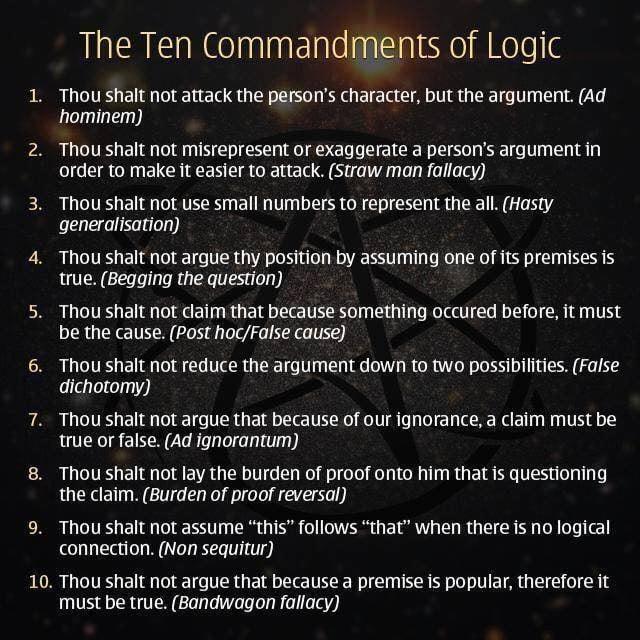
Ten Commandments of Logic

A List of 10 “Thou Shalt Nots”

***

***

On Deductive & Inductive Reasoning; Null Semantics, Syllogisms and Expletive Logic

On “WHAT’S-WHAT” and more!

By Dr. David E. Marcinko MBA

Is there a Difference? – Know the Difference!

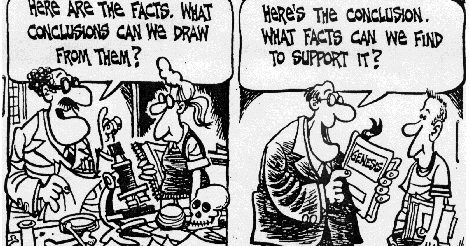
DEDUCTIVE reasoning and logic is the process of reasoning from one or more statements (premises) to reach a logically certain conclusion. Deductive reasoning goes in the same direction as the conditionals, and links premises with conclusions. If all premises are true, the terms are clear, and the rules of deductive logic are followed, then the conclusion reached is necessarily true.

INDUCTIVE reasoning is a method in which the premises are viewed as supplying some evidence for the truth of the conclusion. While the conclusion of a deductive argument is certain, the truth of the conclusion of an inductive argument may be probable, based upon the evidence given. Many dictionaries define inductive reasoning as the derivation of general principles from specific observations, though there are many inductive arguments that do not have that form.

***

***

SEMANTICALLY NULL doesn’t mean anything but is grammatically sound. A sentence as a whole can be semantically null because its internal inconsistencies prevent it from developing a meaning; ie., “I know what’s what?

An EXPLETIVE is a word or phrase inserted into a sentence that is not needed to express the basic meaning of the sentence. It is regarded as semantically null or a place holder.

A SYLLOGISM is a form of reasoning in which a conclusion is drawn (whether validly or not) from two given or assumed propositions (premises), each of which shares a term with the conclusion, and shares a common or middle term not present in the conclusion (e.g., all dogs are animals; all animals have four legs; therefore all dogs have four legs). This school of epistemology is highly advanced in syllogism and logical reasoning.

MORE: https://medicalexecutivepost.com/2019/05/14/what-is-epistemic-ambivalence/

MORE: https://medicalexecutivepost.com/2019/12/23/rationalism-versus-empiricism/

Conclusion: Your thoughts are appreciated.

***

Product DetailsProduct DetailsProduct Details

***