Health Data Breaches Multiplying

Join Our Mailing List

YET – Fines Remain Rare

By Charles Ornstein @charlesornstein

[ProPublica]

Federal health watchdogs say they are cracking down on organizations that don’t protect the privacy and security of patient records, but data suggests otherwise.

***

Fines Remain Rare Even As Health Data Breaches Multiply

***

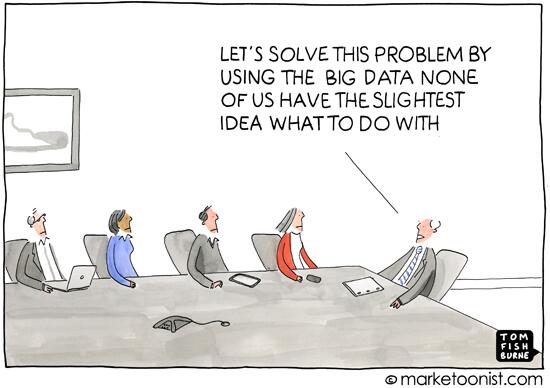
data

***

Channel Surfing the ME-P

Have you visited our other topic channels? Established to facilitate idea exchange and link our community together, the value of these topics is dependent upon your input. Please take a minute to visit. And, to prevent that annoying spam, we ask that you register. It is fast, free and secure.

More:

Even More:

Conclusion

Your thoughts and comments on this ME-P are appreciated. Feel free to review our top-left column, and top-right sidebar materials, links, URLs and related websites, too. Then, subscribe to the ME-P. It is fast, free and secure.

Speaker: If you need a moderator or speaker for an upcoming event, Dr. David E. Marcinko; MBA – Publisher-in-Chief of the Medical Executive-Post – is available for seminar or speaking engagements. Contact: MarcinkoAdvisors@msn.com

OUR OTHER PRINT BOOKS AND RELATED INFORMATION SOURCES:

Product Details

Product DetailsProduct Details

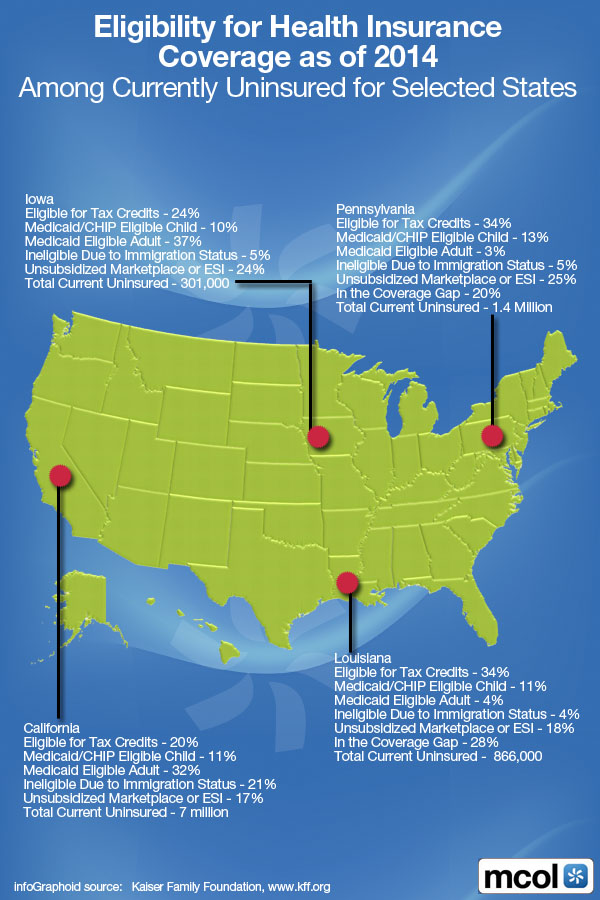
Eligibility for Health Insurance Coverage as of 2014

Join Our Mailing List

Among the Currently Un-insured for Selected United States

By www.MCOL.com

Eligibility

Conclusion

Your thoughts and comments on this ME-P are appreciated. Feel free to review our top-left column, and top-right sidebar materials, links, URLs and related websites, too. Then, subscribe to the ME-P. It is fast, free and secure.

Link: http://feeds.feedburner.com/HealthcareFinancialsthePostForcxos

Speaker: If you need a moderator or speaker for an upcoming event, Dr. David E. Marcinko; MBA – Publisher-in-Chief of the Medical Executive-Post – is available for seminar or speaking engagements. Contact: MarcinkoAdvisors@msn.com

OUR OTHER PRINT BOOKS AND RELATED INFORMATION SOURCES:

DICTIONARIES: http://www.springerpub.com/Search/marcinko
PHYSICIANS: www.MedicalBusinessAdvisors.com
PRACTICES: www.BusinessofMedicalPractice.com
HOSPITALS: http://www.crcpress.com/product/isbn/9781466558731
CLINICS: http://www.crcpress.com/product/isbn/9781439879900
BLOG: www.MedicalExecutivePost.com
FINANCE: Financial Planning for Physicians and Advisors
INSURANCE: Risk Management and Insurance Strategies for Physicians and Advisors

Product DetailsProduct Details

Product Details


Did the NSA End Obamacare?

Join Our Mailing List

Did ambitious NSA officials unintentionally end Obamacare years ago?

[By D. Kellus Pruitt DDS]

1-darrellpruittIf loss of trust in encryption ends Obamacare, can whistleblower Edward Snowden be blamed for that as well? Yep.

What’s even more ominous, the former National Security Agency contractor’s news that encrypted medical records are no longer secure reached Alaska on a weekend.

“Risky electronic health records: Alaska should make information exchange system safer – Imagine: The National Security Agency slips into your doctor’s office and peeks at your medical records,”

by Alaska ACLU executive director Joshua Decker was posted hours ago on Newsminer.com, out of Fairbanks.

http://www.newsminer.com/opinion/community_perspectives/risky-electronic-health-records-alaska-should-make-information-exchange-system/article_a9947eb0-1863-11e3-8153-001a4bcf6878.html

Decker questions the security of the state’s Health Information Exchange (HIE), and offers common sense but costly steps which arguably lessen the danger of privacy breaches – including giving patients the choice of “opting-in” to permit their encrypted, but increasingly vulnerable identities to be shared online via Obamacare’s exchanges.

My POV 

In my opinion, if informed Americans are given the choice of volunteering to risk identity theft, HIEs won’t be around a year from now, and neither will Obamacare. If informed Americans are not given a choice, the costs are even greater. Americans deserve honesty.

National Obamacare Hangs in the Balance

In a related, slow-burning game-changer, Obamacare hangs in the balance, not just for Alaska, but for the nation.

It was September 5th when the Guardian Weekly posted: “Revealed: how US and UK spy agencies defeat internet privacy and security,” written by James Ball, Julian Borger and Glenn Greenwald, and based on top secret NSA information Snowden stole.

http://www.theguardian.com/world/2013/sep/05/nsa-gchq-encryption-codes-security

Snowden told the Guardian that years ago, the NSA joined with the UK’s spy agency GCHQ (Government Communications Headquarters) to successfully make encryption obsolete – including for medical records.

Naturally, if properly informed Americans fear that secrets they tell their doctors might be breached, incorrect EHRs become less than worthless. They become dangerous.

More on Health Information Exchanges

What’s more, even before the added expense of waiting for Americans to opt-in to the exchanges – instead of discouraging them from opting-out – the very funding for the increasingly-battered Obamacare is based on a rumor of savings.

Starting years ago, health IT lobbyists, including former Speaker of the House Newt Gingrich, told lawmakers to expect annual savings of $77 billion and 100,000 lives – quoting the results of a once popular, EHR-friendly 2005 RAND study which was funded by General Electric and Cerner Corporation.

Obamacare

As you can see, while we were not paying attention, we were had!

The RAND Study

Predictably, both GE and Cerner profited immensely from the development and sales of EHR systems before the RAND study was widely discredited months ago – even by RAND.

According to a NY Times article from January, “Cerner’s revenue has nearly tripled since the report was released, to a projected $3 billion in 2013, from $1 billion in 2005.”

(See: “In Second Look, Few Savings From Digital Health Records by Reed Abelson and Julie Creswell, January 10, 2013).

http://www.nytimes.com/2013/01/11/business/electronic-records-systems-have-not-reduced-health-costs-report-says.html?_r=0

Assessment

Last weekend’s bad news for Obamacare is still under the radar, but I predict within days it will become apparent that the mounting obstacle between President Obama and healthcare reform will be in regaining trust his administration squandered while helping GE and Cerner profits at the expense of soon-to-be pissed off American patients.

Conclusion

Your thoughts and comments on this ME-P are appreciated. Feel free to review our top-left column, and top-right sidebar materials, links, URLs and related websites, too. Then, subscribe to the ME-P. It is fast, free and secure.

Link: http://feeds.feedburner.com/HealthcareFinancialsthePostForcxos

Speaker: If you need a moderator or speaker for an upcoming event, Dr. David E. Marcinko; MBA – Publisher-in-Chief of the Medical Executive-Post – is available for seminar or speaking engagements. Contact: MarcinkoAdvisors@msn.com

OUR OTHER PRINT BOOKS AND RELATED INFORMATION SOURCES:

DICTIONARIES: http://www.springerpub.com/Search/marcinko
PHYSICIANS: www.MedicalBusinessAdvisors.com
PRACTICES: www.BusinessofMedicalPractice.com
HOSPITALS: http://www.crcpress.com/product/isbn/9781466558731
CLINICS: http://www.crcpress.com/product/isbn/9781439879900
BLOG: www.MedicalExecutivePost.com
FINANCE: Financial Planning for Physicians and Advisors
INSURANCE: Risk Management and Insurance Strategies for Physicians and Advisors

Product DetailsProduct Details

Challenging a Naive eDR Advocate

An Open Letter to Dr. Margaret Scarlett

By D. Kellus Pruitt; DDS

For the last few weeks, I’ve been challenging a naive EDR advocate. They are becoming increasingly hard to find. Here is what I posted today on her blog.

Dear Dr. Margaret Scarlett

This open conversation on your Medscape Connect blog not only alerts the nation to the possibility of imminent failure of interoperability in post-computerized dentistry, but it also features dialogue introducing potential solutions around otherwise insurmountable problems the industry is encountering.

http://boards.medscape.com/forums?128@884.9VVBadZEUsj@.2a077212!comment=1

Courageous 

A forum such as yours that invites frank discussion about the faults of EDRs is almost unprecedented and entirely politically-incorrect. But then, that is why it is incredibly meaningful. Thank you for your courage, Dr. Scarlett.

Collegial

Let’s keep it collegial but challenging.

First of all, in your April 21st response, you justifiably expressed concern that EHR/fax hybrids might increase danger of data breaches over the incredible risk that already exists in digitalized healthcare. I assume that now that you know more about cloud-based companies such as Sfax, you agree that your security concern is unfounded. Fax, telephone and the US Mail will always be more secure than the internet – an often-forgotten fact. Any arguments?

A large part of your response concerned interoperability and aggregation problems that will be easily solved by the Health Information Exchanges (HIE) and EHR/fax companies. Why would their product not be seamless like any other digital transmission? From our perspective as dentists, your concern is a non-issue. Anything that can be printed on paper can come up on a computer screen and vice versa. Fortunately for our patients, you and I don’t have to worry ourselves about the technological magic of common office equipment.

I just have to say that when I read about your concern for “dependence on ink supplies, phone connections, or the availability of personnel to handle pieces of papers without any mistakes,” I noticed you didn’t say anything about saving the forests and paper cuts. Quite frankly, I think even you recognize that these lame arguments against a new idea are disingenuous stretches. Who’s to say there will be fewer keystroke errors on digital records than paper? See what I mean?

Lastly, in your April 21st response, you seem to suggest that unless the vast majority of dentists spend tens of thousands of dollars to purchase EDRs which will raise the cost of the care they provide, huge pools of data stored in HIEs that you claim somehow “assure patient-centered care,” will not be available to dentistry. You’ve got to be kidding. How many years away is that science? Let me repeat: Dental patients are fortunate that EDRs are going nowhere because of dentists’ solid business reasons in the land of the free. Until EDR advocates base sales claims on evidence rather than hearsay, they are only entertaining themselves with the fantasy.

Assessment 

I only wish the anonymous EHR experts in the ADA who are quietly influencing lawmakers would step out and introduce themselves to the community they serve. Can you think of any possible reason that the ADA can’t answer a few questions about what they have been doing on our behalf. Or should that not concern dentists?

Conclusion

And so, your thoughts and comments on this ME-P are appreciated. Feel free to review our top-left column, and top-right sidebar materials, links, URLs and related websites, too. Then, subscribe to the ME-P. It is fast, free and secure.

Link: http://feeds.feedburner.com/HealthcareFinancialsthePostForcxos

Speaker: If you need a moderator or speaker for an upcoming event, Dr. David E. Marcinko; MBA – Publisher-in-Chief of the Medical Executive-Post – is available for seminar or speaking engagements. Contact: MarcinkoAdvisors@msn.com

Our Print Books and Related Information Sources:

Health Dictionary Series: http://www.springerpub.com/Search/marcinko 

Practice Management: http://www.springerpub.com/product/9780826105752

Physician Financial Planning: http://www.jbpub.com/catalog/0763745790

Medical Risk Management: http://www.jbpub.com/catalog/9780763733421

Healthcare Organizations: www.HealthcareFinancials.com

Physician Advisors: www.CertifiedMedicalPlanner.com

Subscribe Now: Did you like this Medical Executive-Post, or find it helpful, interesting and informative? Want to get the latest ME-Ps delivered to your email box each morning? Just subscribe using the link below. You can unsubscribe at any time. Security is assured.

Link: http://feeds.feedburner.com/HealthcareFinancialsthePostForcxos

Sponsors Welcomed: And, credible sponsors and like-minded advertisers are always welcomed.

Link: https://healthcarefinancials.wordpress.com/2007/11/11/advertise

Product DetailsProduct DetailsProduct Details       

Product Details  Product Details

   Product Details 

On Regional Extension Centers [RECs]

Join Our Mailing List

Another New Governmental Machination?

[By Staff Reporters]

A Regional (health information) Extension Center [REC] is similar to a Health Information Organization [HIO] that brings together healthcare stakeholders within a defined geographic area and governs Health Information Exchange [HIE] among them for the purpose of improving health and care in that community.

Fundamental to this definition is the meaning of Health Information Exchange and Health Information Organization. A Health Information Organization (HIO) is an organization that oversees and governs the exchange of health-related information among organizations according to nationally recognized standards.

Thus, the goal of an REC is to act as a local support organization to help doctors install electronic health records and use them to achieve improved quality, efficiency, and continuity of care.

Past and Present

The RECs are based on the example of agricultural extension offices, established over 100 years ago by Congress, which offered rural outreach and educational services across the country.

Today, the HITECH Act amends Title XXX of the Public Health Service Act by adding Section 3012, Health Information Technology Implementation Assistance. This section provides supportive services for the rest of the HITECH Act. Section 3012 (a) establishes the Health Information Technology Extension Program (Extension Program). The Extension Program provides grants for the establishment of Health Information Technology 

Assessment

Link: Regional Extension Center

Link: http://www.chhs.ca.gov/initiatives/HealthInfoEx/Documents/SUMMIT%20DOCUMENTS/RECSummitSlides_FinalDraft-7-15.pdf

Link: HIT Extension Program – Regional Centers Cooperative Agreement Program

Conclusion

Your thoughts and comments on this ME-P are appreciated. Feel free to review our top-left column, and top-right sidebar materials, links, URLs and related websites, too. Then, subscribe to the ME-P. It is fast, free and secure.

Link: http://feeds.feedburner.com/HealthcareFinancialsthePostForcxos

Speaker: If you need a moderator or speaker for an upcoming event, Dr. David E. Marcinko; MBA – Publisher-in-Chief of the Medical Executive-Post – is available for seminar or speaking engagements. Contact: MarcinkoAdvisors@msn.com

OUR OTHER PRINT BOOKS AND RELATED INFORMATION SOURCES:

Product DetailsProduct Details

Product Details

New-Wave Medical Quality Resources

Beyond Traditional Administrative Databases

Staff Reporters

ho-journal15Physician blogger, and Harvard University CTO, John Halamka MD recently opined about some emerging new medical quality data sources for the industry.

Traditional Sources

As all ME-P subscribers know, traditional data sources are derived from, and usually include, administrative claims data information aggregated from many sources and silos.

www.HealthcareFinancials.com

Emerging Sources

But, newer sources of data for medical quality analysis go beyond administrative data and includes electronic repositories like eHRs, PHRs, eMRs and Healthcare Information Exchange [HIE] resources, where available.

www.HealthDictionarySeries.com

Assessment

For a few more examples:

Link: http://www.thehealthcareblog.com/the_health_care_blog/2009/02/index.html

Conclusion

And so, your thoughts and comments on this Medical Executive-Post, and original post, are appreciated.

Are these database silos secure, and do patients know that, or how, their hopefully blinded information is redacted and used?  Will the health insurance industry use this information to further “slice and dice” ratings levels for their insured’s? Will it then be securitized, re-aggregated and resold again for non-healthcare related purposes like home, auto or life insurance; or other yet to be developed risk-management products and services?

Is this transparent and fair to patients? What are the legal and ethical implications, if any? Thought leaders please opine?

Speaker: If you need a moderator or speaker for an upcoming event, Dr. David E. Marcinko; MBA – Publisher-in-Chief of the Executive-Post – is available for seminar or speaking engagements. Contact: MarcinkoAdvisors@msn.com  or Bio: www.stpub.com/pubs/authors/MARCINKO.htm

Get our Widget: Get this widget!

Our Other Print Books and Related Information Sources:

Practice Management: http://www.springerpub.com/prod.aspx?prod_id=23759

Physician Financial Planning: http://www.jbpub.com/catalog/0763745790

Medical Risk Management: http://www.jbpub.com/catalog/9780763733421

Healthcare Organizations: www.HealthcareFinancials.com

Health Administration Terms: www.HealthDictionarySeries.com

Physician Advisors: www.CertifiedMedicalPlanner.com

Get our Widget: Get this widget!

Subscribe Now: Did you like this Medical Executive-Post, or find it helpful, interesting and informative? Want to get the latest E-Ps delivered to your email box each morning? Just subscribe using the link below. You can unsubscribe at any time. Security is assured.

Link: http://feeds.feedburner.com/HealthcareFinancialsthePostForcxos

A National Health Insurance Proposal

Transitioning from HIE-to-HIE

Join Our Mailing List 

Staff Reporters

Did you know that according to the New York Times, on November 12, 2008, Senator Max Baucus (D- Montana) would eventually require everyone – not just children – to have health insurance coverage, with federal subsidies for those who could not otherwise afford it, and possible enforcement through the federal tax-system?

The Proposed Health Insurance Exchange

The proposal would create a nationwide “health insurance exchange” [HIE] where people could compare and buy insurance policies, with an option of private insurance and a new public plan similar to Medicare. Insurers could not deny coverage to people who had been sick, and would be limited in their ability to charge higher premiums because of a person’s age or prior illness.

Adults also Insured

Adults aged 55 to 64 would be able to buy Medicare coverage if they do not have access to a public insurance program or a group health plan; Medicaid would be available to everyone below the poverty level. The State Children’s Health Insurance Program [SCHIP] would also be expanded to cover all uninsured youngsters in families with incomes at or below 250 percent of the poverty level; and legal immigrants would no longer be barred from Medicaid and the children’s health program in their first five years in the United States.

Small Business Assistance

The plan would also offer tax credits to small businesses to help them defray the costs of providing health benefits to employees, and would offer tax credits to individuals and families with incomes at or below four times the poverty level who buy coverage on their own.

Assessment

According to the Dictionary of Health Information and Technology, a health information exchange [HIE] may be defined as:

the mobilization of healthcare information electronically across organizations within a region, community or national infrastructure; especially disparate systems with the aim to facilitate access to – and retrieval of – clinical data to provide safer, more timely, efficient, effective, equitable, patient-centered care.

So, now it seems that we may be progressing from a health information exchange, to a health insurance exchange [www.HealthDictionarySeries.com]

Conclusion

What do you think? As always, your thoughts and comments on this Executive-Post are appreciated.

Speaker:If you need a moderator or speaker for an upcoming event, Dr. David E. Marcinko; MBA – Publisher-in-Chief of the Executive-Post – is available for seminar or speaking engagements. Contact: MarcinkoAdvisors@msn.com  or Bio: www.stpub.com/pubs/authors/MARCINKO.htm

Our Other Print Books and Related Information Sources:

Practice Management: http://www.springerpub.com/prod.aspx?prod_id=23759

Physician Financial Planning: http://www.jbpub.com/catalog/0763745790

Medical Risk Management: http://www.jbpub.com/catalog/9780763733421

Healthcare Organizations: www.HealthcareFinancials.com

Health Administration Terms: www.HealthDictionarySeries.com

Physician Advisors: www.CertifiedMedicalPlanner.com


Product DetailsProduct DetailsProduct Details