End of Life Care Programs
By Dean G. Smith PhD and the Accounting Workgroup

An alternative to traditional medical resource costing is ‘price adjustment’. In an international context, this method compares the monetary estimates of resource used, after adjustment for price level differences between countries and over time to standard current values. In order to attempt comparisons of different cost estimates, analysts must be at least certain as to what items are included in costs and whether costs are being based on opportunity costs, charges, or average costs.
Medicare Cost-to-Charge Ratios
In the US context, the price adjustment approach underlies the use of Medicare Cost-to-Charge Ratios (CCR). Costs are estimated using the CCR approach by multiplying the number of units of each procedure billed by its Medicare charge and CCR and then summing these costs. Some health care organizations have begun to invest in sophisticated, computerized cost-accounting systems (CAS) that are capable of providing procedure-specific cost estimates, usually based on relative value units, but these systems often rely on billing data to obtain service units.

The Studies
A couple of studies have used a combination of CCR and CAS to estimate costs (costs to the institution – costs to Medicare are the Medicare charges). In both studies, the CAS was for hospital costs only, with Medicare reimbursement (not institution costs) being used for professional services by using relative value units and a conversion factor from the Medicare Fee Schedule.
Inaccuracy
To overcome the issues of inaccurately (or non-transparently) measuring resource units, it has become more common in clinical trials (a distinct sub-set of possible study methods) to develop case report forms to capture all study end points, including medical service use. These studies then translate medical service use into costs using standard charges or costs, or a series of representative data sets of charges or costs, to the resource units. These methods have become so common that all submissions to the British Medical Journal are required to document methods using a 35-part form that includes items such as: part 16) Quantities of resources are reported separately from their unit costs; part 17) Methods for the estimation of quantities and unit costs are described; part 18) Currency and price data are recorded; and part 19) Details of currency of price adjustments for inflation or currency conversion are given.
Following these guidelines, a Michigan-based study is collecting data through a resource use data collection form and applying to standard costs per unit of service to produce costs for a RWJ-sponsored palliative care program.
Not the Usual Medical Care
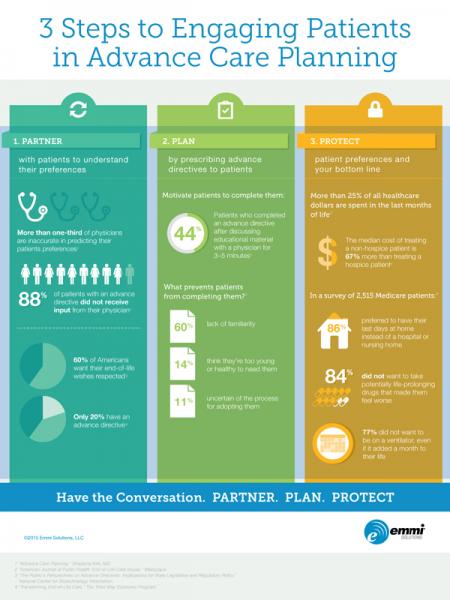
There are a few studies on the costs and cost-effectiveness of end of life programs or the impact of serious illness on patient’s families. Those studies that do evaluate end of life care programs are usually small in scope, compare the end of life program (e.g., as in hospice) to “usual care,” or have no comparison group, or do not evaluate the costs of the program.
Assessment
Criticisms of studies of only one medical resource/cost item often surround the total costs of care – suggesting that the use of focused studies may not be well received. In fact, even studies that capture the total costs of medical care services are criticized for not capturing the indirect costs – family expenses on end of life care are substantial and are not factored into most cost-analysis studies. Very few studies try to capture all costs to enable adjustments of costs for selection processes that may influence resource use.
Editor’s Note: Accounting workgroup members:
1 Stephen Seninger PhD: Professor, Bureau of Business and Economic Research, University of Montana, Missoula, MT
2 Ira Byock, MD: Director, Promoting Excellence in End of Life Care, Practical Ethics Center, University of Montana, Missoula, MT
3 Carol D’Onofrio,DrPH: Research Director, Sutter Visiting Nurse Association & Hospice, Piedmont, CA
4 Jennifer Elston-Lafata PhD: Director, Center for Health Services Research, Henry Ford Health System, Detroit, MI
5 Joe Engelhardt PhD: Research Coordinator, Life Institute VA Medical Center, Albany, NY
6 Carol A. Lockhart PhD: Project Director, Phoenix Care, Hospice of the Valley, Phoenix, AZ
7 Steven H. Miles MD: Professor of Medicine, Center for Bioethics, University of Minnesota, Minneapolis, MN
8 Herbert A. Rosefield: Corrections Care Consultant, Volunteers of America, Raleigh, NC
9 Anne M. Wilkinson PhD:Senior Health Policy Analyst, RAND, Arlington, VA
10 Barbara Volk-Craft RN, MBA Program Manager: Phoenix Care, Hospice of the Valley, Phoenix, AZ
11 Dean G. Smith, PhD Professor and Chair, Department of Health Management & Policy, University of Michigan, Ann Arbor, MI
Conclusion
Your thoughts and comments on this ME-P are appreciated. Feel free to review our top-left column, and top-right sidebar materials, links, URLs and related websites, too. Then, subscribe to the ME-P. It is fast, free and secure.
Speaker: If you need a moderator or speaker for an upcoming event, Dr. David E. Marcinko; MBA – Publisher-in-Chief of the Medical Executive-Post – is available for seminar or speaking engagements. Contact: MarcinkoAdvisors@msn.com
OUR OTHER PRINT BOOKS AND RELATED INFORMATION SOURCES:

***
Filed under: Accounting, Health Economics, Healthcare Finance, Research & Development | Tagged: CCR, computerized cost-accounting systems, Cost-to-Charge Ratios, Dean G. Smith PhD, End of Life Care, medicare, Medicare Fee Schedule, Price Adjustment Medical Costing | 1 Comment »






 Support our online development, and advance our onground research initiatives in free market economics, as we seek to showcase the brightest Next-Gen minds.
THE ME-P DISCLAIMER: Posts, comments and opinions do not necessarily represent iMBA, Inc., but become our property after submission. Copyright © 2006 to-date. iMBA, Inc allows colleges, universities, medical and financial professionals and related clinics, hospitals and non-profit healthcare organizations to distribute our proprietary essays, photos, videos, audios and other documents; etc. However, please review copyright and usage information for each individual asset before submission to us, and/or placement on your publication or web site. Attestation references, citations and/or back-links are required. All other assets are property of the individual copyright holder.
Support our online development, and advance our onground research initiatives in free market economics, as we seek to showcase the brightest Next-Gen minds.
THE ME-P DISCLAIMER: Posts, comments and opinions do not necessarily represent iMBA, Inc., but become our property after submission. Copyright © 2006 to-date. iMBA, Inc allows colleges, universities, medical and financial professionals and related clinics, hospitals and non-profit healthcare organizations to distribute our proprietary essays, photos, videos, audios and other documents; etc. However, please review copyright and usage information for each individual asset before submission to us, and/or placement on your publication or web site. Attestation references, citations and/or back-links are required. All other assets are property of the individual copyright holder.











 The Leading Business Education Network for Doctors, Financial Advisors and Health Industry Consultants