Bundle Charitable Giving Through Donor Advised Funds

By Rick Kahler CFP®
With changes to standard and itemized deductions under the new tax law, many CPA’s and tax attorneys are recommending a strategy of bunching or bundling deductible spending into alternate years. I wrote about this approach a few weeks ago.
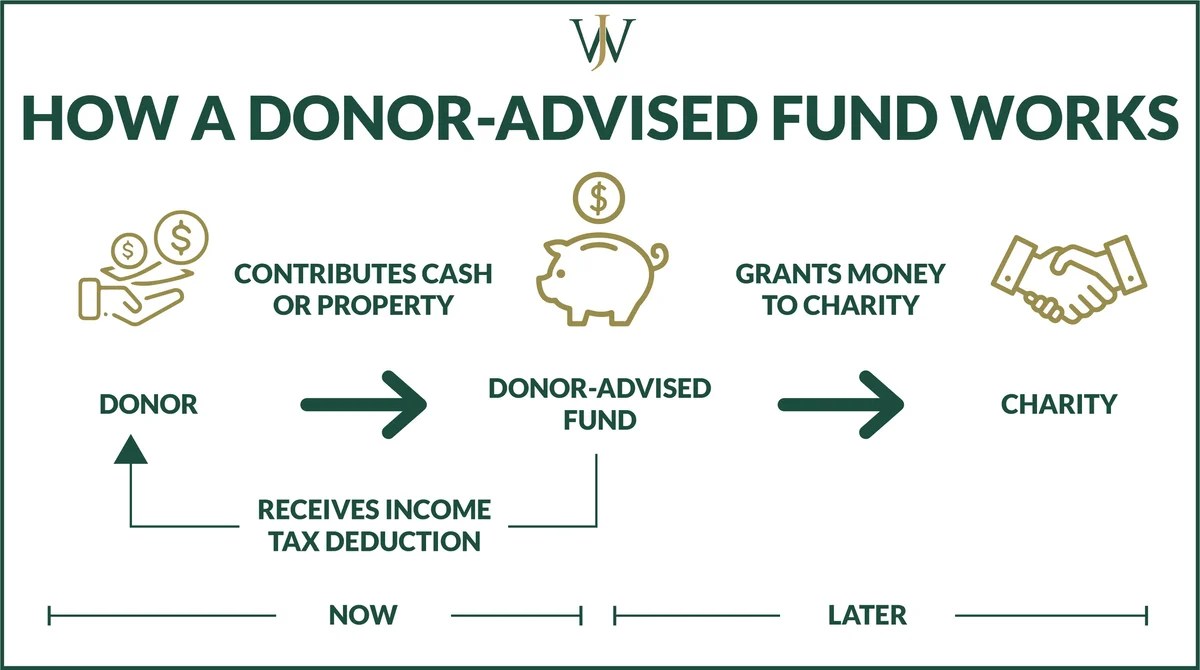
One way to bundle charitable deductions efficiently and effortlessly is through a Donor Advised Fund (DAF).
Here’s how it works
Suppose you budget $15,000 a year for charitable donations. Around half of this goes to local charities you support regularly. The rest you give in different ways, depending on the needs you become aware of throughout the year.
You could double your denotations to charities you support regularly and give directly to them every other year, but you would lessen your ability to give spontaneously. Giving through a DAF allows you to keep that spontaneity. A DAF allows you to make a large, tax-deductible gift in one year, but decide in the future (a day, ten years, or 100 years later) when and how to distribute that gift. The money stays with the DAF, which invests it, until you instruct the DAF to disburse the funds to the charity of your choice.
New tax laws
With the advent of the new tax law, DAFs have become all the rage in charitable giving. According to an article in Advisor Perspectives by Ken Nopar, the senior philanthropic advisor for the American Endowment Foundation, there are now 300,000 DAF accounts. This is twice the number eight years ago and nearly four times the number of private foundations. But all DAFs are not equal, so establishing one should be done only after some thorough investigation.
Some of the areas the article suggests that you explore with your financial planner or tax preparer are:
1. What is the appropriate amount to donate to a DAF account? Donate too much or too little, and you may not realize the maximum benefit from your gift. Be sure to check with your tax preparer.
2. With some DAF sponsors, it’s possible for your financial advisor to continue to manage your assets in well-diversified, low-cost investments. Otherwise, you may be forced to choose from a very limited number of funds with higher expenses—funds your advisor would be unlikely to recommend. Management by your advisor, in many cases, can produce greater returns, actually allowing you to donate more.
3. Investigate these things before choosing a DAF: The fees they charge, whether they appear to have enough staff and experience to administer the DAF properly, how promptly they send out grants, whether they can accept complex assets like appreciated real estate, and whether you could transfer the fund to another DAF sponsor if you should want to do so.
4. Also ask about limitations and requirements. Some DAFs may limit how much you can give each year to individual charities. Others require a certain percentage (sometimes 50% or more) to be donated to the DAF sponsor itself. A DAF’s rules may require the entire balance to be distributed to the DAF sponsor upon a donor’s death.

As Advisor Perspectives notes, many CPAs and attorneys are providing wise advice in recommending that clients establish DAF accounts. It would be a good idea to take that advice one step further and consult your financial advisor first. Otherwise you might end up with a DAF sponsor that may not be the best fit for your needs or those of the charities you support.
Assessment
As good as bundling donations to a DAF can be, don’t make a decision to use one based on the tax advantages alone. Just as with any investment, it’s important to do your research carefully before you write a check.
Conclusion
Your thoughts and comments on this ME-P are appreciated. Feel free to review our top-left column, and top-right sidebar materials, links, URLs and related websites, too. Then, subscribe to the ME-P. It is fast, free and secure.
Speaker: If you need a moderator or speaker for an upcoming event, Dr. David E. Marcinko; MBA – Publisher-in-Chief of the Medical Executive-Post – is available for seminar or speaking engagements.
Book Marcinko: https://medicalexecutivepost.com/dr-david-marcinkos-bookings/
Subscribe: MEDICAL EXECUTIVE POST for curated news, essays, opinions and analysis from the public health, economics, finance, marketing, IT, business and policy management ecosystem.
DOCTORS:
“Insurance & Risk Management Strategies for Doctors” https://tinyurl.com/ydx9kd93
“Fiduciary Financial Planning for Physicians” https://tinyurl.com/y7f5pnox
“Business of Medical Practice 2.0” https://tinyurl.com/yb3x6wr8
HOSPITALS:
“Financial Management Strategies for Hospitals” https://tinyurl.com/yagu567d
“Operational Strategies for Clinics and Hospitals” https://tinyurl.com/y9avbrq5
 8
8
***
Filed under: Estate Planning, Ethics | Tagged: Donor Advised Funds (DAF)., Ken Nopar, Rick Kahler MS CFP® | Leave a comment »







 Support our online development, and advance our onground research initiatives in free market economics, as we seek to showcase the brightest Next-Gen minds.
THE ME-P DISCLAIMER: Posts, comments and opinions do not necessarily represent iMBA, Inc., but become our property after submission. Copyright © 2006 to-date. iMBA, Inc allows colleges, universities, medical and financial professionals and related clinics, hospitals and non-profit healthcare organizations to distribute our proprietary essays, photos, videos, audios and other documents; etc. However, please review copyright and usage information for each individual asset before submission to us, and/or placement on your publication or web site. Attestation references, citations and/or back-links are required. All other assets are property of the individual copyright holder.
Support our online development, and advance our onground research initiatives in free market economics, as we seek to showcase the brightest Next-Gen minds.
THE ME-P DISCLAIMER: Posts, comments and opinions do not necessarily represent iMBA, Inc., but become our property after submission. Copyright © 2006 to-date. iMBA, Inc allows colleges, universities, medical and financial professionals and related clinics, hospitals and non-profit healthcare organizations to distribute our proprietary essays, photos, videos, audios and other documents; etc. However, please review copyright and usage information for each individual asset before submission to us, and/or placement on your publication or web site. Attestation references, citations and/or back-links are required. All other assets are property of the individual copyright holder.






 The Leading Business Education Network for Doctors, Financial Advisors and Health Industry Consultants