







 Support our online development, and advance our onground research initiatives in free market economics, as we seek to showcase the brightest Next-Gen minds.
THE ME-P DISCLAIMER: Posts, comments and opinions do not necessarily represent iMBA, Inc., but become our property after submission. Copyright © 2006 to-date. iMBA, Inc allows colleges, universities, medical and financial professionals and related clinics, hospitals and non-profit healthcare organizations to distribute our proprietary essays, photos, videos, audios and other documents; etc. However, please review copyright and usage information for each individual asset before submission to us, and/or placement on your publication or web site. Attestation references, citations and/or back-links are required. All other assets are property of the individual copyright holder.
Support our online development, and advance our onground research initiatives in free market economics, as we seek to showcase the brightest Next-Gen minds.
THE ME-P DISCLAIMER: Posts, comments and opinions do not necessarily represent iMBA, Inc., but become our property after submission. Copyright © 2006 to-date. iMBA, Inc allows colleges, universities, medical and financial professionals and related clinics, hospitals and non-profit healthcare organizations to distribute our proprietary essays, photos, videos, audios and other documents; etc. However, please review copyright and usage information for each individual asset before submission to us, and/or placement on your publication or web site. Attestation references, citations and/or back-links are required. All other assets are property of the individual copyright holder.


What is Your Risk Number? |

[By David Gratke]
Are your current investments aligned with YOUR investment goals and expectations in 2022?
As we all know, the global financial markets have responded tremendously to the past seven years of Global Central Bank monetary polices. i.e. asset prices, stocks, bonds and real estate have all gone up in price as a result. But now, we have the pandemic and Ukraine war to consider.
So, when have you last ‘stress-tested’ your portfolio to see how durable it may through various market cycles? And, how do you determine if your current investment holdings are right for you? Maybe they are too conservative, or just the opposite, still too aggressive? Maybe they are right where they need to be, but how do you know, how do you measure that?
- Capture you Risk Tolerance
- See if your portfolio fits you.
- OK, How do I Start?
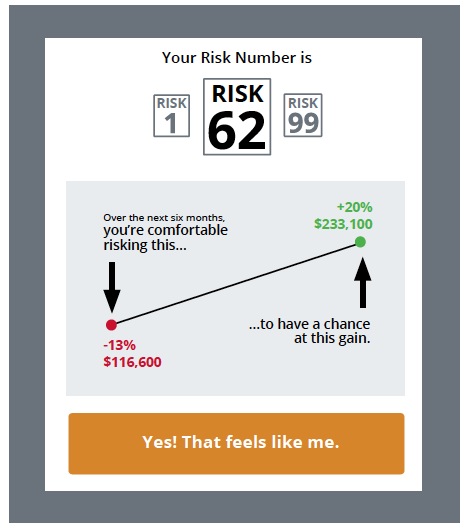
By simply answering a few questions, and spending 10 minutes of your time, based upon the size of your investment portfolio, you will quickly determine your own tolerance for risk.
Comparing your Risk Number to your Portfolio
Now that you have calculated your Risk Number, how does that number compare to your actual portfolio holdings? Is the portfolio you have today, the one you started with some time ago regarding risk and return? Is it still in alignment with your original expectations?
Does your portfolio have?
- Too much risk?
- Is it too conservative?
- Or, is it just right
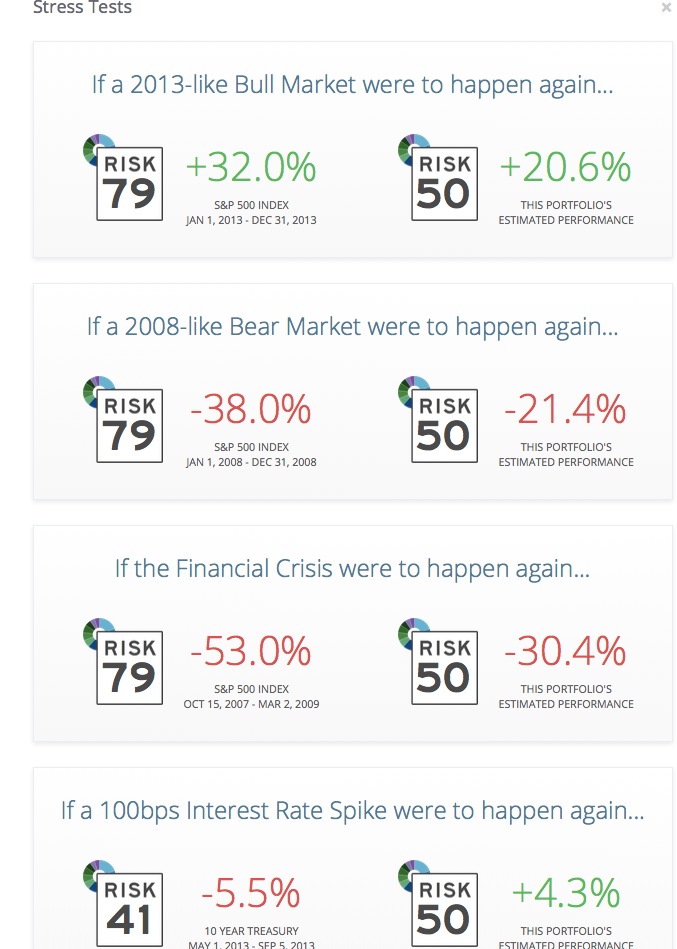
- What if the market drops significantly? Instead, what if the market goes up significantly? See how your current portfolio will fair in any one of these market conditions:
- Let’s put your portfolio onto the treadmill; just like the doctor’s office.
- How do you know, how do you measure?
Let’s Stress Test your Portfolio
- Bull Market (Prices generally rise)
- Bear Market (Prices generally fall)
- Financial Crisis
- Rising Interest Rates
***
***
- Are the results in alignment with your expectations?
- Any ‘hot spots’ you need to know about?
- Are there any individual holdings that will cause you loss of sleep over?
- Maybe investments don’t generate enough income?
- Maybe investments fluctuate too much in price?
- Now you can have a look and see if there are any ‘hot spots’ where you may need to re-balance a portion of your holdings based upon these findings.
***
Yes! That feels like me
***
Congratulations. Once you have determined your Risk Number, and perhaps re-aligned your current portfolio to your Risk Number, then yes, you DO have the portfolio that is right for you, one that ‘feels like you’.
ABOUT
David Gratke is chief executive officer of Gratke Wealth LLC in Beaverton, Ore. A Registered Investment Advisory Firm.
***
Conclusion
Your thoughts and comments on this ME-P are appreciated. How does the current market tumult affect this ME-P or your own investing strategy? Feel free to review our top-left column, and top-right sidebar materials, links, URLs and related websites, too. Then, subscribe to the ME-P. It is fast, free and secure.
***
 8
8
“Physicians who don’t understand modern risk management, insurance, business and asset protection principles are sitting ducks waiting to be taken advantage of by unscrupulous insurance agents and financial advisors; and even their own prospective employers or partners. This comprehensive volume from Dr. David Marcinko, and his co-authors, will go a long way toward educating physicians on these critical subjects that were never taught in medical school or residency training.”
Dr. James M. Dahle MD FACEP [Editor of The White Coat Investor, Salt Lake City, Utah]
***
USA “With time at a premium, and so much vital information packed into one well organized resource, this comprehensive textbook should be on the desk of everyone serving in the healthcare ecosystem. The time you spend reading this frank and compelling book will be richly rewarded.”
Dr. J. Wesley Boyd MD PhD MA [Harvard Medical School, Boston, Massachusetts, USA]
Share this:

Filed under: Investing, Portfolio Management, Research & Development, Retirement and Benefits, Risk Management | Tagged: David Gratke, Global Central Bank, Risk Number | 1 Comment »





 The Leading Business Education Network for Doctors, Financial Advisors and Health Industry Consultants