







 Support our online development, and advance our onground research initiatives in free market economics, as we seek to showcase the brightest Next-Gen minds.
THE ME-P DISCLAIMER: Posts, comments and opinions do not necessarily represent iMBA, Inc., but become our property after submission. Copyright © 2006 to-date. iMBA, Inc allows colleges, universities, medical and financial professionals and related clinics, hospitals and non-profit healthcare organizations to distribute our proprietary essays, photos, videos, audios and other documents; etc. However, please review copyright and usage information for each individual asset before submission to us, and/or placement on your publication or web site. Attestation references, citations and/or back-links are required. All other assets are property of the individual copyright holder.
Support our online development, and advance our onground research initiatives in free market economics, as we seek to showcase the brightest Next-Gen minds.
THE ME-P DISCLAIMER: Posts, comments and opinions do not necessarily represent iMBA, Inc., but become our property after submission. Copyright © 2006 to-date. iMBA, Inc allows colleges, universities, medical and financial professionals and related clinics, hospitals and non-profit healthcare organizations to distribute our proprietary essays, photos, videos, audios and other documents; etc. However, please review copyright and usage information for each individual asset before submission to us, and/or placement on your publication or web site. Attestation references, citations and/or back-links are required. All other assets are property of the individual copyright holder.


By Staff Reporters and ChatGPT
SPONSOR: http://www.MarcinkoAssociates.com
***
***
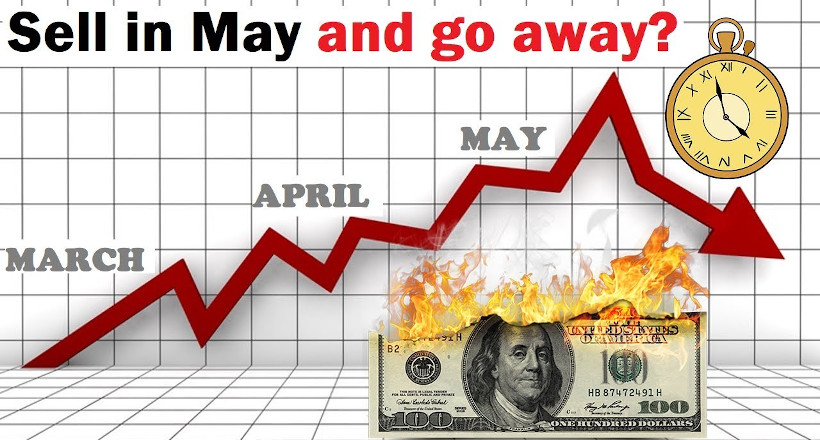
The phrase “sell in May and go away” suggests that investors should sell their stocks in May and avoid the market during the summer months, as historical data indicates poorer stock performance during this period.
***
| It’s Friday morning, so you’re probably clocking out once you’re done reading this ME-P. And who could blame you, after such a wild month of watching your portfolio zig & zag with every headline. In fact, why not just sell all your stocks and walk away entirely? You’ve got to admit, it’s tempting. After all, markets have completed an incredible round trip since Liberation Day—you could just call it even, start celebrating Cinco de Mayo a bit late, and maybe check your portfolio again sometime around August. “Sell in May and go away” might sound like appealing advice these days, especially considering that the market usually spends the next six months under-performing: The S&P 500 gains just 1.8% on average from May through October, the worst-performing stretch of the year historically. But Carson Research Chief Market Strategist Ryan Detrick says that would be a mistake. “ These ‘worst six months’ have gained in eight of the last 10 years,” he recently wrote. He continued: “Not to mention the month of May has been higher nine of the past 10 years, so maybe we should call it, “Sell in June and go Away?” |
***
COMMENTS APPRECIATED
Like and Refer
***
***
Share this:

Filed under: "Ask-an-Advisor", Investing, Risk Management, Touring with Marcinko | Tagged: Carson Research, cinco de Mayo, go away, liberation, Marcinko, Ryan Detrick, sell in may, stocks | Leave a comment »

 The Leading Business Education Network for Doctors, Financial Advisors and Health Industry Consultants