







 Support our online development, and advance our onground research initiatives in free market economics, as we seek to showcase the brightest Next-Gen minds.
THE ME-P DISCLAIMER: Posts, comments and opinions do not necessarily represent iMBA, Inc., but become our property after submission. Copyright © 2006 to-date. iMBA, Inc allows colleges, universities, medical and financial professionals and related clinics, hospitals and non-profit healthcare organizations to distribute our proprietary essays, photos, videos, audios and other documents; etc. However, please review copyright and usage information for each individual asset before submission to us, and/or placement on your publication or web site. Attestation references, citations and/or back-links are required. All other assets are property of the individual copyright holder.
Support our online development, and advance our onground research initiatives in free market economics, as we seek to showcase the brightest Next-Gen minds.
THE ME-P DISCLAIMER: Posts, comments and opinions do not necessarily represent iMBA, Inc., but become our property after submission. Copyright © 2006 to-date. iMBA, Inc allows colleges, universities, medical and financial professionals and related clinics, hospitals and non-profit healthcare organizations to distribute our proprietary essays, photos, videos, audios and other documents; etc. However, please review copyright and usage information for each individual asset before submission to us, and/or placement on your publication or web site. Attestation references, citations and/or back-links are required. All other assets are property of the individual copyright holder.


By Staff Reporters
***
***
- The dollar sank to a one-month low after data last week showed the US is technically in recession.
- It reflects a “sell-the-fact” reaction in markets as investors expect milder Fed rate hikes.
- A weak Chinese economy is also affecting the performance of the greenback on demand concerns.
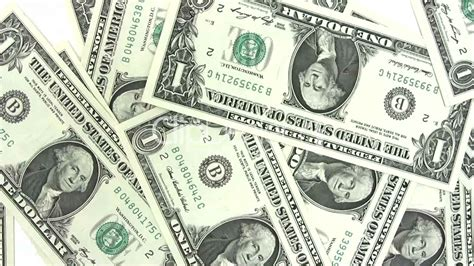
The US dollar index, which measures the greenback’s performance against six other currencies including the Japanese yen, slipped 0.52% to trade at $105.35 – its lowest since July 5th. The safe-haven currency has endured sharp sell-offs in recent weeks, only rising on two days since mid-July as a “sell-the-fact” reaction hits markets over expectations that the Fed will become less aggressive in its monetary policy after data showed US GDP contracted for two straight quarters – the technical definition of a recession.
London-based BP earnings tripled and underlying replacement cost profit, which excludes one-time items and fluctuations in the value of inventories, jumped to $8.45 billion from $2.80 billion in the same period a year earlier. The soaring earnings allowed BP to return billions of dollars to shareholders, with the company boosting its dividend by 10% and announcing that it would buy back $3.5 billion in shares. BP said it expects to increase dividends by about 4% annually through 2025.
Moreover, job openings in the U.S. fell to 10.7 million in June to mark the lowest level since last fall, signaling that a red-hot labor market is cooling off a bit as the economy slows. Job openings slipped from 11.3 million in May. They have dropped three months in a row after peaking in the early spring at a record 11.9 million.The last time job openings dipped below 11 million was in November last year. The number of people who quit jobs in June, meanwhile, only fell slightly to 4.23 million, the Labor Department said Tuesday. Quits topped 4 million one year ago for the first time ever, part of a pandemic-era trend that’s become known as “the great resignation.” Before the pandemic, the number of people quitting jobs averaged fewer than 3 million a month.The high number of people quitting jobs suggests the labor market is still quite robust, though. Most people who quit usually find a better job. Layoff also stayed at historically very low levels. Big picture: The economy is cooling off — and so is a sizzling labor market.
Finally, semi-conductor stocks plunged. For example, shares of Taiwan Semiconductor Manufacturing Company (TSMC)—the world’s biggest and most valuable semiconductor manufacturer valued at $440 billion—fell 2.4%. Its Taiwanese peers United Microelectronics and MediaTek dipped 3% and 1.6%, respectively. Meanwhile, U.S. chip-maker Intel stock dropped 1.5% on the same day.
***
INVITE DR. MARCINKO: https://medicalexecutivepost.com/dr-david-marcinkos-
COMMENTS APPRECIATED
Thank You
***
Share this:

Filed under: "Ask-an-Advisor", Accounting, Alerts Sign-Up, Financial Planning, Investing, LifeStyle, Op-Editorials | Tagged: BP, BP and the Jobs Report, chip stocks, jobs report, micro-chips, micro-conductors, The US Dollar, US Dollar | Leave a comment »





 The Leading Business Education Network for Doctors, Financial Advisors and Health Industry Consultants