





 Support our online development, and advance our onground research initiatives in free market economics, as we seek to showcase the brightest Next-Gen minds.
THE ME-P DISCLAIMER: Posts, comments and opinions do not necessarily represent iMBA, Inc., but become our property after submission. Copyright © 2006 to-date. iMBA, Inc allows colleges, universities, medical and financial professionals and related clinics, hospitals and non-profit healthcare organizations to distribute our proprietary essays, photos, videos, audios and other documents; etc. However, please review copyright and usage information for each individual asset before submission to us, and/or placement on your publication or web site. Attestation references, citations and/or back-links are required. All other assets are property of the individual copyright holder.
Support our online development, and advance our onground research initiatives in free market economics, as we seek to showcase the brightest Next-Gen minds.
THE ME-P DISCLAIMER: Posts, comments and opinions do not necessarily represent iMBA, Inc., but become our property after submission. Copyright © 2006 to-date. iMBA, Inc allows colleges, universities, medical and financial professionals and related clinics, hospitals and non-profit healthcare organizations to distribute our proprietary essays, photos, videos, audios and other documents; etc. However, please review copyright and usage information for each individual asset before submission to us, and/or placement on your publication or web site. Attestation references, citations and/or back-links are required. All other assets are property of the individual copyright holder.


The Markets and Health Economics
By Dr. David Edward Marcinko; MBA, CMP™
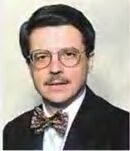
As a centrist fiscal conservative – social liberal – I tend to side with libertarian issues and not political parties. Nevertheless, I was dismayed with the recent presidential election and wondered what impact it would have on the stock markets. Mr. Market replied with haste.
The Question
In the short term, the stock market collapsed back in September when most pundits opined that President-elect Barack Obama would become our new leader. In fact, the DOW has not seen its current lows since 1998, or so.
More specifically, according to one analyst from Wall Street – Paul Shread – “the Dowshould have strong support between here and 7000, which would cover the 1998 and 2002-2003 lows (7200-7400), the 50% decline mark (7100) and the October 1997 low (6971). This would be a very important place for the market to make a stand.” But other chartists see the markets falling even further, with the S&P dropping as low as 400. Why is this?
The Answer is Uncertainty, Doubt and Fear
While the mounting credit default swap and mortgage crisis has had a major role in sinking stocks, some speculators worry that Obama will follow through on promises to raise income taxes on dividends and capital gains; eliminate the estate tax exemption, rescue the auto-industry and the: airlines, home builders, furniture, footgear and apparels, textiles, glassware, tobacco, beer brewers and perhaps a few others, and generally make it difficult for private employers to resist unionizing drives. In other words – there is a rising level of fear, doubt and uncertainty over the seeming potential of Keynesianism and governmental guarantees and protectionism – rather than the opportunities of capitalism. All disguised in the “cloak of change”.
Enter the Politicians
Some economists – tax and policy experts – fear that if Obama, Speaker Nancy Pelosi and Senate Majority Leader Harry Reid bailout these manufacturing segments instead of filing for Chapter 11, the country may face a very long recession. Just look to Japan some two decades ago, when the country bailed out its failing banks and corporations instead of letting them fall so that innovative competitors could take their place.
According to Niall Ferguson, a scholar who has studied the relationship between political, banking and financial fortunes –”you can stick money into every orifice of the big banks — their mouth, their nose, their ears, wherever — but if they can’t make loans because they have to reserve against future losses, and if they won’t make loans because there’s a recession, it won’t do any good,” Ferguson says. “If they can’t lend, there’s no money multiplier — they’re stuck, they’re zombies. It’s Japan all over again.” And, some ghoulish traders are indeed hoping for a deep recession. Today, Japan is still in worse shape than we are.
Phoenix Rising
Following such a debacle, the failed companies might then re-organize with some of their current workers under revamped union contracts. Reorganization, new labor contracts and new employee and retiree health benefit plans would make them competitive and profitable after emerging from bankruptcy; much like the proverbial Phoenix.
National Health Insurance, et al
Our physician clients and investors also are also worried that if national health insurance becomes a reality, defense spending is reduced and/or onerous regulations imposed on the surviving banks and Wall Street, the economy will be in for ride rougher than the one we have experienced to-date. No wonder a recent poll suggested that more than half of all doctors did not encourage their offspring to follow their career footsteps.
Other pressing issues for the medical profession, according to the HealthCare Group – Co-Chaired by Angela Braly of Wellpoint Inc., Dr. Denis Cortese of the Mayo Clinic, Jeffrey Kindler from Pfizer Inc., and Dr. Daniel Vasella from Novartis AG – include tort reform,defining and measuring medical value, payment reform, and building the health care workforce of the future with an emphasis on primary care, nursing and other allied health professionals. Moreover, true healthcare reform must involve integrating issues like Single Payer Systems, Consumer Directed Health Plans, Pharmaceutical Price Competition, Advanced Electronic Medical Records, and Quality & Outcomes Disclosure, etc.
The Obama Cabinet
President-elect Obama’s staff and cabinet appointments will also offer important clues for the markets, going forward. In addition to Rahm Emanuel, as the President-elect’s Chief of Staff, hearsay suggests Laura Tyson or Bill Richardson for Secretary of Commerce, Hillary Clinton as Secretary of State and Timothy Geithner as Treasury Secretary. Other considerations include Renee Glover for Secretary of Housing and Urban Development [HUD], Max Cleland as Secretary for Veteran’s Affairs, Janet Napolitano for Homeland Security, Jim Jones as National Security Advisor; and Richard Danzig and/or Chuck Hagel for other Cabinet Posts. Yet, Tom Daschle as Secretary of HHS is not exactly an “agent of change”, as the term is commonly understood.
Assessment
As the world’s markets sink, the pressure on our new administration will be to clarify these issues. Only then, will a stock market bottom be reached, and the dismal economy begins to reverse itself. Hopefully, the health care-scare will then be mitigated.
Conclusion
Your thoughts and comments on this Medical Executive-Post are appreciated.
Speaker: If you need a moderator or speaker for an upcoming event, Dr. David E. Marcinko; MBA – Publisher-in-Chief of the Medical Executive-Post – is available for seminar or speaking engagements. Contact: MarcinkoAdvisors@msn.com
Subscribe Now: Did you like this Medical Executive-Post, or find it helpful, interesting and informative? Want to get the latest ME-Ps delivered to your email box each morning? Just subscribe using the link below. You can unsubscribe at any time. Security is assured.
Link: http://feeds.feedburner.com/HealthcareFinancialsthePostForcxos



Share this:

Filed under: Health Economics, Health Insurance, Health Law & Policy, Insurance Matters, Managed Care, Research & Development | Tagged: economy, markets, national healthcare |
 The Leading Business Education Network for Doctors, Financial Advisors and Health Industry Consultants
The Domestic Healthcare Myths
Zeke Emanuel and Shannon Brownlee wrote an op-ed piece in Sunday’s Washington Post that should be required reading for anyone interested in health care reform. The title is, “5 Myths About Our Ailing Health Care System.” In the article, they suggest the “5 Myths” are:
1. America has the best health care in the world.
2. Somebody else is paying for your health insurance.
3. We would save by cutting administrative waste in private insurance.
4. Health-care reform is going to cost a bundle.
5. Americans aren’t ready for a major overhaul of the health–care system.
Read more: http://www.washingtonpost.com/wp-dyn/content/article/2008/11/20/AR2008112002420.html
So, true or false; please opine?
-Ann
LikeLike
Full U.S. House Approves Amendment Repealing Insurance Industry’s Antitrust Exemption
The U.S. House of Representatives this morning approved by voice vote an amendment that would repeal the McCarran-Ferguson Act’s antitrust exemption as it applies to health insurance companies. That exemption, which Congress enacted in 1945, was intended to make it easier for states to regulate insurance without federal interference.
Many health care groups have long argued that the exemption gives the insurance industry an unfair advantage in the marketplace. Rep. Paul Gosar (R-Ariz.) offered his legislation as a floor amendment to the ADA-supported Help Efficient, Accessible, Low-cost, Timely Healthcare Act (H.R. 5).
H.R. 5, which would reform medical malpractice laws by limiting awards and attorney fees, passed the House today by a vote of 223 to 181.
Ann Miller RN MHA
via Darrell K. Pruitt DDS
LikeLike