







 Support our online development, and advance our onground research initiatives in free market economics, as we seek to showcase the brightest Next-Gen minds.
THE ME-P DISCLAIMER: Posts, comments and opinions do not necessarily represent iMBA, Inc., but become our property after submission. Copyright © 2006 to-date. iMBA, Inc allows colleges, universities, medical and financial professionals and related clinics, hospitals and non-profit healthcare organizations to distribute our proprietary essays, photos, videos, audios and other documents; etc. However, please review copyright and usage information for each individual asset before submission to us, and/or placement on your publication or web site. Attestation references, citations and/or back-links are required. All other assets are property of the individual copyright holder.
Support our online development, and advance our onground research initiatives in free market economics, as we seek to showcase the brightest Next-Gen minds.
THE ME-P DISCLAIMER: Posts, comments and opinions do not necessarily represent iMBA, Inc., but become our property after submission. Copyright © 2006 to-date. iMBA, Inc allows colleges, universities, medical and financial professionals and related clinics, hospitals and non-profit healthcare organizations to distribute our proprietary essays, photos, videos, audios and other documents; etc. However, please review copyright and usage information for each individual asset before submission to us, and/or placement on your publication or web site. Attestation references, citations and/or back-links are required. All other assets are property of the individual copyright holder.


By Staff Reporters
***
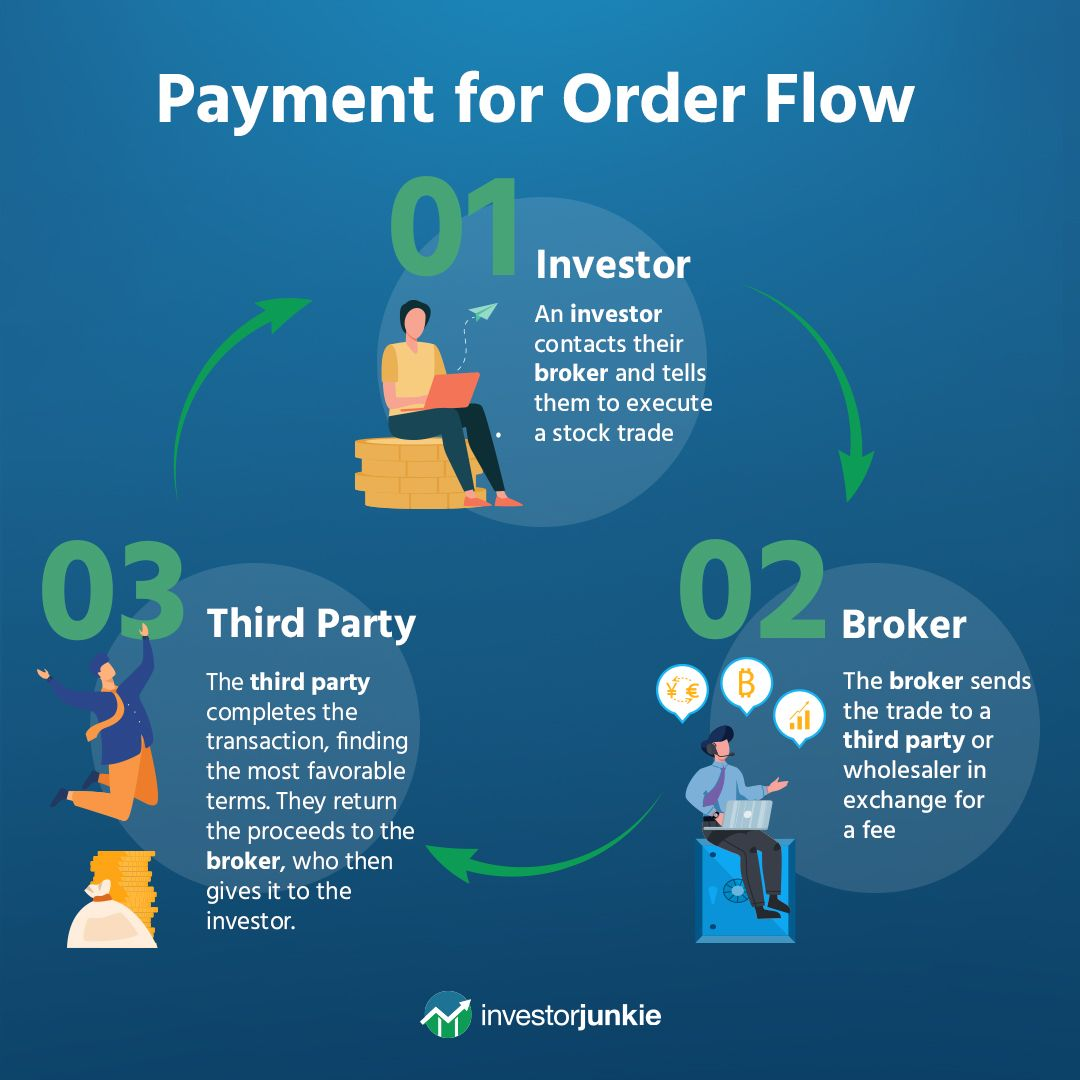
Payment for order flow, or PFOF, is a tactic some brokerages use to rake in piles of cash. Payment for order flow (PFOF) is a form of compensation, usually in terms of fractions of a penny per share, that a brokerage firm receives for directing orders for trade execution to a particular market maker or exchange. Payment for order flow is common in options markets, and is increasingly found in equity (stock market) transactions.
CITE: https://www.r2library.com/Resource/Title/082610254
***

How does it impact everyday investors?
The “P” in PFOF stands for “payment.” That’s because PFOF gets stock brokers paid. It starts when brokers direct trade orders to a particular e-trading firm (like Mountain Securities, for example) instead of routing the trades straight to exchanges. At that point, the e-trading firm may be able to collect the difference between the bid and the ask price, and the brokerages get a cut of that profit. It’s the proverbial “You scratch your broker’s back through their bespoke Ermenegildo Zegna suit, and they’ll scratch yours.”
According to Lillian Stone, some industry experts argue that PFOF is a conflict of interest. (The practice came under scrutiny last year when US brokers made billions on meme stock trading.) You want your broker to get you the best possible prices during a trade, right? Well, if your broker is incentivized to work with one specific e-trading firm, there’s a chance you may not get the sweetest deal—but they’ll line their pockets all the same.
***
COMMENTS APPRECIATED
Thank You
***

***
Share this:

Filed under: "Ask-an-Advisor", Ethics, Experts Invited, Glossary Terms, Health Economics, Investing | Tagged: brokerage, Lillian Stone, Payment for Order Flow, PFOF, stock, stock brokerage | Leave a comment »


 The Leading Business Education Network for Doctors, Financial Advisors and Health Industry Consultants