On Microsoft Health Accelerator, Merck Accelerator and Samsung NEXT

Microsoft Accelerator, Merck Accelerator and Samsung NEXT
have the highest awareness of all corporate health accelerators

By Markus Pohl

Among corporate health accelerators Microsoft Accelerator has the highest awareness level. Merck Accelerator and Samsung NEXT are ranking second and third. 42.8% of the digital health community has heard of Microsoft Accelerator. 26.7% have heard of Merck Accelerator, 26.4% of SAMSUNG Next and 24.8% of Grants4Apps by Bayer. Techstars (Barclays Accelerator, London) (18.2%) follows fifth with some distance behind.

These findings are part of our mHealth Economics program, the biggest survey of its kind with 2,400 answers from the digital global health community. In the ranking of of corporate accelerators’ awareness 21 corporate accelerators investing in healthcare have been included.

***

Here is the full ranking:

Microsoft Accelerator, Merck Accelerator and Samsung NEXT have the highest awareness of all corporate health accelerators

Conclusion

Your thoughts and comments on this ME-P are appreciated. Feel free to review our top-left column, and top-right sidebar materials, links, URLs and related websites, too. Then, subscribe to the ME-P. It is fast, free and secure.

Speaker: If you need a moderator or speaker for an upcoming event, Dr. David E. Marcinko; MBA – Publisher-in-Chief of the Medical Executive-Post – is available for seminar or speaking engagements.

Book Marcinko: https://medicalexecutivepost.com/dr-david-marcinkos-bookings/
Subscribe: MEDICAL EXECUTIVE POST for curated news, essays, opinions and analysis from the public health, economics, finance, marketing, IT, business and policy management ecosystem.

***

On digital health accelerator and corporate start-up programs

Most digital health accelerator and corporate start-up programs must refocus to survive

By Markus Pohl

Berlin, March 29, 2017

The hype around programs that connect start-ups with corporates and investors in digital health has peaked.

For two years running, the number of new accelerator programs has decreased. A lot of accelerator programs are having problems in attracting enough high quality start-ups to justifying budgets from their partner or parent companies. Many digital health accelerator programs will have to change along four dimensions to survive.  

Update 2017

At the beginning of 2017 there were over 340 early stage investors; i.e. accelerators and incubators investing in healthcare start-ups. The growth rate of new accelerators and incubators entering the market has slowed substantially over the last two years. Nearly all of these programs target digital business models.

There are over 15,000 start-ups based on a mobile app business model. This means that there are less than 50 mobile health app start-ups per accelerator! There are just not enough start-ups out there to cater for the demand of 340+ accelerators and incubators. Especially for the rather small and unknown accelerators, which are overshadowed by the regionally well-known programs such as Plug and Play, StartUp Health and Rockstart.   The number of targeted digital health start-ups per accelerator is insufficient for most accelerators to build up a high-quality selection funnel.

***

***

While it is true, that most start-ups will apply for multiple accelerator programs, usually accelerators need to go through several hundred of applications before they can find a candidate that fits to their program.

Assessment

After talking to many digital health accelerators in preparation for this year’s mHealth App Developer Economics Survey (now live: click here), one common problem that stood out was that accelerators struggle to build up a high-quality selection funnel. With the majority of accelerators somewhat struggling for good quality applicants, how is it going to be possible for these programs to survive?

Conclusion

Your thoughts and comments on this ME-P are appreciated. Feel free to review our top-left column, and top-right sidebar materials, links, URLs and related websites, too. Then, subscribe to the ME-P. It is fast, free and secure.

Speaker: If you need a moderator or speaker for an upcoming event, Dr. David E. Marcinko; MBA – Publisher-in-Chief of the Medical Executive-Post – is available for seminar or speaking engagements. Contact: MarcinkoAdvisors@msn.com

OUR OTHER PRINT BOOKS AND RELATED INFORMATION SOURCES:

Product DetailsProduct DetailsProduct Details

***

Six groups that will shape mHealth apps of the future

Join Our Mailing List 

A Special ME-P Report

The Distinct Segment Publishers

By Ralf-Gordon Jahns and Markus Pohl

ralphmarkus


Introduction

Dr. Marcinko and ME-P Readers and Subscribers,

Did you know that mHealth app publishers can be grouped into 6 distinct segments?

Segments differ mainly by goals, business approaches and performance. Their desire to help others distinguishes them from the rest of the app community. Knowing these segments is a pre-requisite for all those who wish to successfully participate in the new mHealth app ecosystem.

The Publishers

So, who is behind the 100,000 mHealth apps published in today’s app stores? How do the publishers differ in terms of motivation, development tool usage and satisfaction about goals achieved? The mHealth app publisher segmentation distinguishes 6 groups of current mHealth app publishers. This segmentation is based on the results of themHealth App Developer Economics 2014study.

A deeper knowledge about the mHealth app publishers is essential to all health market participants who wish to successfully navigate inside the newly emerging mHealth app ecosystem.

mHealth app publishers are not like game or tool app developers. 46% publish apps, because they want to help others. They also have objectives like revenue generation or raising brand awareness, but this “altruistic” attitude clearly distinguishes them from the rest of the app economy.

Within the six mHealth app companies, publishers with a strong medical background and those who leverage existing app development tools & APIs seem to accomplish their goals better than those who do that to a lesser extent.

Traditional healthcare players like Pharma, Med-tech or insurance companies have not been able to define their role in the market yet. Established Healthcare Players are the only segment “mainly not” satisfied with their goal achievement.

These are the profiles of the 6 distinct mHealth app publisher segments:

1) Established healthcare players:

This group includes Pharma, hospitals, health insurance and Med-tech companies, representing 3.4% of the total number of app publishers. These players usually belong to the mHealth app publishers with > 5,000 employees. Their primary objective for being in the market is to raise brand awareness and they have published the largest number of mHealth apps. Nevertheless, average reach in terms of downloads is far below the market’s average. App publishers in this group are so far the least satisfied with the achievements in the mHealth app market. The usage of tools and APIs to improve the efficiency of the app development process and app monitoring as well as the value of the app is below its competitors.

2) App specialists:

App specialists are small companies, which typically hire 3-10 employees. They have entered the mHealth app market in order to benefit from its potential. They have an app developer background and are familiar with available development and support tools. The share of medical experts on board is relatively low. This group constitutes 14% of the mHealth app publisher community.

3) Helpers:

Helpers’ primary motivation for publishing apps is to help others and they are usually organized into small companies of 3-10 employees. Revenue generation is only a minor factor. Typically Helpers have already achieved or over-achieved their goals. In terms of downloads, they have the highest share of companies (61%) that achieved less than 5,000 downloads last year. Helpers represent 32% of the market.

4) Medical specialists:

Medical specialists leverage their medical know-how to develop mobile apps. Similar to the Helper group, Medical specialist have a large share of members who publish apps to help others. By far they have partly reached their goals. They have the highest share of companies, which in 2013 earned more than USD 1m with their mHealth app portfolio. They represent 20% of the market.

5) Fitness specialists:

This group of app developers represents around 10% of the total mHealth app developer community. They primarily develop fitness apps with a clear objective to generate revenue. They connect more often to medical databases and sensors and use app development tools above average. The usual company size is 11-100 employees.

6) Connecters:

This group of mHealth app publishers represents 18% of the total mHealth app developer community. Their strategy is to create value rich apps by enabling connection to other apps, sensors and databases. This group generates the highest average revenue and has the highest goal achievement level.

Apps

Assessment 

The mHealth app publisher segmentation is a snapshot of the current state of the market. It will change as segments become more important (medical specialists) or new groups appear.  One of the main questions will be if and how traditional healthcare players will be able to compete with these small and agile companies that are driving the market today.

More:

Conclusion

Your thoughts and comments on this ME-P are appreciated. Feel free to review our top-left column, and top-right sidebar materials, links, URLs and related websites, too. Then, subscribe to the ME-P. It is fast, free and secure.

Link: http://feeds.feedburner.com/HealthcareFinancialsthePostForcxos

References:

Link to blog post:

http://mhealtheconomics.com/mhealth-segmentation-of-app-publishers-business-approaches/

Link to graph:

http://mhealtheconomics.com/wp-content/uploads/2014/05/research2guidance_mHealth_6_segments_business_approaches.jpg

Link to free report:

http://mhealtheconomics.com/mhealth-developer-economics-report/

Speaker: If you need a moderator or speaker for an upcoming event, Dr. David E. Marcinko; MBA – Publisher-in-Chief of the Medical Executive-Post – is available for seminar or speaking engagements. Contact: MarcinkoAdvisors@msn.com

OUR OTHER PRINT BOOKS AND RELATED INFORMATION SOURCES:

Product Details

Product DetailsProduct Details

Market for Mobile Health App Services Will Reach $26 Billion By 2017

Join Our Mailing List

mHealth services start to leverage apps to become commercially successful

[By Markus Pohl]

The market for mHealth services has now entered the commercialization phase and will reach $ 26 billion globally by 2017 says the new “Global Mobile Health Market Report 2013-2017 ”by research2guidance. Smartphone applications have begun to enable the mHealth industry to successfully monetize their services.

The Impending Revolution

Ralf-Gordon Jahns, Head of Research at research2guidance, points out “Our findings indicate that the long-expected mobile revolution in healthcare is set to happen. Both healthcare providers and consumers are embracing smartphones as a means to improving healthcare.”

The Publishers

Top mHealth publishers manage to generate more than 3 million free and 300.000 paid downloads in the USA on the iOS platform. The reach on other platforms and in other countries differ at lot but show also the increase of business potential for mHealth apps.

Not only are consumers taking advantage of smartphones to manage and improve their own health, but also healthcare professionals. A significant number (15%) of mHealth applications are primarily designed for healthcare professionals. These include CME (Continued Medical Education), remote monitoring and healthcare management applications.

The Climate

Currently there are 97,000 mHealth applications in major app stores, 42% of them adhering to the paid business model. With more and more traditional healthcare providers joining the mobile applications market, the business models will broaden to include healthcare services, sensor, advertising and drug sales revenues.

“With the growing sophistication level of mHealth applications, only 9% of the total market revenue in the next 5 years will come from application download revenue”explains Patrick Houck Analyst at research2guidance. “84% of total mHealth application market revenue will come from related services and products such as sensors”.

###

eHRs

Assessment

The “Global Mobile Health Market Report 2013-2017 ”by research2guidance is a business guide for traditional healthcare companies, mHealth specialists as well as for mobile operators wishing to successfully engage into the new mHealth market.

About research2guidance:

research2guidance is a Berlin-based mobile app economy specialist. The company’s service offerings include app strategy consulting, market studies and research.

Link to blog post: http://www.research2guidance.com/the-market-for-mhealth-app-services-will-reach-26-billion-by-2017/

Link to graph: http://www.research2guidance.com/wp-content/uploads/2013/03/the-mhealth-market-has-reached-the-commercialization-phase.png

Link to report: http://www.research2guidance.com/shop/index.php/mhealth-report-2

Contact:

Ralf-Gordon Jahns [+49 30 609 893 362] ralf.jahns@research2guidance.com

Conclusion

Your thoughts and comments on this ME-P are appreciated. Feel free to review our top-left column, and top-right sidebar materials, links, URLs and related websites, too. Then, subscribe to the ME-P. It is fast, free and secure.

Speaker: If you need a moderator or speaker for an upcoming event, Dr. David E. Marcinko; MBA – Publisher-in-Chief of the Medical Executive-Post – is available for seminar or speaking engagements. Contact: MarcinkoAdvisors@msn.com

OUR OTHER PRINT BOOKS AND RELATED INFORMATION SOURCES:

Product DetailsProduct Details

Mobile Healthcare Applications Update for 2012

Join Our Mailing List 

Market Will Grow in US to 1.3 Billion Dollars

By Markus Pohl

The smartphone application market for mobile healthcare will reach US$ 1.3 billion in 2012– up from US$ 718 million in 2011. Despite this substantial growth, the mHealth market is still in an embryonic state – especially in comparison to the US$ 6 trillion of the overall global healthcare market. Several factors (esp. smartphone penetration), will continue, however, to drive mHealth market growth over the next couple of years. These findings are part of our new Mobile Health Market Report 2011-2016 report.

Multiple Revenue Streams

The increase of revenue stems from downloads, in-app advertisements, mHealth services, direct transactions and sensor sales. As a number of big healthcare companies published mHealth apps in 2011 that go far beyond a simple allergy tracker or pill reminder (e.g. Sanofi Aventis’sensor-based iBGStar Diabetis monitoring app) sensors are a growing part of the landscape.

The 2012 Reach

In 2012 the number of mHealth application users – mobile users who downloaded a smartphone mHealth application at least once – will reach 247 million. Compared to the 124 million users who downloaded mHealth smarthphone applications in 2011, this is a near doubling.

The technical aspects of the healthcare landscape are changing rapidly and fundamentally. Healthcare data, the number of healthcare apps and their usage on mobile phones is growing. It is all evolving around smartphones and sensors attached to the phone.

Assessment

2011 already showed significant growth for the mHealth app market. In 2012 the market size will nearly double.

References

For more information on the mHealth application market read our report,Mobile Health Market Report 2011-2016. The report describes in a detailed 100 pages the impact of smartphone applications on the mHealth industry. It will help decision makers in the healthcare market to understand the current status of the market, learn about best practices and get insights on future trends and market potentials.

Link to report: http://www.research2guidance.com/shop/index.php/mhealth-report-1

Link to blog post: http://www.research2guidance.com/us-1.3-billion-the-market-for-mhealth-applications-in-2012/

Contact:

research2guidance

+49 30 609 893 363

mp@research2guidance.com

Conclusion

And so, your thoughts and comments on this ME-P are appreciated. Please review our top-left column, and top-right sidebar materials, links, URLs and related websites, too. Then, subscribe to the ME-P. It is fast, free and secure.

Link: http://feeds.feedburner.com/HealthcareFinancialsthePostForcxos

Speaker: If you need a moderator or speaker for an upcoming event, Dr. David E. Marcinko; MBA – Publisher-in-Chief of the Medical Executive-Post – is available for seminar or speaking engagements. Contact: MarcinkoAdvisors@msn.com

Our Other Print Books and Related Information Sources:

Health Dictionary Series: http://www.springerpub.com/Search/marcinko

Practice Management: http://www.springerpub.com/product/9780826105752

Physician Financial Planning: http://www.jbpub.com/catalog/0763745790

Medical Risk Management: http://www.jbpub.com/catalog/9780763733421

Healthcare Organizations: www.HealthcareFinancials.com

Physician Advisors: www.CertifiedMedicalPlanner.com

Subscribe Now: Did you like this Medical Executive-Post, or find it helpful, interesting and informative? Want to get the latest ME-Ps delivered to your email box each morning? Just subscribe using the link below. You can unsubscribe at any time. Security is assured.

Link: http://feeds.feedburner.com/HealthcareFinancialsthePostForcxos

Sponsors Welcomed: And, credible sponsors and like-minded advertisers are always welcomed.

Link: https://healthcarefinancials.wordpress.com/2007/11/11/advertise

Product Details

Update On Medical Smartphone Apps

Offering a Window Of Opportunity For M-Health Service Providers

By Markus Pohl

Join Our Mailing List

The potential revenue that could be made in the mobile healthcare app market is just a fraction of the total integrated healthcare market. Service providers within the healthcare market have a window of opportunity with the possibilities that the mobile apps market offers right now.

The benefits of integrated electronic and mobile healthcare solutions are evident. At the moment there is a lot of potential for companies to scale up their services and learn how to adapt to the changing market. But they have to act quickly to seize the moment. In the last few years those solutions either remained as isolated pilots or struggled with all kinds of barriers from healthcare stakeholders, with only a few exceptions.

Integrated Solutions 

As it is not clear when integrated solutions will become widely accepted around the globe, more and more e-health and m-health service provides are rethinking their strategy. They are turning away from complex and integrated solutions that need acceptance of all national healthcare stakeholders to more simple patient centric services.

m-Health Services Rising

This rethinking process goes hand in hand with the rise of the smartphone app market. In the next 5 years the smartphone app market will help the mobile healthcare industry to reach a new level. mHealth apps will be widely used and will demonstrate the technological possibilities of smartphones. Technology, educated patients/doctors and proof of cost savings for health insurance providers will eventually allow companies to make money with mhealth apps.

Before the smartphone app market brought new life to the mobile healthcare market, mHealth service providers struggled to scale up their solutions. Most of them never made it out of the trial stage. Some of them were just too basic, such as simple pill reminders running on SMS as the primary delivery technology. More complex solutions that were based on eHealth initiatives integrated the features of a mobile device with a database (electronic health records), but failed mainly because of political barriers and low awareness amongst patients.

Assessment 

For more information on the smartphone based mHealth market and its business opportunities for healthcare provides please see our latest report on the mHealth market: “Mobile Health Market Report 2010-2015”.

Contact:

research2guidance

+49 30 609 893 363

markus.pohl@research2guidance.com

Conclusion

Your thoughts and comments on this ME-P are appreciated. Feel free to review our top-left column, and top-right sidebar materials, links, URLs and related websites, too. Then, subscribe to the ME-P. It is fast, free and secure.

Link: http://feeds.feedburner.com/HealthcareFinancialsthePostForcxos

Speaker: If you need a moderator or speaker for an upcoming event, Dr. David E. Marcinko; MBA – Publisher-in-Chief of the Medical Executive-Post – is available for seminar or speaking engagements. Contact: MarcinkoAdvisors@msn.com

OUR OTHER PRINT BOOKS AND RELATED INFORMATION SOURCES:

DICTIONARIES: http://www.springerpub.com/Search/marcinko
PHYSICIANS: www.MedicalBusinessAdvisors.com
PRACTICES: www.BusinessofMedicalPractice.com
HOSPITALS: http://www.crcpress.com/product/isbn/9781466558731
CLINICS: http://www.crcpress.com/product/isbn/9781439879900
BLOG: www.MedicalExecutivePost.com
FINANCE: Financial Planning for Physicians and Advisors
INSURANCE: Risk Management and Insurance Strategies for Physicians and Advisors

Product Details 

About the Mobile Health Market

Sensor-Based Mobile Apps Show How M-Health Business Models Could Work

By Markus Pohl

Join Our Mailing List 

Making money with mobile healthcare applications takes much more effort than most developers expected. M-Health apps normally do not get into the app stores’ top ranking lists and thus do not receive high download numbers.

m-Health Applications Business Models

But, there are working business models for the mHealth applications. Within the mobile health app category revenue won’t be generated through app stores. More and more mHealth app publishers have understood that they have to adapt their business model accordingly. Turning away from the “normal” pay-per-download models to practices like charging for medical service (call a doc) or sensor based models.

Sensor Based Models

Sensor based business models seem to have particularly caught the attention of mHealth app publishers over the last 6 months. The idea behind this model is not to sell an app but to use the app to promote the sales of a sensor. Revenue will be generated outside the app store.

Trend Examples: 

Here are some examples to highlight this trend.

  • Health and Wellness Monitoring tools combine fitness-related equipment to track pulse, calories, running speed, heart rate, or use sensor-devices to monitor weight control, fetus observation and eye testing. Target groups for these products are fitness and health-conscious users aged mainly between 35 and 45 years.
  • Chronic Condition Monitoring tools monitor health conditions like heart disease, hypertension, diabetes, asthma and obesity. They generate revenue from selling a sensor-device with a free application. Target groups are healthcare providers, medical personnel and chronically ill people between 30 and 50 years.
  • Diagnosis Tools are mainly targeted at professionals, who increasingly demand more portable and easy-to-use devices for easier communication with patients and peers.
  • Educational and Motivational Tools monitor habit patterns (e.g. sleep monitoring via app/device) or serve as useful didactic instruments for science education (e.g. portable microscopes).

Traditional health care service providers and especially medical device manufacturers should be aware of these trends and start to connect to the smartphone world.

To find a detailed overview of mHealth business models – please see the Mobile Health Market Report 2010-2015. Or, take a look at more mobile healthcare research from research2guidance.

Assessment

Outside app store revenue will drive the market. Sensor-based business models prove how to actually make money with mobile applications.

Conclusion

And so, your thoughts and comments on this ME-P are appreciated. Feel free to review our top-left column, and top-right sidebar materials, links, URLs and related websites, too. Then, subscribe to the ME-P. It is fast, free and secure.

Link: http://feeds.feedburner.com/HealthcareFinancialsthePostForcxos

Speaker: If you need a moderator or speaker for an upcoming event, Dr. David E. Marcinko; MBA – Publisher-in-Chief of the Medical Executive-Post – is available for seminar or speaking engagements. Contact: MarcinkoAdvisors@msn.com

Our Other Print Books and Related Information Sources:

Health Dictionary Series: http://www.springerpub.com/Search/marcinko

Practice Management: http://www.springerpub.com/product/9780826105752

Physician Financial Planning: http://www.jbpub.com/catalog/0763745790

Medical Risk Management: http://www.jbpub.com/catalog/9780763733421

Healthcare Organizations: www.HealthcareFinancials.com

Physician Advisors: www.CertifiedMedicalPlanner.com

Subscribe Now: Did you like this Medical Executive-Post, or find it helpful, interesting and informative? Want to get the latest ME-Ps delivered to your email box each morning? Just subscribe using the link below. You can unsubscribe at any time. Security is assured.

Link: http://feeds.feedburner.com/HealthcareFinancialsthePostForcxos

Sponsors Welcomed: And, credible sponsors and like-minded advertisers are always welcomed.

Link: https://healthcarefinancials.wordpress.com/2007/11/11/advertise

Product DetailsProduct DetailsProduct Details       

Product Details  Product Details

   Product Details 

Smartphone App Market Outperformes Other Booming Markets – 3 Years Benchmark

The Smartphone Applications Market is Impressive 

By Markus Pohl

Join Our Mailing List 

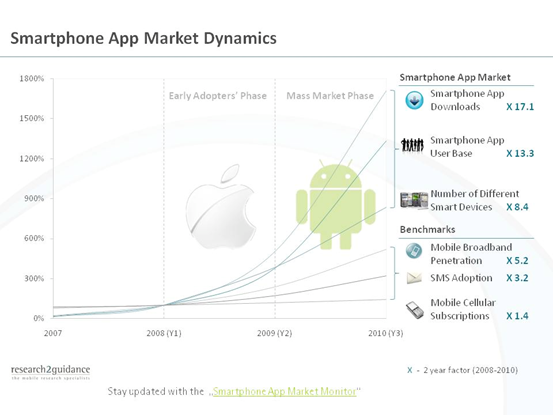
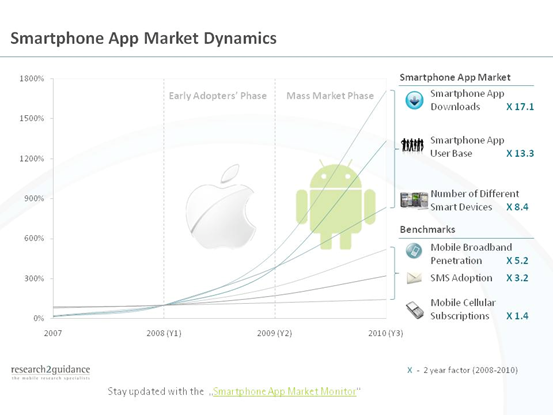
The mobile applications market made it from ramp-up phase to a mass market in only 3 years. This is much faster than previous mobile market sectors needed.

Berlin, March 8th, 2011 

The numbers regarding the smartphone applications market are impressive: Global app download numbers increased by 1700%, user base by 1300%, number of different smart devices by 800%, number of apps by 500% and even app store number increased by 300% in the first 3 years.

With application numbers increasing by almost 100.000 apps per quarter on all major app stores the competition level in a category and platform can change over night, which has an immediate impact on download numbers. Compared to these trends user behavior and demographics in terms of age, gender, usage time, downloads etc. has not changed so quickly over the last three years but will do when applications are proliferating into the mass market. There will be substantial differences per country and platform any company should be aware of, when formulating their application strategy.

Apple dominated the years 2008 and 2009. Since 2010 the hype moved over to Android. With the partnership of Microsoft and Nokia, this might change again as deteriorating average application download numbers on the Android platform will make developers shift again their priorities. What will be the most promising application types and categories will be the next big question.

When looking at the initial phases of other markets, companies really had a lot of time to decide on if, how and when to enter the market. It seems that industry cycles become shorter and shorter and the ability of a company to react very quickly becomes even more important. To stay updated on current trends subscribe to our new “Smartphone App Market Monitor”. This monitoring subscription service will be updated every quarter. Benefit from the intro offer, which saves you 20% until 31st of March.

Twitter: #smartphone #app market outperformes other booming markets – 3 years #benchmark http://j.mp/hRMi6c

About research2guidance:

research2guidance is a Berlin-based market research company specialized in the mobile industry. The company’s service offerings include comprehensive market studies, as well as bespoke research and consultancy.

research2guidance | The Mobile Research Specialists

phone: +49 (0) 30 60 989 3363

mobile: +49 (0) 178 4007736

fax: +49 (0) 30 60 989 3369

email: mp@research2guidance.com

www.research2guidance.com

Conclusion

And so, your thoughts and comments on this ME-P are appreciated. Feel free to review our top-left column, and top-right sidebar materials, links, URLs and related websites, too. Then, subscribe to the ME-P. It is fast, free and secure.

Speaker: If you need a moderator or speaker for an upcoming event, Dr. David E. Marcinko; MBA – Publisher-in-Chief of the Medical Executive-Post – is available for seminar or speaking engagements. Contact: MarcinkoAdvisors@msn.com and http://www.springerpub.com/Search/marcinko

Our Other Print Books and Related Information Sources:

Health Dictionary Series: http://www.springerpub.com/Search/marcinko 

Practice Management: http://www.springerpub.com/product/9780826105752

Physician Financial Planning: http://www.jbpub.com/catalog/0763745790

Medical Risk Management: http://www.jbpub.com/catalog/9780763733421

Healthcare Organizations: www.HealthcareFinancials.com

Physician Advisors: www.CertifiedMedicalPlanner.com

Subscribe Now: Did you like this Medical Executive-Post, or find it helpful, interesting and informative? Want to get the latest ME-Ps delivered to your email box each morning? Just subscribe using the link below. You can unsubscribe at any time. Security is assured.

Link: http://feeds.feedburner.com/HealthcareFinancialsthePostForcxos

Sponsors Welcomed: And, credible sponsors and like-minded advertisers are always welcomed.

Link: https://healthcarefinancials.wordpress.com/2007/11/11/advertise

Mobile Trends and their Impact on the [Medical] App Market

Mobile World Congress Review

By Markus Pohl

Join Our Mailing List 

Some major trends about the mobile apps market were clearly visible at the Mobile World Congress in Barcelona this week. How will trends like new operating systems, new devices, new technologies, developer migration, etc. affect the global apps market? Here is a quick rundown:

Symbian is dead long live Windows 7

This is probably the biggest single piece of news to emerge from last week’s event. Windows 7 will be used as the primary OS for Nokia’s smartphone portfolio. According to Mr. Elop (Nokia CEO) there will be a two year transition time before all new devices are being shipped with the OS from Microsoft, but from our discussions with Microsoft and Nokia we realize that there is a large amount of pressure to make that period as short as possible, especially as it will become even more difficult to convince developers to develop for Symbian, a dead end platform. The co-existence of Nokia phones running on WindowsPhone 7, Symbian and MeeGo presents a challenge. The future of MeeGo seems to be very uncertain even though Nokia and Intel stated their intent to offer an alternative platform especially for non smartphone devices.  Windows 7 will definitely become a very interesting platform for developers in the future. If it will meet the expectations of those two giants is not clear just yet.

Tablets are everywhere

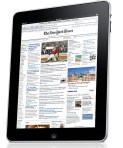
All major and quite a few smaller OEMs presented their answer to the iPad. They were probably the most touched and intensively tested devices at the MWC. Apple created this new market and sold almost 15 million iPads in only 9 months. Not many analysts forecasted this tremendous success (including us). Samsung unveiled the Galaxy Tab’s successor the Galaxy Tab 10.1 based on Android’s avatar for tablets: Honeycomb. LG, HP, HTC, Motorola, RIM, Lenovo and Toshiba all announced devices at the MWC 2011. RIM plans to release its super Playbook’s WiFi version late in Q1 2011, and HSPA+ and LTE, office software capability, multitasking OS, along with Flash, HTML5 and open internet standards in H2 2011. HP also unveiled Touchpad, a webOS based tablet. ZTE will accelerate its expansion on smart devices by launching lightweight tablets based on Honeycomb, which will be due in Q3 2011. Malata, a smaller Chinese vendor, only showed its portfolio of tablets in Barcelona. What it shows: There will be hundreds of tablets launched by the end of 2011. It is going to be the year of the tablets. Make sure your apps look good on them.
Broad awareness for m-Health and home monitoring

mHealth was clearly the biggest cross industry topic on the conference. Most of the OEM and operators as well as big fishes like Qualcomm and IBM showed some of their solutions which make use of a mobile device to support the treatment of a patient. Interesting that most of the mHealth solutions where not smartphone centered but made use of a specific device. Only smaller players which showed their solutions in the health care pavilion where mainly smartphone focused.  Home monitoring has been another interesting cross industry area which caught a lot of attention during the week. Telco companies used an entire pavilion, the “Embedded House”, to showcase their offerings. It became clear that the Telco industry will compete against the energy industry in that promising market.

Cross platform development is becoming more visible

It is clear that in the following years developers will face increasing challenges in developing apps for multi app platforms. There are some promising cross platform development tools and platforms out there which should gain more attention in the near future. There are a growing number of companies concentrating on those services such as Service2Media, Mobile Distillery, ideas2mobile and Geniem. Another interesting concept that showcased at the event is Kinoma by Marvell. This could be described as an app store within an app store. Marvell claims that apps running in the Kinoma environment must be developed only once and work on Android and Windows 7 operating systems.

Assessment 

Stay updated with our “App Market Monitoring”.

Link to blog post: http://www.research2guidance.com/gsma-mobile-world-congress-in-barcelona-impact-on-the-app-market/

Link to picture: http://www.research2guidance.com/wp-content/uploads/2011/02/2011-02-21-Barcelona.png

Twitter: #Mobile #Trends And Their Impact On The #App #Market – MWC Review: http://bit.ly/eMy2JR

About research2guidance:

research2guidance is a Berlin-based market research company specialized in the mobile industry. The company’s service offerings include comprehensive market studies, as well as bespoke research and consultancy.

Contact:

Markus Pohl

research2guidance

+49 30 609 893 363

markus.pohl@research2guidance.com

Conclusion

And so, your thoughts and comments on this ME-P are appreciated. Feel free to review our top-left column, and top-right sidebar materials, links, URLs and related websites, too. Then, subscribe to the ME-P. It is fast, free and secure.

Speaker: If you need a moderator or speaker for an upcoming event, Dr. David E. Marcinko; MBA – Publisher-in-Chief of the Medical Executive-Post – is available for seminar or speaking engagements. Contact: MarcinkoAdvisors@msn.com and http://www.springerpub.com/Search/marcinko

Our Other Print Books and Related Information Sources:

Health Dictionary Series: http://www.springerpub.com/Search/marcinko

Practice Management: http://www.springerpub.com/product/9780826105752

Physician Financial Planning: http://www.jbpub.com/catalog/0763745790

Medical Risk Management: http://www.jbpub.com/catalog/9780763733421

Healthcare Organizations: www.HealthcareFinancials.com

Physician Advisors: www.CertifiedMedicalPlanner.com

Subscribe Now: Did you like this Medical Executive-Post, or find it helpful, interesting and informative? Want to get the latest ME-Ps delivered to your email box each morning? Just subscribe using the link below. You can unsubscribe at any time. Security is assured.

Link: http://feeds.feedburner.com/HealthcareFinancialsthePostForcxos

Sponsors Welcomed: And, credible sponsors and like-minded advertisers are always welcomed.

Link: https://healthcarefinancials.wordpress.com/2007/11/11/advertise

Product Details 

Doctors Will Replace App Stores as Main Distribution Channels for Mobile Health Apps

ADVERTISEMENT

In the Year 2015?

By Markus Pohl

Join Our Mailing List 

Dear Publisher Dr. David Edward Marcinko

Please review this brief survey and press release. We think it is of some interest to you and your ME-P readers.

Berlin, 24 November 2010A global survey by research2guidance amongst leading mHealth developers and healthcare companies shows that mHealth apps will predominantly be distributed through traditional healthcare channels by 2015.

mHealth

In the years to come mHealth applications will cease to be distributed primarily through the app stores survey participants anticipate. At the moment app stores are still the distribution channels of choice but in the future it is expected that traditional healthcare distribution channels like hospitals and specialized healthcare product vendors will become the predominant distribution channels. This would represent a significant shift when compared to the market today, as the smartphone app store model has been the key driver behind the initial success of mHealth applications over the last two years.

The Survey Results

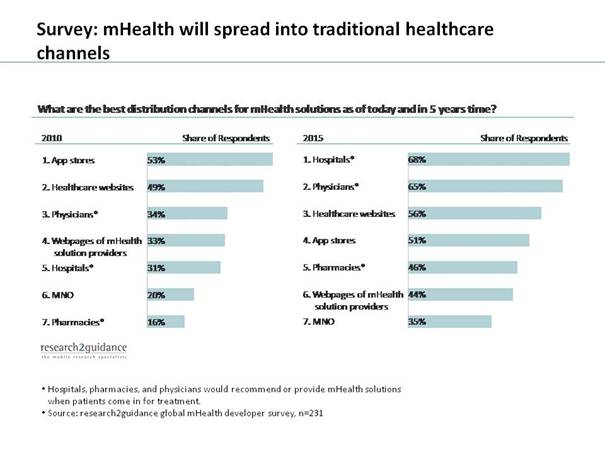
More than half of all respondents (53%) believe that currently app stores are the best distribution channels followed only by healthcare websites (49%). Traditional health distribution channels like doctors (34%), hospitals (31%) and pharmacies (16%) are ranked as second and third tier distribution channels today. Despite the fact that mobile operators are regarded as players who will help the mHealth market to grow, they are not seen as appropriate distribution channels either now or in the future.

In 5 years’ time survey participants anticipate that the traditional distribution channels like hospitals (68%), doctors (65%) and traditional healthcare websites (56%) will become the main platforms on which to sell mHealth solutions. Generally speaking all distribution channels will grow in importance, but developers envision that in just 5 years’ time the major distribution channel will be doctors prescribing or suggesting applications to patients as a component of treatment.

About the Survey

The survey was conducted by research2guidance to identify emerging trends demonstrated by common thinking amongst early adopters in this new market. It is part of the comprehensive “Mobile Health Market Report 2010-2015“ (http://www.research2guidance.com/shop/index.php/mhealth-report).

About research2guidance:

research2guidance is a Berlin-based market research company specialized in the mobile industry. The company’s service offerings include comprehensive market studies, as well as bespoke research and consultancy.

Contact:

Robert Kuersten

Conclusion

Your thoughts and comments on this ME-P are appreciated. Feel free to review our top-left column, and top-right sidebar materials, links, URLs and related websites, too. Then, subscribe to the ME-P. It is fast, free and secure.

Link: http://feeds.feedburner.com/HealthcareFinancialsthePostForcxos

Speaker: If you need a moderator or speaker for an upcoming event, Dr. David E. Marcinko; MBA – Publisher-in-Chief of the Medical Executive-Post – is available for seminar or speaking engagements. Contact: MarcinkoAdvisors@msn.com

OUR OTHER PRINT BOOKS AND RELATED INFORMATION SOURCES:

DICTIONARIES: http://www.springerpub.com/Search/marcinko
PHYSICIANS: www.MedicalBusinessAdvisors.com
PRACTICES: www.BusinessofMedicalPractice.com
HOSPITALS: http://www.crcpress.com/product/isbn/9781466558731
CLINICS: http://www.crcpress.com/product/isbn/9781439879900
BLOG: www.MedicalExecutivePost.com
FINANCE: Financial Planning for Physicians and Advisors
INSURANCE: Risk Management and Insurance Strategies for Physicians and Advisors

Product DetailsProduct DetailsProduct Details

Smartphone Apps Market Model Takes mHealth Market to New Level

ADVERTISEMENT

Will mobile apps become the killer application of the mHealth market?

By Markus Pohl                                                                                   

research2guidance / The Mobile Research Specialists

phone: +49 (0) 30 60 989 3363

mobile: +49 (0) 178 4007736

fax: +49 (0) 30 60 989 3369

email: mp@research2guidance.com

Join Our Mailing List 

Dear Dr. Marcinko,  

New research by research2guidance concludes that mobile applications and the new smartphone market model will help the mHealth market to reach a new level. The mHealth market will develop from a trial market to a global market, which is about to realize its full potential.

A Long Time Topic 

mHealth solutions have been discussed since the end of the 90s. There were very positive market projections indicating that the mHealth market would soon become a billion Dollar market at that time. But the market never really took off. What stopped the early mHealth market from being successful?

In the last years a new market model has been created by Apple: The mobile applications eco-system. Can this new system ignite the market development that everybody has been expecting for the last years? Will smartphone apps become the killer application of the mHealth market?

Barriers to Entry

The following list shows the main barriers which prevented the mHealth market from growing in the past and the changes the new model will bring:

1. Devices: Early solution providers had to live with limited device capabilities and in order to achieve successful market entry and profitability had to find hardware partners to develop the mobile device. Furthermore, reach was very limited for any kind of smarter phone. Many of the features that early solutions providers had to find special solutions for are now included as standard on smartphones (e.g. GPS or sensors). Reach of smartphones, although limited today, won’t be in 2 years time with the number of smartphone users projected to be 1 in 2013.

2. Distribution: In the early days mHealth solutions providers had to seek partnerships with MNOs in order to gain some support with the distribution of the service or had to do it on their own. The new market model offers global reach without having to deal with an MNO.  Still, traditional distribution channels like doctors, hospitals and health insurance providers are not being affected by the new model.

3. Patients and doctors: The awareness of mHealth solutions was very limited. The new market model offers a better user experience along the entire value chain: discovery and access, billing and usage. The hype for smartphone apps also brings mHealth apps into the spotlight of its potential users. Still, one of the biggest target groups for mHealth solutions, the elderly, will have the biggest issues with technology adoption, although they would benefit most from mHealth application usage. This mismatch will not be changed by the new market model in the near future.

4. Regulations: The new market model has only limited impact on one of the key barriers regulation. As long as mHealth solutions and services don’t get clearance from national regulators and are thus not reimbursable by health insurance providers, patients must pay expenses them-selves. Doctors won’t prescribe e.g. a pill reminder application and will have no financial incentive to propose such solutions to the majority of their patients. The market will remain a consumer driven market, which means that the full potential will remain untapped.  Another barrier remains the discussion around security and confidentiality of data. Major projects like electronic health records have been mandated a decade ago in some countries but implementation has been delayed until now mainly because of security and confidentiality reasons.

The findings are a part of a new report by market research institute research2guidance about the global mHealth market. The report analyzes in detail the impact of the new market model, the business opportunities for mHealth app publishers, and how the market will look like in 2015 and will be published at the end of October 2010

Assessment 

Link to related blog post: http://www.research2guidance.com/will-smartphone-apps-become-the-killer-application-of-the-mhealth-market/

Link to graph: http://www.research2guidance.com/wp-content/uploads/2010/10/Barriers.jpg

For more information please contact:

Robert Krsten,

email: rk@research2guidance.com

phone: +49 30 60 989 3366

web: www.research2guidance.com

Conclusion

Your thoughts and comments on this ME-P are appreciated. Feel free to review our top-left column, and top-right sidebar materials, links, URLs and related websites, too. Then, subscribe to the ME-P. It is fast, free and secure.

Speaker: If you need a moderator or speaker for an upcoming event, Dr. David E. Marcinko; MBA – Publisher-in-Chief of the Medical Executive-Post – is available for seminar or speaking engagements. Contact: MarcinkoAdvisors@msn.com

OUR OTHER PRINT BOOKS AND RELATED INFORMATION SOURCES:

Product DetailsProduct DetailsProduct Details

   Product Details

***