





 Support our online development, and advance our onground research initiatives in free market economics, as we seek to showcase the brightest Next-Gen minds.
THE ME-P DISCLAIMER: Posts, comments and opinions do not necessarily represent iMBA, Inc., but become our property after submission. Copyright © 2006 to-date. iMBA, Inc allows colleges, universities, medical and financial professionals and related clinics, hospitals and non-profit healthcare organizations to distribute our proprietary essays, photos, videos, audios and other documents; etc. However, please review copyright and usage information for each individual asset before submission to us, and/or placement on your publication or web site. Attestation references, citations and/or back-links are required. All other assets are property of the individual copyright holder.
Support our online development, and advance our onground research initiatives in free market economics, as we seek to showcase the brightest Next-Gen minds.
THE ME-P DISCLAIMER: Posts, comments and opinions do not necessarily represent iMBA, Inc., but become our property after submission. Copyright © 2006 to-date. iMBA, Inc allows colleges, universities, medical and financial professionals and related clinics, hospitals and non-profit healthcare organizations to distribute our proprietary essays, photos, videos, audios and other documents; etc. However, please review copyright and usage information for each individual asset before submission to us, and/or placement on your publication or web site. Attestation references, citations and/or back-links are required. All other assets are property of the individual copyright holder.


Can this Vital Buck be More Efficiently Used?
By Dr. David Edward Marcinko MBA CMP™
[Editor-in-Chief]
Recently, healthcare economist Austin Frakt PhD offered these points about healthcare dollars spent on the margin:
1. Spending on health is not without value. It does improve lives [See Cutler]. Yet, we spend much to get that value.
2. Price per QALY is very high [See Aaron’s series on spending and his other on quality).
3. Just staying within the realm of health, the price per QALY on another “service” might be a lot lower [like nutrition, exercise, and healthy habits, etc].
Note: The quality-adjusted life year (QALY) is a measure of disease burden, including both the quality and the quantity of life lived. It is most often used in assessing the value for money of a medical intervention. The QALY model requires independent utility, neutral risk and constant proportional tradeoff behavior.
Understanding Marginal Profit
Recalling the equation: Profit = (Price x Volume) – Total Costs
We could amend it and say that:
Total Profit = P x V – (FC + VC) or: Total Profit = Price x Volume – (Fixed Costs + Variable Costs)
However, most medical office or clinic contracts today are based not on total profit, but on additional or marginal profit, because overhead costs always remain and clinic fixed costs are not important in contracted medicine.
And, for other pricing decisions, the equation can again be re-written, to emphasize variable costs, as follows: Marginal Profit = (P x V) – VC.
In other words, the marginal benefit must exceed the marginal cost of practice.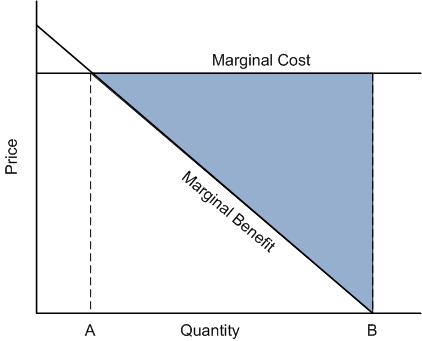
Cost-Volume-Profit Analysis
Now, once a basic understanding of marginal profit and medical cost behavior is achieved, the techniques of cost-volume-profit analysis (CVPA) can be used to further refine the managerial cost and profit aspects of the medical office business unit. CVPA is thus concerned with the relationship among prices of medical services, unit volume, per unit variable costs, total fixed costs, and the mix of services provided.

Assessment
Austin felt that if [*]od were jointly designing all health-related systems and functions of society and government – He’d look at the marginal cost/QALY over all possible ways to spend the next dollar and pick the smallest. How about you?
But, it’s not always going to be on health care services and it probably isn’t given what we’re already spending for those and what we’re getting for that spending.
Conclusion
Your thoughts and comments on this ME-P are appreciated. Feel free to review our top-left column, and top-right sidebar materials, links, URLs and related websites, too. Then, subscribe to the ME-P. It is fast, free and secure.
Link: http://feeds.feedburner.com/HealthcareFinancialsthePostForcxos
Speaker: If you need a moderator or speaker for an upcoming event, Dr. David E. Marcinko; MBA – Publisher-in-Chief of the Medical Executive-Post – is available for seminar or speaking engagements. Contact: MarcinkoAdvisors@msn.com
OUR OTHER PRINT BOOKS AND RELATED INFORMATION SOURCES:
- DICTIONARIES: http://www.springerpub.com/Search/marcinko
- PHYSICIANS: www.MedicalBusinessAdvisors.com
- PRACTICES: www.BusinessofMedicalPractice.com
- HOSPITALS: http://www.crcpress.com/product/isbn/9781466558731
- CLINICS: http://www.crcpress.com/product/isbn/9781439879900
- ADVISORS: www.CertifiedMedicalPlanner.org
- BLOG: www.MedicalExecutivePost.com
- FINANCE:Financial Planning for Physicians and Advisors
INSURANCE:Risk Management and Insurance Strategies for Physicians and Advisors



Share this:

Filed under: Health Economics | Tagged: Austin Frakt PhD, Business of Medical Practice, david marcinko, marginal profit, Medical Cost-Volume-Profit Analysis, QALY, www.BusinessofMedicalPractice.com | 3 Comments »


 The Leading Business Education Network for Doctors, Financial Advisors and Health Industry Consultants