







 Support our online development, and advance our onground research initiatives in free market economics, as we seek to showcase the brightest Next-Gen minds.
THE ME-P DISCLAIMER: Posts, comments and opinions do not necessarily represent iMBA, Inc., but become our property after submission. Copyright © 2006 to-date. iMBA, Inc allows colleges, universities, medical and financial professionals and related clinics, hospitals and non-profit healthcare organizations to distribute our proprietary essays, photos, videos, audios and other documents; etc. However, please review copyright and usage information for each individual asset before submission to us, and/or placement on your publication or web site. Attestation references, citations and/or back-links are required. All other assets are property of the individual copyright holder.
Support our online development, and advance our onground research initiatives in free market economics, as we seek to showcase the brightest Next-Gen minds.
THE ME-P DISCLAIMER: Posts, comments and opinions do not necessarily represent iMBA, Inc., but become our property after submission. Copyright © 2006 to-date. iMBA, Inc allows colleges, universities, medical and financial professionals and related clinics, hospitals and non-profit healthcare organizations to distribute our proprietary essays, photos, videos, audios and other documents; etc. However, please review copyright and usage information for each individual asset before submission to us, and/or placement on your publication or web site. Attestation references, citations and/or back-links are required. All other assets are property of the individual copyright holder.


What it is – How it works?
By Tim McIntosh MBA CFP CMP® MPH
Courtesy: http://www.CertifiedMedicalPlanner.org
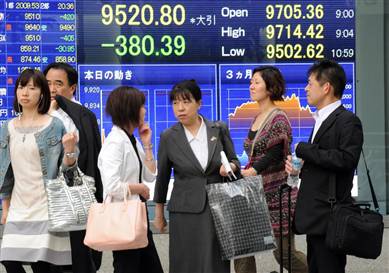
 A future is a financial derivative that represents the purchase of a particular investment at a predetermined date. Futures are traded on a wide range of investments (e.g., baskets of stocks, interest rates, currencies and commodities) and are useful tools for controlling the risk of cash flow timing for those that wish to lock in a particular price for a security.
Futures versus Options
Likewise, they also provide some insight as to the expected future price in the market of the security.
The key difference between futures and options is that futures obligate both parties to make the agreed upon transaction, whereas options give the option holder the right, but not the requirement, to make the transaction.
Trades
Futures are typically traded on an organized exchange, such as the Chicago Board of Trade (e.g., interest rate and stock index futures) or the Chicago Mercantile Exchange (e.g., foreign exchange and stock futures). The design of the contract traded on an exchange typically includes a pre-defined contract size and delivery month.
Margin Maintenance
Also, futures transactions generally require maintaining a margin deposit (i.e., a fraction of the trade value held in reserve to help ensure the final settlement at the contract settlement date) and the recognition of gains and losses on a daily basis with movements in contract prices.
Assessment
The pricing of a futures contract is based upon the price of the underlying security (e.g., the S&P 500 Index price), the opportunity cost of cash (e.g., current borrowing rates) and any distributions expected from the security over the period (e.g., dividends).
MORE: Futures
About the Author
Timothy J. McIntosh is Chief Investment Officer and founder of SIPCO. As chairman of the firm’s investment committee, he oversees all aspects of major client accounts and serves as lead portfolio manager for the firm’s equity and bond portfolios. Mr. McIntosh was a Professor of Finance at Eckerd College from 1998 to 2008. He is the author of The Bear Market Survival Guide and the The Sector Strategist.
Conclusion
Your thoughts and comments on this ME-P are appreciated. Feel free to review our top-left column, and top-right sidebar materials, links, URLs and related websites, too. Then, subscribe to the ME-P. It is fast, free and secure.
Speaker: If you need a moderator or speaker for an upcoming event, Dr. David E. Marcinko; MBA – Publisher-in-Chief of the Medical Executive-Post – is available for seminar or speaking engagements. Contact: MarcinkoAdvisors@msn.com
 8
8
***
Share this:

Filed under: Investing, Portfolio Management | Tagged: commodities, Commodity Futures Trading Commission, derivatives, futures, Managed Futures, Tim McIntosh MBA | Leave a comment »




 The Leading Business Education Network for Doctors, Financial Advisors and Health Industry Consultants