







 Support our online development, and advance our onground research initiatives in free market economics, as we seek to showcase the brightest Next-Gen minds.
THE ME-P DISCLAIMER: Posts, comments and opinions do not necessarily represent iMBA, Inc., but become our property after submission. Copyright © 2006 to-date. iMBA, Inc allows colleges, universities, medical and financial professionals and related clinics, hospitals and non-profit healthcare organizations to distribute our proprietary essays, photos, videos, audios and other documents; etc. However, please review copyright and usage information for each individual asset before submission to us, and/or placement on your publication or web site. Attestation references, citations and/or back-links are required. All other assets are property of the individual copyright holder.
Support our online development, and advance our onground research initiatives in free market economics, as we seek to showcase the brightest Next-Gen minds.
THE ME-P DISCLAIMER: Posts, comments and opinions do not necessarily represent iMBA, Inc., but become our property after submission. Copyright © 2006 to-date. iMBA, Inc allows colleges, universities, medical and financial professionals and related clinics, hospitals and non-profit healthcare organizations to distribute our proprietary essays, photos, videos, audios and other documents; etc. However, please review copyright and usage information for each individual asset before submission to us, and/or placement on your publication or web site. Attestation references, citations and/or back-links are required. All other assets are property of the individual copyright holder.


It is Not What You Think!
[By Lon Jefferies MBA CMP® CFP®]
 A new logic has been surfacing amongst the top minds in the financial planning industry.
Many of my favorite financial authors – Warren Buffett, Josh Brown, Nick Murray, Howard Marks, and others – have proposed the need to redefine the word “risk.”
“Risk” vs “Volatility”
Most investors and financial advisors tend to utilize the words “risk” and “volatility” interchangeably. We measure how risky a portfolio is by examining its potential downside performance.
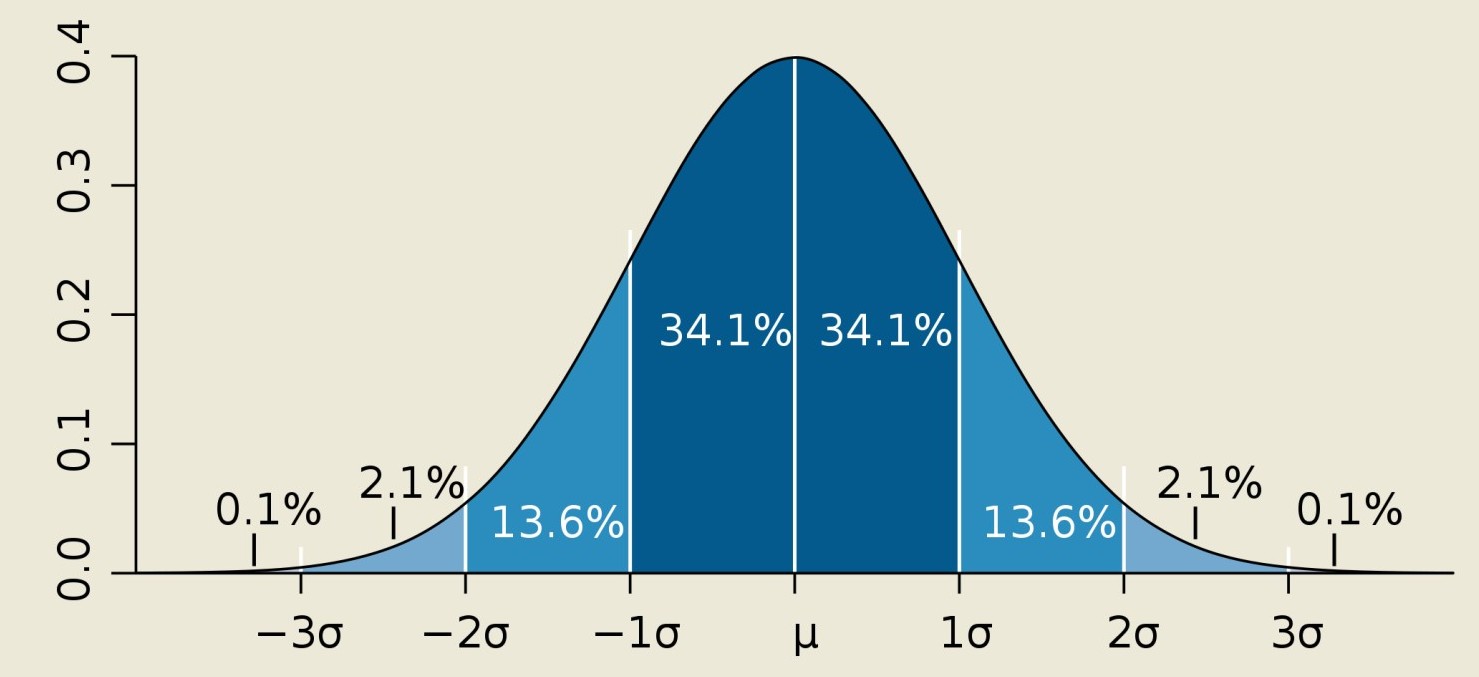
For example, we review how much a similar portfolio lost during 2008 or when the tech bubble popped in 2000-2002. When doing this, we are really talking about volatility rather than risk. Volatility – usually measured by standard deviation – reflects how much a portfolio is likely to increase or decrease in value when the market as a whole fluctuates. Risk, however, is quite different.
Two Threats
Josh Brown characterizes risk as the possibility of two threats:
- The possibility of not having enough money to fund a specific goal, which includes the possibility of outliving your money
- The possibility of a permanent loss of capital.
Example:
In a dramatic example of how volatility is different from risk, consider a retiree with a $10 million portfolio who only spends $50,000 a year. Next, assume the investor experiences a two-year period in which during the first year his portfolio loses 50% of its value and in year two the portfolio earns a 100% return. Thus, after year one the portfolio would only be worth $5 million and after year two it would again be worth $10 million.
Clearly, this is a very volatile portfolio that is subject to a wide range of potential performance outcomes. However, is this portfolio truly risky to the investor? According to Mr. Brown’s first factor, the portfolio is not risky because the investor will have enough money to fund his $50k per year retirement regardless of whether his portfolio is valued at $10 million or $5 million. Additionally, the portfolio is also not risky according to the second factor in that the investor didn’t experience a permanent loss.
Investors tend to view stocks as risky assets because their returns have a large standard deviation (variation from a mean). Similarly, we tend to view money market equivalents such as CDs and savings accounts as very safe investments because their returns have less dispersion, and consequently, are more predictable.
However, rather than considering stocks to be risky and cash equivalents to be safe, it would be more accurate to consider stocks an investment with high volatility and cash to be a holding with low volatility.
***

***
What is the difference?
Suppose it is determined that you need an average rate of return of 6% over time to achieve your retirement goals. Historically, over a sufficiently significant period of time, stocks have returned an average of about 10% per year while cash equivalents have returned about 3% per year. Consequently, if these averages continue in the future, you actually have a very low chance of reaching your retirement goal of not outliving your money if you place money in the “safe” investment of a cash equivalent, while you would actually have a high probability of reaching your retirement goal if you place money in a more volatile basket of stocks.
By this metric, cash is actually the more risky investment because investing in it would increase the probability of outliving your funds. Meanwhile a basket of stocks, if given enough time to achieve its historically average rate of return, is actually the safer investment as it gives you a higher probability of not outliving your nest egg. Thus, while a portfolio of stocks will almost certainly experience more short-term volatility, over an extended period of time it very well may be a safer investment for ensuring your retirement goals are met.
Further, Mr. Brown proposes that the muddying of definition between risk and volatility is something a portion of the financial service industry has done on purpose. Brown suggests that the easiest way to sell someone a product is to first convince them they have a need. If hedge fund managers, insurance agents, and annuity salesmen can make consumers believe that volatility is equal to risk, and that since their products minimize volatility they must also minimize risk, they can achieve more sales.
However, even if an annuity can eliminate downside volatility, if it limits potential return to an amount that is insufficient to achieve the investor’s long-term goals, the investment is still more risky than an investment with more short-term volatility but a higher probability of long-term success.
***
***
Assessment
Next time the market goes through a correction, remember that the drop in your portfolio’s value is a reflection of the potential volatility your portfolio is capable of experiencing. Yet, recall that as long as you don’t sell your assets and suffer a permanent loss of your investment capital, you can allow the market time to recover and achieve its historical rate of return.
Doing so will ultimately make your investment strategy less risky than utilizing investment options that experience less volatility because it maximizes the probability you will eventually achieve your long-term financial goals.
More:
Conclusion
Your thoughts and comments on this ME-P are appreciated. Feel free to review our top-left column, and top-right sidebar materials, links, URLs and related websites, too. Then, subscribe to the ME-P. It is fast, free and secure.
Speaker: If you need a moderator or speaker for an upcoming event, Dr. David E. Marcinko; MBA – Publisher-in-Chief of the Medical Executive-Post – is available for seminar or speaking engagements. Contact: MarcinkoAdvisors@msn.com
OUR OTHER PRINT BOOKS AND RELATED INFORMATION SOURCES:
- PRACTICES: www.BusinessofMedicalPractice.com
- HOSPITALS: http://www.crcpress.com/product/isbn/9781466558731
- CLINICS: http://www.crcpress.com/product/isbn/9781439879900
- ADVISORS: www.CertifiedMedicalPlanner.org
- FINANCE: Financial Planning for Physicians and Advisors
- INSURANCE: Risk Management and Insurance Strategies for Physicians and Advisors
- Dictionary of Health Economics and Finance
- Dictionary of Health Information Technology and Security
- Dictionary of Health Insurance and Managed Care
 8
8
This book was crafted in response to the frustration felt by doctors who dealt with top financial, brokerage, and accounting firms. These non-fiduciary behemoths often prescribed costly wholesale solutions that were applicable to all, but customized for few, despite ever-changing needs. It is a must-read to learn why brokerage sales pitches or Internet resources will never replace the knowledge and deep advice of a physician-focused financial advisor, medical consultant, or collegial Certified Medical Planner™ financial professional.
Parin Khotari MBA [Whitman School of Management, Syracuse University, New York]
http://www.CertifiedMedicalPlanner.org
Share this:

Filed under: Financial Planning, Investing, Portfolio Management | Tagged: Howard Marks, Investing, Josh Brown, Lon Jefferies MBA CFP®, Nick Murray, physician investors, risk and volatility, Warren Buffett | Leave a comment »


 The Leading Business Education Network for Doctors, Financial Advisors and Health Industry Consultants