







 Support our online development, and advance our onground research initiatives in free market economics, as we seek to showcase the brightest Next-Gen minds.
THE ME-P DISCLAIMER: Posts, comments and opinions do not necessarily represent iMBA, Inc., but become our property after submission. Copyright © 2006 to-date. iMBA, Inc allows colleges, universities, medical and financial professionals and related clinics, hospitals and non-profit healthcare organizations to distribute our proprietary essays, photos, videos, audios and other documents; etc. However, please review copyright and usage information for each individual asset before submission to us, and/or placement on your publication or web site. Attestation references, citations and/or back-links are required. All other assets are property of the individual copyright holder.
Support our online development, and advance our onground research initiatives in free market economics, as we seek to showcase the brightest Next-Gen minds.
THE ME-P DISCLAIMER: Posts, comments and opinions do not necessarily represent iMBA, Inc., but become our property after submission. Copyright © 2006 to-date. iMBA, Inc allows colleges, universities, medical and financial professionals and related clinics, hospitals and non-profit healthcare organizations to distribute our proprietary essays, photos, videos, audios and other documents; etc. However, please review copyright and usage information for each individual asset before submission to us, and/or placement on your publication or web site. Attestation references, citations and/or back-links are required. All other assets are property of the individual copyright holder.


By Staff Reporters
SPONSOR: http://www.MarcinkoAssociates.com
***
***
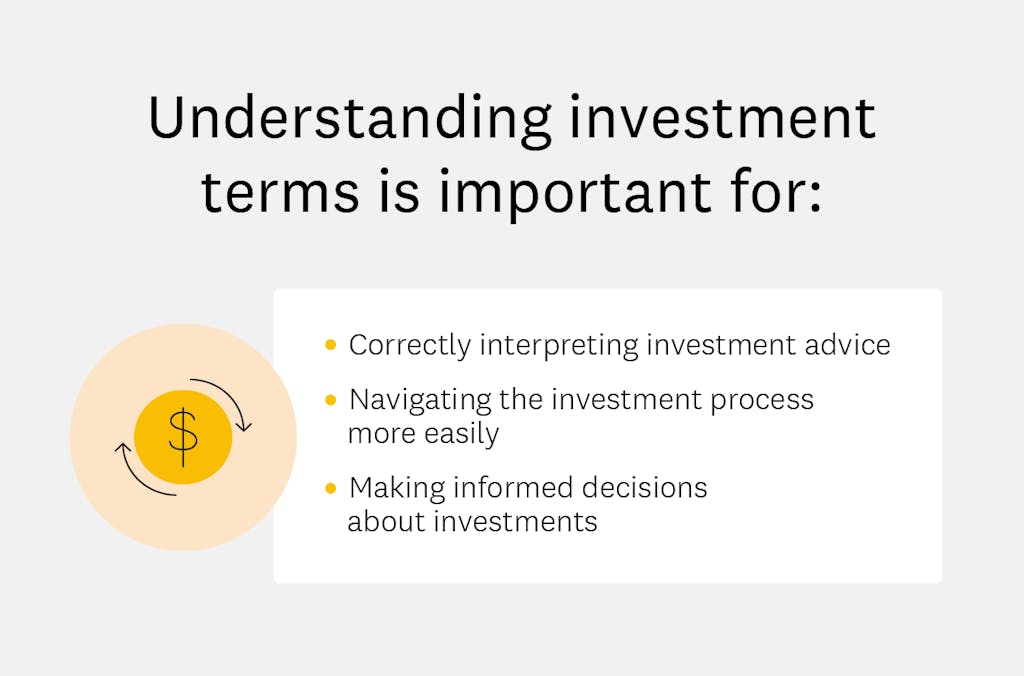
Here is a list of the most common and helpful investment terms you’ll come across and should know.
- Ask. The price that someone looking to sell stock wants to receive.
- Bid. The price that someone is willing to pay for stock.
- Buy. To acquire shares and thereby take a position in a company.
- Sell. To get rid of shares whether because you’ve reached your goal or to prevent losses.
- Bull market. Market conditions in which investors expect prices to rise.
- Bear market. Market conditions in which investors expect prices to fall.
- Dividend. A portion of a company’s earnings paid to shareholders.
- Blue chip stocks. Shares of large and well-recognized companies that have a long history of solid financial performance.
- Earning per share. A company’s net profit divided by the number of outstanding common shares.
- Mutual fund. A collection of investments — stocks, bonds, commodities, and more — bundled together and held in common by a group of investors.
- Asset. Something you own that could generate a return in the form of more assets.
- Asset allocation. Your investment strategy, essentially — the mix of assets you choose to put your money into, whether that be cash, bonds, stocks, commodities, real estate or something else.
- Broker. A person or firm — or robot — that arranges transactions between buyers and sellers in exchange for a commission (that is, a fee).
- Capital gain (or capital loss). The money you make (or lose) on the sale of an asset.
- Diversification. Investing in a variety of sectors, such as health care, energy and IT as well as across different geographic locations.
- Dow Jones Industrial Average. A price-weighted list of 30 blue-chip stocks. It’s often used to help get a sense of the overall health of the stock market, even though it only reflects a small portion of the players.
- Exchange-traded fund (ETF). A collection of investments that is traded like a stock.
- Index fund. A type of mutual fund or exchange-traded fund that allows you to invest in a portfolio that mimics a market index, which is basically a list that tracks the performance of a group of investments either for a specific sector or the overall market.
- Hedge fund. A type of investment partnership. Partners pool money from investors and try out a few different investing strategies. Generally, hedge funds will make riskier investments than your typical investor. They’ll also often use leverage (that is, borrowed money) or place bets against the market to get bigger returns. They make their money by charging their investors management fees based on a percentage of their profits.
- Expense ratio. The percentage-based fee that mutual fund managers charge you to manage your investments.
- Market price. How much it would cost right now to buy or sell an asset or service.
- Securities and Exchange Commission (SEC). An independent government body that was created to protect investors and the national banking system. The SEC enforces laws that maintain orderly, fair and efficient markets.
- Short selling. A tactic available to investors who predict a stock’s price is about to drop. An investor borrows a quantity of shares through a broker and then sells them, intending to repurchase them later, at a lower price, and return them to the lender.
- Stock exchange. A place buyers and sellers come together to buy, sell and trade stock during set business hours. The New York Stock Exchange (NYSE) is the most important stock exchange in the world, but there are a total of 16 exchanges around the world.
- Stock market. Refers in general to the collection of markets and exchanges where the buying, selling and trading of investment vehicles takes place.
- Price per share. A simple way of calculating a company’s market value at a given moment. To find the price per share, you take a company’s most recent share price and multiply it by its total number of outstanding shares.
- Prospectus. A legal document that contains in-depth information about anything you might be planning to invest in: stocks, bonds or mutual funds.
COMMENTS APPRECIATED
Refer and Subscribe
***
***
Share this:

Filed under: "Ask-an-Advisor", "Doctors Only", Financial Planning, Funding Basics, Glossary Terms, Investing | Tagged: economics, finance, Investing, investing doctors, investing terms, investments, Marcinko, personal-finance, stock market, stocks | Leave a comment »
 The Leading Business Education Network for Doctors, Financial Advisors and Health Industry Consultants