







 Support our online development, and advance our onground research initiatives in free market economics, as we seek to showcase the brightest Next-Gen minds.
THE ME-P DISCLAIMER: Posts, comments and opinions do not necessarily represent iMBA, Inc., but become our property after submission. Copyright © 2006 to-date. iMBA, Inc allows colleges, universities, medical and financial professionals and related clinics, hospitals and non-profit healthcare organizations to distribute our proprietary essays, photos, videos, audios and other documents; etc. However, please review copyright and usage information for each individual asset before submission to us, and/or placement on your publication or web site. Attestation references, citations and/or back-links are required. All other assets are property of the individual copyright holder.
Support our online development, and advance our onground research initiatives in free market economics, as we seek to showcase the brightest Next-Gen minds.
THE ME-P DISCLAIMER: Posts, comments and opinions do not necessarily represent iMBA, Inc., but become our property after submission. Copyright © 2006 to-date. iMBA, Inc allows colleges, universities, medical and financial professionals and related clinics, hospitals and non-profit healthcare organizations to distribute our proprietary essays, photos, videos, audios and other documents; etc. However, please review copyright and usage information for each individual asset before submission to us, and/or placement on your publication or web site. Attestation references, citations and/or back-links are required. All other assets are property of the individual copyright holder.


Status Growing in Importance – or Sham
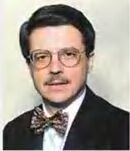
Dr. David Edward Marcinko; MBA, CMP™
And Staff Reporters
 Increasingly, efforts to boost quality and gain better value from the world’s most costly healthcare system are including attention to Maintenance of Board Certification [BOBC], a little-understood but rigorous process by which physicians maintain board certification status and then keep it.
Hillary-Care Redeux
Back in the day, circa late 1970s – early 1980s, medical board certification was indeed a rigorous process; and still is to a very large extent. For example, Democratic presidential candidate Hillary Rodham Clinton, in laying out the quality portion of her three-part healthcare reform plan last year, specifically touted these programs as a key step in enhancing quality. From the presidential campaign trail to hospital and health plan board rooms, Board Certification and the Maintenance of Board Certification is a growing force in the industry.
But, is maintaining recertification status another matter of true quality import?
Major Health Plans On-Board
Several of the nation’s biggest health plans—including Aetna, Cigna, Humana, UnitedHealth Group and national and regional Blue Cross and Blue Shield organizations—are embracing Maintenance of Certification as part of their recognition and reward programs. Physicians who do not participate are not highlighted in plan directories and miss out on higher plan reimbursements.
Yet, why do we have “red flag” issues, “never-events” policies and/or the rise of “checklist-medicine” for risk reduction if these continuing education programs are so effective?
Allow me to cite the raging over-treatment epidemic, especially in specialties like arthroscopic orthopedics, radiology imaging [CT and MRI scans] and invasive cardiology, etc. Not to mention recent, and not so recent, Institute of Medicine [IOM] quality chasm reports for in-hospital patient deaths, complications and infections, etc.
Assessment
Of course, savvy hospital administrators and physician executives, of all stripes, are examining ways to use elements of board certification maintenance to respond to the Joint Commission’s new requirements for physician credentialing and privileging. Furthermore, the National Quality Forum [NQF] and the AQA quality alliance will be considering Maintenance of Certification for quality measurement endorsement.
Source: Cary Sennett and Christine Cassel, Modern Healthcare
Joint Commission Relevance in Modernity
But, is the Joint Commission itself even as relevant today, as in the past? Or – is its [political, quality and economic] status, might and swagger being reduced in favor of modern new-wave insights from health 2.0 collaboration activities and emerging formal organizations like DNV Healthcare Inc., a division of the Norwegian company.
As subscribers and Medical Executive-Post readers are aware, Det Norske Veritas [DNV] has recently been charged with immediately determining if hospitals are in compliance with the Medicare Conditions of Participation [COP]. The company’s authority to accredit hospitals runs through September 26, 2012. DNV joins the American Osteopathic Association [AOA] as the only other national hospital accrediting agency approved by the Centers for Medicare and Medicaid Servicers [CMS].
Conclusion
And so, your thoughts and comments on this Medical Executive-Post are appreciated. Is medical board certification and maintenance status of real value – or just fluff – much like the continuing education and licensure requirements of insurance agents, stock-brokers and financial advisors, etc? Is it less for medical education – and more for liability risk reduction – or PR – you decide?
Disclosure: I am a reformed insurance agent, stock-broker, board certified quality review physician and Certified Financial Planner®.
Speaker:If you need a moderator or speaker for an upcoming event, Dr. David E. Marcinko; MBA – Publisher-in-Chief of the Medical Executive-Post – is available for seminar or speaking engagements. Contact: MarcinkoAdvisors@msn.com
Our Other Print Books and Related Information Sources:
Practice Management: http://www.springerpub.com/prod.aspx?prod_id=23759
Physician Financial Planning: http://www.jbpub.com/catalog/0763745790
Medical Risk Management: http://www.jbpub.com/catalog/9780763733421
Physician Advisors: www.CertifiedMedicalPlanner.org
Subscribe Now:Did you like this Medical Executive-Post, or find it helpful, interesting and informative? Want to get the latest ME-Ps delivered to your email box each morning? Just subscribe using the link below. You can unsubscribe at any time. Security is assured.
Link: http://feeds.feedburner.com/HealthcareFinancialsthePostForcxos


Share this:

Filed under: "Doctors Only", Career Development, Health Law & Policy, Managed Care, Op-Editorials, Quality Initiatives, Research & Development, Risk Management | Tagged: ADA, AMA, AOA, APMA, AQA, COP, david marcinko, Det Norske Veritas, DNV, IOM, Joint Commission, medicare, NQF | 3 Comments »



 The Leading Business Education Network for Doctors, Financial Advisors and Health Industry Consultants