







 Support our online development, and advance our onground research initiatives in free market economics, as we seek to showcase the brightest Next-Gen minds.
THE ME-P DISCLAIMER: Posts, comments and opinions do not necessarily represent iMBA, Inc., but become our property after submission. Copyright © 2006 to-date. iMBA, Inc allows colleges, universities, medical and financial professionals and related clinics, hospitals and non-profit healthcare organizations to distribute our proprietary essays, photos, videos, audios and other documents; etc. However, please review copyright and usage information for each individual asset before submission to us, and/or placement on your publication or web site. Attestation references, citations and/or back-links are required. All other assets are property of the individual copyright holder.
Support our online development, and advance our onground research initiatives in free market economics, as we seek to showcase the brightest Next-Gen minds.
THE ME-P DISCLAIMER: Posts, comments and opinions do not necessarily represent iMBA, Inc., but become our property after submission. Copyright © 2006 to-date. iMBA, Inc allows colleges, universities, medical and financial professionals and related clinics, hospitals and non-profit healthcare organizations to distribute our proprietary essays, photos, videos, audios and other documents; etc. However, please review copyright and usage information for each individual asset before submission to us, and/or placement on your publication or web site. Attestation references, citations and/or back-links are required. All other assets are property of the individual copyright holder.


A MEMORIAL DAY OPINION – EDITORIAL
[Innovation – Not Nationalization – Can Again Lead]
By Dr. David Edward Marcinko; FACFAS, MBA, CPHQ, CMP™
[Publisher-in-Chief]
By Hope Rachel Hetico; RN, MHA, CPHQ, CMP™
[Managing Editor]
Ann Miller; RN, MHA
[Executive-Director]

On this 2010 Memorial Day weekend, please allow us to directly reflect for a moment on the decline of the healthcare, banking and financial services industry in America. And; then somewhat indirectly comment on the hopeful emergence of the web 2.0 phenomena of which we all are a part. The competitive applicability to these sectors should be appreciated by the insightful ME-P reader.
Collapse of Command and Control Monopolies and Oligarchies
Old monopolies everywhere are crumbling because of tougher new competitors and the transparency wrought by electronic connectedness. For example, our old newspaper has to compete with the internet, your electric utility company battles low-cost local start-ups, telephone companies must begin installing fiber optic lines to fend off cable companies; and RIAs and fiduciary focused financial advisors [FAs] will supplant BDs and stock brokers in the financial services sector.
www.CertifiedMedicalPlanner.com

The airline industry collapsed a few years ago, the banking industry has just collapsed, and the auto industry is recovering as we pen this post. [We have a particular affinity for the auto sector however, as the son of a UAW member and step-daughter of Michiganders]. Regardless, the rush to more intense competition cannot be stopped. As a doctor, FA or other business competitor; you either keep pace or get crushed by quasi-oligarchic organizations like the American Medical Association [AMA], American Podiatric Medical Association [FPMA], American Dental Association [ADA], American Osteopathic Medical Association AOMA], Financial Planning Association [FPA], Certified Financial Planner Board of Standards [CFP BoS], College for Financial Planning [CFP] or the National Association of Personal Financial Advisors [NAPFA], etc. What have they, and Wall Street, done for you … lately? Scandal, taint, doubt, lost-credibility, a business-as-usual ennui, lethargy and ruin! Enter www.Sermo.com
Health Insurance Companies
In the last-generation of health insurance companies and related fraternal medical organizations, patients exercised great control over physician selection, had quicker access to specialists and encountered fewer restrictions on care. The reverse was true with financial services. But, because of advancing technology, aging demographics, intense R&D, global manufacturing, and escalating domestic HR costs – competitive market forces against traditional and structured staff model managed care companies – many industry analysts [like us] predicted growth would decline [Yes, greed was also involved as healthcare was presumed a recession-proof sector; and didn’t we all own behemoth big-pharma and HMO stocks in our 401-K, and 403-B plans]? But now, many former stock-brokers and FAs are going rogue; er – independent!
“Although inefficiencies in any business often open up in the short term, and can be greatly exploited by creative and visionary entrepreneurs – as in most business structures – market forces will prevail in the long run”.
Leo F. Mullin, MBA
[Former CEO – Delta Airlines]
Next-Gen with “Fly”
Fortunately, a new generation of enlightened physician and FA entrepreneurs is coming “out-of-the-shadows” as new-wave web 2.0 corporations and RIAs are becoming more flexible, competitive and market responsive. Simultaneously, monolithic and collectivist political ideas keep trying to regulate the medical and financial services workplace with rules, regulations and contracts to control entire populations. Yet, in the new healthcare economy, this new generation of doctors and FAs with “fly,” is headed toward more competition; not less – with more collaboration with patients and clients – regaining self autonomy.
Physician and FA Advocates
Meanwhile, as medical professionals, FAs and patient advocates, we must all choose between staying flexible to ride out tough times – or – adopting a hard, brittle line that will crack under the pressure of competition. We know where we stand at the ME-P, do you?
Flexibility and Virtual Reality
In recent years, many large corporations and top-down business models were not market responsive and change was not inherent in their DNA. These traditional organizations represented a rigid or “used-to-be” mentality, not a flexible or “wanna-be” mindset; according to business columnist Alan Webber. Some financial advisory corporations, and today’s emerging health 2.0 initiatives, may possess the market nimbleness that cannot be recreated in a controlled or collectivist [nationalistic] environment. And so, going forward, it is not difficult to imagine the following new rules for the new financial and virtual medical ecosystem.
[A] Rule No. 1
Forget about “SEC suitability and FINRA rules”, large office suites, surgery centers, fancy equipment, larger hospitals and the bricks and mortar that comprised traditional medical practices or financial product delivery systems. One doctor or niche focused FA with a great idea, good bedside manners or competitive advantage, can outfox a slew of public servants, the AMA, SEC, ADA or FINRA “faux copy-cat examiners”, while still serving the public – and patients – and making money. It’s now a unit-of-one economy where “Me Inc.”, is the standard. Physicians and FAs must maneuver for advantages that boost their standing and credibility among patients, peers, payers, customers and clients. Examples include patient satisfaction surveys; outcomes research analysis, evidence-based-medicine, physician economics credentialing and true integrated fiduciary-focused financial planning.
However, we should also realize the power of networking, vertical integration and the establishment of virtual RIAs or medical practices, which come together to treat a patient, or help a client, and then disband when a successful outcome is achieved. Job security is earned with more successful outcomes; not necessarily a degree, automatic AUMs, certifications or onsite presence. In fact, some competition experts, like Shirley Svorny PhD, a professor of economics and chair of the Department of Economics at California State University, wonder if a medical degree is a barrier – rather than enabler – of affordable healthcare.
Others even presume the establishment of virtual medical schools and hospitals, where students and doctors learn and practice their art on cyber-entities that look and feel like real patients, but are generated electronically through the wonders of virtual reality units. The same can be said for the financial services industry, although much farther down-line given its current slow rate of real education and quasi-professional acceptance.
[B] Rule No. 2
Challenge conventional wisdom, think outside the traditional box, recapture your dreams and ambitions, disregard conventional gurus and work harder than you have ever worked before. Remember the old saying, “if everyone is thinking alike, then nobody is thinking”. Do collective-nistas and nationalized healthcare advocates react rationally; or irrationally? [THINK: Wall Street, medical unions]
[C] Rule No 3
Differentiate yourself among your healthcare and financial advisory peers. Do or learn something new and unknown by your competitors. Market your accomplishments and let the world know. Be a non-conformist. Conformity is an operational standard and a straitjacket on creativity. Doctors and FAs should create and innovate, not blindly follow organization or political “union” leaders [shop stewards, BDs, etc] into oblivion.
[D] Rule No 4
Realize that the present situation is not necessarily the future. Attempt to see the future and discern your place in it. Master the art of the quick change with fast but informed decision making. Do what you love, disregard what you don’t, and let the fates have their way with you. Then, decide for yourself if you are of this ilk – and adhere to any of the above rules? Or, just become an employed [government, BD] doctor or FA shill. Just remember that the political party, or monopoly that can give you a job, can also take it away [THINK: LB, ML, Wachovia, national healthcare, etc].

Memorial Day Considerations
Finally, on this Memorial Day weekend, consider that life and career is a journey, and that in this country we have the choice to ponder or pursue any, and all of the above options, and more. We have the ability to think, cogitate and ruminate, as we have done here today. So – please – thank those who have helped turn this idealistic philosophy, into pragmatic daily reality.
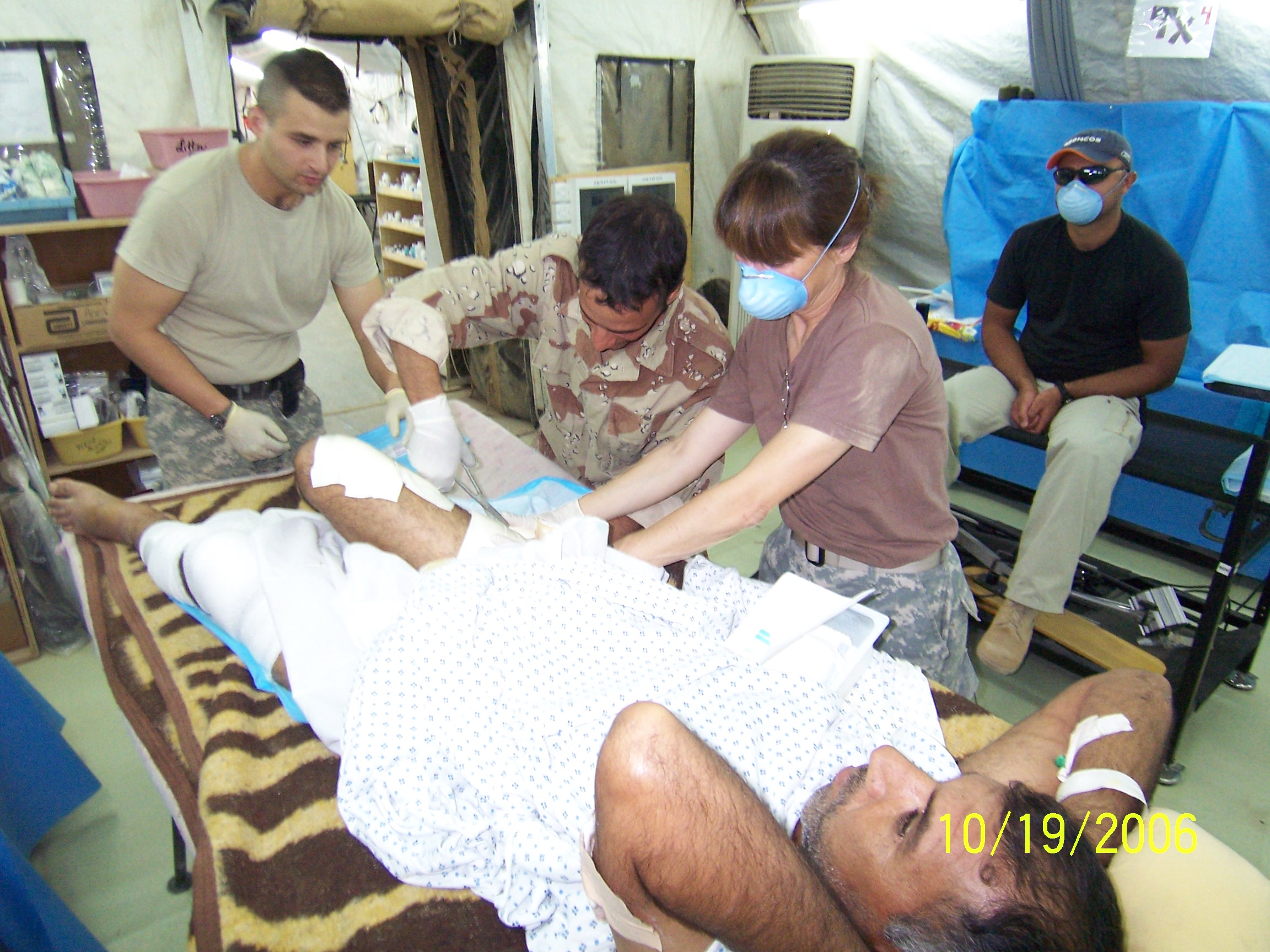
For us personally, we thank Bonze Star Medal Winner Captain Cecelia T. Perez, RN. Now – ponder and consider – who do you thank? If no one has impacted you up-close on this Memorial Day weekend and national holiday, please visit our military channel to reflect, comment and opine.
Link: https://healthcarefinancials.wordpress.com/category/military-medicine
Conclusion
And so, your thoughts and comments on this Medical Executive-Post are appreciated. Feel free to review our top-left column, and top-right sidebar materials, links, URLs and related websites, too. Then, be sure to subscribe to the ME-P. It is fast, free and secure.
Link: http://feeds.feedburner.com/HealthcareFinancialsthePostForcxos
Speaker: If you need a moderator or speaker for an upcoming event, Dr. David E. Marcinko; MBA – Publisher-in-Chief of the Executive-Post – is available for seminar or speaking engagements. Contact: MarcinkoAdvisors@msn.com or Bio: www.stpub.com/pubs/authors/MARCINKO.htm
Get our Widget: Get this widget!
Our Other Print Books and Related Information Sources:
Practice Management: http://www.springerpub.com/prod.aspx?prod_id=23759
Physician Financial Planning: http://www.jbpub.com/catalog/0763745790
Medical Risk Management: http://www.jbpub.com/catalog/9780763733421
Healthcare Organizations: www.HealthcareFinancials.com
Health Administration Terms: www.HealthDictionarySeries.com
Physician Advisors: www.CertifiedMedicalPlanner.com
Subscribe Now: Did you like this Medical Executive-Post, or find it helpful, interesting and informative? Want to get the latest ME-Ps delivered to your email box each morning? Just subscribe using the link below. You can unsubscribe at any time. Security is assured.
Link: http://feeds.feedburner.com/HealthcareFinancialsthePostForcxos
Share this:

Filed under: Career Development, CMP Program, Military Medicine, Op-Editorials, Sponsors | Tagged: ADA, alan webber, AMA, ann miller, AOA, APMA, BD, broker-dealers, bronze star award, business competition, cecelia perez, certified financial planner, certified medical planner, CFP, CFPBoS, CMP, College Financial Planning, david marcinko, dentists, doctors, FA, financial advisor, financial planning association, financial services, financial services sector, FPA, health 2.0, healthcare, hope hetico, labor unions, Managed Care, Memorial Day, NAPFA, national healthcare, osteopaths, physicians, podiatrists, RIA, RIAs, stock-brokers, UAW, Wall Street, web 2.0 | 10 Comments »







 The Leading Business Education Network for Doctors, Financial Advisors and Health Industry Consultants