Professional Relations 101

Establishing Rapport within Your Medical Community

Staff Writers 

The following are useful “tips and pearls” to enhance your awareness among known and unknown physician colleagues in your area: 

  • Send office announcements to all health professionals in the community. Include pharmacies, pediatricians, family practitioners, nursing and convalescent facilities. All are potential sources of patient referrals.
  • Meet other health professionals personally and establish a one-to-one relationship with them. This will serve to educate them to your abilities and practice.
  • Send written reports to all practitioners who refer patients.
  • Do not hesitate to refer patients for consultations, as indicated. This is not only good business sense but good medicine.
  • Use novel business cards, such as the new CD-ROMs cut into the size of a standard business card, by One Voice Technologies, of San Diego. For about a dollar, depending upon quantity, you can order a labeled disc with all the business information of a standard card, which also functions as a CD-ROM containing up to 100 megabytes of multi-media data about your practice.

So, how did you establish yourself and practice brand, in your local area? 

For related info: The Business of Medical Practice [Advanced Profit Maximization Techniques for Savvy Doctors]
http://www.springerpub.com/prod.aspx?prod_id=23759 


The Health Insurance Paradigm Shift

Medical Industry Changes to Wholesale Mentality

Staff Writers  

Until a decade ago, most doctors were probably more concerned with acquiring, maintaining or improving their medical acumen than worrying about practice management or personal financial planning.

And this was a good strategy, until recently. 

Introduction 

Variably, since 1990-2000 or so, medical professionals have not only worked harder to earn a living, but that living has not been as lucrative as it once was. Doctors today are working longer hours, diagnosing and treating patients faster; and augmenting their fear of malpractice with the fear of compliance audits like HIPAA, and literally risk their lives as they treat an increasing number of patients infected with HIV, herpes and hepatitis C; etc.  

What do they get for all their trouble? Slowly, a lifestyle that is sinking lower than many of the middle class patients they treat.

The Dramatic Shift

This is a dramatic change from the way things used to be in medicine. Some pundits even use the expression “health insurance payment paradigm shift” because the way doctors practice medicine – and the manner in which they get paid – has drastically changed.

This change has been from an individual retail mentality – to a wholesale and collective one. 

Other experts argue that this is a better deal for patients, while others document that there are more uninsured or underinsured patients than ever before.  

Nevertheless, a study done a few years ago revealed that almost 45 percent of all physicians are now corporate employees, and that private doctors do 40 percent less pro bono charity work than they did in the fee-for-service reimbursement system.  

Why; because they can no longer afford to work for free. 

Medicine’s Lost Professional Status 

Regardless of philosophy, one thing is certain: medical professionals have lost their financial clout, professional status and social standing; as some hospitals are even paid by the U.S. government not to train certain specialist physicians.  

And, twenty percent of medical schools are affiliated with business schools and practitioners are experiencing profound depression because of the managed care insurance crisis. 

Assessment 

The medical profession and healthcare industry is experiencing a professional crisis of conscience; a personal crisis of economics, and a very real problem that hurts everyone, doctor, payer and patient alike.   

Conclusion 

How and why this shift happened is very complex, but there are three main factors involved: (1) demand and supply side inequalities, (2) healthcare technology cost escalation, and (3) socio-political timing and demographics.  

What are your own causative thoughts, and/or local and national ideas on the shifting debacle?

For more related information:Risk Management and Insurance for Physicians and Advisors” http://www.jbpub.com/catalog/9780763733421 

Cultivating Complimentary Medical Practitioners

Join Our Mailing List

Increasing Referrals from the Alternative Medical Community

[By Staff Writers]

Introduction 

Recent medical marketing surveys indicate that almost one-third of most managed care plan patients already use some form of complementary medicine and one-third more are considering exploring these new, and often ancient, techniques. Nationally, it is estimated that American are spending over $ 20 billion per year, including 600 million visits annually on complementary and alternative medicine; and these figures will  increase in the future. 

What is Alternative Medicine? 

Complementary medicine covers a broad range of topics, philosophies and approaches, such as: herbal formulas, acupuncture, chiropractors, massage therapy, mind-body techniques, neurofeedback, nutritional therapy and traditional Chinese medicine. 

What Common Conditions are Treated? 

The following symptoms have shown treatment success when conventional medicine has not produced the results that both patients and physicians desire:

· allergies

· anxiety

· back pain

· cluster headaches

· depression

· digestive problems

· headaches

· sprains and strains 

How Legitimate is Complementary Medicine? 

In a word; increasingly. For example, more than 50 US medical schools now teach some sort of alternative medicine as part of their standard medical curriculum. Managed Care Organizations such as Oxford Health Plans, in Norwalk, Conn., HealthCare Plan, in Buffalo, NY, HealthEast, in St. Paul, MN, and Pre-paid Health Plan of Syracuse, NY, all have panels of non-traditional healthcare providers. Now, there are far too many-to count; today. 

Should Traditionalists learn about these concepts?

Yes, but only if you want your practice to flourish. Cultivating these referral sources is also an excellent marketing idea.

***

0b985530904385_56389b1c01809

[Bang the Complimentary Drum]

**

Visionary Thoughts 

According to Dr. Rob Gleser, an internist in Denver, some medical doctors dismiss alternative care out of fear:

“What it comes down to is fear of change. But integrating our practice with alternative medicine, allows us to practice as more effective physicians And, I believe we make a better income than if we were concentrating only on traditional care”. 

What are your thoughts on the matter? Do you refer, and receive referrals, from the alternative medical community?

Assessment

Please comment on your experiences; positive or negative?

Conclusion

Feel free to review our top-left column, and top-right sidebar materials, links, URLs and related websites, too. Then, subscribe to the ME-P. It is fast, free and secure.

Speaker: If you need a moderator or speaker for an upcoming event, Dr. David E. Marcinko; MBA – Publisher-in-Chief of the Medical Executive-Post – is available for seminar or speaking engagements. Contact: MarcinkoAdvisors@msn.com

OUR OTHER PRINT BOOKS AND RELATED INFORMATION SOURCES:

Product DetailsProduct DetailsProduct Details

***

Enticing HMOs for Practice Acceptance

Take Care … Your Wishes

Staff Writers   


When, and if, you decide to be included in an HMO network, keep in mind the following considerations just as the HMO itself considers whether or not to include your practice in their network: 


· Is there a local need for your practice?

· Is your practice respected in the medical community?

· Is it profitable enough so that HMOs feel sure in your future survival?

· Do you pursue a strategic plan that affords a seamless union should you decide to sell or merge at a later date.

· Do you have the HR, capital and IT service to synergize with the plan?

· Are you familiar with basic business, managerial and financial principals; including an understanding of horizontal and vertical integration, cost principals and cost-volume-profit analysis?

· Are you willing to treat all conditions and patient types in your specialty?

· Is your office readily accessible with barrier free design (OSHA)?

· Is your office HIPAA, EMTALA, EMR, etc compliant?

· Do you have the appropriate emergency resuscitation equipment?

· If a part time office, is it open at least 20 hours / week?

· Do you offer 24/7 on-call coverage?


Remember, you can always appeal a declination, or renegotiate a contract after expiration.

So, what is you experience in the matter?

For related info: The Business of Medical Practice [Advanced Profit Maximization Techniques for Savvy Doctors]
http://www.springerpub.com/prod.aspx?prod_id=23759 

The Employed Physician Business Model

Employed Doctors Enjoy Several Compensation Options

By Dr. David Edward Marcinko; MBA, CMP™

biz-book1According to corporate medical recruiter Kris Barlow RN MBA, physicians can select from various employment models that may include fringe benefit packages (life, health, dental, disability insurance; medical society and hospital dues, journals, vacations, auto, and CEUs, etc.) equal to 25-40% of salary [personal communication]. 

And, this medical business model is fast growing as the various types below demonstrate. 

Independent Contractor or Employee 

A payer has the right to control or direct only the result of the work done by an independent contractor, and not the means or methods of accomplishing the result.

By contrast, anyone who performs services for another is an employee if he or she can control what will be done and how it will be done. Employed physicians are usually not compensated as independent contractors. 

New Practitioner Salaries: 

Published annually for new practitioners by The Health Care Group®, the Physician Starting Salary Survey collects and collates nationwide data on new physician employment compensation.

The guide reports first, second and third year of starting physicians’ salary and incentives, but with large high-low spreads. It also includes information about co-ownership provisions, benefits and restrictive covenants.

The survey is categorized by specialty and results are based on information provided by medical practices, health care advisors, physicians, and health care consultants across the country. The figures represent basic elements of the bid/ask process for establishing optimal salary and benefit amounts for new physicians entering private practice.

Available for no charge from the Health Care Group (800.473.0030 or www.HealthCareGroup.com) 

Public Equity Relationships 

The public equity roll-up model of medical partnerships in the late 1990s offered employed physicians experience within a large group whose decisions were made by managers.  Compensation was controlled and replaced with the stress of investor expectations, as Physician Practice Management Corporations (PPMCs) needed to grow revenues by 10-15% annually to maintain price-to-earnings ratios. If stock was held in a growing PPMC, physician employees shared in both practice and corporate compensation

But, by 2007, a survey of the Cain Brothers Physician Practice Management Corporation Index of public PPMCs, revealed a market capitalization loss of more than 95% since inception.

Newer Healthcare Delivery and Physician Compensation Models

Today, whether independent or employed, physicians can pursue several creative compensation models not available a decade ago:

MSO Contracting: 

According to consultant Jeffrey Peters, physicians maintain private practice in this model, but contract with a management services organization to relieve administrative burdens. Physicians maintain control with less stress, but, as MSO contracts are expensive (18-45% revenue), compensation diminishes, and rests on MSO competence.

Locum Tenens Practitioner:

Locum Tenens (LT) is an alternative to full-time employment for most specialties. Some younger physicians enjoy the travel, while mature physicians like to practice at their leisure.

Employment factors to consider include: firm reputation, malpractice insurance, credentialing, travel and relocation expenses (which are negotiable).  However, a LT firm typically will not cover taxes. 

Cash Based Compensation:  

A Cash Based Compensation (CBC) model attracts patients who pay cash for desirable services, such as surgeons who dispense scar reducers or in areas such as pain relief, weight loss, aesthetic procedures, and natural health.  

Any well-rounded CBC program should include: patient demand; low entry cost; little marketing costs; existing employees to administer the program; and an operational plan. With time and effort, profit for physician compensation may increase 10-20% annually.

Values Based Health Insurance Model:

According to some pundits,instead of the one size fits all approach of traditional health insurance, a “clinically-sensitive” cost-sharing system that supports co-payments related to evidence-based value for targeted patients seems plausible. 

In this model, out-of-pocket costs are based on price and a cost/quality tradeoff in clinical circumstances: low co-payments for interventions of highest value, and higher co-payments for interventions with little proven health benefit. Smarter benefit packages are designed to combine disease management with cost sharing to address spending growth.

Global Healthcare Model: 

American businesses are extending their cost-cutting initiatives to include offshore employee medical benefits, and facilities like the Bumrungrad Hospital in Bangkok, Thailand (cosmetic surgery), the Apollo Hospital in New Delhi, India (cardiac and orthopedic surgery) are premier examples for surgical care. Both are internationally recognized institutions that resemble five-star hotels equipped with the latest medical technology.  

Countries such as Finland, England and Canada are also catering to the English-speaking crowd, while dentistry is especially popular in Mexico and Costa Rica. Although this is still considered “medical tourism,” Mercer Health and Benefits was recently retained by three Fortune 500 companies interested in contracting with offshore hospitals and JCAHO has accredited 88 foreign hospitals through a joint international commission.  

To be sure, when India can discount costs up to 80%, the effects on domestic hospital reimbursement and physician compensation may be assumed to increase downward compensation pressures.

dhimc-book1Conclusion

Regardless of the salaried compensation model, its review and understanding is vital for long-term success.

How have the above compensation models affected your medical practice business model, and salary, if any?

Speaker: If you need a moderator or a speaker for an upcoming event, Dr. David Edward Marcinko; MBA is available for speaking engagements. Contact him at: MarcinkoAdvisors@msn.com

Product Details

The Independent Physician Business Model

Self-Employed Physician Compensation Models Vary

By Dr. David Edward Marcinko; MBA, CMP™

By Hope Rachel Hetico; RN, MHA, CMP™ 

According to medical benefits consultant Eric Galtress, physicians can still select from traditional self-employment compensation models [personal communications] as outlined below.  

But, the trend does seem to be against self-employment.  

Independent Physicians 

A self-employed physician has great freedom but less security, because relationships with an employer are defined in return for a set compensation. Typically, this option is ideal for those who desire control, don’t work well in structured environments, and are committed to maximizing personal compensation.

Same-Specialty Group Partnerships

A same-specialty partnership is more restrictive than independent practice, and must balance control with the security that comes from working with colleagues along a continuum-of-care. Internal competition may be fierce, but partners maintain some autonomy while reaping rewards from economies of scale. More personal time is available too, but compensation is based on individual and group performance.

Multi-Specialty Group Partnerships

The partners of a multi-specialty group have even more restrictions, but harvest power from an expanded group of physicians and the presence of a vertically integrated referral chain. Because more disciplines are within the group, a partner might be well-positioned to capture additional prospective payment contracts.

The Compensation versus Value Paradox 

Regardless of the model, physician compensation is inversely related to practice value.

In other words, the more a doctor takes home in compensation, the less the practice is worth and vice versa. This is the difference between a short-term and long-term compensation strategy.

In-Sourced Entrepreneurs 

The classic example is an inpatient specialist or hospitalist. The National Association of Inpatient Physicians (NAIP) estimated the model encompassed 40,000 hospitalists in 2005, with an average salary of $171,001. Both figures are growing.

Out-Sourced Entrepreneurs

Some physicians are risk-tolerant and utility-neutral when seeking other compensation opportunities.

For example, Vanderbilt University-trained neurologist Michel Burry, MD is a hedge fund manager at Scion Capital, LLC; Dimitri Sokoloff, MD, MBA is a venture capitalist on Wall Street; and Harvard-trained emergency room physician Gigi Hirsch, MD, is the founder of a pharmaceutical industry physician executive search firm.

Conclusion

Regardless of the independent business or physician compensation model, degree or medical specialty, its review and understanding is vital for long-term success.

Now, going forward, will the independent medical business model survive; or is it domed?

More info: http://www.springerpub.com/prod.aspx?prod_id=23759

Speaker: If you need a moderator or a speaker for an upcoming event, Dr. David Edward Marcinko; MBA is available for speaking engagements. Contact him at: MarcinkoAdvisors@msn.com


Back to Medical School – Not

Certified Medical Planner

Physician Education and Re-engineering 

By Dr. David Edward Marcinko; MBA, CMP™

[Publisher-in-Chief]dem2

The Times … are a Changing 

Absent significant health reforms, it is important for healthcare providers to stay informed and current as to the volatile direction that health care is taking in this country. And, it is vital for every physician to learn as much about medically related business and financial topics as possible.  

In fact, several medical schools have even initiated business certification and degree programs, and other medical colleges along with the private sector will do the same going forward. This will allow the Profession to make the transition from a supply based medical system, to a demand driven one. It will also ensure that practices are operated as a Strategic Business Unit (SBU), and not like the “home office” medical practices of the past.

The Trend

Surprisingly, the trend in managed care now appears to be moving toward giving control back to informed physician-executives, who “stay the course” and continue to practice medicine.  

However, many physicians, nurses and healthcare workers don’t see it this way and become depressed. Pragmatically, the future healthcare industrial complex will offer great opportunities to change medicine for the better.

One way to accomplish this goal is to run your practice like a business and integrate management concepts with tem of trusted team of advisors, or formally re-educate yourself.  

Online master’s degree programs, for medical professionals, like those offered at Regis University (303) 964-5447, the University of Tennessee (423) 974-1768, Washington University (Olin) in St. Louis (888-273-6820), and the University of Wisconsin (608) 263-4889, may also help.

Example:

To illustrate this education premium, total compensation for a full time and experienced Chief Medical Officer (CMO) increased 8% annually the last few years, and more than half were working toward an advanced management degree.

But, CMO turnover is becoming alarmingly high of late; and may not be the great career move it once was. 

Still, since an MBA is a huge time, and money investment ($30-90,000), it is not for everyone. And, do not expect increased earnings or an automatic managerial position without experience.  

telehealth

Assessment

So instead, consider earning the professional fiduciary designation Certified Medical Planner [CMP™], which integrates personal financial planning principles with medical practice management acumen http://www.CertifiedMedicalPlanner.org

For more information: Professor Hope R. Hetico; RN, MHA, CMP™ MarcinkoAdvisors@msn.com or [770.448.0769 ph]

Conclusion

Your thoughts and comments on this ME-P are appreciated. Feel free to review our top-left column, and top-right sidebar materials, links, URLs and related websites, too. Then, subscribe to the ME-P. It is fast, free and secure.

Link: http://feeds.feedburner.com/HealthcareFinancialsthePostForcxos

Speaker: If you need a moderator or speaker for an upcoming event, Dr. David E. Marcinko; MBA – Publisher-in-Chief of the Medical Executive-Post – is available for seminar or speaking engagements. Contact: MarcinkoAdvisors@msn.com

OUR OTHER PRINT BOOKS AND RELATED INFORMATION SOURCES:

Product DetailsProduct Details

Product Details

Physicians “Stay the Course”

Join Our Mailing List

“Don’t give up Medical Practice, Yet!”

By Dr. David Edward Marcinko; MBA, CMP™dr-david-marcinko 

Practicing Medicine … is Hard to Do 

Is practicing medicine today, really that tough? Increasingly, the answer is “Yes”, according to our doctor clients and the docs we interviewed for this post.  

And, it’s no wonder that Dr. Regina E. Herzlinger – the Nancy R. McPherson professor of business administration and chair at Harvard Business School and author of the books Creating New Healthcare Ventures and Market Term in Healthcare – says that many medical professionals have become depressed and want to give up their careers, entirely. 

For example, Gigi Hirsch, MD, a former ER physician and instructor at Harvard Medical School grew so disenchanted with clinical medicine, that she ditched her career and started her own business, MD IntelliNet, in Brookline, Mass. The company places doctors in non-traditional jobs by pairing them with venture capitalists and other businesses seeking physicians [personal communication].  

In the same light, Michael Burry, MD, a promising young neurologist from Stanford and Vanderbilt, rejected his medical career to become a private portfolio manager for Scion Capital Management, as did Harvard trained radiologist, Faraz Naqvi, MD, the former fund manager for Dresdner RCM Biotechnology Fund [personal communication]. 

Other notables include Dr. Dimitri Sogoloff, MBA of Alexandra Investment Management, LLC, and Dr. Ken Shuben-Stein, CFA©, formerly of Promethean Investing, a hedge fund in New York City [personal communication].   

In a final example, Dr. Laura Eackloff, 45 was a podiatrist for 10 years and thoroughly enjoyed treating patients, but she hated spending more time on the phone negotiating with health insurance companies than examining her patients. “Honestly, health care is a business, and I didn’t like the business of medicine,” said Eackloff, who shut down her practice and opened Gotta Knit, a yarn store in New York City’s Greenwich Village. Her friends and family were extremely supportive of her decision to help people with their hands instead of their feet.

Source: Geoff Williams, Entrepreneur.com [11/27/07]

Assessment

But, Herzlinger implores in her book, Market Driven Healthcare, “don’t give up practice, yet.”  

So, will you stay the course – or abandon ship – and what are your alternatives?

Conclusion

Your thoughts and comments on this ME-P are appreciated. Feel free to review our top-left column, and top-right sidebar materials, links, URLs and related websites, too. Then, subscribe to the ME-P. It is fast, free and secure.

Speaker: If you need a moderator or speaker for an upcoming event, Dr. David E. Marcinko; MBA – Publisher-in-Chief of the Medical Executive-Post – is available for seminar or speaking engagements. Contact: MarcinkoAdvisors@msn.com

OUR OTHER PRINT BOOKS AND RELATED INFORMATION SOURCES:

Product DetailsProduct Details

Product Details

Managed Care Backlash?

A True “Sea-Change”

By Dr. David Edward Marcinko; MBA, CMP

Publisher-in-Chief 

Does anyone recall a study several years ago by The MEDSTAT Group and JD Power and Associates, which surveyed nearly 30,000 physicians – participating in 150 healthcare plans and located in 22 different markets – nearly seven of ten physicians considered themselves “anti-managed care” with capitation accounts declining in nearly every HMO category. 

Of course, dis-satisfaction with financial reimbursement was the leading factor back then; but 4 other major factors drive physician’s rating of health plans now, as listed below: 

  • Satisfaction with financial reimbursement
  • Administration
  • Policies impacting on care quality
  • Support of clinical practice
  • Limits on medical care

Nevertheless, HMOs had not been initially unresponsive to this managed care backlash. 

For example, since 1998, managed care companies and their allies fought against restrictive new proposed regulations and spent more than $112,000 per lawmaker to lobby Congress.

This 60 million dollar outlay was four times the $14 million plus spent by medical organizations, trial lawyers ($1 million), unions ($1.4 million) and consumer groups ($8 million) to press for passage of the failed Patients Bill of Rights.

The $60 million dollar lobbying tab is also 50 percent higher than the $40 million dollars that tobacco interests spent to kill legislature to raise cigarette taxes to curb teenage smoking! 

But, there have been some recent physician victories.  

For example, the Independence Blue Cross (IBC) and the Pennsylvania Orthopedic Society agreed to settle a class action lawsuit about its payment policies, in July 2003, with payouts in 2004. Members of the class were to receive benefits worth an estimated $40 million, but more importantly, IBC was to disclose its standard fee schedules, changes applicable to provider’s specialty, and policies that may have effected reimbursement.  IBC also replaced its independent procedure designation with Current Procedure Terminology’s (CPT’s) separate procedure designation, and was to process claims in accordance with established standards.

Finally, the insurance company will establish a formal resolution process for provider payments appeals.  

Current and newly defunct IBC subsidiaries include QCC Insurance Company, Keystone Health Plan East, Amerihealth HMO, Amerihealth, Amerihealth HMO New Jersey, or Amerihealth New Jersey. 

Can you report a victory to our readers, in your own case?

Is this a sea-change, or merely an isolated event?

Concierge Medicine – New Wave or Drought?

Join Our Mailing List

Boutique Medical Practices – Wave of the Future or Mirage?

[By Dr. David Edward Marcinko; MBA, CMP™]dr-david-marcinko1

Briefly, a new-wave boutique, or concierge medical practice business model requires an annual retainer fee for personalized treatment that includes amenities far beyond those offered in the typical practice. And, as doctors may not accept Medicare patients for two years thereafter, there is no going back to the economic oasis if the model doesn’t pan out.

Rather, patients pay annual out-of-pocket fees for top tier service, but also use traditional health insurance to cover allowable expenses, such as inpatient hospital stays, outpatient diagnostics and care, and basic tests and physician exams.   

Typical annual fees can range from $1,000 to $ 5,000 per patient, to family fees that top $20,000 a year, or more.  The concept, initially developed for busy corporate executives, has now made its way to those desiring such service; but the masses have been slow to accept the new business model. 

Conclusion

Your thoughts and comments on this ME-P are appreciated. Feel free to review our top-left column, and top-right sidebar materials, links, URLs and related websites, too. Then, subscribe to the ME-P. It is fast, free and secure.

Speaker: If you need a moderator or speaker for an upcoming event, Dr. David E. Marcinko; MBA – Publisher-in-Chief of the Medical Executive-Post – is available for seminar or speaking engagements. Contact: MarcinkoAdvisors@msn.com

OUR OTHER PRINT BOOKS AND RELATED INFORMATION SOURCES:


Product DetailsProduct DetailsProduct Details     

The Hospitalists [Evolved]

Join Our Mailing List

Whither the Hospitalists? 

By Dr. David Edward Marcinko; MBA, CMP™

[Publisher-in-Chief] 

New Role also includes Hospital Based Medical Groups 

The usual role of inpatient care in this country, for many decades, saw hospitalized patients cared for by their primary care doctor or admitting physician. 

Although this model had the advantage of continuity, and perhaps personalization, it often suffered because of the limited knowledge base of the physician, as well as familiarity with the available internal and external resources of the hospital.  Furthermore, the limited time spent with each individual patient prevented the physician from becoming the quality leader in this setting.

These shortcomings have led hundreds of hospitals around the country to turn to the hospitalists as dedicated inpatient specialists. The National Association of Inpatient Physicians (NAIP) estimates the model could result in up to 50,000 hospitalists by the Year 2008. The term hospitalist was coined by Dr. Robert M. Wachter of the University of California at San Francisco. It denotes a specialist in inpatient medicine (personal communication). 

At its center is the concept of low cost and comprehensive broad based care in the hospital, hospice or even extended care setting. If, well designed, hospitalist programs can offer benefits beyond the often cited inpatient efficiencies they bring.

For example, the average length of stay for patients on the medical service of UCSF’s Moffitt-Long Hospital initially fell by 15%, compared to historical controls adjusted for case mix. There was no reported decrease in patient satisfaction or clinical outcomes. 

Similarly, another integration model is “on-site” employee affiliations that represent an adjustment of the hospitalist concept. This redeployment of existing MDs into the workplace (factory, police station, office building) or retail setting (Walmart, Intel Corp, Microsoft, IBM etc) is another exciting challenge in heath care today.

The keys to success are thoughtful implementation and a commitment to measure the results of change and use the data to produce further innovations. 

***

Hospital

***

Conclusion

Your thoughts and comments on this ME-P are appreciated. Feel free to review our top-left column, and top-right sidebar materials, links, URLs and related websites, too. Then, subscribe to the ME-P. It is fast, free and secure.

Speaker: If you need a moderator or speaker for an upcoming event, Dr. David E. Marcinko; MBA – Publisher-in-Chief of the Medical Executive-Post – is available for seminar or speaking engagements. Contact: MarcinkoAdvisors@msn.com

OUR OTHER PRINT BOOKS AND RELATED INFORMATION SOURCES:

Product Details 

MARCINKO’s New Risk Management and Asset Protection Textbook for MDs and Financial Advisors

Join Our Mailing List

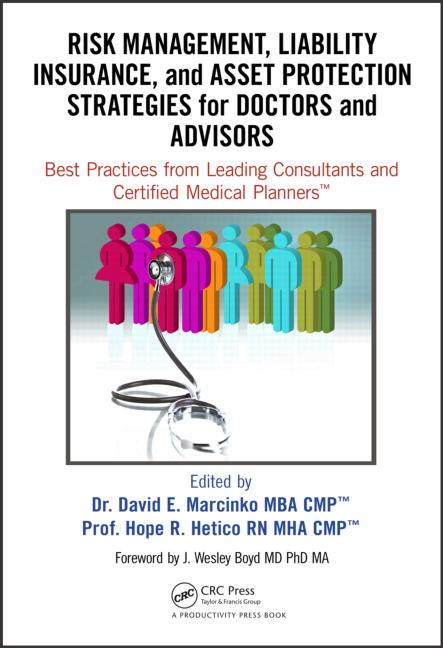
Risk Management, Liability Insurance, and Asset Protection Strategies for Doctors and Advisors [Best Practices from Leading Consultants and Certified Medical Planners]

***

 Our New Text – “Take a Peek Inside 

Available – ORDER NOW!

***

Risk Management, Liability Insurance, and Asset Protection Strategies for Doctors and Advisors: Best Practices from Leading Consultants and Certified Medical Planners™8Risk Management, Liability Insurance, and Asset Protection Strategies for Doctors and Advisors: Best Practices from Leading Consultants and Certified Medical Planners™

***

Foreword by J. WESLEY BOYD MD PhD MA

logos

“BY DOCTORS – FOR DOCTORS – PEER REVIEWED – FIDUCIARY FOCUSED”

***

Book Reviews

“Physicians who don’t understand modern risk management, insurance, business and asset protection principles are sitting ducks waiting to be taken advantage of by unscrupulous insurance agents and financial advisors; and even their own prospective employers or partners. This comprehensive volume from Dr. David Marcinko, and his co-authors, will go a long way toward educating physicians on these critical subjects that were never taught in medical school or residency training.”
—Dr. James M. Dahle, MD, FACEP, Editor of The White Coat Investor, Salt Lake City, Utah, USA

“With time at a premium, and so much vital information packed into one well organized resource, this comprehensive textbook should be on the desk of everyone serving in the healthcare ecosystem. The time you spend reading this frank and compelling book will be richly rewarded.”
—Dr. J. Wesley Boyd, MD, PhD, MA, Harvard Medical School, Boston, Massachusetts, USA

“Physicians have more complex liability challenges to overcome in their lifetime, and less time to do it, than other professionals. Combined with a focus on practicing their discipline, many sadly fail to plan for their own future. They need trustworthy advice on how to effectively protect themselves, families and practice, from the many overt and covert risks that could potentially disrupt years of hard work.
Fortunately, this advice is contained within ‘Risk Management, Liability Insurance, And Asset Protection Strategies For Doctors And Advisors: Best Practices From Leading Consultants And Certified Medical Planners™’. Written by Dr. David Edward Marcinko, Nurse Hope Rachel Hetico and their team of risk managers, accountants, insurance agents, attorneys and physicians, it is uniquely positioned as an integration of applied, academic and peer-reviewed strategies and research, with case studies, from top consultants and Certified Medical Planners™. It contains the latest principles of risk management and asset protection strategies for the specific challenges of modern physicians. My belief is that any doctor who reads and applies even just a portion of this collective wisdom will be fiscally rewarded. The Institute of Medical Business Advisors has produced another outstanding reference for physicians that provide peace of mind in this unique marketplace! In my opinion, it is a mandatory read for all medical professionals.”
—David K. Luke, MS-PFP, MIM, CMP™, Net Worth Advisory Group, Inc., Sandy, Utah, USA

“This book is a well-constructed, comprehensive and experiential view of risk management throughout the entire medical practice life-cycle. It is organized in an accessible, high-yield style that is familiar to doctors. Each chapter has case models, examples and insider tips and useful pearls. I was pleased to see multi-degreed physicians sharing their professional experiences in a textbook on something other than clinical medicine. I can’t decide if this book is right on – over the top – or just plain prescient. Now, after a re-read, I conclude it is all of the above; and much more.”
—Dr. Peter P. Sidoriak, Pottsville, Pennsylvania, USA

“When a practicing physician thinks about their risk exposure resulting from providing patient care, medical malpractice risk immediately comes to mind. But; malpractice and liability risk is barely the tip of the iceberg, and likely not even the biggest risk in the daily practice of medicine. There are risks from having medical records to keep private, risks related to proper billing and collections, risks from patients tripping on your office steps, risks from medical board actions, risk arising from divorce, and the list goes on and on. These liabilities put a doctor’s hard earned assets and career in a very vulnerable position. This new book from Dr. David Marcinko and Prof. Hope Hetico shows doctors the multiple types of risk they face and provides examples of steps to take to minimize them. It is written clearly and to the point, and is a valuable reference for any well-managed practice. Every doctor who wants to take preventive action against the risks coming at them from all sides needs to read this book.”
—Richard Berning, MD, FACC, New Haven, Connecticut, USA

“This is an excellent companion book to Dr. Marcinko’s Comprehensive Financial Planning Strategies For Doctors And Advisors: Best Practices from Leading Consultants and Certified Medical Planners™. It is all inclusive yet easy to read with current citations, references and much frightening information. I highly recommend this text. It is a fine educational and risk management tool for all doctors and medical professionals.”
—Dr. David B. Lumsden, MD, MS, MA, Orthopedic Surgeon, Baltimore, Maryland, USA

“This comprehensive text book provides an in-depth presentation of the cyber security and real risk management, asset protection and insurance issues facing all medical profession today. It is far beyond the mere medical malpractice concerns I faced when originally entering practice decades ago.”
—Dr. Barbara s. Schlefman, DPM, MS, Family Foot Care, PA, Tucker, Georgia, USA

“Am I over-insured and thus wasting money? Am I under-insured and thus at risk for a liability or other disaster? I never really had the means of answering these questions; until now.”
—Dr. Lloyd M. Krieger, MD, MBA, Rodeo Drive Plastic Surgery, Beverly Hills, California, USA

“I read and use this book, and several others, from Dr. David Edward Marcinko and his team of advisors.”
—Dr. John Kelley, DO, Orthopedic Surgeon, Tucker, Georgia, USA

“An important step in the risk management, insurance planning and asset protection process is the assessment of needs. One can create a strong foundation for success only after all needs have been analyzed so that a plan can be constructed and then implemented. This book does an excellent job of recognizing those needs and addressing strategies to reduce them.
—Shikha Mittra, MBA, CFP®, CRPS®, CMFC®, AIF®, President – Retire Smart Consulting LLC, Princeton, New Jersey, USA

“The Certified Medical Planner™ professional designation and education program was created by the Institute of Medical Business Advisors Inc., and Dr. David Edward Marcinko and his team (who wrote this book). It is intended for financial advisors who aim specifically to serve physicians and the medical community. Content focuses not only on the insurance and professional liability issues relevant to physicians, but also provides an understanding of the risky business of medical practice so advisors can help work more successfully with their doctor-clients.”
—Michael E. Kitces, MSFS, MTAX, CFP®, CLU, ChFC, RHU, REBC, CASL, http://www.Kitecs.com, Reston, Virginia, USA

“I have read this text and used consulting services from the Institute of Medical Business of Advisors, Inc. on several occasions.”
—Dr. Marsha Lee, DO, Radiologists, Norcross, Georgia, USA

“The medical education system is grueling and designed to produce excellence in medical knowledge and patient care. What it doesn’t prepare us for is the slings and arrows that come our way once we actually start practicing medicine. Successfully avoiding these land mines can make all the difference in the world when it comes to having a fulfilling practice. Given the importance of risk management and mitigation, you would think these subjects would be front and center in both medical school and residency – ‘they aren’t.’ Thankfully, the brain trust over at iMBA Inc., has compiled this comprehensive guide designed to help you navigate these mine fields so that you can focus on what really matters – patient care.”
—Dennis Bethel, MD, Emergency Medicine Physician

MORE: FRONT MATTER Risk Management
***

business-valuation1

***

Invite Dr. Marcinko

***