







 Support our online development, and advance our onground research initiatives in free market economics, as we seek to showcase the brightest Next-Gen minds.
THE ME-P DISCLAIMER: Posts, comments and opinions do not necessarily represent iMBA, Inc., but become our property after submission. Copyright © 2006 to-date. iMBA, Inc allows colleges, universities, medical and financial professionals and related clinics, hospitals and non-profit healthcare organizations to distribute our proprietary essays, photos, videos, audios and other documents; etc. However, please review copyright and usage information for each individual asset before submission to us, and/or placement on your publication or web site. Attestation references, citations and/or back-links are required. All other assets are property of the individual copyright holder.
Support our online development, and advance our onground research initiatives in free market economics, as we seek to showcase the brightest Next-Gen minds.
THE ME-P DISCLAIMER: Posts, comments and opinions do not necessarily represent iMBA, Inc., but become our property after submission. Copyright © 2006 to-date. iMBA, Inc allows colleges, universities, medical and financial professionals and related clinics, hospitals and non-profit healthcare organizations to distribute our proprietary essays, photos, videos, audios and other documents; etc. However, please review copyright and usage information for each individual asset before submission to us, and/or placement on your publication or web site. Attestation references, citations and/or back-links are required. All other assets are property of the individual copyright holder.


By Staff Reporters
***
***
In Healthcare
Monopsony and Oligopsony occur when discounts are extracted from healthcare providers because of supply and demand size inequalities, and may run afoul of anti-trust laws.
Many medical providers have monopoly or near-monopoly power, yet antitrust laws prevent some potentially beneficial integration.
***
Introduction
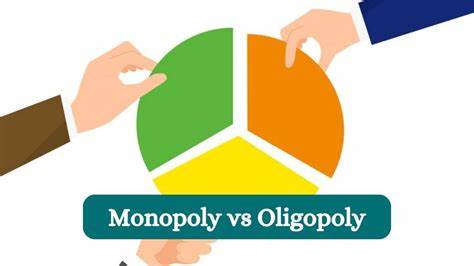
Monopsony and oligopsony are two terms that are often used interchangeably, but they are not the same thing.
Monopsony refers to a market structure where there is only one buyer of a certain product or service, while oligopsony refers to a market structure where there are only a few buyers of a certain product or service.
In this ME-P, we will explore the differences between these two market structures and their implications.
ANTI-TRUST: https://medicalexecutivepost.com/2024/12/29/paradox-anti-trust-definition-with-book/
***
***
1. Number of Buyers
The main difference between monopsony and oligopsony is the number of buyers in the market. In a monopsony, there is only one buyer, which gives them significant bargaining power over the suppliers. In contrast, an oligopsony has a few buyers, which means that the suppliers have some bargaining power, but not as much as they would in a perfectly competitive market.
For example, the government is often the only buyer of certain goods and services, such as military equipment, healthcare [ACA] or public transportation. This gives them significant bargaining power over the suppliers, who have no other buyers to turn to. On the other hand, the automobile industry is an example of an oligopsony, with a few large manufacturers controlling the majority of the market. Suppliers have some bargaining power, but they still have to compete for contracts with the few buyers in the market.
2. Price Setting
In a monopsony, the buyer has the power to set the price of the product or service. Since there is only one buyer, the suppliers have no choice but to accept the price offered. This can lead to lower prices for the buyer, but it can also lead to lower quality products or services, as suppliers may cut corners to meet the buyer’s demands.
In an oligopsony, the buyers have some bargaining power, but they still have to compete with each other for the best deals. This can lead to higher prices for the suppliers, but it can also lead to higher quality products or services, as suppliers have more resources to invest in their products.
3. Competition
One of the main advantages of a perfectly competitive market is the competition between buyers and sellers. This competition leads to better prices and higher quality products or services. In a monopsony, there is no competition between buyers, which can lead to lower quality products or services and higher prices for the suppliers.
In an oligopsony, there is some competition between buyers, which can lead to better prices and higher quality products or services. However, the competition is limited to a few buyers, which means that suppliers have less choice and bargaining power than they would in a perfectly competitive market.
***
***
Assessment
The implications of monopsony and oligopsony depend on the specific market and the parties involved. In general, monopsony can lead to lower prices for the buyer, but it can also lead to lower quality products or services and reduced innovation. Oligopsony can lead to higher prices for the suppliers, but it can also lead to higher quality products or services and increased innovation.
Conclusion
Monopsony and oligopsony are two different market structures with different implications for buyers and suppliers. While monopsony can lead to lower prices for the buyer, it can also lead to reduced quality and innovation. Oligopsony can lead to higher prices for the suppliers, but it can also lead to higher quality and increased innovation.
The best option depends on the specific market and the parties involved.
***
***
COMMENTS APPRECIATED
Refer, Like and Subscribe
Share this:

Filed under: iMBA, Inc. | Tagged: business, China, digital marketing, entrepreneurship, marketing |
 The Leading Business Education Network for Doctors, Financial Advisors and Health Industry Consultants
Leave a comment