







 Support our online development, and advance our onground research initiatives in free market economics, as we seek to showcase the brightest Next-Gen minds.
THE ME-P DISCLAIMER: Posts, comments and opinions do not necessarily represent iMBA, Inc., but become our property after submission. Copyright © 2006 to-date. iMBA, Inc allows colleges, universities, medical and financial professionals and related clinics, hospitals and non-profit healthcare organizations to distribute our proprietary essays, photos, videos, audios and other documents; etc. However, please review copyright and usage information for each individual asset before submission to us, and/or placement on your publication or web site. Attestation references, citations and/or back-links are required. All other assets are property of the individual copyright holder.
Support our online development, and advance our onground research initiatives in free market economics, as we seek to showcase the brightest Next-Gen minds.
THE ME-P DISCLAIMER: Posts, comments and opinions do not necessarily represent iMBA, Inc., but become our property after submission. Copyright © 2006 to-date. iMBA, Inc allows colleges, universities, medical and financial professionals and related clinics, hospitals and non-profit healthcare organizations to distribute our proprietary essays, photos, videos, audios and other documents; etc. However, please review copyright and usage information for each individual asset before submission to us, and/or placement on your publication or web site. Attestation references, citations and/or back-links are required. All other assets are property of the individual copyright holder.


It’s About Deep Niche Knowledge [An AV Presentation]
By Vicki Rackner MD
Enter the CMPs 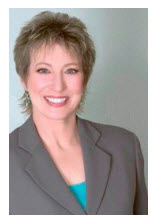
AUDIO-VIDEO PRESENTATION
PODCAST; https://www.youtube.com/watch?v=W0SGlL0UzXE#t=22
More:
About the Author
Vicki Rackner MD, author, speaker, ME-P thought-leader and President of Targeting Doctors, helps financial advisors accelerate their practice growth by acquiring more physician clients. She calls on her experience as a practicing surgeon, clinical faculty at the University of Washington School of Medicine and nationally-noted expert in physician engagement to offer a bridge between the world of medicine and the world of business.
Conclusion
Your thoughts and comments on this ME-P are appreciated. Feel free to review our top-left column, and top-right sidebar materials, links, URLs and related websites, too. Then, subscribe to the ME-P. It is fast, free and secure.
Speaker: If you need a moderator or speaker for an upcoming event, Dr. David E. Marcinko; MBA – Publisher-in-Chief of the Medical Executive-Post – is available for seminar or speaking engagements. Contact: MarcinkoAdvisors@msn.com
OUR OTHER PRINT BOOKS AND RELATED INFORMATION SOURCES:
- HOSPITALS: http://www.crcpress.com/product/isbn/9781466558731
- CLINICS: http://www.crcpress.com/product/isbn/9781439879900
- ADVISORS: www.CertifiedMedicalPlanner.org
- FINANCE: Financial Planning for Physicians and Advisors
- INSURANCE: Risk Management and Insurance Strategies for Physicians and Advisors
- Dictionary of Health Economics and Finance
- Dictionary of Health Information Technology and Security
- Dictionary of Health Insurance and Managed Care
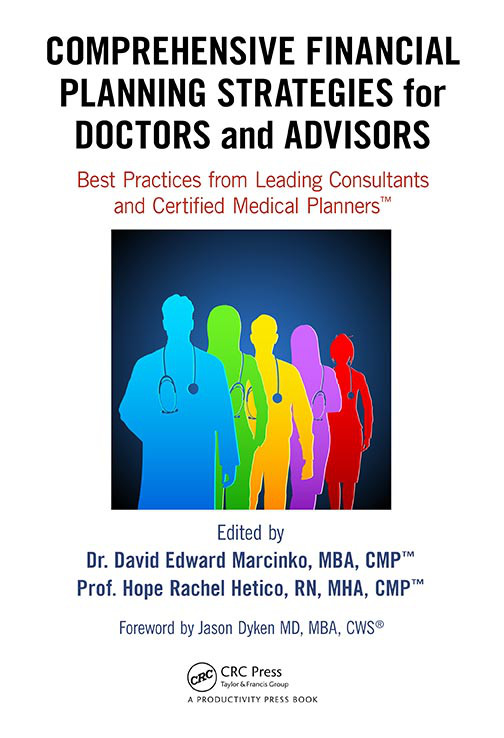
Front Matter with Foreword by Jason Dyken MD MBA
***
Share this:

Filed under: Career Development, CMP Program, Experts Invited, Financial Planning, iMBA, Inc., Practice Management, Videos | Tagged: certified medical planner, How Financial Advisors Acquire Physician Clients, Targeting Doctors, Vicki Rackner MD |
 The Leading Business Education Network for Doctors, Financial Advisors and Health Industry Consultants
Financial Advisors Make a Difference in Times of Financial Turbulence
How do you as a financial advisor help your clients through times of financial turbulence?
Think about what makes things better for you when you are a passenger and your plane runs into turbulence. It’s comforting to hear over the loud speaker, “This is your Captain. Just wanted to warn you we’re in for a bumpy ride. Sit down and fasten your seat belts. We should be out of this turbulent patch in 30 minutes.”
The Captain cannot control air conditions; however, his leadership changes your experience.
Offer Leadership
During times of financial turbulence, your clients look to you for leadership. Step up and act like the Captain. What does this mean?
• You remain calm when things around you are chaotic.
• You remind clients they are not alone. You are there.
• You remind clients there is a plan, and that you know just what to do.
• You offer concrete instructions about what they should and should not do.
• You offer hope.
Spring into Action
Here is how you can translate the concept of leadership into a to-do list.
• Proactively reach out to your clients in a letter or phone call. Consider a video chat .
• Consider recording a video message and sending it out to your list.
• Invite clients to a “town hall meeting.” You can easily invite people to a video hangout on Google Plus, Skype or a paid service of your choice.
• Help clients avoid mistakes. The evolving fields of behavioral financial and neuro-economics help us understand that people make the riskiest choices when trying to avoid losses. Athletic coaches say games are won or lost in practice; actions during corrections impact wealth-building.
• Keep your clients updated as new developments unfold.
Communicate with Words and Actions that You Care
According to Gary Chapman, there are 5 “love languages” with which people deliver and receive the “I care” message:
• Words Say,” I care about you and am committed to helping you achieve your financial goals. We’re right on track.”
• Gifts Consider sending your clients a stress management kit that might include herbal teas, chocolate, a “squoosh ball” a white noise generator or a scented sachet.
• Acts of service Ask clients, “What can I do to help?”
• Quality time This is where a town hall meeting comes in handy. There are only so many hours in a day.
• Touch Use with caution in the business setting
Be Guided by a Client’s Pain Personality
Understand that different clients respond to pain differently. As a surgeon I noticed five patterns of responses I call the “pain personalities”. I believe that this pain personality is shaped in childhood and is largely unalterable. Each needs something different during turbulent times.
• The Strong Stoic This is the person who takes pride in strength and hides vulnerability. Remind them of their courage.
• The Ostrich While the Strong Stoic recognizes and hides financial pain, the Ostrich wants to pretend that everything is okay. Tell them you’re on top of this.
• Worried Well Imagine a Chicken Little constantly worried about impending financial doom. Remind them that you know exactly what to do.
• The Victim Some people experience themselves as victims of external circumstances. Further, they’re certain they cannot change their reality. Prepare yourself for drama. I decided not to work with victims.
• The Ideal The ideal client discerns the difference between a little problem and a big problem, and responds on a timely basis with minimal drama.
Each person in a relationship, including you, your client and your client’s spouse, brings his or her own pain personality. Some combinations are volatile. Imagine a Strong Stoic married to a Worried Well.
Look to the Past
If clients are behaving in a highly emotional or uncharacteristic way, ask them about financial traumas in their past. Changes are good that they are responding to the past rather than the present.
Look to the Future
Offer your predictions about how and when the turbulence will resolve. Clients know that you do not have a crystal ball; however, you know more about market behaviors than they do.
This is When You Earn Your Fees
Clients may love you when the markets are strong; you become a hero in their eyes during times of financial turbulence.
Thank you for doing your job!
Vicki Rackner MD
LikeLike