ME-P SYNDICATIONS:
WSJ.com,
CNN.com,
Forbes.com,
WashingtonPost.com,
BusinessWeek.com,
USNews.com, Reuters.com,
TimeWarnerCable.com,
e-How.com,
News Alloy.com,
and Congress.org


BOARD CERTIFICATION EXAM STUDY GUIDES
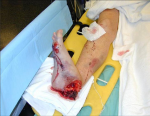
Lower Extremity Trauma
[Click on Image to Enlarge]
The “Medical Executive-Post” is about connecting doctors, health care executives and modern consulting advisors. It’s about free-enterprise, business, practice, policy, personal financial planning and wealth building capitalism. We have an attitude that’s independent, outspoken, intelligent and so Next-Gen; often edgy, usually controversial. And, our consultants “got fly”, just like U. Read it! Write it! Post it! “Medical Executive-Post”. Call or email us for your FREE advertising and sales consultation TODAY [678.779.8597] Email: MarcinkoAdvisors@outlook.com



ePodiatryConsentForms.com
Suite #5901 Wilbanks Drive, Norcross, Georgia, 30092 USA [1.678.779.8597]. Our location is real and we are now virtually enabled to assist new long distance clients and out-of-town colleagues.
If you want the opportunity to work with leading health care industry insiders, innovators and watchers, the “ME-P” may be right for you? We are unbiased and operate at the nexus of theoretical and applied R&D. Collaborate with us and you’ll put your brand in front of a smart & tightly focused demographic; one at the forefront of our emerging healthcare free marketplace of informed and professional “movers and shakers.” Our Ad Rate Card is available upon request [678-779-8597].

“Providing Management, Financial and Business Solutions for Modernity”
Whether you’re a mature CXO, physician or start-up entrepreneur in need of management, financial, HR or business planning information on free markets and competition, the "Medical Executive-Post” is the online place to meet for Capitalism 2.0 collaboration.

Support our online development, and advance our onground research initiatives in free market economics, as we seek to showcase the brightest Next-Gen minds.
THE ME-P DISCLAIMER: Posts, comments and opinions do not necessarily represent iMBA, Inc., but become our property after submission. Copyright © 2006 to-date. iMBA, Inc allows colleges, universities, medical and financial professionals and related clinics, hospitals and non-profit healthcare organizations to distribute our proprietary essays, photos, videos, audios and other documents; etc. However, please review copyright and usage information for each individual asset before submission to us, and/or placement on your publication or web site. Attestation references, citations and/or back-links are required. All other assets are property of the individual copyright holder.





 The Leading Business Education Network for Doctors, Financial Advisors and Health Industry Consultants
Prices across sectors are growing at their fastest rates in years.
Housing: Global housing prices increased 7.3% on average in the 12 months to March—the fastest pace since 2006, according to Knight Frank’s Global House Price Index. The top five countries for price growth are 1) Turkey 2) New Zealand 3) Luxembourg 4) Slovakia and 5) the US.
Shipping: The cost of moving a container from China to Dubai has ballooned to $5,000 from $1,000 last year, according to SCMP.
Food: A UN food price index soared 40% in May, the largest jump in a decade. Low-income countries will suffer the worst effects of this food inflation.
Consumer goods: Prices across 36 mostly wealthy countries rose at their fastest pace in more than 12 years during April. Economists are chalking up this eye-popping inflation to “base effects”—meaning these numbers only appear huge because they’re being compared to last spring, when prices plummeted at the onset of the pandemic.
Brenda
LikeLike
Health care Post Pandemic DEFLATION?
During the pandemic, health care became even more important than before. So how has medical care dodged inflation? Preventative doctor’s visits and healthcare were moved to the back burner last year as people stayed home during the pandemic.
Since February 2020, medical care commodities, which include all medicinal drugs and other medical supplies, have gotten 2.3% cheaper.
Broken down into more specific categories, prices of medicinal drugs, which encompass both prescription and over-the-counter medicine, saw a 2.2% decrease. Prescription drug prices alone are down 2.9% over the past year and a half.
Medical equipment and supplies, which includes items like dressings, contraceptives, heating pads and wheel chairs, saw the biggest change with a 5.8% drop in price since before the pandemic.
Dr. David E. Marcinko MBA
LikeLike