







 Support our online development, and advance our onground research initiatives in free market economics, as we seek to showcase the brightest Next-Gen minds.
THE ME-P DISCLAIMER: Posts, comments and opinions do not necessarily represent iMBA, Inc., but become our property after submission. Copyright © 2006 to-date. iMBA, Inc allows colleges, universities, medical and financial professionals and related clinics, hospitals and non-profit healthcare organizations to distribute our proprietary essays, photos, videos, audios and other documents; etc. However, please review copyright and usage information for each individual asset before submission to us, and/or placement on your publication or web site. Attestation references, citations and/or back-links are required. All other assets are property of the individual copyright holder.
Support our online development, and advance our onground research initiatives in free market economics, as we seek to showcase the brightest Next-Gen minds.
THE ME-P DISCLAIMER: Posts, comments and opinions do not necessarily represent iMBA, Inc., but become our property after submission. Copyright © 2006 to-date. iMBA, Inc allows colleges, universities, medical and financial professionals and related clinics, hospitals and non-profit healthcare organizations to distribute our proprietary essays, photos, videos, audios and other documents; etc. However, please review copyright and usage information for each individual asset before submission to us, and/or placement on your publication or web site. Attestation references, citations and/or back-links are required. All other assets are property of the individual copyright holder.


Yield Curve 101
[By GREGOR AISCH and AMANDA COX]
The yield curve shows how much it costs the federal government to borrow money for a given amount of time, revealing the relationship between long- and short-term interest rates.
It is, inherently, a forecast for what the economy holds in the future — how much inflation there will be, for example, and how healthy growth will be over the years ahead — all embodied in the price of money today, tomorrow and many years from now.
***
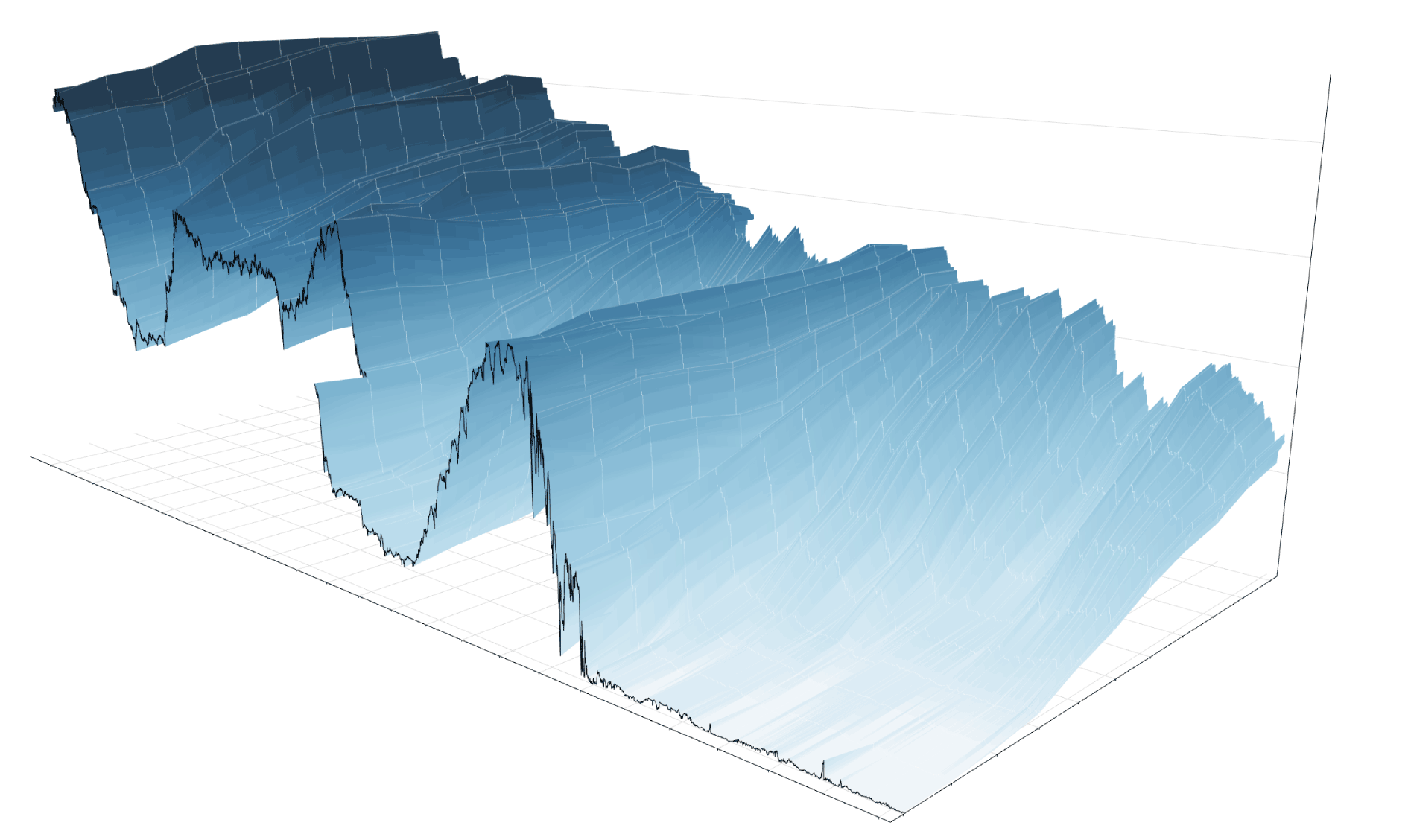
A 3-D View of a Chart That Predicts The Economic Future …
***
More:
Conclusion
Your thoughts and comments on this ME-P are appreciated. Feel free to review our top-left column, and top-right sidebar materials, links, URLs and related websites, too. Then, subscribe to the ME-P. It is fast, free and secure.
Speaker: If you need a moderator or speaker for an upcoming event, Dr. David E. Marcinko; MBA – Publisher-in-Chief of the Medical Executive-Post – is available for seminar or speaking engagements. Contact: MarcinkoAdvisors@msn.com
OUR OTHER PRINT BOOKS AND RELATED INFORMATION SOURCES:
- PRACTICES: www.BusinessofMedicalPractice.com
- HOSPITALS: http://www.crcpress.com/product/isbn/9781466558731
- CLINICS: http://www.crcpress.com/product/isbn/9781439879900
- ADVISORS: www.CertifiedMedicalPlanner.org
- FINANCE: Financial Planning for Physicians and Advisors
- INSURANCE: Risk Management and Insurance Strategies for Physicians and Advisors
- Dictionary of Health Economics and Finance
- Dictionary of Health Information Technology and Security
- Dictionary of Health Insurance and Managed Care

Front Matter with Foreword by Jason Dyken MD MBA

“BY DOCTORS – FOR DOCTORS – PEER REVIEWED – FIDUCIARY FOCUSED”
***
Share this:

Filed under: Investing | Tagged: AMANDA COX, FOMC, GREGOR AISCH, inflation, long-and short-term interest rates, Yield Curve 101 |
 The Leading Business Education Network for Doctors, Financial Advisors and Health Industry Consultants
Whither the Bear?
As a doctor, your action plan in a future bear market depends on many variables, with perhaps your age being the most important:
In your 30s:
• Pay off debts, school or practice loans.
• Invest in safe money market mutual funds, cash or CDs.
• Start retirement plan or 401-K account.
In your 40s:
• Increase your pension plan or 401-K contributions.
• Stay weighted more toward equity investments.
• Review your goals, risk tolerance and portfolio.
In your 50s:
• Position assets for ready cash instruments.
• Diversify into stock, bonds and cash.
Retirement:
• Maintain 3 years of ready cash living expenses.
• Reduce, but still maintain your exposure to equities.
Dr. David E. Marcinko MBA CMP™ MBBS [Hon]
http://www.CertifiedMedicalPlanner.org
LikeLike