







 Support our online development, and advance our onground research initiatives in free market economics, as we seek to showcase the brightest Next-Gen minds.
THE ME-P DISCLAIMER: Posts, comments and opinions do not necessarily represent iMBA, Inc., but become our property after submission. Copyright © 2006 to-date. iMBA, Inc allows colleges, universities, medical and financial professionals and related clinics, hospitals and non-profit healthcare organizations to distribute our proprietary essays, photos, videos, audios and other documents; etc. However, please review copyright and usage information for each individual asset before submission to us, and/or placement on your publication or web site. Attestation references, citations and/or back-links are required. All other assets are property of the individual copyright holder.
Support our online development, and advance our onground research initiatives in free market economics, as we seek to showcase the brightest Next-Gen minds.
THE ME-P DISCLAIMER: Posts, comments and opinions do not necessarily represent iMBA, Inc., but become our property after submission. Copyright © 2006 to-date. iMBA, Inc allows colleges, universities, medical and financial professionals and related clinics, hospitals and non-profit healthcare organizations to distribute our proprietary essays, photos, videos, audios and other documents; etc. However, please review copyright and usage information for each individual asset before submission to us, and/or placement on your publication or web site. Attestation references, citations and/or back-links are required. All other assets are property of the individual copyright holder.


Doctors Beware – A Bad Idea
By Muhammad Saleem
Did you know that almost 60% of drivers use their phones on the road? What about doctors?
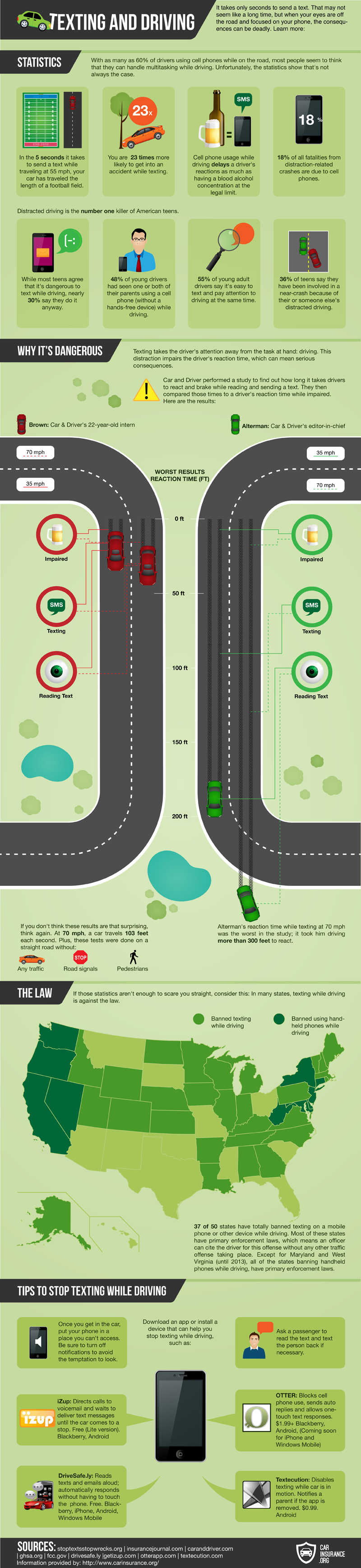
The numbers from our piece today could not be clearer on the consequences of using your smartphone while driving. For example:
- You are 23 times more likely to get into an accident while texting.
- 18% of distraction-related crashes are from cell phone usage.
- Distracted driving is the number one killer of American teens.
Assessment
Doctors – Have you ever texted medical orders, or patient instructions etc., while driving? Be honest!
In addition to the above, our infographic discusses statistics on smarthpones and driving, illustrate the dangers, discuss the law, and provide tips to make you and your passengers safer.
Conclusion
Your thoughts and comments on this ME-P are appreciated. Feel free to review our top-left column, and top-right sidebar materials, links, URLs and related websites, too. Then, subscribe to the ME-P. It is fast, free and secure.
Speaker: If you need a moderator or speaker for an upcoming event, Dr. David E. Marcinko; MBA – Publisher-in-Chief of the Medical Executive-Post – is available for seminar or speaking engagements. Contact: MarcinkoAdvisors@msn.com
OUR OTHER PRINT BOOKS AND RELATED INFORMATION SOURCES:
- DICTIONARIES: http://www.springerpub.com/Search/marcinko
- PHYSICIANS: www.MedicalBusinessAdvisors.com
- PRACTICES: www.BusinessofMedicalPractice.com
- HOSPITALS: http://www.crcpress.com/product/isbn/9781466558731
- CLINICS: http://www.crcpress.com/product/isbn/9781439879900
- ADVISORS: www.CertifiedMedicalPlanner.org
- BLOG: www.MedicalExecutivePost.com
- FINANCE:Financial Planning for Physicians and Advisors
- INSURANCE:Risk Management and Insurance Strategies for Physicians and Advisors


Share this:

Filed under: Information Technology, LifeStyle, Risk Management | Tagged: cell phones, Driving, On Smart Phones, Texting |
 The Leading Business Education Network for Doctors, Financial Advisors and Health Industry Consultants
Dear David,
Please find below our latest press release.
Kind regards.
Markus Pohl
**************
Enterprise smartphones are a Trojan Horse: 64% of all companies accept private smartphones but they are not aware of the consequences.
The ever increasing demand for access to company data on the go has compelled companies to address the complexity of application deployment, device management, security management and user support. These factors will lead mobile device policy setting to become one of the most important decisions for IT departments.
The enormous increase of smartphones since 2008 has been mainly driven by consumers who used their electronic companion to communicate, play games, manage photos, listen to music etc. Business phones at that time have been mainly feature phones or email machines like BlackBerrys: No touchscreens, no apps, just pure communication devices.
Giving away company smartphones to employees as incentives had a rather short positive effect for companies. Incentivized employees did not appreciate an additional device since they were used to dozens of apps on their own private devices. Companies had no chance other than allowing their employees to bring in their own device (BYOD). As of today two thirds (67%) of companies pursue this strategy, both small and large companies alike.
The openness to use a “private” computer (in fact smartphones are small computers) within the company environment to access databases, corporate email lists and newsfeeds is astonishing if compared to the openness to use private laptops or PCs for the same purposes.
Current mobile device policies reflect the fact that smartphones used in enterprises are largely employee-owned and not company-owned. The speed at which companies have adapted their policies to accommodate employees’ willingness to use their 500+ US$ smartphone for business purposes is impressive, but not surprising. Many companies have encountered a near win-win situation by satisfying employee desires to use their own device for email, calendaring, etc. while saving on mobile device expenditures at the same time.
Our hypothesis is that IT managers did not realize the full consequences of the BYOD strategy for their company. BYOD entails a list of actions companies must pursue in order to manage the risks and business potentials, given the increased mobile experience of their employees.
– Need for a mobile policy: It is a nightmare for every IT responsible to decide case by case what devices and operating systems, applications or access will be allowed. Each company with more than 100 employees following a BYOD strategy should have a mobile policy.
– Need for new tools: The consequences of a stolen or lost device, which allows access to critical company information or a malware app the spreads a virus within the company network, could be fatal. The more employees’ devices a company has to manage the more likely this scenario grows. Not surprisingly the market for MDM (Mobile Device Management) and MEAP (Mobile Enterprise Application Management) products surged over the last 1-2 years. It is a must-have for BYOD-companies to get those tools in order to protect their assets.
– Need for mobilizing company software and processes: With the increased possibilities to access company information on-the-go the demand for access to company information and mobilization of entire company processes will increase. This trend has started within the sales and service departments and spread to other company areas like HR, innovation and controlling to only name a few. It is a must for companies to at least start an analysis to identify the cost and benefits of mobilizing the core company processes.
– Need for becoming more permeable for outside mobile solutions: The support for mobile solutions will be always suboptimal if only the company’s resources, processes and ideas are taken into account. If that hypothesis is true, companies must open up and find ways to attract developers to bring in their concepts and solutions.
For more information on the enterprise app market, tools, best practices, app sourcing strategies and much more please have a look at our latest “Enterprise Mobile App Market Status Report”.
Links to Enterprise Report:
http://www.research2guidance.com/shop/index.php/enterprise-mobile-app-market-status-report
Link to blog post:
http://www.research2guidance.com/enterprise-smartphones-are-a-trojan-horse-64-of-all-companies-accept-private-smartphones-but-they-are-not-aware-of-the-consequences./
Picture:
Contact:
Markus Pohl
research2guidance
+49 30 609 893 363
mp@research2guidance.com
LikeLike
‘The Doctor Will Text You Now’
Dr. Jay Parkinson, 37, looks like any other young tech visionary. But Dr. Parkinson’s start-up isn’t a new app or social network. He is a founder of Sherpaa, a Web site that operates like a virtual doctor’s office, examining patients by e-mail and text message.
In 2007, after graduating from Penn State College of Medicine, and completing a residency in pediatrics at St. Vincent’s Manhattan Hospital in Greenwich Village, and another in preventive medicine at Johns Hopkins in Baltimore, he moved to Brooklyn and started a blog on which he wrote about health issues.
Hope Rachel Hetico RN MHA
LikeLike