







 Support our online development, and advance our onground research initiatives in free market economics, as we seek to showcase the brightest Next-Gen minds.
THE ME-P DISCLAIMER: Posts, comments and opinions do not necessarily represent iMBA, Inc., but become our property after submission. Copyright © 2006 to-date. iMBA, Inc allows colleges, universities, medical and financial professionals and related clinics, hospitals and non-profit healthcare organizations to distribute our proprietary essays, photos, videos, audios and other documents; etc. However, please review copyright and usage information for each individual asset before submission to us, and/or placement on your publication or web site. Attestation references, citations and/or back-links are required. All other assets are property of the individual copyright holder.
Support our online development, and advance our onground research initiatives in free market economics, as we seek to showcase the brightest Next-Gen minds.
THE ME-P DISCLAIMER: Posts, comments and opinions do not necessarily represent iMBA, Inc., but become our property after submission. Copyright © 2006 to-date. iMBA, Inc allows colleges, universities, medical and financial professionals and related clinics, hospitals and non-profit healthcare organizations to distribute our proprietary essays, photos, videos, audios and other documents; etc. However, please review copyright and usage information for each individual asset before submission to us, and/or placement on your publication or web site. Attestation references, citations and/or back-links are required. All other assets are property of the individual copyright holder.


A Review for Physicians
By Gary A Cook; MSFS, CLU, ChFC, RHU, CFP® CMP™ (Hon)

Like the Home Owners policy, automobile insurance comes in a package (commonly called a Personal Auto Policy, or PAP) containing declarations, forms and endorsements.
These are: Liability Coverage, Medical Payments coverage, Uninsured Motorist coverage, and Coverage for Damage to your auto.
Important Elements
The important elements of automobile coverage are:
- The vehicle or vehicles is covered, whether owned or leased
- The insured – the covered driver
- What is covered?
- What are the limits of coverage – for both property and liability?
Exclusions
What are the exclusions – for example, the business use of a vehicle may not be covered under the personal policy? Other coverage for example includes a friend driving your car, or, coverage driving a rental vehicle. The medical payments coverage outlines the limits of liability for medical services needed as the result of an accident.
PULP
The final area of common personal coverages is the Personal Umbrella Liability Policy. To say that our society has become very litigious may be a gross understatement. The umbrella liability policy transfers the risk of losing substantial assets or future personal income to pay legal obligations resulting from an adverse judgment. The umbrella policy originated to provide risk protection against catastrophic legal claims or judgments. Typically, coverage limits begin at $1 million with upper limits of $10 million, and some unique situations, more. The term “umbrella” arises from the contract language that reflects that the individual carries the appropriate underlying basic coverages (homeowners or automobile) and that this coverage is triggered after the limits of the base contracts are exhausted.
Provided Coverage
An important element of this policy is that coverage provides for protection for the named insured, spouse, and family members living in the household. This coverage should be very important to those households with teenage drivers. Organizations may also obtain the protection of an umbrella policy, with certain limitations and exclusions. Unfortunately, “failure to render proper professional services” is very frequently a common exclusion, though some insurance companies will cover this loss exposure with an increased premium.
Other Policies
Other common policies available include: Watercraft and Airplane coverage, Title Insurance, Flood Insurance (offered by very few private insurance companies), Renters Insurance (which covers the contents), and Condominium protection (like homeowners, but has language for common wall risks).
Personal Legal Expense Protection
Finally, there is the issue of the taxation of premiums and claim payments. Premiums for personal property and casualty coverage are not deductible. Therefore, only under unusual circumstances will any benefits received from the coverage be considered taxable income.
Assessment
However, the benefit payments may be considered capital gain if they happen to exceed the insured’s basis in the property. Uninsured losses are generally deductible under the current Internal Revenue Code.
As usual, specific questions concerning the taxation of premiums or benefits should be directed to your professional advisors.
Conclusion
Your thoughts and comments on this ME-P are appreciated. Feel free to review our top-left column, and top-right sidebar materials, links, URLs and related websites, too. Then, subscribe to the ME-P. It is fast, free and secure.
Link: http://feeds.feedburner.com/HealthcareFinancialsthePostForcxos
Speaker: If you need a moderator or speaker for an upcoming event, Dr. David E. Marcinko; MBA – Publisher-in-Chief of the Medical Executive-Post – is available for seminar or speaking engagements. Contact: MarcinkoAdvisors@msn.com
OUR OTHER PRINT BOOKS AND RELATED INFORMATION SOURCES:
- DICTIONARIES: http://www.springerpub.com/Search/marcinko
- PHYSICIANS: www.MedicalBusinessAdvisors.com
- PRACTICES: www.BusinessofMedicalPractice.com
- HOSPITALS: http://www.crcpress.com/product/isbn/9781466558731
- CLINICS: http://www.crcpress.com/product/isbn/9781439879900
- ADVISORS: www.CertifiedMedicalPlanner.org
- BLOG: www.MedicalExecutivePost.com
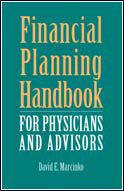
- FINANCE:Financial Planning for Physicians and Advisors


Share this:

Filed under: Book Reviews, Career Development, Financial Planning, iMBA, Inc., Insurance Matters, Practice Management, Professional Liability, Recommended Books | Tagged: airplane insurance, auto insurance, condo insurance, david marcinko, flood insurance renter's insurance, gary cook, home owner's insurance, hope hetico, IRC, PAP, personal auto policy, personal umbrella liability policy, PULP, title insurance, uninsured motorist, vehicle insurance, watercraft insurance |
 The Leading Business Education Network for Doctors, Financial Advisors and Health Industry Consultants
All those years in school can add up to good deals on car insurance
Did you know that doctors and nurses qualify for auto insurance discounts with a variety of companies?
For example, Farmers Insurance in California offers 15% discounts to licensed physicians, surgeons, dentists and veterinarians, and 10% discounts to licensed and practicing physical and occupational therapists, chiropractors, registered nurses and speech audiologists and pathologists.
Dr. Binford
LikeLike
Plug in, drive less, save more
http://www.insurance.com/auto-insurance/turn-signals/pay-as-you-go-car-insurance.html
Pay-as-you-drive car insurance can yield big discounts for some drivers, but privacy issues worry many.
http://money.msn.com/auto-insurance/plug-in-drive-less-save-more
Maurine
LikeLike
Upside down car loans
[What does gap insurance do]?
Gap insurance coverage protects you if your car is totaled out (or stolen) and you owe more than it’s worth to your lienholder.
http://www.carinsurance.com/coverage-definition/gap-insurance.aspx#gap1
Burl
LikeLike
Drive for Uber – Beware?
A personal automobile policy is designed to cover only the traditional uses of private passenger vehicles. It is not designed to cover the commercial use of a vehicle – including making money via a ride-sharing service.
This exclusion extends beyond ride-sharing to any business use of a vehicle, such as delivering newspapers or using a pickup to plow snow.
So, before agreeing to be a ride-sharing driver, a motorist should talk to [his or her] insurance representative and get a commercial insurance policy that provides appropriate insurance protection.
Mendy
LikeLike
Buying Auto Insurance For Teen Drivers
Driving may be a rite of passage for teenagers, but for parents, having a teenage driver can be stressful and expensive. Your child will need auto insurance coverage as soon as he or she receives his or her driver’s license. Here are some important considerations.
Determine Whether to Add your Child to your Policy or Purchase a Separate Policy
• Check with your insurer to see how your premiums are affected. Expect them to rise dramatically, but savings may be found through multiple-car and good-student discounts.
• If your child is driving an “old beater” that doesn’t require comprehensive or collision coverage, a separate policy, in limited instances, may save you money.
• Discuss your options with your insurance agent.
Consider Your Teen Driver Coverage Choices
• Most personal auto policies won’t cover a driver transporting goods or services in exchange for a wage. So if your teen is planning on becoming a pizza delivery driver, contact your insurance agent to determine if additional coverage is needed.
Find Ways to Save Money
• Consider vehicles with high safety ratings over sportier, more expensive cars.
• Think about raising your policy’s deductibles.
• Reassess your need for collision or comprehensive coverage.
• Ask about “occasional” or “pleasure-only” discounts, which may apply to children away at school.
• Explore usage-based insurance, which involves installing a device in the vehicle that monitors driving behavior and rewards good driving. It’s also a way to keep tabs on your teen’s driving.
• Have your teen complete a driver’s education course.
Jason Dyken MD MBA
LikeLike