







 Support our online development, and advance our onground research initiatives in free market economics, as we seek to showcase the brightest Next-Gen minds.
THE ME-P DISCLAIMER: Posts, comments and opinions do not necessarily represent iMBA, Inc., but become our property after submission. Copyright © 2006 to-date. iMBA, Inc allows colleges, universities, medical and financial professionals and related clinics, hospitals and non-profit healthcare organizations to distribute our proprietary essays, photos, videos, audios and other documents; etc. However, please review copyright and usage information for each individual asset before submission to us, and/or placement on your publication or web site. Attestation references, citations and/or back-links are required. All other assets are property of the individual copyright holder.
Support our online development, and advance our onground research initiatives in free market economics, as we seek to showcase the brightest Next-Gen minds.
THE ME-P DISCLAIMER: Posts, comments and opinions do not necessarily represent iMBA, Inc., but become our property after submission. Copyright © 2006 to-date. iMBA, Inc allows colleges, universities, medical and financial professionals and related clinics, hospitals and non-profit healthcare organizations to distribute our proprietary essays, photos, videos, audios and other documents; etc. However, please review copyright and usage information for each individual asset before submission to us, and/or placement on your publication or web site. Attestation references, citations and/or back-links are required. All other assets are property of the individual copyright holder.


What they Are – How they Work
By Staff Reporters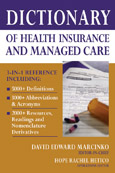
Bond uni-trusts are a type of closed-end investment company. Their funds issue a fixed number of shares, and the value of the shares is determined by the market for them.
Obtaining unit trust bonds
A physician-investor wishing to buy into a closed-end fund must buy shares from an owner of the shares of that fund. The same holds true for selling shares. The market price may or may not be related to the net asset value of the fund. If the market for the shares is higher than the net asset value, then the shares are said to be trading at a premium. If the market for the shares is lower, they are said to be trading at a discount.
Appropriate uses
Unit trusts are generally sold in units of $1,000. As funds are received into the trust, reflecting payment of principal and interest, they are distributed to the shareholders. Because the portfolio is fixed and therefore does not incur the higher expenses normally associated with research and trading, the unit trust’s expenses are relatively low. For these reasons, unit trusts are appropriate for physician-investors who need a steady and periodic income. The doctor-investor who needs to withdraw capital may do so by selling shares back to the unit trust at their current net asset value. Again, depending on where interest rates are, the medical professional may or may not suffer a capital loss.
Assessment
For more terminology information, please refer to the Dictionary of Health Economics and Finance.
www.HealthDictionarySeries.com
Conclusion
And so, your thoughts and comments on this Medical Executive-Post are appreciated?
Link: http://feeds.feedburner.com/HealthcareFinancialsthePostForcxos
Speaker: If you need a moderator or speaker for an upcoming event, Dr. David E. Marcinko; MBA – Publisher-in-Chief of the Executive-Post – is available for seminar or speaking engagements. Contact: MarcinkoAdvisors@msn.com or Bio: www.stpub.com/pubs/authors/MARCINKO.htm
Get our Widget: Get this widget!
Our Other Print Books and Related Information Sources:
Practice Management: http://www.springerpub.com/prod.aspx?prod_id=23759
Physician Financial Planning: http://www.jbpub.com/catalog/0763745790
Medical Risk Management: http://www.jbpub.com/catalog/9780763733421
Healthcare Organizations: www.HealthcareFinancials.com
Health Administration Terms: www.HealthDictionarySeries.com
Physician Advisors: www.CertifiedMedicalPlanner.com
Subscribe Now: Did you like this Medical Executive-Post, or find it helpful, interesting and informative? Want to get the latest E-Ps delivered to your email box each morning? Just subscribe using the link below. You can unsubscribe at any time. Security is assured.
Link: http://feeds.feedburner.com/HealthcareFinancialsthePostForcxos
Share this:

Filed under: Book Reviews, Financial Planning, Glossary Terms, Investing, Portfolio Management, Sponsors | Leave a comment »




 The Leading Business Education Network for Doctors, Financial Advisors and Health Industry Consultants