RFID: Defined for Hospital Inventory Tracking

A Supply Chain Management Strategy

By Staff Reporters

***
***

RADIO FREQUENCY IDENTIFICATION

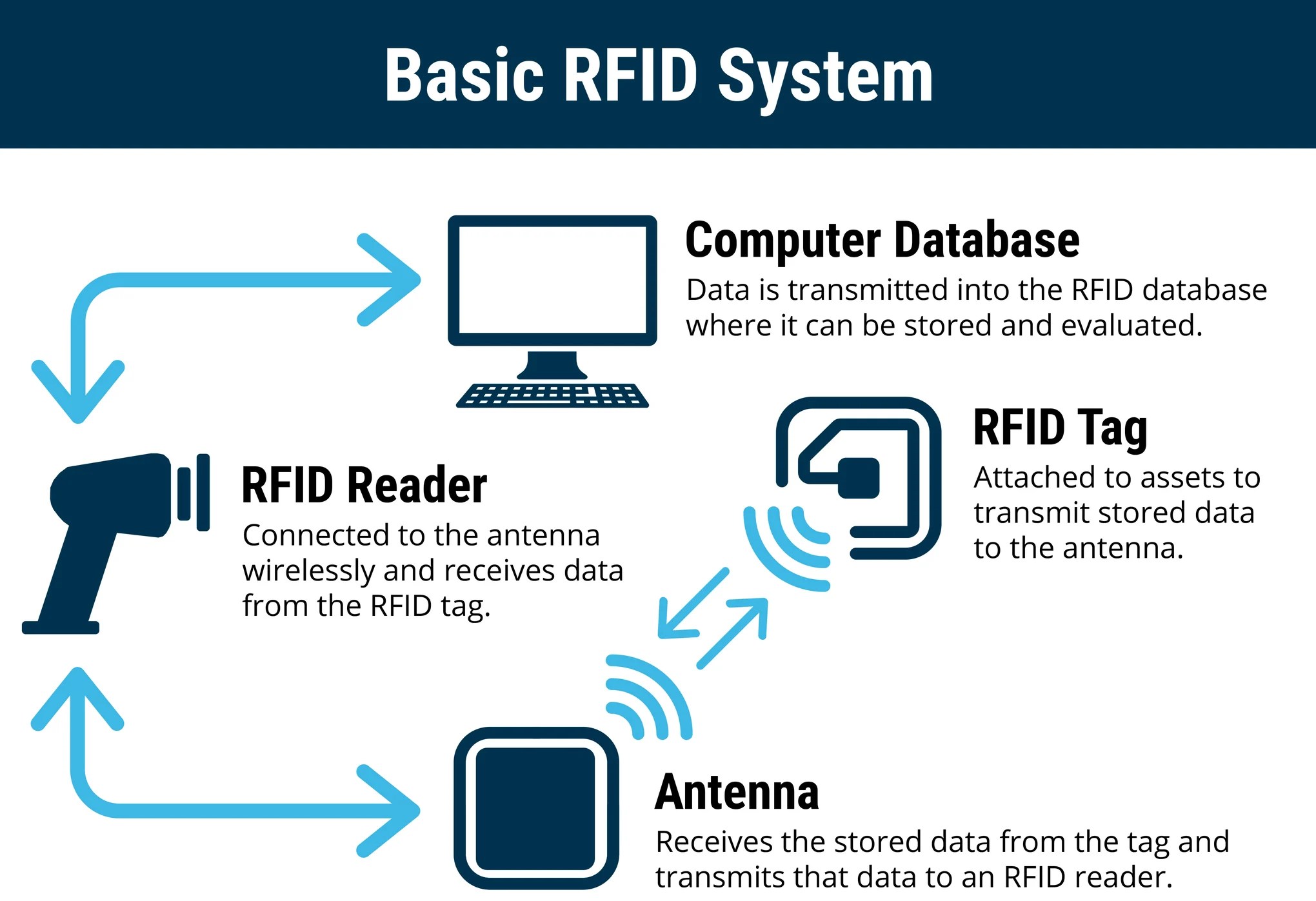
RFID refers to a device attached to an object that transmits data to an RFID receiver. A device can be a large piece of hospital hardware the size of a small book like those attached to ocean containers, or a very small device inserted into a label on a package. RFID has advantages over bar codes such as the ability to hold more data, and to change the stored data as processing occurs. Moreover, it does not require line-of-sight to transfer data, and is very effective in harsh environments where bar-code labels will not work. RFID is not without its own problems, however, as RF signals can be compromised by materials such as metals and liquids.

SCM: https://medicalexecutivepost.com/2011/06/09/supply-chain-management-in-healthcare/

Although RFID technology is receiving much current attention, it still tends to be cost-prohibitive for some hospital inventory tracking applications. As chip prices go down, there will be continued growth in the application of RFID, but, as in the case of 2D bar codes, many hospital warehouse applications simply do not require this added functionality. The low-cost 1D bar code may continue to be the technology of choice for many hospital inventory tracking applications in the short term.

Smart labels are labels with integrated RFID chips. The idea is to produce labels (probably with bar codes) as well as programming the RFID chips embedded in the label. This would provide all current functionality (human- and machine-readable text and bar codes) as well as adding RFID functionality.

Slap-and-ship describes an approach to complying with vendor requirements for physical identification of shipped goods. More recently, slap-and-ship has been used to describe complying With RFID requirements (such as those from large health care systems); however, it is also applicable to any compliance labeling requirement (such as compliance bar-code labels). Slap-and-ship implies meeting the customer’s requirement by applying the bar-code labels or RFID tags, but not utilizing the technology internally.

SCM PODCAST: https://medicalexecutivepost.com/2022/03/16/podcast-medical-supply-chain-management/

Finally, anti-skimming bills were first approved by California and Washington State relative to RFID privacy and are focused on making it illegal for criminals or businesses (or criminal businesses) to read and use personal information from RFID-enabled items such as driver’s licenses and credit cards without the owner’s consent.

COMMENTS APPRECIATED

Like and Subscribe

***

***

Search Guidance for a Chief Medical Security Officer

A Business Case Model

By Richard J. Mata MD MS CIS

Dr. Mata

Join Our Mailing List

The Mighty-Soft Hospital is a futuristic 1,500 bed fortress-like facility operating with a state-of-the-art dual wired-wireless infrastructure complete with computerized physician order entry  system, radio frequency inventory device (RFID) control tags, and integrated electronic medical records (EMRs) that are the envy of its competitors and vendors, and offer a formidable strategic competitive advantage in the marketplace.

Now, imagine the potential liability, PR disaster and chagrin when its enfant terrible CEO is told of a massive security breach similar to the ChoicePoint and Lexis-Nexis fiascos.  The ID theft involves release of critically protected healthcare financial, employment, clinical, and contact information for all of its patients, employees, physicians, business associates, and affiliated medical personnel.

Suddenly, senior management is charged with the task of establishing the new position of Chief Medical Security Officer (CMSO) for Mighty-Soft, and navigating a crisis management dilemma never previously faced by the formerly HIPAA-compliant electronic giant.

The CMSO is to be a senior level management position responsible for championing institutional security.  Awareness of electronic and HIPAA policy and procedure developments, while working to ensure compliance with internal and external standards related to information security, is vital.  The CMSO is to report directly to the CEO and the CIO.

The Search Committee developed the following list of CMSO duties and responsibilities:

  • Chair the hospital’s Information Security and Privacy Committee in its policy development efforts to maintain the security and integrity of information assets in compliance with state and federal laws, and accreditation standards.
  • Provide project management and operational responsibility for the administration, coordination, and implementation of information security policies and procedures across the enterprise-wide hospital system.
  • Perform periodic information security risk assessments including disaster recovery and contingency planning, and coordinate internal audits to ensure that appropriate access to information assets is maintained.
  • Work with the financial division to coordinate a business recovery plan.
  • Serve as a central repository for information security-related issues and performance indicators.  Research security or database software for implementing the central repository, and note that a server based system could be useful for a Wide Area Network (WAN), so this information can be shared with the enterprise-wide hospital system.  Develop, implement, and administer a coordinated process for response to such issues.
  • Function when necessary as an approval authority for platform and/or application security and coordinate efforts to educate the hospital community in good information security practices.
  • Maintain a broad understanding of federal and state laws relating to information security and privacy, security policies, industry best practices, exposures, and their application to the healthcare information technology environment.
  • Make recommendations for short- and long-range security planning in response to future systems, new technology, and new organizational challenges.
  • Act as an advocate for security and privacy on internal and external committees as necessary.
  • Develop, maintain, and administer the security budget required to fulfill organizational information security expectations.
  • Demonstrate effectiveness with consensus building, policy development, and verbal and written communication skills.
  • Possess the clear ability to explain information technology concepts to audiences outside the field.
  • Become the public face for the Mighty-Soft Hospital’s legacy security system.

Minimum Qualifications:

  • MD, DO, DPM, DDS, DMD, with bachelor’s/master’s degree in computer science or related field or equivalent experience.
  • Three or more years of experience in the healthcare industry.
  • Five or more years of experience in information security.
  • Eight or more years of experience in information technology.
  • In-depth understanding of network and system security technology and practices across all major computing areas (mainframe, client/server, PC/LAN, telephony) with a special emphasis on Internet related technology.

Preferred Qualifications:

  • Experience with electronic medical devices.
  • Specific experiences in the healthcare industry.
  • Familiarity with legislation and standards for PHI and patient privacy.
  • Demonstrated successful project management expertise.
  • Professional certification, e.g., CISSP, CISA, PMP.
  • Experience with student record/higher education laws.

Key Issues:

  • What is your IT hardware infrastructure and how are security-related devices deployed?
  • What security requirements are imposed by federal and state authorities on your institution?
  • What would you consider the most important criteria for choosing a CMSO?
  • What relationship will the CMSO have with the CIO, CMIO and CEO?
  • What level of security education/training do you consider necessary for your hospital community?
  • What are the key security issues your CMSO will have to address?
  • What are the key privacy issues?
  • What are the key risk management issues?
  • What are the pros and cons of EHRs for your institution?
  • What do you see as the EHR priorities for your CMSO?
  • What are the security issues of EHRs for your institution?

Assessment

How would you select a CMSO?

Conclusion

And so, your thoughts and comments on this ME-P are appreciated. Feel free to review our top-left column, and top-right sidebar materials, links, URLs and related websites, too. Then, subscribe to the ME-P. It is fast, free and secure.

Speaker: If you need a moderator or speaker for an upcoming event, Dr. David E. Marcinko; MBA – Publisher-in-Chief of the Medical Executive-Post – is available for seminar or speaking engagements. Contact: MarcinkoAdvisors@msn.com

OUR OTHER PRINT BOOKS AND RELATED INFORMATION SOURCES:

Product DetailsProduct DetailsProduct Details

Product Details  Product Details

   Product Details 

Hospital RFID versus Wi-Fi Technologies

Understanding Wireless Communications and Inventory Tracking Systems

By Staff Reporters

Join Our Mailing List 

According to inventory tracking system expert David J. Piasecki, the two wireless technologies currently competing to provide hospitals with better systems for managing equipment inventories are: wireless-fidelity (WiFi) and active RFID. WiFi is the name of the popular wireless networking technology that uses radio waves to provide wireless high-speed Internet connections. The WiFi Alliance is the non-profit organization that owns WiFi (registered trademark) and the term specifically defines WiFi as any “wireless local area network products that are based on the Institute of Electrical and Electronics Engineers’s 802.11 standards.”  Yet, less than 5 percent of North American healthcare facilities are equipped with these real-time locating systems, so the market is currently up for grabs.

Wi-Fi Advantages/ Disadvantages

The advantage of WiFi-based real time locating systems (RTLSs) is that most hospitals already have WiFi networks in place, and many medical devices are equipped with WiFi functionality. Moreover, WiFi vendors such as Aeroscout, Ekahau, and PanGo market their products based on a standards-based non-proprietary functionality. And, development of the so-called “super Wi-Fi” is now on the horizon. The downside of WiFi systems is that hospitals will need to install additional access points to bring the needed functionality to existing networks.

RFID Advantages/ Disadvantages

On the other hand, RFID vendors such as RF Code and Radianse point to the wide application of RFID for asset tracking, and to the technology’s longevity in the industry. Still, RFID tags remain suspect because their ability to efficiently track DME may not be private or secure. Increasingly, WiFi seems more ubiquitous than RFID.

Assessment

Finally, of the three WiFi major vendors, only Ekahau makes a point of stressing that its inventory system is based only on WiFi and not RFID, so the issue isn’t clear cut.  Perhaps it will take both technologies to deploy for hospitals.

Conclusion

And so, your thoughts and comments on this ME-P are appreciated. Feel free to review our top-left column, and top-right sidebar materials, links, URLs and related websites, too. Then, subscribe to the ME-P. It is fast, free and secure.

Get our Widget: Get this widget!

Our Other Print Books and Related Information Sources:

Practice Management: http://www.springerpub.com/prod.aspx?prod_id=23759

Physician Financial Planning: http://www.jbpub.com/catalog/0763745790

Medical Risk Management: http://www.jbpub.com/catalog/9780763733421

Healthcare Organizations: www.HealthcareFinancials.com

Physician Advisors: www.CertifiedMedicalPlanner.com

Subscribe Now: Did you like this Medical Executive-Post, or find it helpful, interesting and informative? Want to get the latest ME-Ps delivered to your email box each morning? Just subscribe using the link below. You can unsubscribe at any time. Security is assured.

Link: http://feeds.feedburner.com/HealthcareFinancialsthePostForcxos

Sponsors Welcomed: And, credible sponsors and like-minded advertisers are always welcomed.

Link: https://healthcarefinancials.wordpress.com/2007/11/11/advertise

Product DetailsProduct DetailsProduct Details

RFID versus WiFi Hospital Inventory Tracking Systems

Understanding Competing Wireless Technologies

By Davd Piasecki, with

Hope Hetico; RN, MHA

www.HealthcareFinancials.comHOFMS

The two wireless technologies currently competing to provide hospitals with better systems for managing equipment inventories are (WiFi) and active RFID.

Wireless-Fidelity [WiFi]

WiFi is the name of the popular wireless networking technology that uses radio waves to provide wireless high-speed Internet connections. The WiFi Alliance is the non-profit organization that owns WiFi (registered trademark) and the term specifically defines WiFi as any “wireless local area network products that are based on the Institute of Electrical and Electronics Engineers’s 802.11 standards.”  Yet, less than 5 percent of North American healthcare facilities are equipped with these real-time locating systems, so the market is currently up for grabs.

WiFi Pros

The advantage of WiFi-based real time locating systems (RTLSs) is that most hospitals already have WiFi networks in place, and many medical devices are equipped with WiFi functionality. Moreover, WiFi vendors such as Aeroscout, Ekahau, and PanGo market their products based on a standards-based non-proprietary functionality. The downside of WiFi systems is that hospitals will need to install additional access points to bring the needed functionality to existing networks.

RFID Pros

On the other hand, RFID vendors such as RF Code and Radianse point to the wide application of RFID for asset tracking, and to the technology’s longevity in the industry. Still, RFID tags remain suspect because their ability to efficiently track DME may not be private or secure. Increasingly, WiFi seems more ubiquitous than RFID.

Finally, of the three WiFi major vendors, only Ekahau makes a point of stressing that its inventory system is based only on WiFi and not RFID, so the issue isn’t clear cut.  Perhaps it will take both technologies to deploy RTLSs for hospitals.

General Recommendations

As a general recommendation, RFID is not yet practical for most small to mid-sized healthcare entities or medical clinics looking to automate their inventory-related transactions (though it does work for other applications such as with returnable containers and asset tracking).

RFID Hype

Despite the hype over RFID, bar codes are not becoming obsolete and are still very effective at quickly and accurately identifying products, locations, and documents. Unless there exists an application where bar codes simply don’t work, or where RFID offers a significant advantage over bar codes, use bar codes. Even if an application that cries out for RFID exists, hospital material management administrators may want to consider waiting (if possible) as the cost of the technology comes down.

Both RFID and WFI Needed

According to Robert M. Wachter MD, Professor and Chief of the Division of Hospital Medicine and Associate Chairman of Department of Medicine, and Lynne and Marc Benioff Endowed Chair in Hospital Medicine, University of California at San Francisco, and Chief of the Medical Service at UCSF Medical Center [personal communication], both should be used.

Ultimately, of course, we do need both bar coding and RFIDs, and we need rigorous studies looking at what works and what doesn’t. But, you have to start somewhere. Even though the evidence continues to trail, based on what I know today, if I was a hospital ready to get into the IT game, I’d go with bar coding first. 

Assessment

Join Our Mailing List

In the next few years, standards will be finalized, hardware prices will drop, software will become more readily available, and, more importantly, the bugs will be worked out of all these systems.   

Conclusion

And so, your thoughts and comments on this Medical Executive-Post are appreciated. Feel free to review our top-left column, and top-right sidebar materials, links, URLs and related websites, too. Then, be sure to subscribe to the ME-P. It is fast, free and secure.

Link: http://feeds.feedburner.com/HealthcareFinancialsthePostForcxos

Speaker: If you need a moderator or speaker for an upcoming event, Dr. David E. Marcinko; MBA – Publisher-in-Chief of the Executive-Post – is available for seminar or speaking engagements. Contact: MarcinkoAdvisors@msn.com 

Get our Widget: Get this widget!

Our Other Print Books and Related Information Sources:

Practice Management: http://www.springerpub.com/prod.aspx?prod_id=23759

Physician Financial Planning: http://www.jbpub.com/catalog/0763745790

Medical Risk Management: http://www.jbpub.com/catalog/9780763733421

Healthcare Organizations: www.HealthcareFinancials.com

Health Administration Terms: www.HealthDictionarySeries.com

Physician Advisors: www.CertifiedMedicalPlanner.com

Sponsors Welcomed

And, credible sponsors and like-minded advertisers are always welcomed.

Link: https://healthcarefinancials.wordpress.com/2007/11/11/advertise

Integration of Hospital Automatic Data Collection Technologies

Review of Automatic Data Collection Equipment

By David J. Piasecki, with
Hope Hetico; RN, MHA

While hardware costs of automatic data collection [ADC] equipment continue to come down for hospital and healthcare organizations, the cost of integration will often prove to be the project buster. Software and integration costs will often be several times the cost of the hardware, especially in smaller health system operations where only a few devices will be used. Integration of ADC technologies is also far from standardized.

www.HealthcareFinancials.comHO-JFMS-CD-ROM

Example:

For example, when implementing a system with portable terminals, one integrator may create a program on the terminals that will write directly to the file on the host system, another may create programs on a separate server to do this, another may write or modify a program on your host system and use terminal emulation software, and another may use a screen mapping tool to reformat an existing program to be used on the portable device. So, make sure to speak with several integrators to ensure the best solution. Also, make sure to participate heavily in equipment selection and program/process design (prompts, data input) to ensure a system that provides the highest levels of accuracy and productivity.

Real-Time Locator System 

A real-time locator system (RTLS) uses RFID technology that provides the objects they are attached to the ability to transmit their current location.  The system requires some type of RFID tag to be attached to each object that needs to be tracked, and RF transmitters/receivers located throughout the facility to determine the location and send information to a computerized tracking system. While it sounds like a great way to eliminate “lost” inventory, the systems are still too costly for most inventory-tracking operations and are more likely to be used to track more valuable assets.

Screen Mapping/Screen Scraping

This software provides the functionality to change the arrangement of data fields on a computer screen that accesses a mainframe computer program. Screen mapping is frequently used in combination with terminal-emulation software to “remap” data fields from a standard mainframe program to be used on the smaller screen of a portable hand-held device.

Speech-Based Technology

Speech-based technology, also known as voice technology is really composed of two technologies:  (1) voice directed, which converts computer data into audible commands, and (2) speech recognition, which allows user voice input to be converted into data.  Portable voice systems consist of a headset with a microphone and a wearable computer.

Terminal Emulation

Software used on desktop and portable computers is available that allows the computer to act like a terminal connected to a mainframe system. If you have a networked desktop PC and are accessing mainframe programs (green screen programs) you are using terminal emulation. Terminal emulation is also a common method used to connect portable computers (as in pharmacy bar-code ADC systems) to mainframe software.

Warehouse Management System

Computer software designed specifically for managing the movement and storage of materials throughout the healthcare system warehouse or chain of command generally controls the following three operations:  (1) put-away, (2) replenishment, and (3) picking.  The key to these systems is the logic to direct these operations to specific locations based on user-defined criteria.  Warehouse Management Systems (WMSs) are often set up to integrate with ADC systems. 

Conclusion

And so, your thoughts and comments on this Medical Executive-Post are appreciated. Can you think of any other data integration technologies?  Tell us what you think. Feel free to review our top-left column, and top-right sidebar materials, links, URLs and related websites, too. Then, be sure to subscribe to the ME-P. It is fast, free and secure.

Link: http://feeds.feedburner.com/HealthcareFinancialsthePostForcxos

Speaker: If you need a moderator or speaker for an upcoming event, Dr. David E. Marcinko; MBA – Publisher-in-Chief of the Executive-Post – is available for seminar or speaking engagements. Contact: MarcinkoAdvisors@msn.com 

Get our Widget: Get this widget!

Our Other Print Books and Related Information Sources:

Practice Management: http://www.springerpub.com/prod.aspx?prod_id=23759

Physician Financial Planning: http://www.jbpub.com/catalog/0763745790

Medical Risk Management: http://www.jbpub.com/catalog/9780763733421

Healthcare Organizations: www.HealthcareFinancials.com

Health Administration Terms: www.HealthDictionarySeries.com

Physician Advisors: www.CertifiedMedicalPlanner.com

Subscribe Now: Did you like this Medical Executive-Post, or find it helpful, interesting and informative? Want to get the latest ME-Ps delivered to your email box each morning? Just subscribe using the link below. You can unsubscribe at any time. Security is assured.

Link: http://feeds.feedburner.com/HealthcareFinancialsthePostForcxos

Sponsors Welcomed

And, credible sponsors and like-minded advertisers are always welcomed.

Link: https://healthcarefinancials.wordpress.com/2007/11/11/advertise