







 Support our online development, and advance our onground research initiatives in free market economics, as we seek to showcase the brightest Next-Gen minds.
THE ME-P DISCLAIMER: Posts, comments and opinions do not necessarily represent iMBA, Inc., but become our property after submission. Copyright © 2006 to-date. iMBA, Inc allows colleges, universities, medical and financial professionals and related clinics, hospitals and non-profit healthcare organizations to distribute our proprietary essays, photos, videos, audios and other documents; etc. However, please review copyright and usage information for each individual asset before submission to us, and/or placement on your publication or web site. Attestation references, citations and/or back-links are required. All other assets are property of the individual copyright holder.
Support our online development, and advance our onground research initiatives in free market economics, as we seek to showcase the brightest Next-Gen minds.
THE ME-P DISCLAIMER: Posts, comments and opinions do not necessarily represent iMBA, Inc., but become our property after submission. Copyright © 2006 to-date. iMBA, Inc allows colleges, universities, medical and financial professionals and related clinics, hospitals and non-profit healthcare organizations to distribute our proprietary essays, photos, videos, audios and other documents; etc. However, please review copyright and usage information for each individual asset before submission to us, and/or placement on your publication or web site. Attestation references, citations and/or back-links are required. All other assets are property of the individual copyright holder.


 PROFESSIONAL Human Resources Options
By Eric Galtress
“In-house service and support activities are monopolies. They have little incentive to improve productivity. In fact, they have considerable disincentive to improve their productivity. Clerical, maintenance and support work, do not make a direct and measurable contribution to the bottom line.”
“Sell the Mailroom” by Peter F. Drucker
***
Labor Law
Labor Law compliance begins with the hire of your very first employee, thus a well managed human resources (HR) function should be an area of strategic focus by the medical executive, regardless of practice size or the number of employees. Consideration of this vital role can help contribute to an efficient, highly effective and productive professional staff committed to the goals of the practice encompassing a positive and nurturing culture evident to your patients, while maintaining your competitive edge.
HR
Human Resources are the major expense driver of today’s medical practice and addresses staffing requirements, wages and other compensation, payroll and tax compliance, labor law compliance, employee benefits, training, employee turnover, safety, risk management and workers’ compensation. These responsibilities must be performed in accordance with State and Federal guidelines, beginning with the hire of your very first employee.
At specific employee level thresholds, employers are required to comply with a growing number of employee-related requirements including State and Federal Laws. These laws govern the proper method of how employees must be treated and paid, as well as ensuring that their rights in the workplace are protected. State and Federal Regulators each create vast amounts of workplace legislation every year, many of which become law.
In most cases, the specific requirement (either State or Federal) that affords the employee the most workplace rights and/or protection and benefits takes precedence over the other. Non-compliance can subject the practitioner/business owner to hefty fines, penalties, business interruption, litigation, and in some cases, even practice failure.
Moreover, these HR efforts are backed by labor attorneys, service providers, brokers and other consultants. Given the typical size of a medical practice, this presents a compelling argument that practices should consider taking advantage of an innovative alternative: being able to delegate (outsource) part or most of the HR burden as well as the employee / employer related liabilities.
Outsourcing
Simply put, instead of the practitioner/staff performing the HR requirements, part or most of this responsibility can be outsourced to an off-site HR services provider that specializes in labor law compliance, employee management and cost control. The practitioner retains functional control of the employees and the service provider handles the HR issues.
Added value is achieved by the practice in receiving these services more cost effectively since their needs are combined with those of the many other practices and businesses the provider already serves. Outsourcing is a matter of simple economics, enabling the practitioner to gain relief from cumbersome employee administration, while enhancing productivity and benefits for the staff members.
The HR outsourcing relationship is not to be confused with a Physician Practice Management Company (PPMC). The HR services provider has no financial interest or ownership whatsoever in the practice.
***

***
DEFINITIONS
To have an outside firm take responsibility and much of the liability to perform activities traditionally handled by internal staff and resources because:
- They can do it cheaper and/or faster.
- They can do it better because of their expertise and experience.
- They have all of the required professional staff and/or facilities.
- They take all or part of the risk and the liability to do it right.
- They can expand their service offering commensurate with your growth needs
- They save you the time of doing it yourself or having one or more of your key staff members distracted from the priorities of the practice.
- They help safeguard against chaos should the key person handling HR suddenly leave
- They help maintain the high standards of the practice with regard to the employees and the workplace.
- Outsourcing can benefit all parties.
Human resource management
In general, HR management consists of the activities, responsibilities and issues of any practice/business, corporation, partnership or other business entity that comes as a result of having employees (IRS1099 independent contractors are not considered employees).
Some of these requirements are mandatory such as paying minimum wage and providing workers’ compensation insurance protection; other aspects and their related administrative functions can be at the discretion of the owner(s) of the practice or business such as sponsoring health benefits, retirement plans for their employees or paid vacation and sick time.
Employer POV
What follows is an overview of the HR requirements of being the employer. This includes a condensed view of employment and labor laws, government compliance issues, employee related costs and the alarming upsurge in employee litigation. The last poses a growing level of liability, vulnerability and distraction to today’s medical executive and practitioner/owner, second only to that of medical malpractice.
Assessment
As a result, many physicians without available HR expertise are finding it increasingly difficult to focus on growing their practices.
More:
Conclusion
Your thoughts and comments on this ME-P are appreciated. Feel free to review our top-left column, and top-right sidebar materials, links, URLs and related websites, too. Then, subscribe to the ME-P. It is fast, free and secure.
Speaker: If you need a moderator or speaker for an upcoming event, Dr. David E. Marcinko; MBA – Publisher-in-Chief of the Medical Executive-Post – is available for seminar or speaking engagements. Contact: MarcinkoAdvisors@msn.com
OUR OTHER PRINT BOOKS AND RELATED INFORMATION SOURCES:
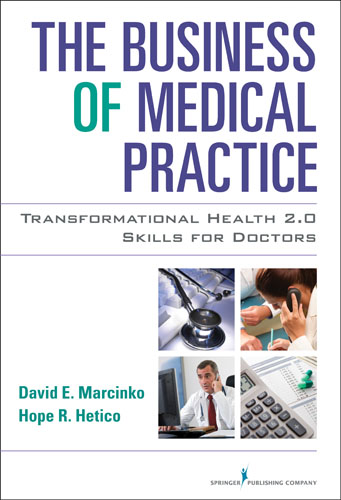
- PRACTICES: www.BusinessofMedicalPractice.com
- HOSPITALS: http://www.crcpress.com/product/isbn/9781466558731
- CLINICS: http://www.crcpress.com/product/isbn/9781439879900
- ADVISORS: www.CertifiedMedicalPlanner.org
- FINANCE: Financial Planning for Physicians and Advisors
- INSURANCE: Risk Management and Insurance Strategies for Physicians and Advisors
- Dictionary of Health Economics and Finance
- Dictionary of Health Information Technology and Security
- Dictionary of Health Insurance and Managed Care
***
[PRIVATE MEDICAL PRACTICE BUSINESS MANAGEMENT TEXTBOOK – 3rd. Edition]

[Foreword Dr. Hashem MD PhD] *** [Foreword Dr. Silva MD MBA]
***
Share this:

Filed under: iMBA, Inc., Practice Management | Tagged: Eric Galtress, Medical Office HR, PEOs, Physician Practice Management Company, PPMC | 1 Comment »


 The Leading Business Education Network for Doctors, Financial Advisors and Health Industry Consultants