Meet Next-Gen Healthcare Powered by the Industrial Internet

Join Our Mailing List 

This is Your Body Online

[By GE Healthcare IT]

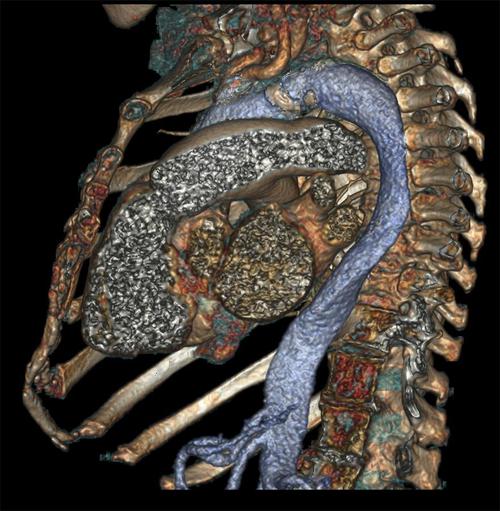
A couple of years ago, the Kadlec Health System in Washington State started testing a new cloud-based technology that mashes up professional networking and diagnostics. The system allows doctors to create a professional profile, store patient images and data together in one place, view them from anywhere and access intuitive analytics.

“It’s like LinkedIn professional networking meets diagnostic imaging,” said Jeanine Banks, general manager of Commercial Cloud Solutions at GE Healthcare IT, which developed the technology. “There is a lot of waste in the system. We want to help rein in the costs and make the system far more efficient.”

A study published in the Journal of American Medical Association found that almost 40 percent of patients are misdiagnosed in primary care [1]. Another report by the American College of Physicians discovered that unnecessary testing and medical procedures, and extra days in the hospital caused by wrong diagnoses could add up to $800 billion per year, close to one-third of all U.S. healthcare costs [2].

***

tumblr_m7tx4hQDeq1qk4ealo1_1280

***

At a panel of experts, John Dineen, president and CEO of GE Healthcare, Bill Ruh, who runs GE’s Global Software Center, and Michael Leavitt, the former secretary of U.S. Health and Human Services discussed the state of American healthcare and the ways to improve it with technology. Their panel, which was moderated by technology investor and philanthropist Esther Dyson, was part of GE’s conference focused on IT in healthcare.

Ruh and Dineen reminded everyone that over the last two decades many consumer-facing industries got thoroughly remade and that healthcare won’t be different. “There was an architectural shift of technology,” Ruh said. “We changed how we deliver and interact with music and books.”

Dineen said that the healthcare landscape was also changing “from cost plus to profit and loss. The consumer will start making buying decisions,” Dineen said. “There’s going to be transparency. There is going to be a real focus on productivity and customer satisfaction and that’s going to require tremendous investment …The industry will pivot over the next few years.”

Industrial Internet systems like the GE technology that’s now working at Kadlec will be one driver of change. But, former Sec. Leavitt said collaborative tools that bring together patients, insurers and providers will help distribute the risk associated with healthcare costs.

“Exchanges will allow consumers to make trade-offs,” Leavitt said. “If you stay with me and get your body in a better shape, I’ll give you a better [insurance] price.”

***
tumblr_inline_nhs0a2MZUr1qzgziy

***

Next-generation healthcare will also focus on outcomes. Dineen said that engineers used to be concerned chiefly with building better machines and “taking the technology to the next level.” But, medical systems in the future will have to combine high quality and lower costs with results.

Dineen and Ruh stressed the need to focus on predictive analytics, which has started empowering other industries. Dineen said that in aviation, Industrial Internet systems can already see “a signature of a problem and get it fixed when [the aircraft] comes to a shop and not on a mountain top.”

“It’s not that you get this magic answer that something is going to break,” Ruh said. “You get early indicators. You still need to have experts in the loop.”

Dineen said that right now, the healthcare industry was going through “this clumsy period when the incentives have not kicked in” yet. He listed three stages of the IT revolution in healthcare that need to take place. They include connecting machines and digitizing data, getting data from siloes like primary care providers, as well as the “rich stage,” which involves analysis and learning from the data.

Assessment

Researchers estimate that the majority of healthcare costs stem from preventable chronic health conditions rather than disease prevention and early detection. Dineen called the status quo “unproductive.” The new system will have the rewards and the incentives to change that, he said.

Citations:

1 Journal of American Medical Association 2012

2 Reuter’s, citing study by American College of Physicians

Conclusion

Your thoughts and comments on this ME-P are appreciated. Feel free to review our top-left column, and top-right sidebar materials, links, URLs and related websites, too. Then, subscribe to the ME-P. It is fast, free and secure.

Speaker: If you need a moderator or speaker for an upcoming event, Dr. David E. Marcinko; MBA – Publisher-in-Chief of the Medical Executive-Post – is available for seminar or speaking engagements. Contact: MarcinkoAdvisors@msn.com

OUR OTHER PRINT BOOKS AND RELATED INFORMATION SOURCES:

Product DetailsProduct Details

[Do] eHRs Fail to Improve Healthcare Quality?

I told you so … wow! That felt really, really good!

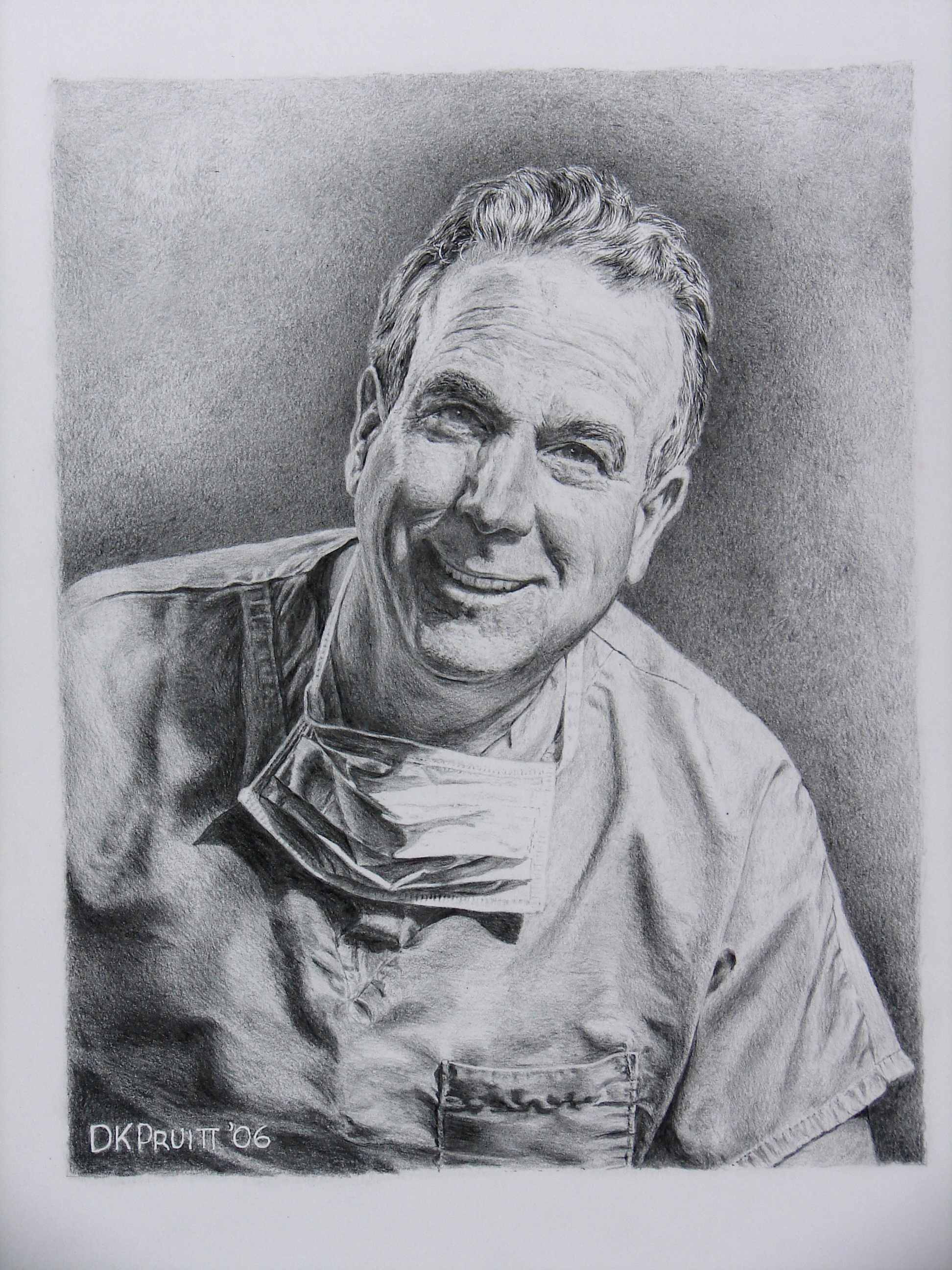
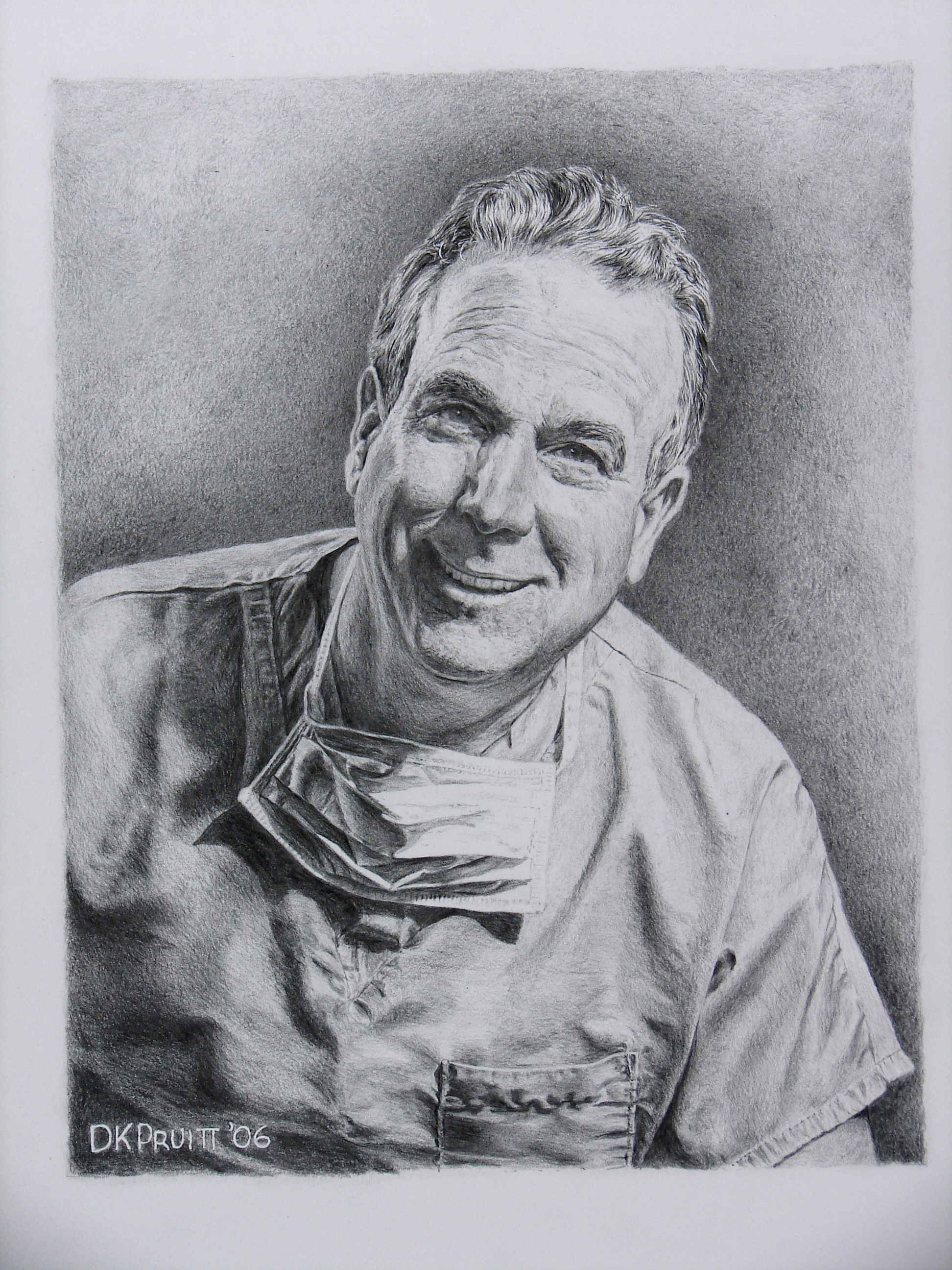
By D. Kellus Pruitt DDS 

If you haven’t been following the bad news for electronic health records that has broken in the popular media in the last few days, you may be unaware of recent studies that are about as welcome in Washington DC as Wikileaks revelations of diplomatic farts – but much more serious. Healthcare reform itself is in the balance, and President Obama’s credibility with mandates is already shot.

Records will show that a few politically-incorrect troublemakers knew all along that EHRs will fail to save money or improve the quality of healthcare – ever – unless doctors and patients are involved in their development. This troublemaker warned dentists 5 years ago about how HIT stakeholder and former Speaker of the House Newt Gingrich deceived naïve ADA Delegates about benefits of eHRs to dental patients. In turn, 3 years later, the ADA’s HIT stakeholder, Dr. Robert Ahlstrom, deceived Bush’s HHS Secretary Michael Leavitt with biased, self-serving testimony he gave to the NCVHS. (See “Dr. Robert H. Ahlstrom’s controversial HIPAA testimony” that I posted in 2008.)

http://community.pennwelldentalgroup.com/forum/topics/dr-robert-h-ahlstroms

Do you still not agree that long ago, I told you so?

At a time when President Obama’s healthcare reform is teetering between the Houses, just wait until lawmakers catch the news I’m bringing to you hours, days or even weeks ahead of Fox News: Transparency just caused a huge chunk of anticipated funding for reform to evaporate like American’s property values. After billions of stimulus dollars have been gleefully spent benefiting influential healthcare stakeholders rather than principals, the bi-partisan feel-good digital fantasy is bankrupt. Pop goes the bubble.

Although there have been minor news reports of growing disappointment in eHRs for years, the results of two recent studies by Public Library of Sciences (PLoS) and Stanford clearly expose the lack of value of eHRs for Americans. We’ve been had.

The WSJ 

On January 21, the Wall Street Journal posted an article titled, “Study Looks For, Can’t Find Much Evidence of E-Health’s Benefits,” by Katherine Hobson.

http://blogs.wsj.com/health/2011/01/21/study-looks-for-cant-find-much-evidence-of-e-healths-benefits/

Hobson writes: “With the U.S. and the U.K. heading full steam towards electronic medical records and other health IT applications, how much evidence is there that they improve care?

Not a whole lot, according to a review of existing research on the topic published this week by PLoS Medicine. While governments and other proponents are claiming that digitizing health records can save lives and increase efficiency, the review’s ‘key conclusion is that these claims need to be scrutinized before people invest quite large sums of money in these technologies,’ Aziz Sheikh, lead author of the study and a professor of primary care research and development at the Center for Population Health Sciences at the University of Edinburgh, tells the Health Blog.’”

US News & World Report

And; only hours ago, US News & World Report posted a story titled “Electronic Record-Keeping Alone May Not Boost Health Care.” (no byline).

http://health.usnews.com/health-news/managing-your-healthcare/policy/articles/2011/01/25/electronic-record-keeping-alone-may-not-boost-health-care

“Electronic health records have so far done little to improve the quality of health care in the United States, a new study states.

Researchers from the Stanford University School of Medicine analyzed data on use of electronic records from 2005 through 2007. The data came from a nationwide physician survey that encompassed nearly 250,000 outpatient visits.”

The ADA 

So how does the truth about eHRs affect ADA leadership’s stubborn push for paperless practices in dentistry? Well, if as a trusting ADA member, you haven’t already swallowed the propaganda, now wouldn’t be a good time to convert to paperless.

eDRs

Though my unpopular but accurate statements about eDRs eventually got me in secret trouble with vetted, anonymous Texas Dental Association officials, I predicted this week’s bad news years ago on the TDA online forum. Unfortunately, my warnings to other TDA members about the ADA’s biggest blunder in history were censored by the TDA Executive Director without warning or explanation. Why? She isn’t accountable to anyone and “Image is everything.” (ADA/IDM slogan).

Just how difficult can it be to recognize that eHRs are inefficient in dental practices for simple, common sense reasons? First of all, dental records which involve prevention and treatment of disease in the lower third of the face rarely include laboratory test results like medical records which concern the whole body. In addition, dentists maintain tenfold fewer thin patient charts than physicians’ thick ones. So if the value of eHRs are questionable for hospital care involving millions of charts, I think dentists are safe to ignore Presidential eHR mandates. The bottleneck in dental offices isn’t the front desk, it’s the dentist … or at least it should be. As for thumbing your nose at a Presidential mandate, I wouldn’t get too concerned. Obama also mandated that the prison at Guantanamo Bay was to be closed over a year ago. It didn’t happen, and nobody went to jail.

Unfunded Mandates 

Unfunded mandates just don’t carry the respect they once did when they were less common and actually made sense. Considering the absurdity of eHRs in dentistry, worse things could happen for trusting, clueless Americans.

Those who represent our concerns in government probably don’t yet realize that in the last four days, the price of healthcare reform skyrocketed even further out of reach, and we simply cannot borrow any more money from our grandchildren just to throw it away on expensive hi-tech crap. As for myself, I’m sending this ME-P to my national and state representatives: Cornyn, Hutchison, Barton, Burgess, Harris, Davis, Patrick and Veasey, I hope you will contact your representatives as well. The Internet makes it so easy these days to educate those who would otherwise determine our future based on deception from healthcare stakeholders.

Assessment 

I publicly challenge Dr. Robert Ahlstrom, who is currently a member of the ADA Council on Dental Practice and chair of the Members Advisory Group to an Internet discussion concerning electronic health records in dentistry. It’s the same unanswered challenge I issued to the influential dentist over 3 years ago: I still say electronic dental records are an expensive hobby paid for by dental patients in higher fees, and they do nothing to improve patient care. What do you have to say about that, Dr. Robert Ahlstrom? You know you’re going to have to face me again and again, so please don’t disappoint ADA members by continuing to hide. It makes the whole ADA look cowardly.

Conclusion

Always remember: I told you so, Dr. Robert Ahlstrom. And so, your thoughts and comments on this ME-P are appreciated. How do you select an eMR consultant? Feel free to review our top-left column, and top-right sidebar materials, links, URLs and related websites, too. Then, subscribe to the ME-P. It is fast, free and secure.

Speaker: If you need a moderator or speaker for an upcoming event, Dr. David E. Marcinko; MBA – Publisher-in-Chief of the Medical Executive-Post – is available for seminar or speaking engagements. Contact: MarcinkoAdvisors@msn.com and http://www.springerpub.com/Search/marcinko

Our Other Print Books and Related Information Sources:

Health Dictionary Series: http://www.springerpub.com/Search/marcinko

Practice Management: http://www.springerpub.com/product/9780826105752

Physician Financial Planning: http://www.jbpub.com/catalog/0763745790

Medical Risk Management: http://www.jbpub.com/catalog/9780763733421

Healthcare Organizations: www.HealthcareFinancials.com

Physician Advisors: www.CertifiedMedicalPlanner.com

Subscribe Now: Did you like this Medical Executive-Post, or find it helpful, interesting and informative? Want to get the latest ME-Ps delivered to your email box each morning? Just subscribe using the link below. You can unsubscribe at any time. Security is assured.

Link: http://feeds.feedburner.com/HealthcareFinancialsthePostForcxos

Sponsors Welcomed: And, credible sponsors and like-minded advertisers are always welcomed.

Link: https://healthcarefinancials.wordpress.com/2007/11/11/advertise

Product Details 

On Continuity of Medical Care and HIMSS

Join Our Mailing List

Considering Pay-for-Retention [P-4-R]

By Darrell K Pruitt; DDSpruitt5

Here is the question on lots of minds these days; how can we change the way medical providers are paid so they are both incentivized and adequately compensated to provide consistent, high-quality, patient-centered medical homes?

My Novel Idea

Here is a solid, common sense idea; increase providers’ pay gradually according to how long the doctors retain patients – who are free to choose any doctor they wish.  Consistency is the mortar of a medical home [i.e., pay-4-retention]. 

An Ounce of Prevention 

If prevention, which predates eHRs by thousands of years, is more than just a modern buzzword, the nation can still shave much more expense from health care by promoting continual, personalized care for consumers than from digital health records alone – void of prevention incentives. Who in the audience still cannot understand that concept? Think of it this way. How do business leaders in the land of the free retain the best employees? They pay bonuses. Even waiters get tips to encourage interest in providing service consumers will return for. What do US physicians get?  Guaranteed cuts in their Medicaid payments over the next decade. Physicians no longer encourage their children to become doctors. Surprised? Scared? 

Consumers Should Rule 

In place of consumers ruling their healthcare in the US, well-positioned, giant stakeholders have persuaded lawmakers to offer physicians bonus money (that will later be taken away), not for curing patients, but for using digital records “in a meaningful manner.” It’s called “Mark and Michael Leavitts’ Clicking for Cash.”  Since the rules are made up along the way, they change like the weather. That is why the larger and more progressive medical facilities pay bonuses to retain their best “Coders” and other informatics specialists who keep up with the current Ingenix-styled games in order to maximize profits. It is my opinion that health care IT’s complexity works well with the economic stimulus plan to improve employment in the nation. Entrepreneurial stakeholders will continue to be movie-star popular right up until the complete collapse of Medicare.  Then they’ll be impossible to find www.HealthDictionarySeries.com

HIMSS 

Have you ever heard of HIMSS?

“The Healthcare Information and Management Systems Society (HIMSS) is the healthcare industry’s membership organization exclusively focused on providing leadership for the optimal use of healthcare information technology (IT) and management systems for the betterment of healthcare.”

– From the HIMSS Web site.

HIMSS Annual Meeting 

A week ago, HIMSS convened its annual convention in Chicago. The keynote speakers for the four day event were actor Dennis Quaid; followed by the Chairman and CEO of Kaiser Foundation Health Plan, George C. Halvorson; then the economist and former Chairman, Board of Governors of the Federal Reserve, Alan Greenspan, and finally; Jerry M. Linenger, MD, MSSM, MPH, PhD, Captain, Medical Corps, USN (Ret.), NASA Astronaut, and Space Analyst, NBC News. As one can tell, healthcare IT has lots of momentum. In fact, Dave Roberts, the HIMSS vice president for government relations confidently told Bob Brewin on NextGov.com

“The e-records initiative is an entitlement program like Social Security.” 

http://www.nextgov.com/nextgov/ng_20090406_1509.phpdhimc-book9

Another Entitlement Program – Entitlement for Whom

In Regina Herzlinger’s 2007 book “Who Killed Health Care?” the Harvard School of Business professor argues that entitled stakeholders, including a few ambitious members of HIMSS, are destroying health care in the name of reform. In the first half of her 260 page book, she spells out entrepreneurial malfeasance in simple well-annotated terms. In the last half, she describes why Consumer-Driven Health Care [CDHC] makes sense to her. Professor Herzlinger does not specifically mention the words “medical home” in her book, yet she emphasizes the importance of continuity of care. To promote continuity, she suggests that managed care insurance policies be extended to three years duration and longer.  Although she also does not mention dentistry, it is obvious to me that since chronic illnesses like diabetes are exacerbated by poor oral health, continuity of care in dentistry is of special importance.  It occasionally takes years to improve some patients’ oral health care. And sometimes we fail.

Assessment 

If these assumptions about continuity of care are accurate, it follows that the physical and economic health of the nation depends on long-term medical insurance contracts with employers and freedom-of-choice in providers. So is prevention worth holding ourselves accountable to consumers for once? Maybe it is just me, but I think unprecedented truth in healthcare will soon emerge regardless of stakeholders’ needs for confusion and obscurity.  It is called consumerism.  And it goes hand-in-hand with the Hippocratic Oath, the free-market and common sense.

Conclusion

Your thoughts and comments on this ME-P are appreciated. Feel free to review our top-left column, and top-right sidebar materials, links, URLs and related websites, too. Then, subscribe to the ME-P. It is fast, free and secure.

Link: http://feeds.feedburner.com/HealthcareFinancialsthePostForcxos

Speaker: If you need a moderator or speaker for an upcoming event, Dr. David E. Marcinko; MBA – Publisher-in-Chief of the Medical Executive-Post – is available for seminar or speaking engagements. Contact: MarcinkoAdvisors@msn.com

OUR OTHER PRINT BOOKS AND RELATED INFORMATION SOURCES:

Health Dictionary Series: http://www.springerpub.com/Search/marcinko

Practice Management: http://www.springerpub.com/product/9780826105752

Physician Financial Planning: http://www.jbpub.com/catalog/0763745790

Medical Risk Management: http://www.jbpub.com/catalog/9780763733421

Hospitals: http://www.crcpress.com/product/isbn/9781439879900

Physician Advisors: www.CertifiedMedicalPlanner.org

Product DetailsProduct DetailsProduct Details

Product Details  Product Details

Product DetailsProduct Details