







 Support our online development, and advance our onground research initiatives in free market economics, as we seek to showcase the brightest Next-Gen minds.
THE ME-P DISCLAIMER: Posts, comments and opinions do not necessarily represent iMBA, Inc., but become our property after submission. Copyright © 2006 to-date. iMBA, Inc allows colleges, universities, medical and financial professionals and related clinics, hospitals and non-profit healthcare organizations to distribute our proprietary essays, photos, videos, audios and other documents; etc. However, please review copyright and usage information for each individual asset before submission to us, and/or placement on your publication or web site. Attestation references, citations and/or back-links are required. All other assets are property of the individual copyright holder.
Support our online development, and advance our onground research initiatives in free market economics, as we seek to showcase the brightest Next-Gen minds.
THE ME-P DISCLAIMER: Posts, comments and opinions do not necessarily represent iMBA, Inc., but become our property after submission. Copyright © 2006 to-date. iMBA, Inc allows colleges, universities, medical and financial professionals and related clinics, hospitals and non-profit healthcare organizations to distribute our proprietary essays, photos, videos, audios and other documents; etc. However, please review copyright and usage information for each individual asset before submission to us, and/or placement on your publication or web site. Attestation references, citations and/or back-links are required. All other assets are property of the individual copyright holder.


By Staff Reporters
***
***
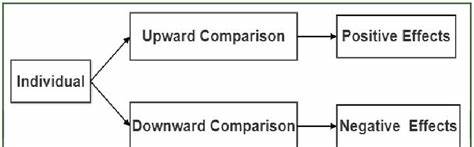
According to some studies, as much as 10 percent of our thoughts involve comparisons of some kind. Social comparison theory is the idea that individuals determine their own social and personal worth based on how they stack up against others. The theory was developed in 1954 by psychologist Leon Festinger. Later research has shown that people who regularly compare themselves to others may find motivation to improve, but may also experience feelings of deep dissatisfaction, guilt or remorse, and engage in destructive behaviors like lying or disordered eating.
***
Downward Comparison is the act of comparing oneself to others who are worse off to feel better about one’s situation. It’s like looking at someone else’s messy desk to feel better about your clutter.
On the other hand, Upward Comparison is the act of comparing oneself to others who are better off to feel bad about one’s situation. It’s like looking at someone else’s neat desk and feel worse about your own clutter.
Finally, according to Dan Ariely PhD, these coping mechanisms boosts self-esteem or depress us with a sense of relief or dread. While helpful in moderation, relying too much on upward or downward comparisons can help hinder personal growth and/or depress growth or empathy; etc.
So, them sparingly and remember: upward comparisons can inspire you to improve and strive for better; while downward comparisons have the opposite effects.
MORE: https://www.verywellmind.com/what-is-the-social-comparison-process-2795872
COMMENTS APPRECIATED
Subscribe Today!
***
***
Share this:

Filed under: "Doctors Only", Ethics, Experts Invited, LifeStyle, mental health, Risk Management | Tagged: Dan Ariely PhD, downward, downward comparison, Leon Festinger, mental health, social comparison theory, upward, upward comparison | Leave a comment »
 The Leading Business Education Network for Doctors, Financial Advisors and Health Industry Consultants