






 Support our online development, and advance our onground research initiatives in free market economics, as we seek to showcase the brightest Next-Gen minds.
THE ME-P DISCLAIMER: Posts, comments and opinions do not necessarily represent iMBA, Inc., but become our property after submission. Copyright © 2006 to-date. iMBA, Inc allows colleges, universities, medical and financial professionals and related clinics, hospitals and non-profit healthcare organizations to distribute our proprietary essays, photos, videos, audios and other documents; etc. However, please review copyright and usage information for each individual asset before submission to us, and/or placement on your publication or web site. Attestation references, citations and/or back-links are required. All other assets are property of the individual copyright holder.
Support our online development, and advance our onground research initiatives in free market economics, as we seek to showcase the brightest Next-Gen minds.
THE ME-P DISCLAIMER: Posts, comments and opinions do not necessarily represent iMBA, Inc., but become our property after submission. Copyright © 2006 to-date. iMBA, Inc allows colleges, universities, medical and financial professionals and related clinics, hospitals and non-profit healthcare organizations to distribute our proprietary essays, photos, videos, audios and other documents; etc. However, please review copyright and usage information for each individual asset before submission to us, and/or placement on your publication or web site. Attestation references, citations and/or back-links are required. All other assets are property of the individual copyright holder.


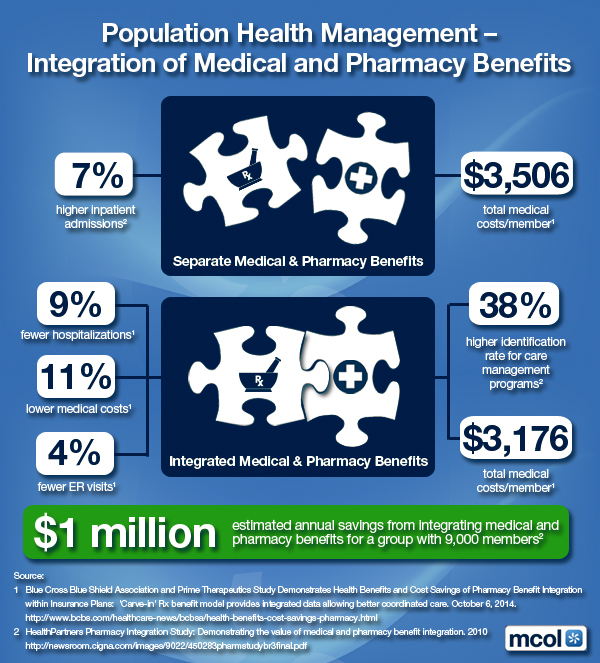
Of Medical and Pharmacy Benefits
Channel Surfing the ME-P
Have you visited our other topic channels? Established to facilitate idea exchange and link our community together, the value of these topics is dependent upon your input. Please take a minute to visit. And, to prevent that annoying spam, we ask that you register. It is fast, free and secure.
Conclusion
Your thoughts and comments on this ME-P are appreciated. Feel free to review our top-left column, and top-right sidebar materials, links, URLs and related websites, too. Then, subscribe to the ME-P. It is fast, free and secure.
Speaker: If you need a moderator or speaker for an upcoming event, Dr. David E. Marcinko; MBA – Publisher-in-Chief of the Medical Executive-Post – is available for seminar or speaking engagements. Contact: MarcinkoAdvisors@msn.com
OUR OTHER PRINT BOOKS AND RELATED INFORMATION SOURCES:
- PRACTICES: www.BusinessofMedicalPractice.com
- HOSPITALS: http://www.crcpress.com/product/isbn/9781466558731
- CLINICS: http://www.crcpress.com/product/isbn/9781439879900
- ADVISORS: www.CertifiedMedicalPlanner.org
- FINANCE: Financial Planning for Physicians and Advisors
- INSURANCE: Risk Management and Insurance Strategies for Physicians and Advisors
- Dictionary of Health Economics and Finance
- Dictionary of Health Information Technology and Security
- Dictionary of Health Insurance and Managed Care


Share this:

Filed under: Practice Management | Tagged: Population Health |
 The Leading Business Education Network for Doctors, Financial Advisors and Health Industry Consultants
Population Health Analytics
Population Health is about more than just identifying a group of patients. It involves helping physicians care for their patients as individuals, improving their own practice through evidence-based best practices, and enacting cultural change that results in better outcomes for entire populations.
Population Health with the capability to look at one patient at a time, and one physician at a time, will enable providers and organizations to answer three important questions: 1) What best practices should I be doing with this population? 2) How well am I following these best practices with this population? And 3) How can I change to create better outcomes for this population?
Dr. David Edward Marcinko MBA
LikeLike
Defining population health?
One characteristic of the relatively new term “population health” is that its definition varies depending on whom you ask.
http://www.hiewatch.com/news/defining-population-health?mkt_tok=3RkMMJWWfF9wsRogv6XPZKXonjHpfsX56O0kXK6zlMI%2F0ER3fOvrPUfGjI4HS8diI%2BSLDwEYGJlv6SgFQ7LHMbpszbgPUhM%3D
Dr. David Edward Marcinko FACFAS MBA CMP™ MBBS [Hon]
LikeLike
Population health management
World-class, risk-bearing, population health management companies like Health Care Partners, CareMore, and ChenMed have long known that the best medical care is necessary but not sufficient for many of their at-risk / high-risk patients. Frustrated by the fragmentation of care across the continuum and disenfranchised by the misalignment of payments and incentives, organizations such as these set out to care for their patients differently. They put the patient at the center of the care delivery ecosystem and broke down barriers that blocked what patients need. What they found was that truly transformative outcomes went hand-in-hand with superior financial performance. Further, they learned that to generate those transformative outcomes meant addressing the patient’s medical, psychological, pharmacological, social, environmental and functional needs.
Unfortunately, in much of the country, payment models do not properly incentivize organized systems of care to make the considerable investments in time and resources required to properly address patients’ social determinants of health. Purchasers would be wise to start measuring the degree to which social determinants of health are assessed and managed by different providers in their network. Those that are effectively managing their patients’ needs beyond merely their medical issues should be rewarded with enhanced reimbursement and steerage.
Providers should begin incorporating social determinants of health into their overall assessment of a patient’s ability to manage their illness burden. When a higher risk patient’s illness burden exceed their ability to manage that burden, extra care management resources should be brought to bear as well as any available community resources that can begin to address any of the identified issues.
Rick Weil via Ann Miller RN MHA
[Managing Director]
BDC Advisors
LikeLike