





 Support our online development, and advance our onground research initiatives in free market economics, as we seek to showcase the brightest Next-Gen minds.
THE ME-P DISCLAIMER: Posts, comments and opinions do not necessarily represent iMBA, Inc., but become our property after submission. Copyright © 2006 to-date. iMBA, Inc allows colleges, universities, medical and financial professionals and related clinics, hospitals and non-profit healthcare organizations to distribute our proprietary essays, photos, videos, audios and other documents; etc. However, please review copyright and usage information for each individual asset before submission to us, and/or placement on your publication or web site. Attestation references, citations and/or back-links are required. All other assets are property of the individual copyright holder.
Support our online development, and advance our onground research initiatives in free market economics, as we seek to showcase the brightest Next-Gen minds.
THE ME-P DISCLAIMER: Posts, comments and opinions do not necessarily represent iMBA, Inc., but become our property after submission. Copyright © 2006 to-date. iMBA, Inc allows colleges, universities, medical and financial professionals and related clinics, hospitals and non-profit healthcare organizations to distribute our proprietary essays, photos, videos, audios and other documents; etc. However, please review copyright and usage information for each individual asset before submission to us, and/or placement on your publication or web site. Attestation references, citations and/or back-links are required. All other assets are property of the individual copyright holder.


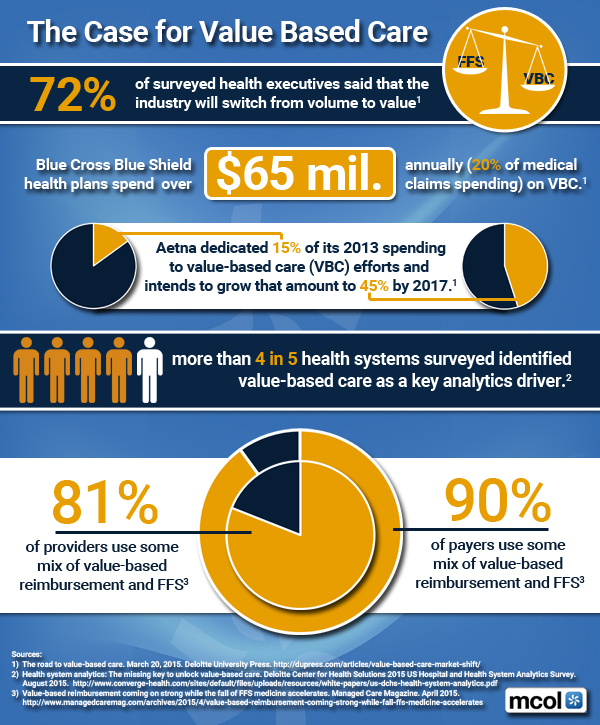
Migrating from Volume to … Value
***
***
Assessment
- Evaluating ACOs at Mid-Launch
- Proposed Federal Regulations for ACOs
- Ground Breaking Book Explains Why Accountable Care Organizations May Be the Answer the Health Care Industry Has Been Seeking!
- Doubting the Accountable Care Organization B-Model
Conclusion
Your thoughts and comments on this ME-P are appreciated. Feel free to review our top-left column, and top-right sidebar materials, links, URLs and related websites, too. Then, subscribe to the ME-P. It is fast, free and secure.
Speaker: If you need a moderator or speaker for an upcoming event, Dr. David E. Marcinko; MBA – Publisher-in-Chief of the Medical Executive-Post – is available for seminar or speaking engagements. Contact: MarcinkoAdvisors@msn.com
OUR OTHER PRINT BOOKS AND RELATED INFORMATION SOURCES:
- PRACTICES: www.BusinessofMedicalPractice.com
- HOSPITALS: http://www.crcpress.com/product/isbn/9781466558731
- CLINICS: http://www.crcpress.com/product/isbn/9781439879900
- ADVISORS: www.CertifiedMedicalPlanner.org
- FINANCE: Financial Planning for Physicians and Advisors
- INSURANCE: Risk Management and Insurance Strategies for Physicians and Advisors
- Dictionary of Health Economics and Finance
- Dictionary of Health Information Technology and Security
- Dictionary of Health Insurance and Managed Care
***
[PRIVATE MEDICAL PRACTICE BUSINESS MANAGEMENT TEXTBOOK – 3rd. Edition]

[Foreword Dr. Hashem MD PhD] *** [Foreword Dr. Silva MD MBA]
***
Share this:

Filed under: Health Insurance, Quality Initiatives | Tagged: Value Based Medical Care |


Employer Health Care Costs Expected to Increase 4.1% for 2015
Key findings from the annual Towers Watson/NBGH Best Practices in Health Care Employer Survey include:
• Employers expect a 4.1% rate of increase in the cost of employer-sponsored health care benefits in 2015.
• Health care costs for 2015 are expected to average $12,041 per employee, up from $11,567 in 2014.
• Employer confidence in offering health coverage 10 years from now increased from 25% in 4014 to 44%.
• On average, employees will pay 22.2% of total premium costs in 2015, or $223 a month on average.
• 82% of companies offered an account-based health plan (ABHP) in 2015 and 4% will add one in 2016.
• Half of employers have used new coverage/utilization restrictions to curb high cost specialty pharmacy.
Source: Towers Watson, October 6, 2015
LikeLike
ACOs working?
[Experts debate]
The 20 ACOs in the Pioneer program and the 333 in the shared savings program reported total savings of $411 million.
http://www.medicalpracticeinsider.com/news/acos-working-experts-debate?email=%%EmailAddress%%&GroupID=90115&mkt_tok=3RkMMJWWfF9wsRovv67LZKXonjHpfsX56O0kXK6zlMI%2F0ER3fOvrPUfGjI4ATMBiNq%2BTFAwTG5toziV8R7nHLs161sIQWRjg
But after paying bonuses, the ACOs recorded a net loss of $2.6 million to the Medicare trust fund.
Clayton
LikeLike
55% of Executives Expect Most Payments to be Value-Based Before 2020
Lazard recently released results from their Global Healthcare Leaders Study. Here are some key findings from the report:
• 47% of executives cite value-based models as transformative in the next decade.
• 38% cite scientific breakthroughs as most transformative over the next decade.
• 1 in 3 respondents in devices/tech/services say non-traditional competitors will have a transformative impact on the industry in the next 3-5 years.
• 55% said they expect most healthcare payments will be value-based before 2020.
• Half expect an increase in public company acquisitions over the next 18 months.
• More than two-thirds expect an increase in private company acquisitions.
Source: Lazard, May 15, 2017
LikeLike
Cyprian,
Not ever going to happen!
Dr. David E. Marcinko MBA
LikeLike
Nine Things to Know From GAO Report on Hospital Value Based Purchasing
1. Safety net hospitals generally scored lower in quality compared to all hospitals
2. Small rural and small urban hospitals scored higher on efficiency compared to all hospitals
3. In 4/5 years of GAO’s analysis, small rural and small urban hospitals were more likely to receive a bonus compared to all hospitals
4. Safety net hospitals were more likely to receive a penalty during this timespan
5. A majority of all hospitals received a bonus or a penalty of less than 0.5 percent each year
6. Hospitals receiving a bonus > 0.5 percent increased from 4% of hospitals to 29% from FY 2013 – 2017
7. Most hospitals had a bonus or penalty of less than $100,000 in fiscal year 2017
8. Efficiency score had a greater effect on total performance score because of CMS methodology
9. Hospitals with missing scores were more likely to receive bonuses than hospitals with complete scores.
Source: GAO Report – June 30, 2017: CMS Should Take Steps to Ensure Lower Quality Hospitals Do Not Qualify for Bonuses
LikeLike