






 Support our online development, and advance our onground research initiatives in free market economics, as we seek to showcase the brightest Next-Gen minds.
THE ME-P DISCLAIMER: Posts, comments and opinions do not necessarily represent iMBA, Inc., but become our property after submission. Copyright © 2006 to-date. iMBA, Inc allows colleges, universities, medical and financial professionals and related clinics, hospitals and non-profit healthcare organizations to distribute our proprietary essays, photos, videos, audios and other documents; etc. However, please review copyright and usage information for each individual asset before submission to us, and/or placement on your publication or web site. Attestation references, citations and/or back-links are required. All other assets are property of the individual copyright holder.
Support our online development, and advance our onground research initiatives in free market economics, as we seek to showcase the brightest Next-Gen minds.
THE ME-P DISCLAIMER: Posts, comments and opinions do not necessarily represent iMBA, Inc., but become our property after submission. Copyright © 2006 to-date. iMBA, Inc allows colleges, universities, medical and financial professionals and related clinics, hospitals and non-profit healthcare organizations to distribute our proprietary essays, photos, videos, audios and other documents; etc. However, please review copyright and usage information for each individual asset before submission to us, and/or placement on your publication or web site. Attestation references, citations and/or back-links are required. All other assets are property of the individual copyright holder.


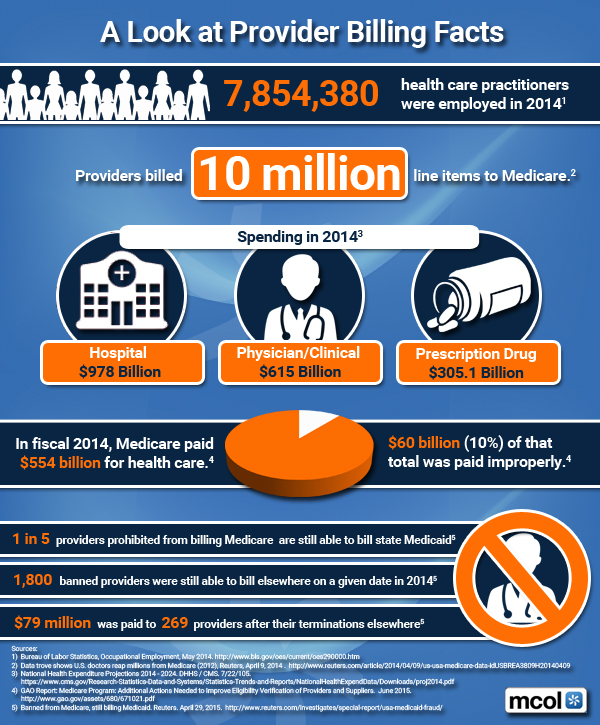
A Look at Medicare Spending
***
***
Conclusion
Your thoughts and comments on this ME-P are appreciated. Feel free to review our top-left column, and top-right sidebar materials, links, URLs and related websites, too. Then, subscribe to the ME-P. It is fast, free and secure.
Speaker: If you need a moderator or speaker for an upcoming event, Dr. David E. Marcinko; MBA – Publisher-in-Chief of the Medical Executive-Post – is available for seminar or speaking engagements. Contact: MarcinkoAdvisors@msn.com
OUR OTHER PRINT BOOKS AND RELATED INFORMATION SOURCES:
- PRACTICES: www.BusinessofMedicalPractice.com
- HOSPITALS: http://www.crcpress.com/product/isbn/9781466558731
- CLINICS: http://www.crcpress.com/product/isbn/9781439879900
- ADVISORS: www.CertifiedMedicalPlanner.org
- FINANCE: Financial Planning for Physicians and Advisors
- INSURANCE: Risk Management and Insurance Strategies for Physicians and Advisors
- Dictionary of Health Economics and Finance
- Dictionary of Health Information Technology and Security
- Dictionary of Health Insurance and Managed Care
[HOSPITAL OPERATIONS, ORGANIZATIONAL BEHAVIOR AND FINANCIAL MANAGEMENT COMPANION TEXTBOOK SET]


[Foreword Dr. Phillips MD JD MBA LLM] *** [Foreword Dr. Nash MD MBA FACP]
***
Share this:

Filed under: Career Development, Ethics, Health Insurance, Risk Management | Tagged: CMS, Medical Provider Billing Facts, medicare, Medicare Provider Billing |
 The Leading Business Education Network for Doctors, Financial Advisors and Health Industry Consultants
2018 – Growing Bad-Debt Problem Illustrates Broken Billing System
Patient payment represents a growing share of health systems’ revenue, putting consumers and providers in a precarious position, a new report finds. Patient balances after insurance rose from 8% of the total bill responsibility in the first quarter of 2012 to 12.2% in the first quarter of 2017, according to new analysis from TransUnion Healthcare. Commercially insured patients saw their balance after insurance increase 67% from $467 to $781.
For Medicare beneficiaries, it increased from $144 to $314. Medicare bad debt, which is the result of beneficiaries not paying their deductibles and co-insurance, increased 17% to $3.69 billion in 2016, up from $3.14 billion in 2012, according to CMS data.
The TransUnion report recommended engaging patients about payment earlier, even before care, to gauge their coverage level and financial situation. Providers can work with consumers to set up payment plans or see if they qualify for their charity care program. Before writing it off as bad debt, see if patients qualify for commercial or public-payer coverage, the report said. Also, ensure prior authorization is in place before treatment.
Source: Modern Healthcare [6/27/18]
LikeLike